
A Titanium electrode used as an insoluble anode does not replenish plating-metal ions consumed at the cathode. Your anode can retain its shape while dissolved metal inventory falls during production. A stable current display may hide that changing bath condition. Compare deposition, drag-out and replenishment records before revising the bath-control plan.
1. How does a Titanium electrode affect metal-ion supply?
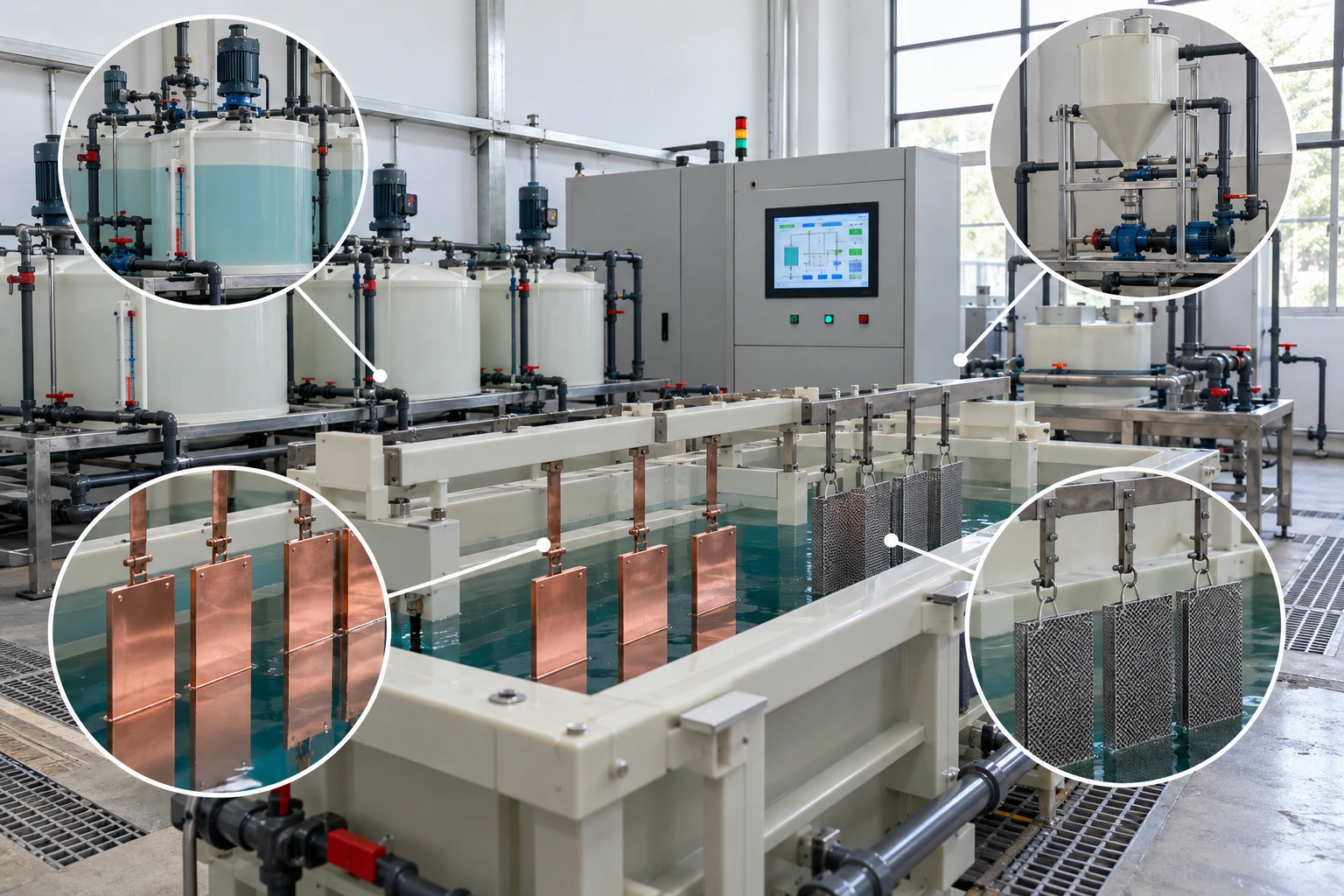
A Titanium electrode affects how current enters the bath, while cathodic deposition consumes dissolved metal ions. Its anode reaction determines whether metal enters solution.
Separate electrode duty from bath inventory
Track two flows through the same cell. Electrical current passes between anode and cathode, while metal ions move from solution into deposits or through replenishment. A soluble anode can contribute metal by dissolving; an insoluble surface follows another reaction.
- Mark the metal-depositing cathode and its production load.
- Name the anode type and bath replenishment route.
| Check | Decision |
|---|---|
| Cathode | Consumes ions during deposition |
| Soluble anode | Can release metal ions into bath |
Track electrode condition and bath metal balance with separate measurements. Key Takeaway: Describe the anode reaction and ion-feed route separately.
2. What dissolves from a soluble anode beside a Titanium electrode?
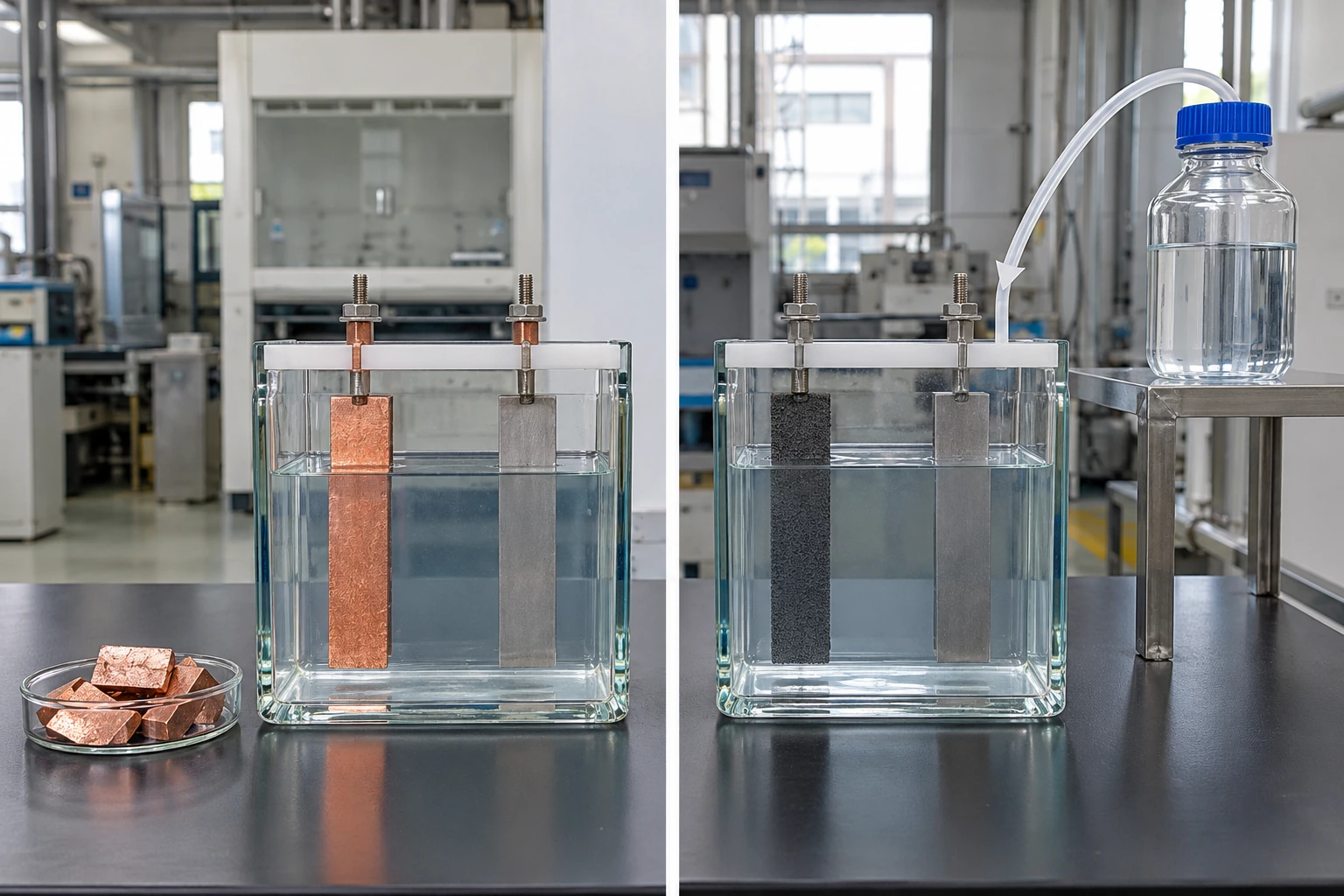
A soluble metal anode can dissolve and contribute ions opposite a Titanium electrode cathode. Dissolution and deposition rates may differ.
What dissolves from a soluble metal anode?
Follow metal leaving each electrode. Metal oxidation at anode releases ions into solution; at cathode, ions reduce into deposit. Differences in current efficiency, drag-out, side reactions, and impurities mean bath analysis still matters.
- Track anode mass or replacement records where relevant.
- Compare cathode production with routine bath assays.
| Check | Decision |
|---|---|
| Soluble feed | Links anode loss with metal supply |
| Bath assay | Shows actual solution inventory |
The theoretical balance may drift when real anode and cathode efficiencies differ. Key Takeaway: Use measured bath values to confirm any anode-based balance estimate.
3. What happens at an insoluble Titanium electrode?
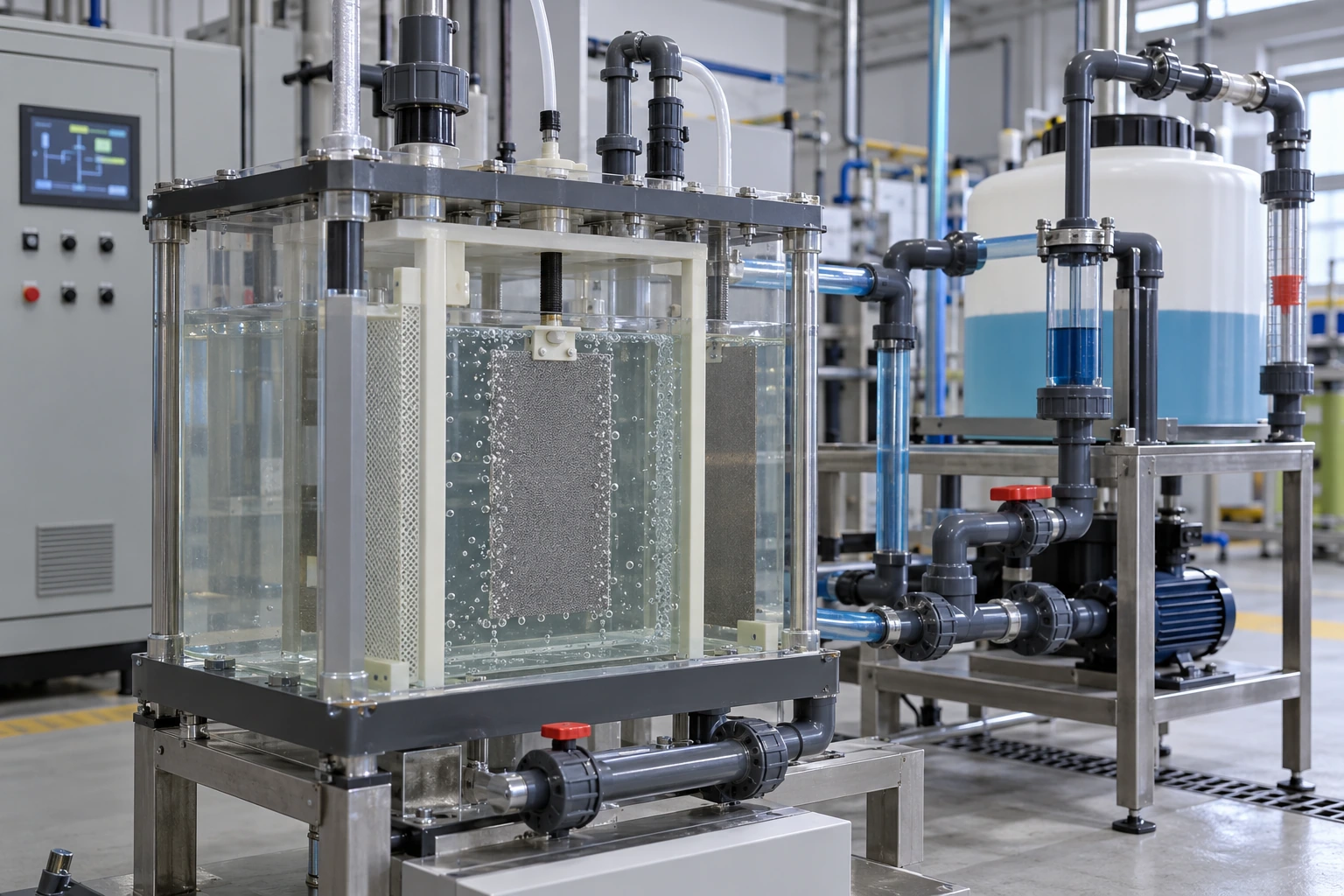
An insoluble Titanium electrode carries an anodic reaction without dissolving as the plating metal. Bath ions still decline as product deposits form.
What happens at an insoluble titanium anode?
Separate current carrying from metal supply. An insoluble surface may support oxidation of a bath species, with reaction products depending on chemistry and potential. It does not provide a matching metal-ion feed, so the cell needs separate inventory control.
- State the intended anodic reaction and coating surface.
- Identify any gas, oxidant, or acidity control relevant to the bath.
| Check | Decision |
|---|---|
| Insoluble anode | Carries current through its surface reaction |
| Metal inventory | Needs a separate supply path |
Titanium substrate alone does not define coating activity or bath compatibility. Key Takeaway: Review coating, potential, and replenishment as linked process decisions.
4. How does deposition at a Titanium electrode change bath inventory?
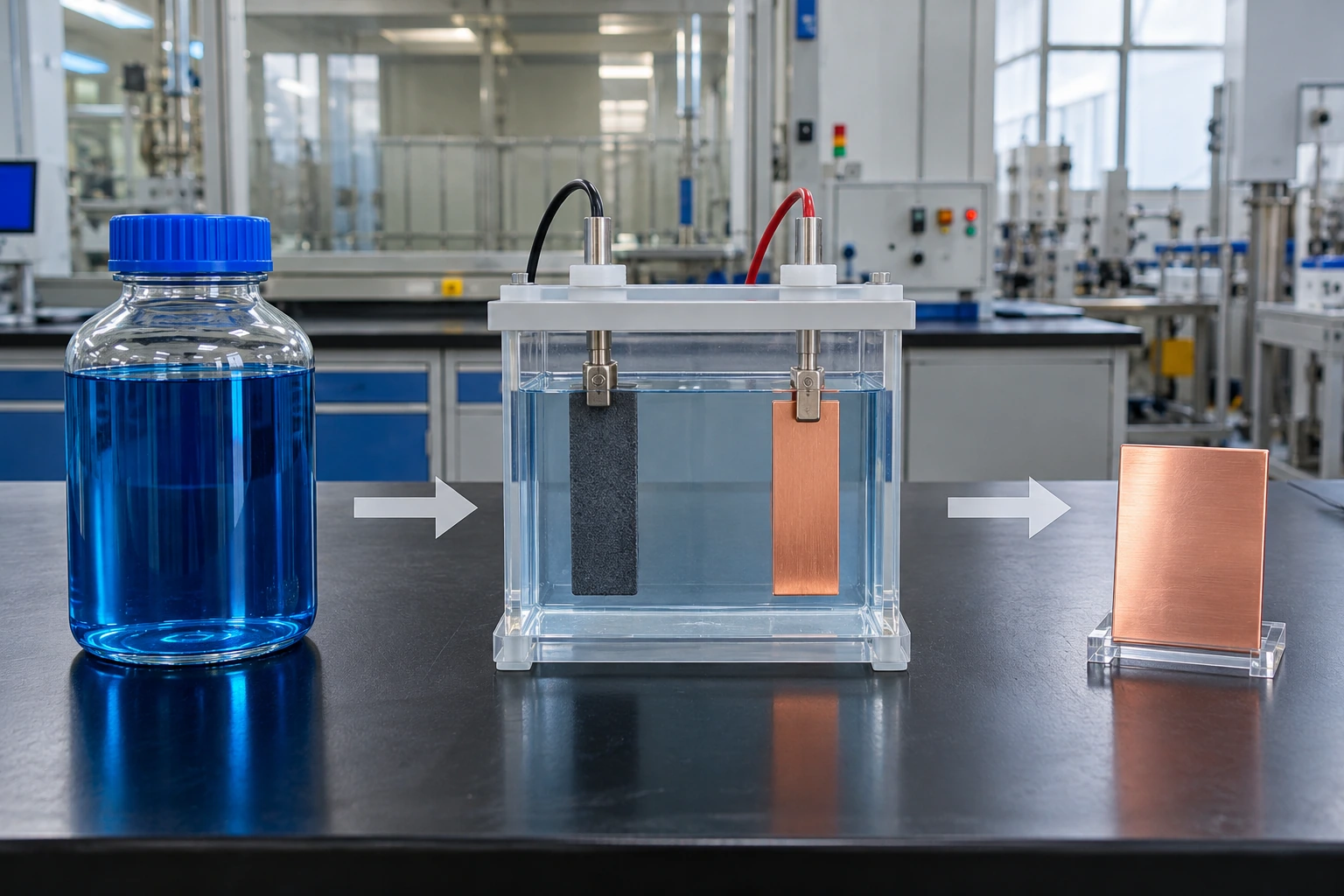
A Titanium electrode cell consumes bath metal at its cathode, while other losses and feeds change measured inventory. A simple balance can expose gaps.
How does deposition change bath inventory?
Build the balance around measured flows. A custom application review can account for metal deposited, ions released by any soluble anode, material added, solution carried out, and verified side losses. Remaining change should match bath analysis within your measurement method.
- Use production area or metal deposited as an output record.
- Log additions, drag-out controls, bleeds, and returns.
| Check | Decision |
|---|---|
| Known inputs and outputs | Support a useful balance |
| Unlogged solution loss | Leaves unexplained inventory drift |
A stable tank level cannot prove stable metal-ion concentration. Key Takeaway: Reconcile inventory from analytical results and material-flow records.
5. Which replenishment route fits a Titanium electrode cell?
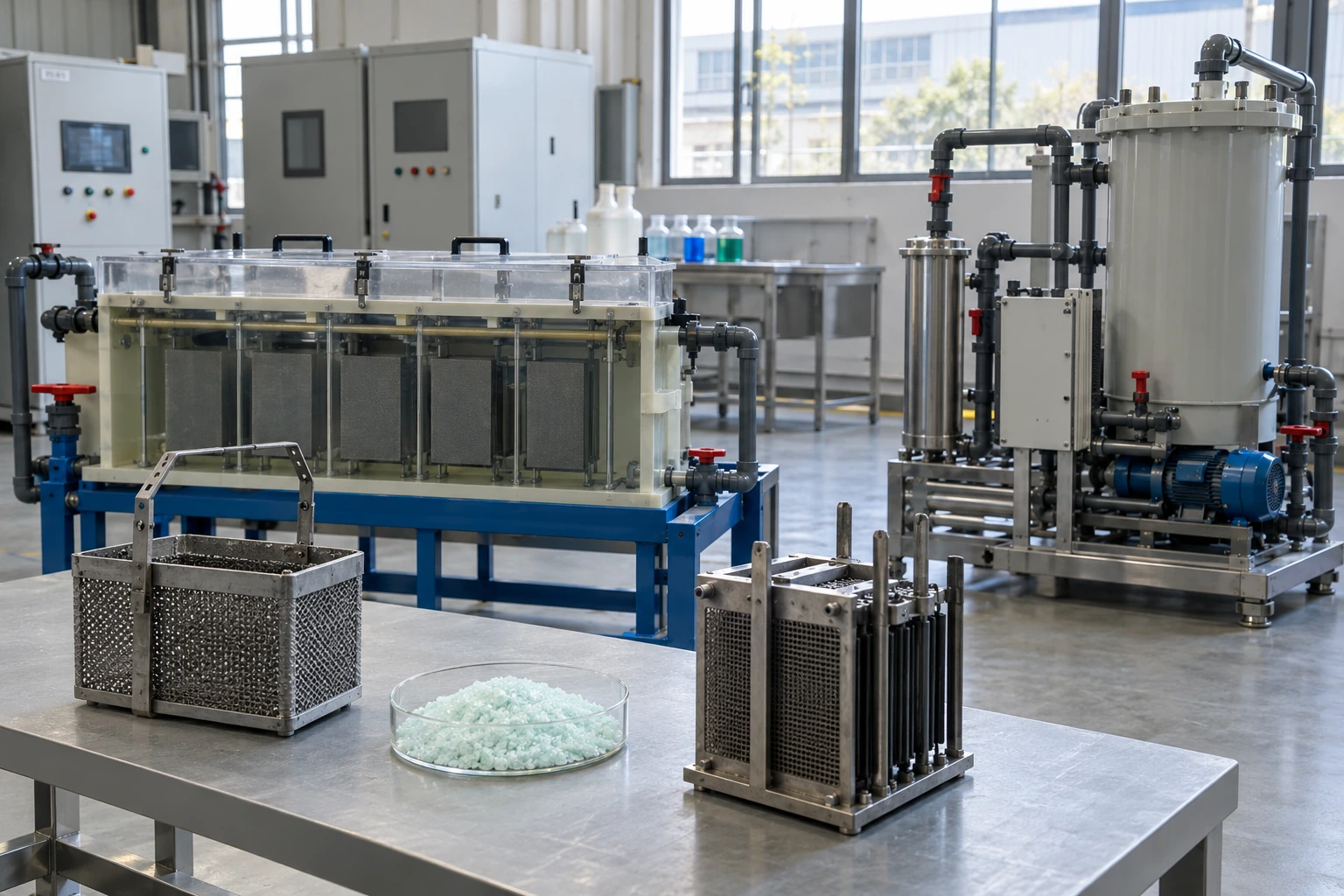
A Titanium electrode route should be selected with the replenishment method that can hold bath composition. Soluble metal, salts, and external dissolution systems serve different needs.
Which replenishment route fits an insoluble anode?
Choose a feed path that the plant can measure. Copper systems may use soluble anodes, prepared copper-bearing solution, or a separate dissolution loop. Nickel baths may use soluble nickel or controlled salt additions; each route affects anions and bath balance.
- Identify chemical storage and metering controls.
- Check whether added counter-ions accumulate in the process.
| Check | Decision |
|---|---|
| Metal anode | Feeds ions through anodic dissolution |
| Salt or dissolver | Feeds ions through separate equipment |
A technically possible feed route may still conflict with waste, filtration, or control limits. Key Takeaway: Select replenishment from bath chemistry and available monitoring capability.
6. How do additives change a Titanium electrode bath?

A Titanium electrode changes anodic chemistry, which can affect additives, pH, gas formation, and impurity control. Effects vary with bath chemistry and operating potential.
How can anode reactions shift bath balance?
Watch the whole electrolyte, not just metal concentration. Anodic reactions may create gas or oxidized species and shift acid-base balance. Additive consumption, filtration, and contamination can change alongside the metal inventory.
- Track pH, metal ions, and bath-specific control species.
- Record anode condition and any visible process changes.
| Check | Decision |
|---|---|
| Metal assay | Tracks deposited-metal inventory |
| Bath chemistry panel | Tracks related chemical balance |
A metal-ion correction alone may leave another bath variable outside its target. Key Takeaway: Define an analysis panel with your plating-chemistry owner.
7. What records track metal-ion loss around a Titanium electrode?

A Titanium electrode performance record helps explain bath drift when paired with production and replenishment data. Current alone does not reveal all metal losses.
Which records reveal metal-ion loss?
Make each addition traceable to a measured need. Trend bath assays alongside charge, plated area, product mass, drag-out, additions, and maintenance. Compare changes by production family when load mix shifts.
- Keep sample location and analysis method consistent.
- Link addition records with production and anode service logs.
| Check | Decision |
|---|---|
| Current log | Shows electrical throughput |
| Bath assay | Shows measured metal concentration |
Production current is useful context, while chemical analysis verifies solution state. Key Takeaway: Review inventory trends by batch or line period rather than in isolation.
8. How should replenishment be controlled with a Titanium electrode?
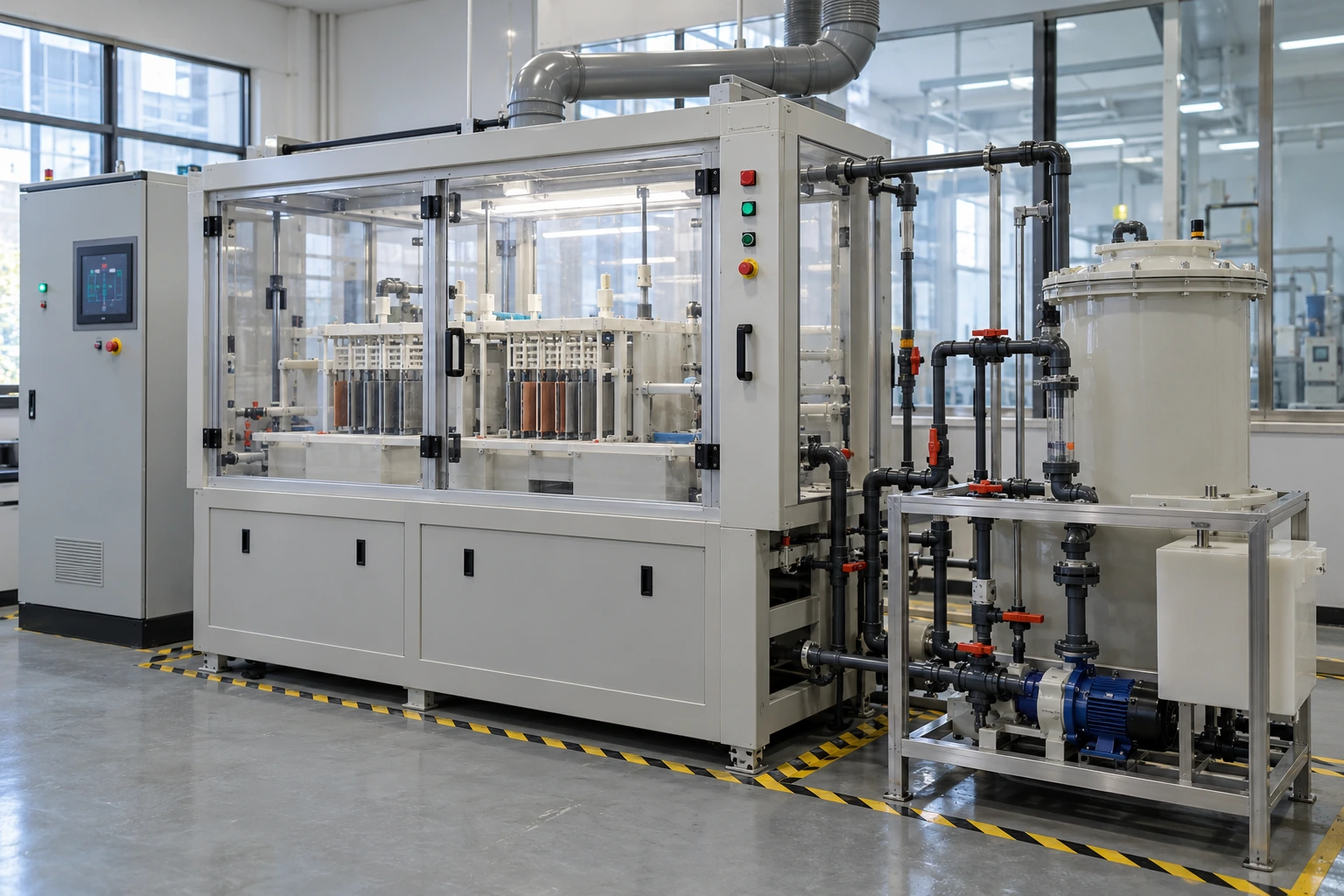
A Titanium electrode process needs a controlled replenishment procedure matched to its bath and equipment. Additions should follow verified plant controls.
How should metal additions be controlled?
Use an approved addition and verification sequence. Confirm tank identity, chemical form, mixing state, and analysis before changing a feed rate. drawing-based electrode options can be reviewed alongside the bath sampling plan and documented operating controls.
- Use trained personnel and the site's chemical handling procedure.
- Verify concentration and related bath variables after an addition.
| Check | Decision |
|---|---|
| Unverified addition | Can leave chemistry outside target |
| Measured correction | Can be checked against analysis |
Adding a calculated amount does not replace a post-addition bath check. Key Takeaway: Tie every correction to the site's approved analysis and work instruction.
9. What should a Titanium electrode replenishment trial measure?

A Titanium electrode trial should compare bath inventory, deposit quality, anode behavior, and replenishment response over a representative load. Define trial evidence before testing.
What should a replenishment trial measure?
Compare changes under matched production conditions. Sample bath metal and related chemistry at consistent points, then map deposits and record additions. Track anode potential or condition only when the cell design provides a defined method.
- Use representative loads and stable sampling locations.
- Record metal concentration, pH, additions, deposit checks, and anode state.
| Check | Decision |
|---|---|
| Before and after assays | Show bath inventory response |
| Deposit inspection | Checks product effect |
A replenishment change should be judged by both bath control and product acceptance. Key Takeaway: Set trial duration and decision limits with the process owner.
10. What should you send for a Titanium electrode review?

For a Titanium electrode review, send bath chemistry, cathode load, anode reaction, cell drawing, and replenishment plan. Those details distinguish electrode from process scope.
What should a metal-replenishment review include?
Show where metal enters and leaves the process. We review custom titanium plate, mesh, rod, tube, and assembly requests from drawings or samples. contact us today with cell geometry, anode duty, bath analysis, and ion-feed route for a drawing-based discussion.
- Attach cell layout and current connections.
- List metal balance records, chemical controls, and deposit acceptance checks.
| Check | Decision |
|---|---|
| Electrode details | Define the hardware duty |
| Bath-control details | Define metal-ion management |
A sound replenishment plan treats electrode reaction and dissolved-metal inventory as separate evidence streams. Key Takeaway: Send chemical and electrical records together before changing anode architecture.
Frequently Asked Questions
Can I use a titanium electrode to replenish plating metal? No, an insoluble titanium anode cannot supply dissolved plating metal by dissolution.
What's the best metal-replenishment route for an insoluble anode? It depends on bath chemistry, counter-ion limits, equipment, and analysis controls. Compare salt feeds with any suitable external dissolution process.
How do I know if my bath is losing metal faster than additions? Trend reliable bath assays against deposit production, drag-out, and addition records. Confirm sampling and analysis consistency before changing feed.
Can I rely on soluble-anode dissolution alone to hold concentration? Not always, because efficiencies and solution losses shift concentration during operation.
Can I correct bath metal with a calculated addition alone? No, a calculated addition still needs bath-assay verification under approved plant controls.