
Choose a Titanium electrode for copper recovery from its electrode role, feed composition and the required anodic reaction. Copper deposition normally belongs to the cathodic side of an electrowinning process. A buyer who specifies only copper recovery can therefore receive a technically incomplete proposal. Define both sides of the cell and validate recovery, product quality and operating behavior together.
1. What Does a Titanium electrode Do in Copper Recovery?
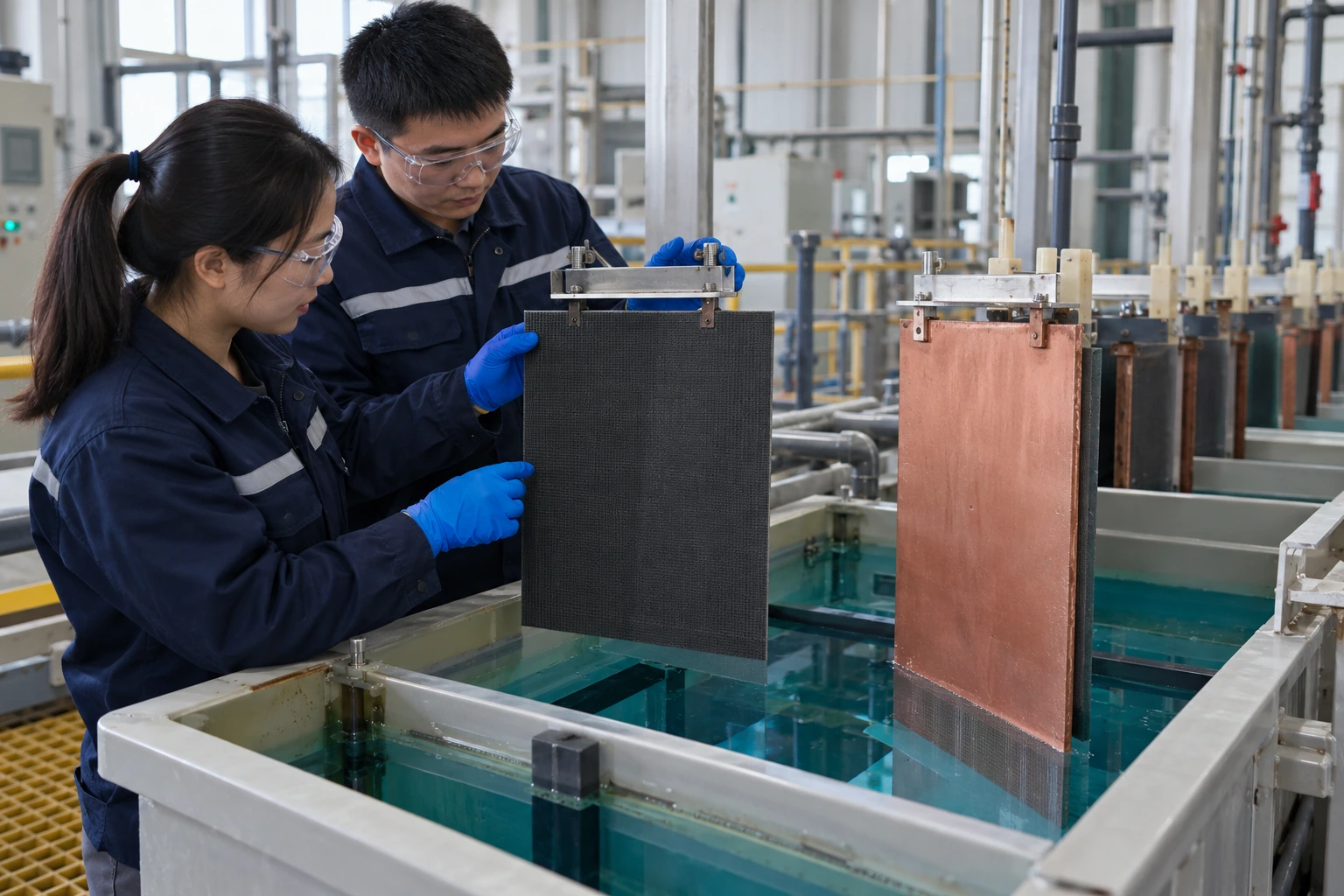
A coated Titanium electrode can serve a specified anodic duty in a copper-recovery system while copper deposits on a suitable cathode. The actual process determines the component requirements.
Which process should your inquiry identify?
Distinguish recovery from other copper electrochemical processes. Electrowinning, electrorefining and plating can use different feed and anode arrangements. State what your equipment actually does.
- Identify feed and desired recovered product.
- Define anode and cathode duties.
| Check | Decision |
|---|---|
| Anodic component | Supports its specified reaction |
| Cathodic component | Supports copper deposition where designed |
An application name cannot replace a process description. Key Takeaway: Specify the cell roles before selecting materials.
2. How Do Titanium electrode Anode and Cathode Roles Differ?
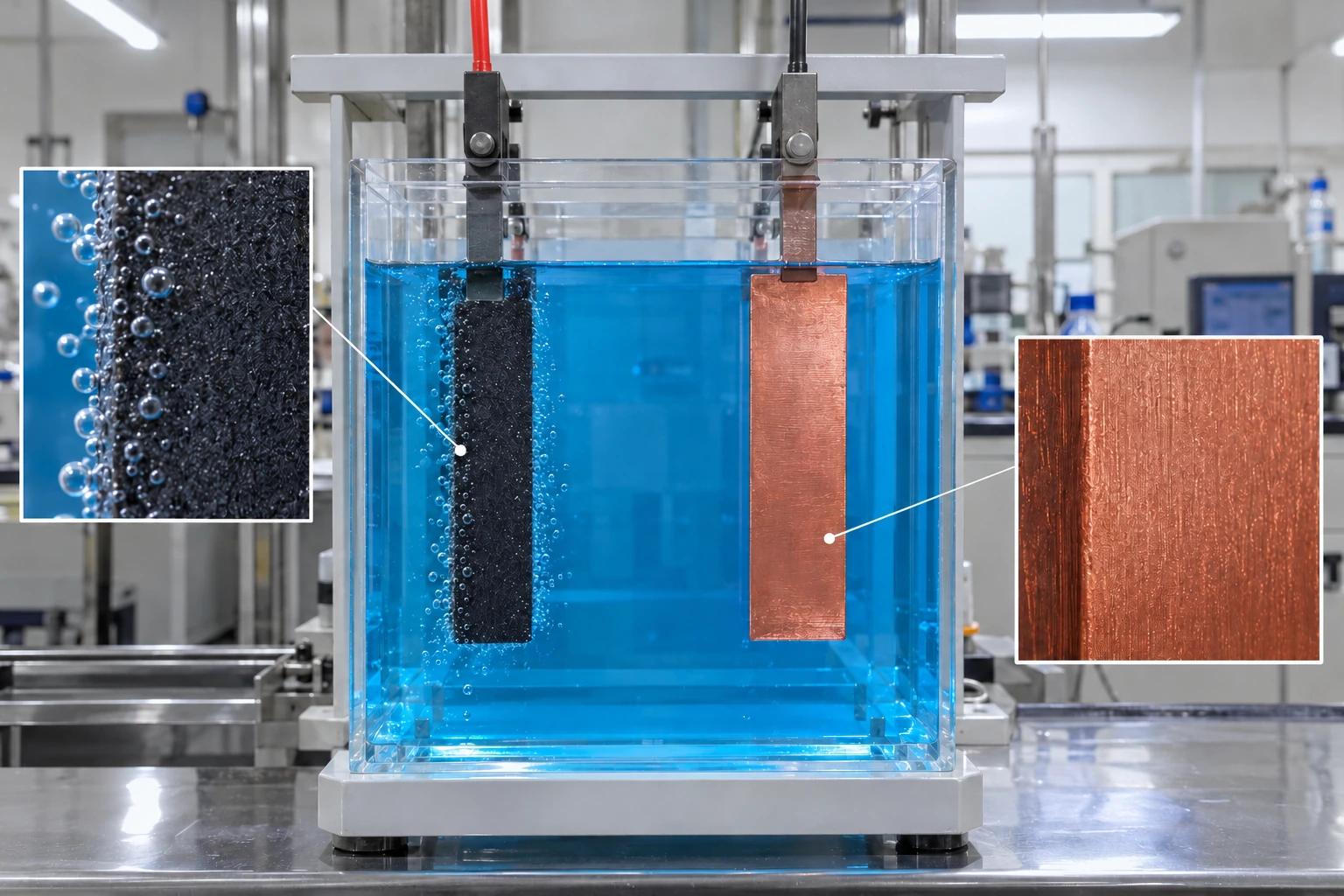
Titanium electrode anode and cathode roles differ because oxidation and reduction occur at different interfaces. A coated anode is not automatically a copper-deposition substrate.
What should the electrical drawing show?
Mark both reactions and current paths. Include polarity and any reversal. Keep the material specification tied to its actual position.
- Identify each electrode and active face.
- Record current and geometry conventions.
| Check | Decision |
|---|---|
| Anode role | Requires an oxidation-duty review |
| Cathode role | Requires a deposition-duty review |
Identical base materials can perform different functions with different surfaces. Key Takeaway: Review each electrode separately.
3. Which Feed Data Does a Titanium electrode Supplier Need?
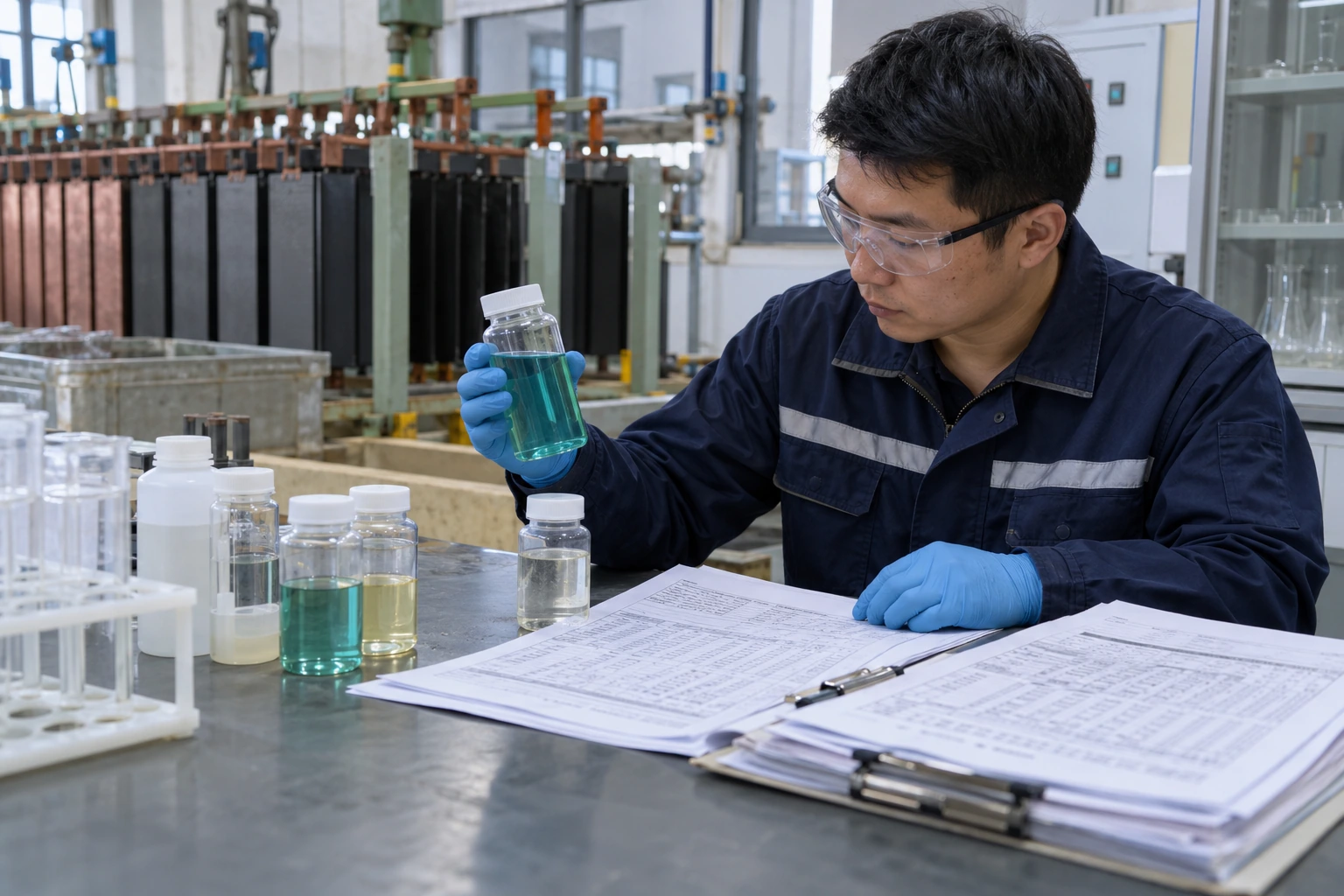
A Titanium electrode supplier needs copper concentration, supporting electrolyte, acidity, impurities, additives and operating ranges. Feed variability can affect both recovery and material selection.
Which feed sample is representative?
Use the liquid the cell will actually receive. Include upstream treatment and recirculation effects. A clean laboratory solution may not represent a process bleed stream.
- Provide normal and limiting composition.
- Identify suspended solids and contaminants.
| Check | Decision |
|---|---|
| Feed analysis | Defines chemical exposure |
| Process history | Explains expected variation |
A coating proposal becomes more useful when the real feed range is known. Key Takeaway: Characterize the intended recovery stream.
4. How Does Copper Concentration Affect Titanium electrode Duty?
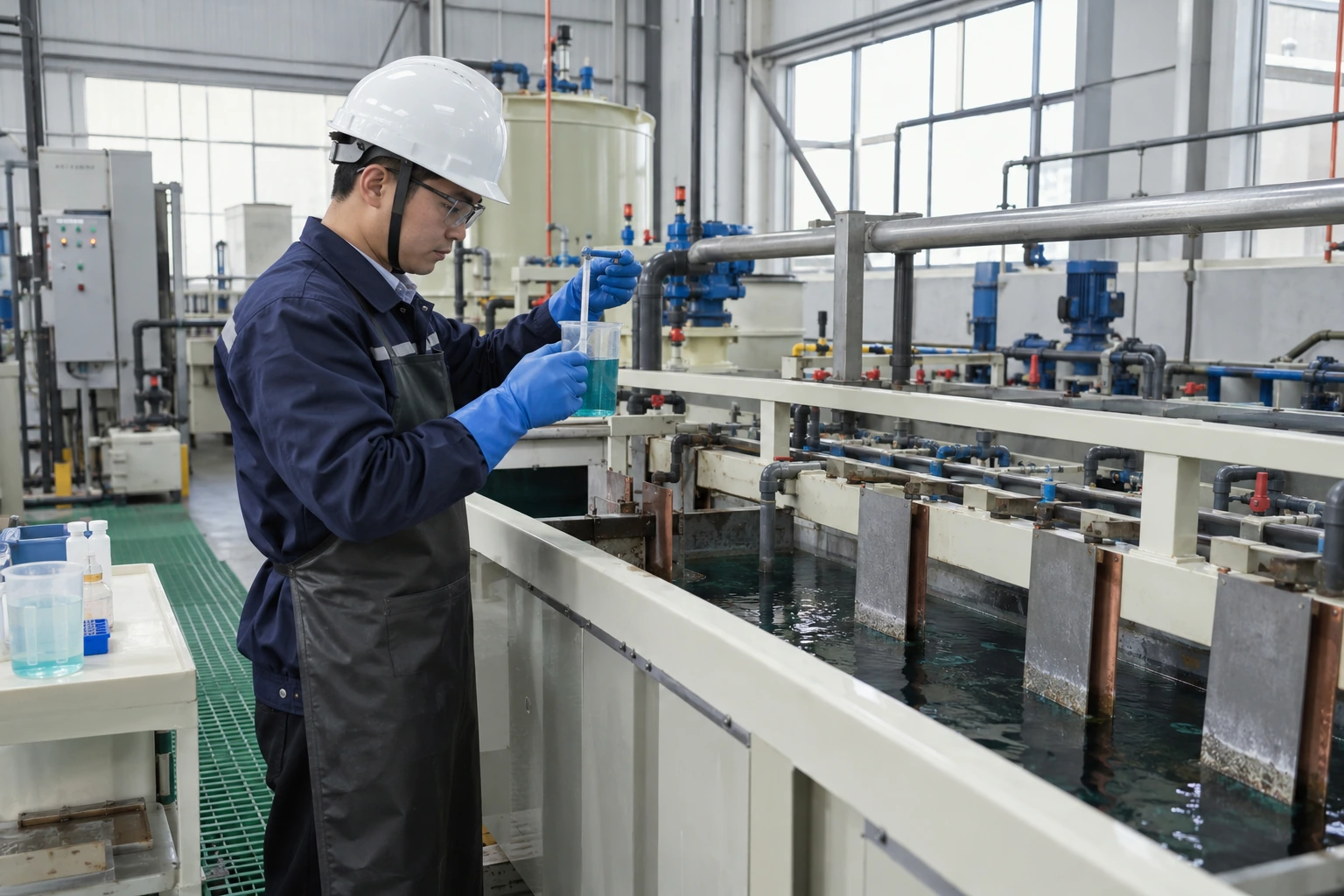
Copper concentration affects the cathodic recovery duty and can change suitable operating conditions in a Titanium electrode system. A fixed electrical setting may not remain appropriate as the solution changes.
What should the application review track?
Follow concentration through the recovery cycle. A custom application review needs the expected starting and ending conditions. Record flow, current and the required residual concentration.
- Measure feed and outlet composition.
- Describe batch or continuous operation.
| Check | Decision |
|---|---|
| Initial concentration | Describes the starting duty |
| Changing concentration | Can alter the operating constraint |
A successful initial run does not establish behavior near the process endpoint. Key Takeaway: Validate the full intended recovery range.
5. Which MMO Titanium electrode Fits the Anodic Reaction?

An MMO Titanium electrode must fit the actual anodic reaction, which may involve oxygen evolution in a defined copper-electrowinning electrolyte. Coating suitability remains chemistry-specific.
What should the supplier demonstrate?
State the reaction and full bath composition. Include current, temperature and impurities. Do not transfer a chlorine-duty rating to another reaction without review.
- Identify the proposed coating designation.
- Define the required operating window.
| Check | Decision |
|---|---|
| Reaction basis | Guides catalyst selection |
| Bath conditions | Define compatibility and loading |
The word MMO covers different active-surface formulations. Key Takeaway: Request a duty-specific coating proposal.
6. How Do Impurities Affect Titanium electrode Selection?

Impurities can affect a Titanium electrode recovery cell through competing reactions, deposits or product-quality changes. Their significance depends on the process chemistry.
Which unknowns should be resolved before testing?
Prioritize constituents that can change the decision. Ask the process team to identify consequential species and variability. Avoid assuming that total copper concentration is a complete feed specification.
- Include relevant metals and organic contamination.
- Record additives and recycled liquids.
| Check | Decision |
|---|---|
| Known impurity range | Supports targeted review |
| Uncharacterized variation | Limits interpretation |
A successful clean-feed trial may not establish suitability for the production stream. Key Takeaway: Test representative impurities and variability.
7. When Should a Platinum Titanium electrode Be Considered?

A platinum-coated Titanium electrode may be considered for a defined specialty duty when its material and operating evidence support that application. It is not a universal upgrade for copper recovery.
What should the comparison include?
Compare qualified candidates under the same bath conditions. State active-layer requirements and substrate compatibility. Evaluate useful recovery and product quality alongside electrical behavior.
- Match geometry and active-area basis.
- Retain application-specific test evidence.
| Check | Decision |
|---|---|
| Material option | Provides a candidate surface |
| Validated duty | Establishes its suitability |
A more expensive active metal does not settle the application choice. Key Takeaway: Choose from evidence for the actual electrolyte.
8. How Does Geometry Affect Titanium electrode Metal Recovery?
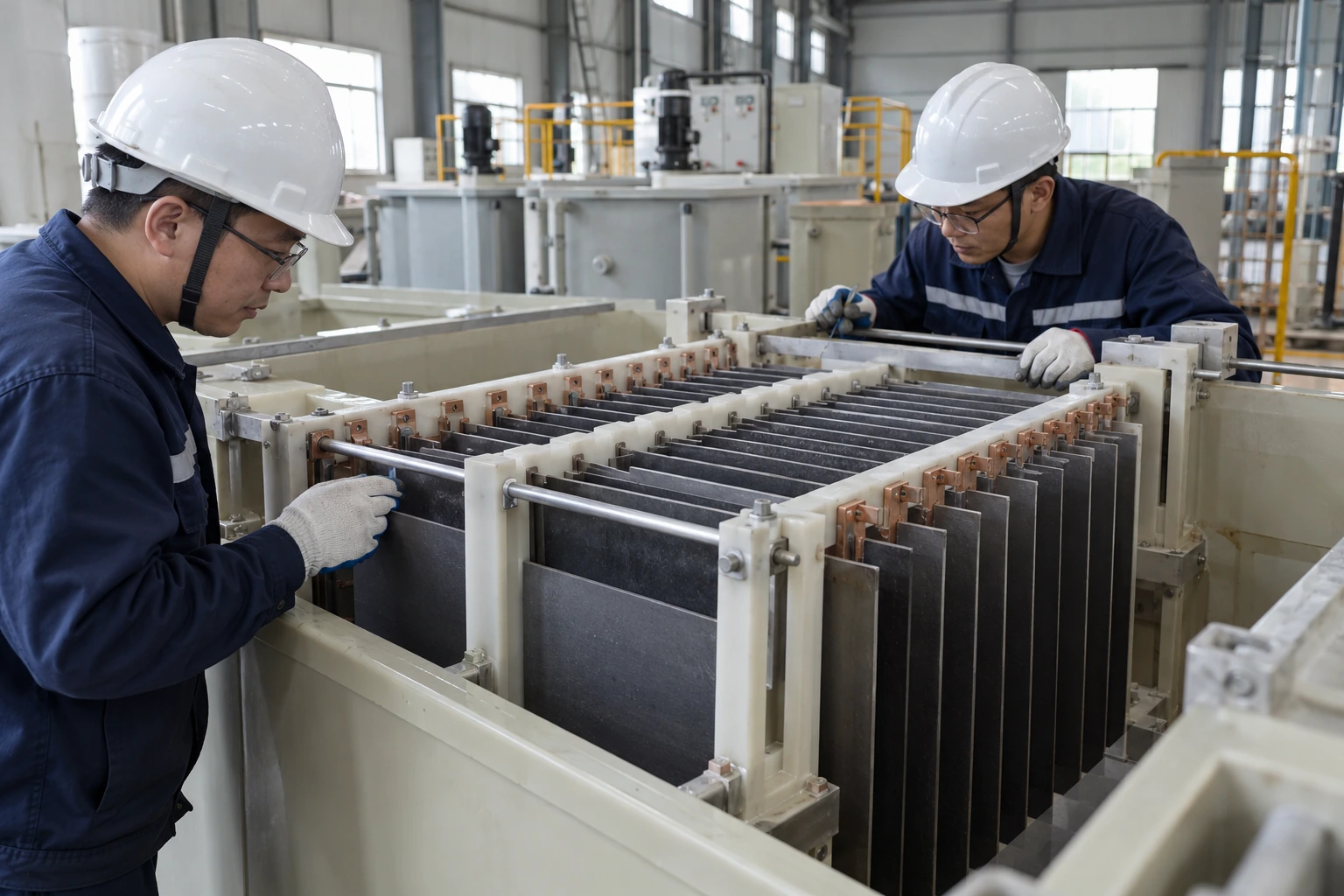
Titanium electrode geometry affects spacing, current distribution, flow and gas release in the recovery cell. Those factors can influence operating behavior and deposit uniformity.
Which interfaces should the drawing control?
Review the complete electrode arrangement. The drawing-based electrode options should be matched to cathode position, supports and connections. Check local alignment rather than only outside dimensions.
- Mark active surfaces and installed gaps.
- Identify flow and gas-release paths.
| Check | Decision |
|---|---|
| Electrode geometry | Defines local interfaces |
| Cell arrangement | Determines their operating context |
A suitable coating can still perform poorly in an unsuitable arrangement. Key Takeaway: Validate geometry with the complete cell.
9. Which Tests Validate a Titanium electrode Recovery Project?

A Titanium electrode recovery trial should measure copper balance, recovered-product quality, electrical input and component condition under defined duty. A visible deposit alone does not quantify recovery.
What makes the result credible?
Keep material and electrical accounting consistent. Define sampling, analysis and collection boundaries. Record losses or unmeasured streams that limit the calculation.
- Measure relevant feed and product quantities.
- Inspect electrodes after testing.
| Check | Decision |
|---|---|
| Recovery measurement | Quantifies the useful result |
| Condition assessment | Checks component behavior |
A process balance is more informative than a photograph of deposited metal. Key Takeaway: Approve recovery claims from traceable measurements.
10. What Titanium electrode Copper-Recovery Data Should You Send?

Send Titanium electrode electrode roles, feed analysis, geometry, current profile and recovery targets for review. Include product-quality and residual-solution requirements.
How can we support the component proposal?
Provide the process basis before choosing the coating. We can review custom electrode requirements; contact us today with the recovery-cell package. Our position is that a recovery claim should follow a measured process balance.
- Identify feed variability and unresolved impurities.
- Define pilot and acceptance criteria.
| Check | Decision |
|---|---|
| Feed package | Defines the chemical duty |
| Validation package | Defines the evidence for selection |
This information connects electrode supply with the recovery result you need. Key Takeaway: Qualify the complete application before series use.
Frequently Asked Questions
Can I use a coated titanium anode as the copper-deposit surface? Not as an automatic assumption. Define the anode and cathode roles in the actual process.
What's the best anode coating for copper recovery? It depends on the anodic reaction and electrolyte. Request an application-specific review.
How do I know if recovery is efficient? Use a defined material and electrical balance with suitable measurements. Visible copper alone is insufficient.
Can I test with a clean synthetic solution only? That can support limited development, but production impurities and variability may require further trials.
Can I use one fixed current throughout a batch? Only if the validated operating plan supports it. Changing concentration can alter the process constraints.