
Inspect a Titanium electrode shipment by recording package condition, confirming part identity and checking critical surfaces and dimensions before installation. A damaged crate can leave only a small visible mark while shifting a tab enough to prevent assembly. Immediate unpacking without records can also weaken the investigation. Use a defined receiving sequence that preserves both the component and the evidence.
1. What Should You Check Before Unpacking a Titanium electrode?

Before unpacking a Titanium electrode, check the package identity, visible condition and receiving documents. Record damage before moving or opening the package where practical.
Which observations are useful?
Capture the condition as received. Photograph the whole package and affected areas. Match shipment references with the expected order and part revision.
- Record visible impact or moisture signs.
- Confirm quantity and package identification.
| Check | Decision |
|---|---|
| Package record | Shows arrival condition |
| Order record | Defines expected delivery |
A later photograph may not establish how the package arrived. Key Takeaway: Preserve receiving evidence before unpacking.
2. How Do You Unpack a Coated Titanium electrode?

Unpack a coated Titanium electrode using its approved handling points and protective supports. Avoid lifting or dragging it by active surfaces or unsupported tabs.
What should technicians know beforehand?
Read the handling method before removing restraints. Some parts need fixtures or more than one person. Keep clean supports ready so the electrode has a safe resting place.
- Identify approved lifting and support points.
- Prevent coated faces from rubbing.
| Check | Decision |
|---|---|
| Handling plan | Protects shape and surface |
| Prepared resting area | Limits secondary damage |
Unpacking can create damage after an otherwise successful shipment. Key Takeaway: Control the part throughout removal.
3. How Do You Record Titanium electrode Shipping Damage?
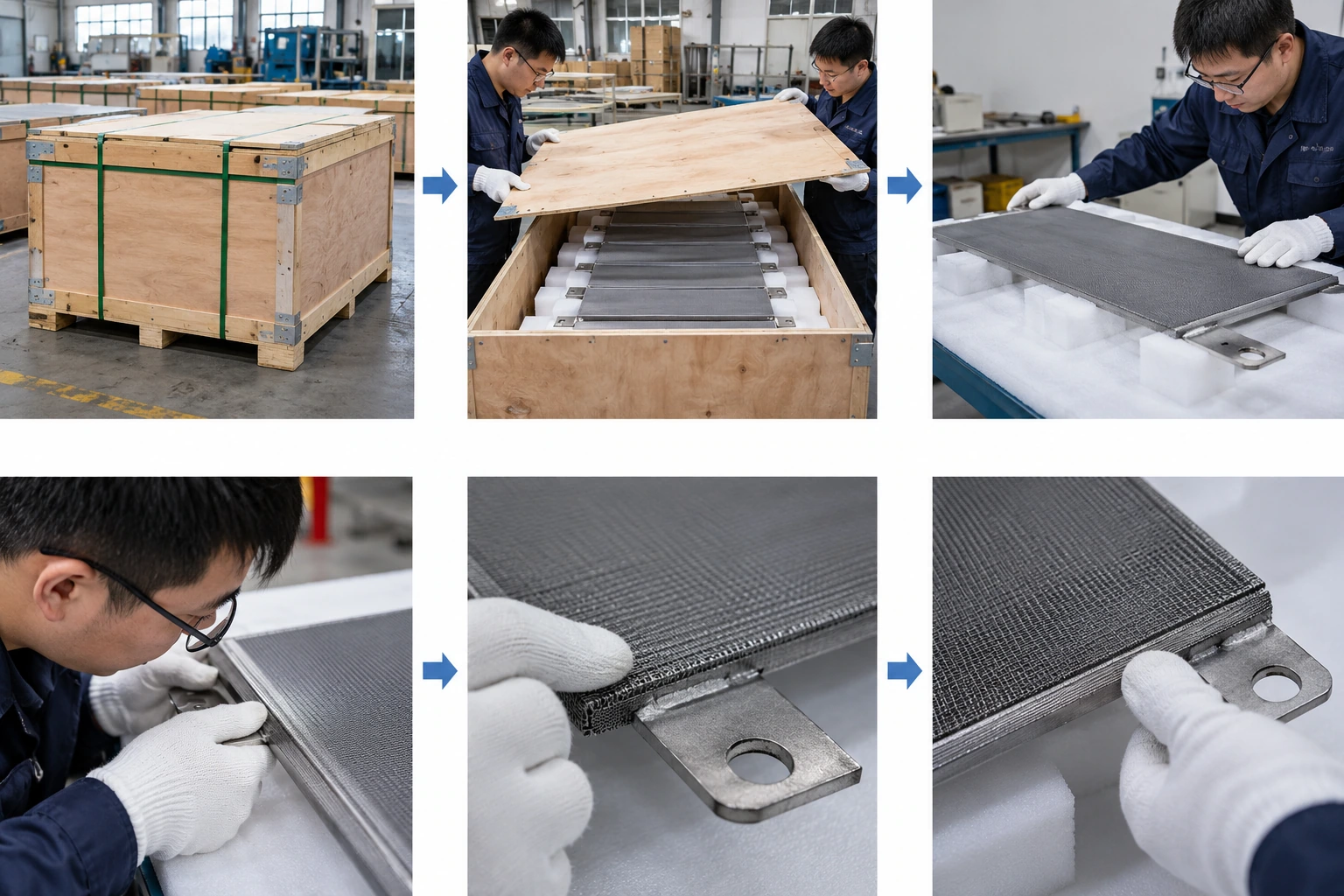
Record Titanium electrode shipping damage with package, whole-part and detailed photographs linked to part identity. Distinguish visible condition from assumptions about cause.
What should a useful evidence set contain?
Show location and context. A close-up gains meaning when its position on the assembly is clear. Keep packaging available until the disposition is agreed.
- Photograph affected and unaffected reference areas.
- Record receipt and inspection timing.
| Check | Decision |
|---|---|
| Context image | Locates the concern |
| Detail image | Shows its visible character |
A precise record supports investigation without requiring an immediate blame decision. Key Takeaway: Document the condition before repair or cleaning.
4. Which Titanium electrode Identity Checks Come Before Installation?

Confirm Titanium electrode part number, revision, quantity and relevant batch identity before installation. A correctly made part for the wrong revision can still be unusable.
Which records should agree?
Compare the delivery with the released specification. A custom engineering review may be needed when documents conflict. Hold unresolved differences instead of assuming the latest-looking drawing is correct.
- Match drawing and order references.
- Identify approved deviations.
| Check | Decision |
|---|---|
| Part identity | Defines what arrived |
| Released specification | Defines what was required |
Identity checks prevent installation of an incompatible but undamaged component. Key Takeaway: Resolve revision differences before release.
5. How Should You Inspect Titanium electrode Active Surfaces?

Inspect Titanium electrode active surfaces for damage, contamination, deposits and unexpected differences against agreed criteria. Color alone cannot establish coating conformity.
How should visual checks be performed?
Use consistent lighting and a protected work surface. Inspect both faces, edges and coated boundaries. Avoid invasive checks that have not been approved.
- Record scratches and exposed regions.
- Compare with the accepted reference condition.
| Check | Decision |
|---|---|
| Visual inspection | Finds visible concerns |
| Technical disposition | Determines their significance |
A visible difference may need assessment rather than an immediate pass or rejection. Key Takeaway: Use the agreed surface criteria.
6. Which Titanium electrode Dimensions Need Receiving Checks?

Receiving checks should cover Titanium electrode dimensions that govern installation, spacing and electrical connection. Focus on critical interfaces rather than measuring every feature without purpose.
Which method is practical?
Use the same datums as the drawing. A mating fixture can support repeatable checks. Record the part's support condition during measurement.
- Check holes, tabs and flatness.
- Verify active and contact boundaries.
| Check | Decision |
|---|---|
| Critical dimensions | Control fit and function |
| Mating fixture | Checks assembly compatibility |
A short targeted inspection can be more useful than an unfocused measurement list. Key Takeaway: Measure the interfaces that determine acceptance.
7. How Do You Protect a Platinum Titanium electrode in Storage?

Store a platinum-coated Titanium electrode with suitable separation, clean supports and protection from physical damage or contamination. Apply the same part-specific discipline to other active coatings.
What should storage preserve?
Keep the approved packaging function intact. Replacement wrapping should not introduce residue or point loads. Retain identification so parts cannot be confused later.
- Prevent active surfaces from contacting each other.
- Support the intended structural areas.
| Check | Decision |
|---|---|
| Surface protection | Limits rubbing and contamination |
| Identity retention | Supports correct later use |
Storage should preserve the condition that receiving inspection accepted. Key Takeaway: Keep protection and identification with the part.
8. When Should a Titanium electrode Shipment Be Quarantined?

Quarantine a Titanium electrode shipment when unresolved identity, damage or conformity concerns prevent release under your procedure. A hold decision should have a clear owner and next step.
What should the hold record say?
Describe the issue without changing the evidence. For water-treatment applications, include relevant installation or operating consequences. Keep held parts separated and protected.
- State the reason and affected quantity.
- Assign the required technical disposition.
| Check | Decision |
|---|---|
| Hold status | Prevents unintended use |
| Disposition process | Defines the path to resolution |
Quarantine is useful when it leads to a documented decision. Key Takeaway: Keep unresolved parts out of installation.
9. How Do You Resolve a Titanium electrode Delivery Discrepancy?

Resolve a Titanium electrode delivery discrepancy by comparing received condition with the agreed specification and evidence. Repair, replacement or acceptance with deviation needs authorized disposition.
What should the supplier receive?
Send one coherent evidence package. Include photographs, measurements and the exact requirement in question. Avoid modifying the part before agreeing the investigation method.
- Identify order, part and batch.
- State the requested resolution and urgency.
| Check | Decision |
|---|---|
| Evidence package | Supports technical review |
| Agreed disposition | Controls the next action |
A clear discrepancy record reduces repeated clarification. Key Takeaway: Resolve the requirement and condition together.
10. What Titanium electrode Receiving Records Should You Keep?

Keep Titanium electrode receiving records that link delivery condition, inspection, disposition and installation location. Those records support later service investigations and spare orders.
How can we support a receiving review?
Send the measured discrepancy with the drawing reference. We can review custom electrode requirements and relevant evidence; contact us today with the receipt package. Our position is that acceptance should remain traceable to the delivered part.
- Retain inspection and release records.
- Link installed units with component batches.
| Check | Decision |
|---|---|
| Receipt history | Documents initial condition |
| Installation history | Supports later traceability |
The record connects shipment quality with field performance. Key Takeaway: Preserve the evidence through installation and service.
Frequently Asked Questions
Can I install an electrode before resolving a shipping concern? Follow your release procedure. Unresolved identity or damage issues may require a hold.
What's the best way to photograph damage? Include the package, whole part and close-up with location context and part identity.
How do I know if a scratch is acceptable? Use the agreed surface criteria and technical disposition. Appearance alone may not establish its functional effect.
Can I repair a bent tab during receiving inspection? Only under an approved disposition. Uncontrolled rework can change geometry and obscure evidence.
Can I discard the packaging immediately? Retain relevant packaging when damage or a discrepancy is under investigation. Follow the agreed handling process.