
A Titanium electrode in electrodialysis supports the electrical circuit through reactions at the stack's end compartments. Ion-selective membranes perform the separation within the stack. Confusing those roles can lead you to specify an electrode against process water that never directly contacts it. Identify the actual rinse chemistry, polarity and end-compartment geometry before requesting a component.
1. What Role Does a Titanium electrode Have in an ED Stack?
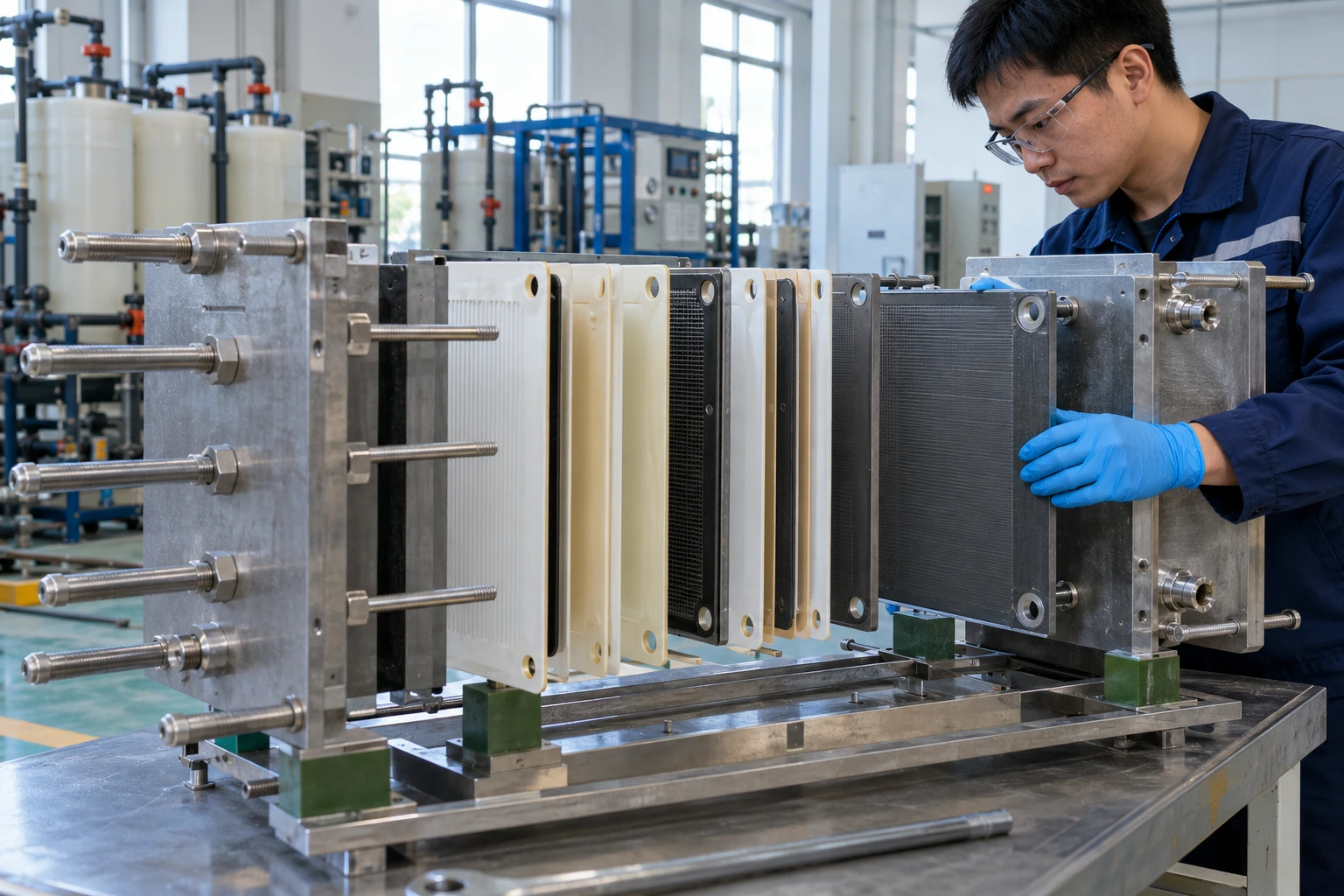
A Titanium electrode in an electrodialysis stack supports the electrode reactions that complete the electrical circuit. Membranes and the applied field govern selective ion transport through the process compartments.
Which role should the supplier review?
Locate the electrode within the whole stack. Identify its compartment and contacted liquid. The process feed and electrode-rinse stream may have different compositions.
- Provide a stack and flow diagram.
- Identify both electrode roles.
| Check | Decision |
|---|---|
| Electrode compartment | Contains the end reactions |
| Membrane compartments | Provide selective separation paths |
A membrane-process requirement does not fully define the electrode duty. Key Takeaway: Specify the end-compartment conditions.
2. How Does Titanium electrode Rinse Differ from Process Flow?
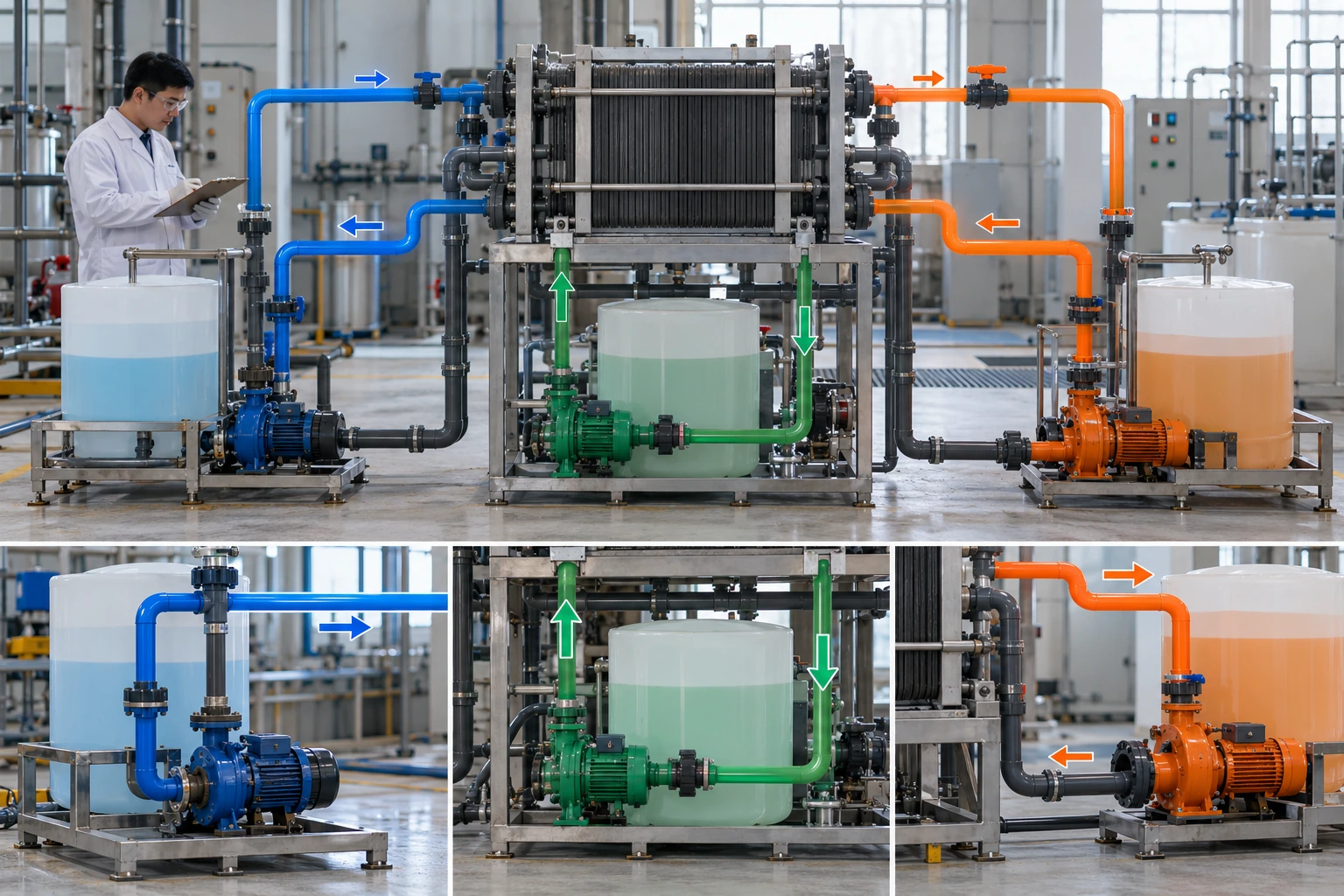
Titanium electrode rinse flow serves the electrode compartments and may differ from dilute and concentrate process streams. Actual circuit arrangements depend on the stack design.
What should the diagram make clear?
Trace each liquid loop separately. Show supply, return, makeup and disposal paths. Do not assume that every design uses the same number of tanks or shared circuits.
- Identify which liquids contact each electrode.
- Mark separation and connection points.
| Check | Decision |
|---|---|
| Process streams | Carry the separation duty |
| Rinse circuit | Supports electrode-compartment operation |
A shared process label can conceal different liquid exposure. Key Takeaway: Use the actual equipment flow diagram.
3. Which Chemistry Reaches the Titanium electrode?
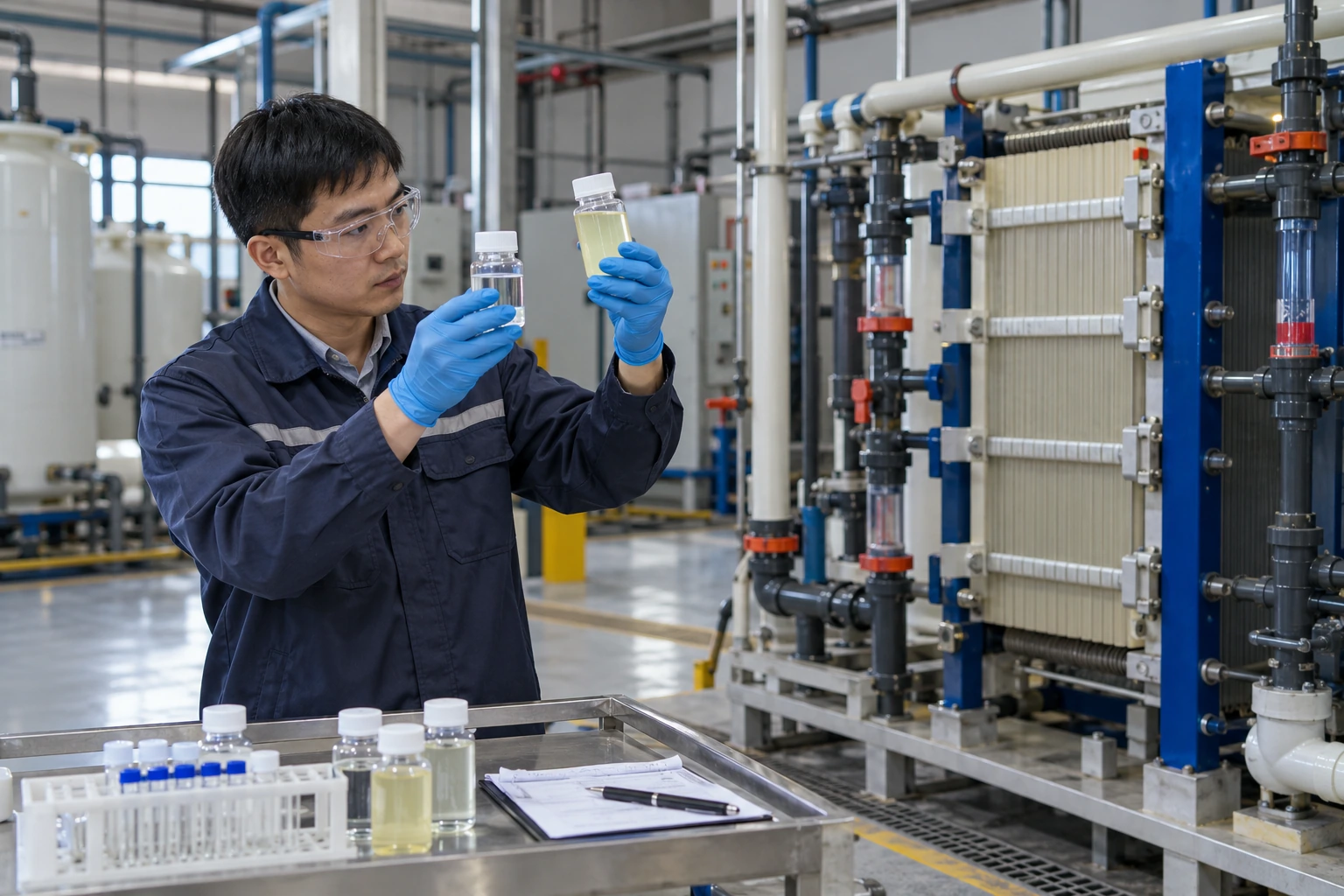
The chemistry reaching a Titanium electrode is the relevant basis for coating selection, including changes within its rinse circuit. Process-feed analysis alone may be insufficient.
Which liquid should be sampled?
Sample the actual electrode circuit. Include normal composition, contamination pathways and operating variation. Record cleaning and shutdown exposure.
- Provide rinse and process analyses separately.
- Identify makeup and crossover possibilities.
| Check | Decision |
|---|---|
| Feed analysis | Describes the separation feed |
| Rinse analysis | Describes direct electrode exposure |
Selection can be misdirected when the wrong stream is used as its basis. Key Takeaway: Review the contacted liquid.
4. How Do You Specify Titanium electrode End Compartments?
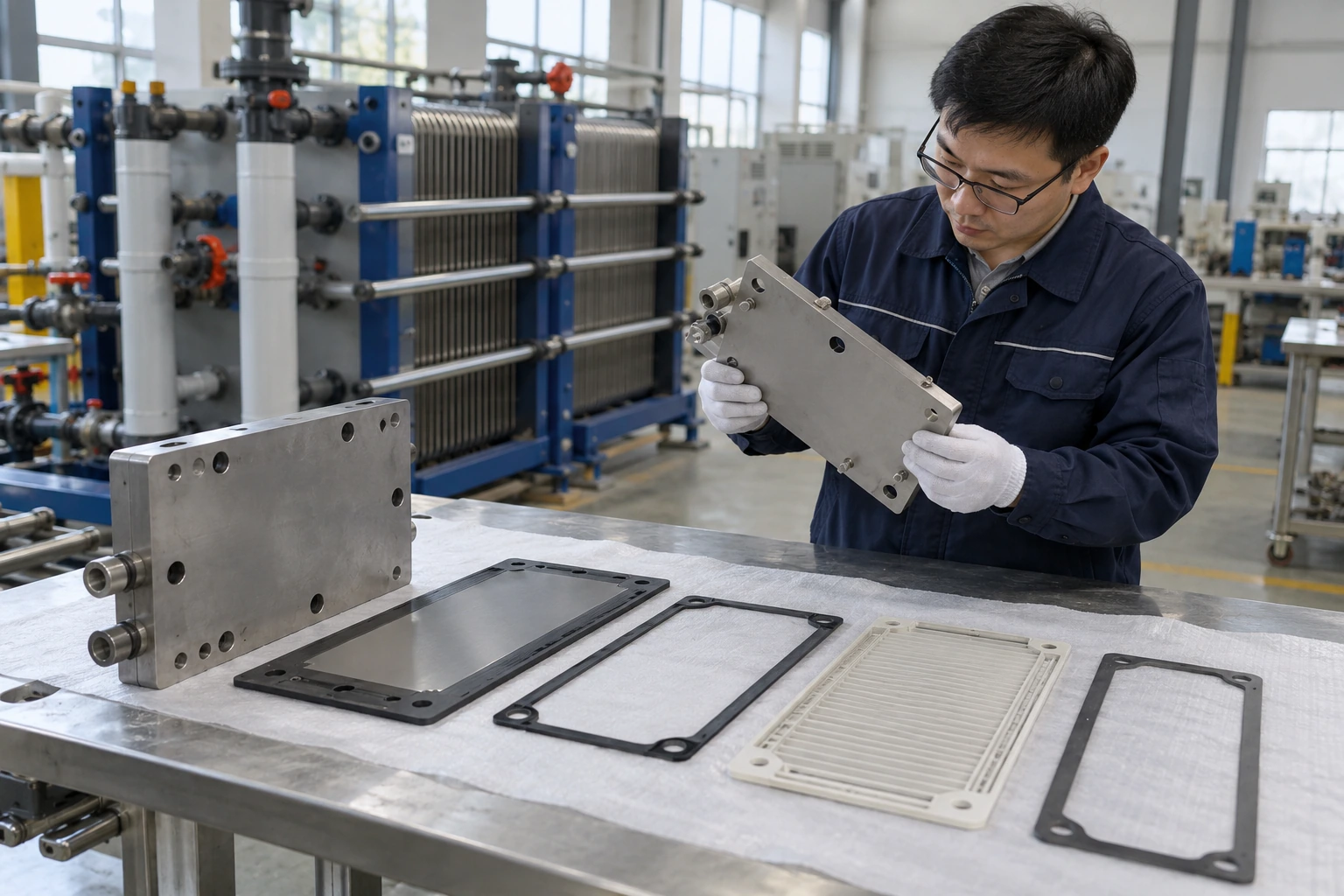
Specify Titanium electrode end compartments through electrode dimensions, gasket interfaces, flow passages, supports and electrical connections. The complete stack arrangement defines those requirements.
Which drawings help the supplier?
Include the mating components. A custom stack-interface review needs more than the plate outline. Mark active boundaries, contact zones and required clearances.
- Show end plates, seals and spacers.
- Define installation orientation and polarity.
| Check | Decision |
|---|---|
| Electrode drawing | Defines the component |
| End-compartment drawing | Defines its integration |
A correctly manufactured plate can still fail to fit an incomplete interface specification. Key Takeaway: Review the complete end assembly.
5. Which Coating Fits an Electrodialysis Titanium electrode?

An electrodialysis Titanium electrode coating should fit rinse chemistry, electrode reaction and operating polarity. A generic membrane-stack description does not establish those conditions.
What should the coating review include?
State both routine and exceptional duty. Include current, temperature, cleaning and any reversal. Ask for evidence relevant to that combination.
- Identify coating designation and exposure limits.
- Define the actual current profile.
| Check | Decision |
|---|---|
| Chemical basis | Guides compatibility |
| Electrical basis | Defines reaction and loading |
Coating selection depends on the end-compartment duty rather than the application name alone. Key Takeaway: Qualify the stated operating window.
6. How Should a Titanium electrode Rinse Loop Manage Gas?
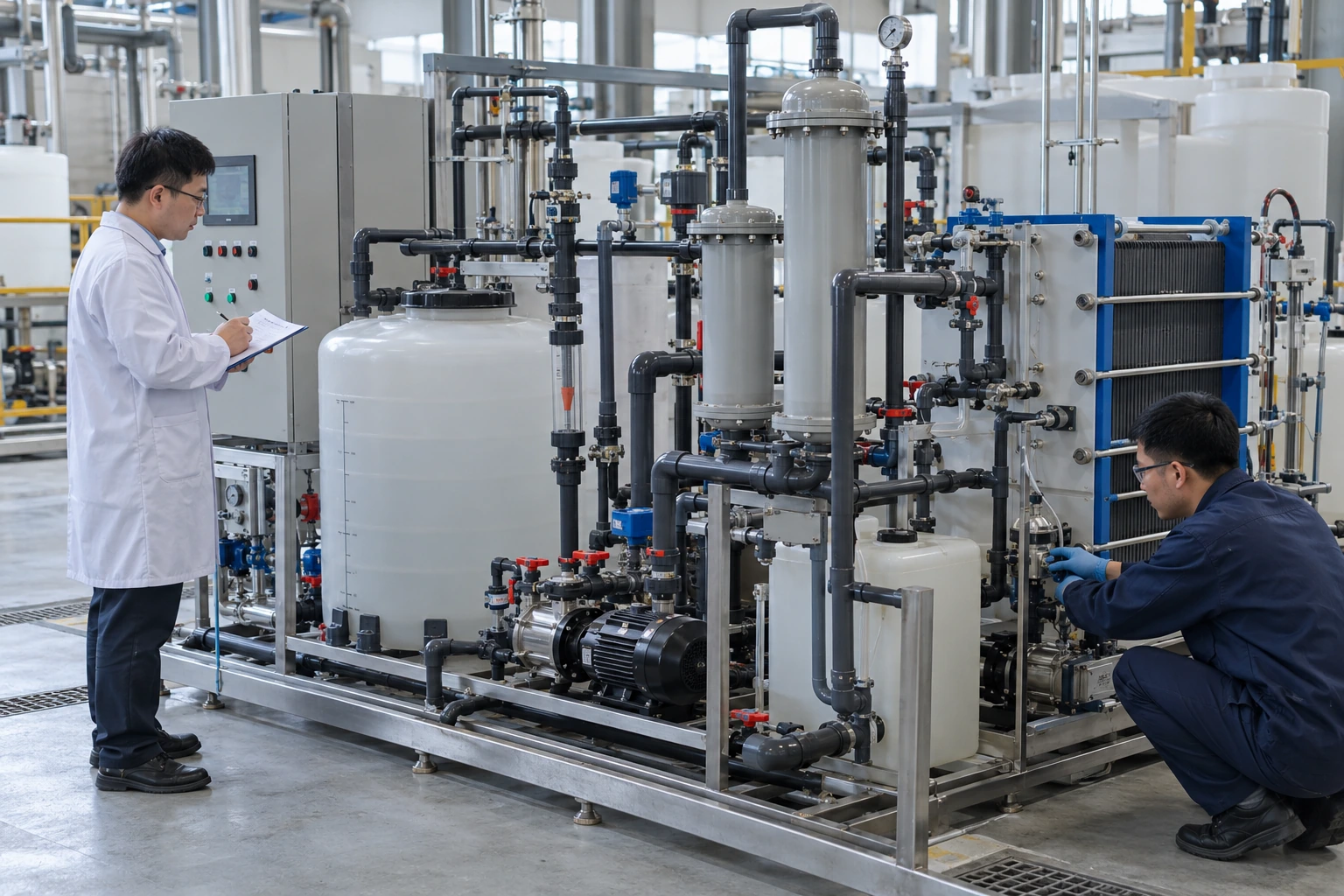
A Titanium electrode rinse circuit needs engineered management of gases and reaction products from its electrode compartments. Circuit sharing and gas routing require design-specific review.
Which responsibilities should be assigned?
Give the rinse and gas systems a defined owner. The stack designer should specify separation, monitoring and fault behavior. An electrode supplier's component proposal does not replace that work.
- Identify expected reactions and gas products.
- Document handling interfaces and controls.
| Check | Decision |
|---|---|
| Electrode specification | Defines component duty |
| Rinse-system design | Controls the surrounding process |
A suitable coating cannot make an unreviewed rinse arrangement acceptable. Key Takeaway: Review the complete circuit before commissioning.
7. Does EDR Require a Reversible Titanium electrode?

EDR operation requires a Titanium electrode suitable for the actual directional duty imposed by the system. Reversal of a membrane process does not automatically qualify every electrode coating.
Which data should be provided?
Send the complete reversal profile. Include direction, current, timing and transitions. Review corresponding rinse and process-routing behavior with the equipment designer.
- Identify fixed and reversing components.
- Define qualification in both directions where needed.
| Check | Decision |
|---|---|
| Controller capability | Can switch operating states |
| Electrode qualification | Establishes material suitability |
A reversal setting is not a material rating. Key Takeaway: Validate the actual bidirectional duty.
8. How Do Deposits Affect a Titanium electrode Rinse Circuit?
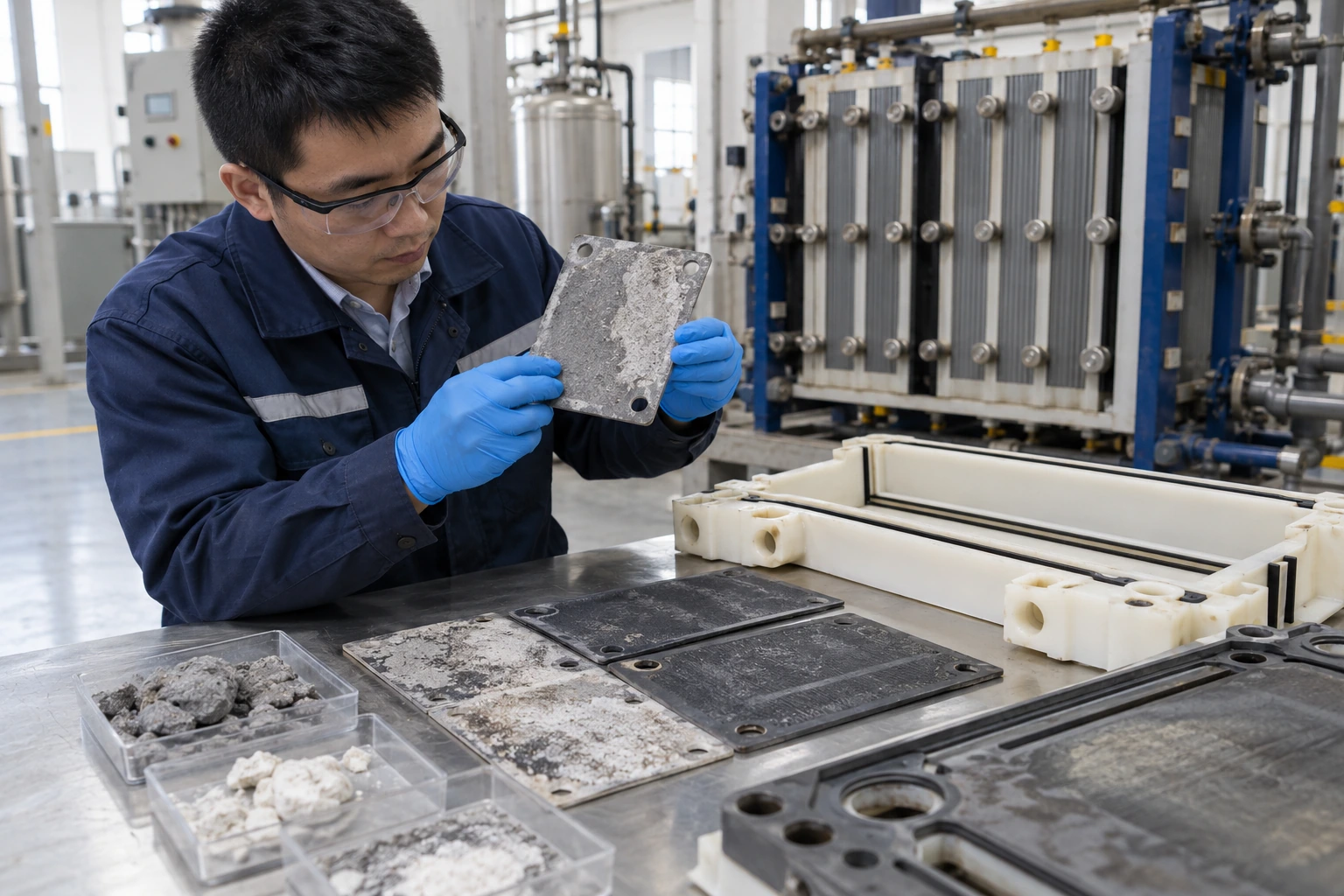
Deposits in a Titanium electrode rinse circuit can affect flow, local conditions and maintenance. Their cause and treatment depend on rinse chemistry and electrode roles.
How should a fouling review proceed?
Locate the deposit before selecting a remedy. In water-treatment applications, distinguish electrode deposits from membrane or piping fouling. Use a compatible approved cleaning procedure.
- Record deposit location and composition where relevant.
- Compare chemistry and operating history.
| Check | Decision |
|---|---|
| Deposit evidence | Identifies the affected region |
| Circuit records | Provide operating context |
One cleaning method may not suit every component in the stack. Key Takeaway: Use component-specific maintenance.
9. What Should an ED Titanium electrode Trial Verify?
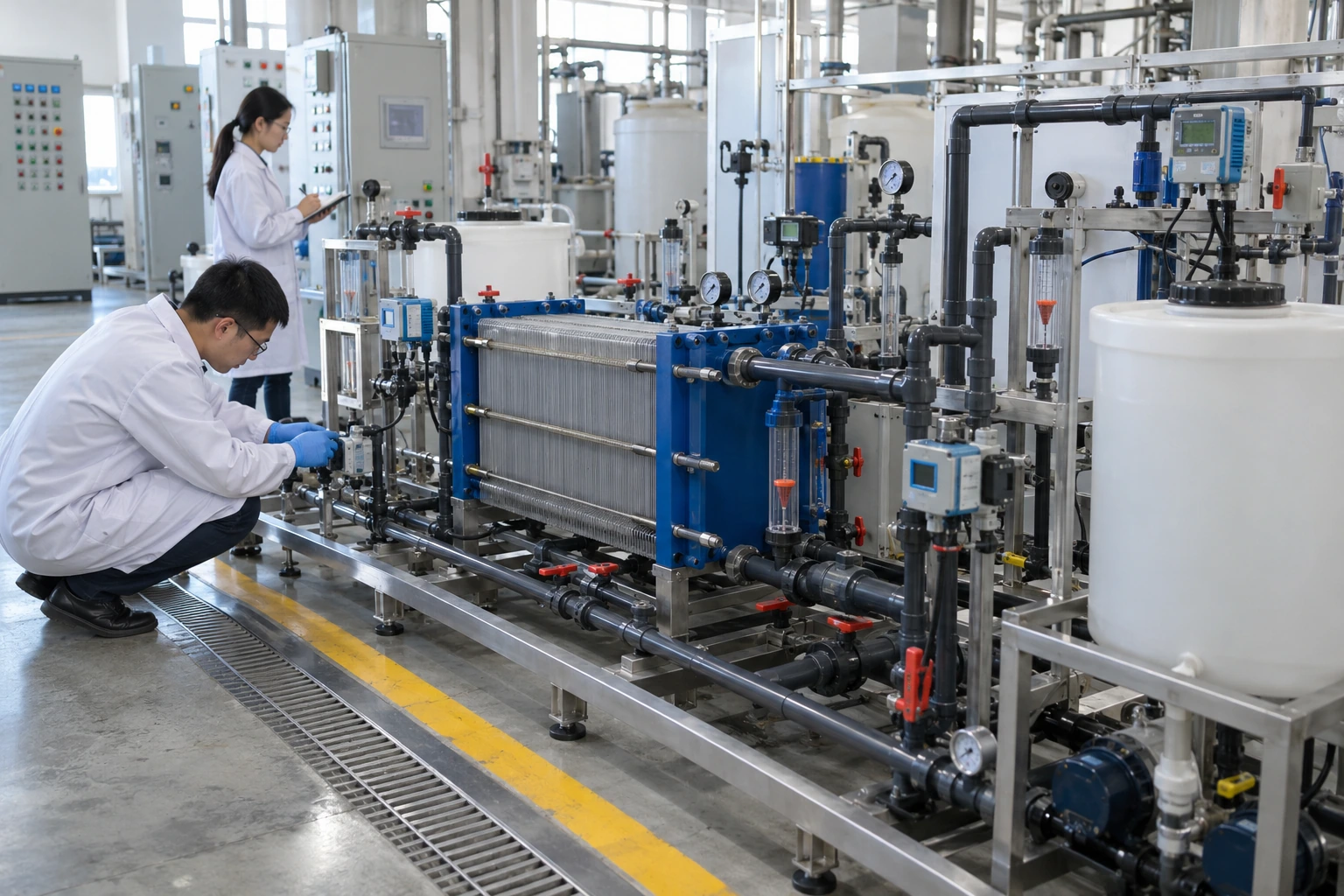
An ED Titanium electrode trial should verify fit, electrical behavior, rinse conditions and relevant part condition under defined duty. Complete-stack separation performance remains a system measurement.
Which acceptance boundaries should be documented?
Separate component checks from stack results. Record what the electrode trial can establish and which outcomes depend on membranes or hydraulics. Keep methods consistent.
- Inspect interfaces and active surfaces.
- Record chemistry, current and temperature.
| Check | Decision |
|---|---|
| Component acceptance | Checks the electrode |
| Stack acceptance | Checks the integrated process |
A successful component test cannot independently prove the whole separation process. Key Takeaway: Approve each level with appropriate evidence.
10. What Titanium electrode ED Data Should You Provide?
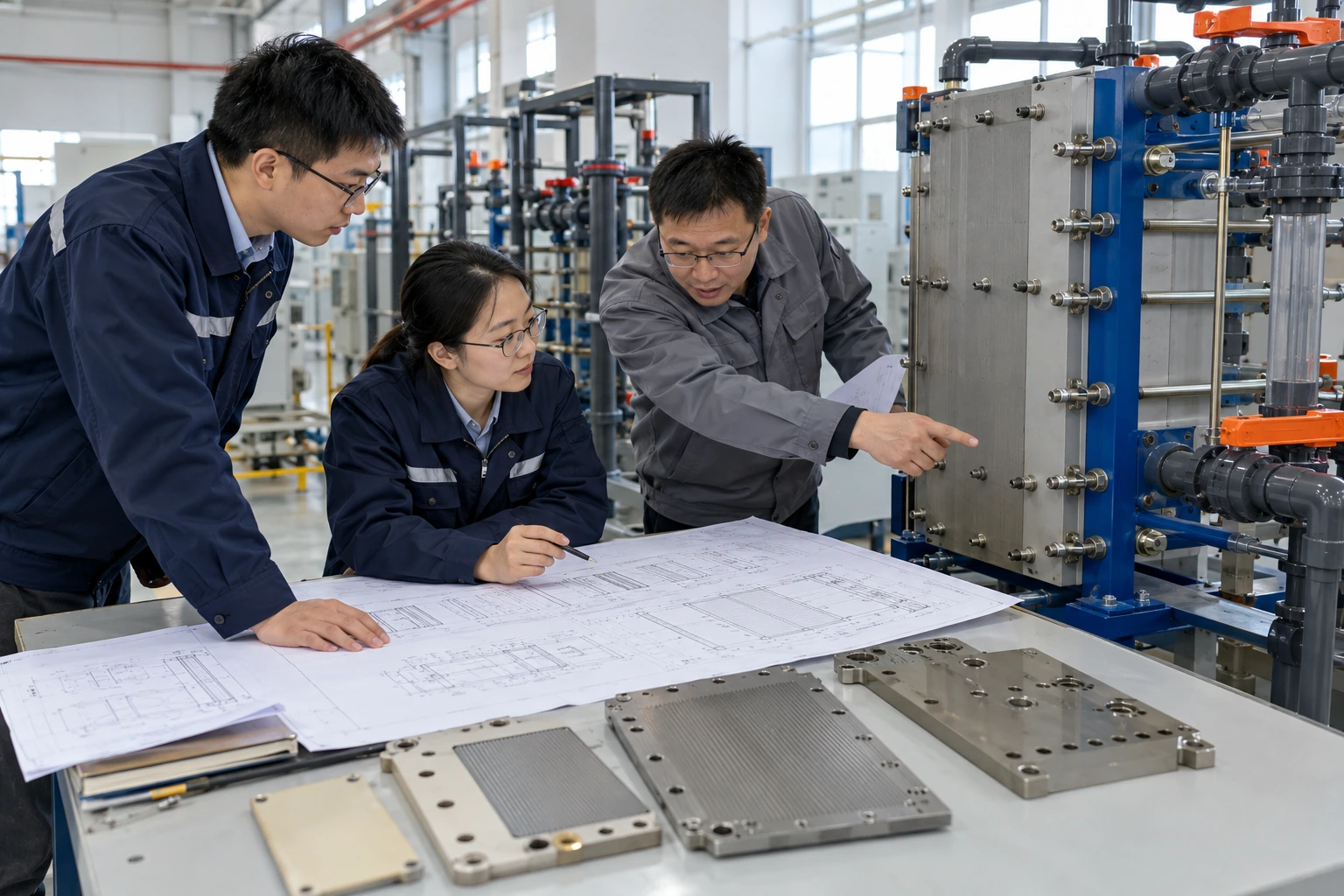
Provide Titanium electrode end-compartment drawings, rinse chemistry, polarity profile, current and acceptance requirements for review. Include the stack designer's interface specification.
How can we support the project?
Send the rinse basis with the electrode geometry. We can review custom component requirements; contact us today with the stack-interface package. Our position is that electrode selection should follow the liquid and duty it actually encounters.
- Identify unresolved rinse and reversal conditions.
- Define prototype and inspection requirements.
| Check | Decision |
|---|---|
| Interface package | Defines mechanical integration |
| Duty package | Defines electrochemical exposure |
The package connects electrode manufacturing with the stack's real operating conditions. Key Takeaway: Validate the component within its intended end compartment.
Frequently Asked Questions
Can I specify an ED electrode from process-feed analysis alone? Not always. The electrode may contact a separate rinse solution with different chemistry.
What's the best rinse-circuit arrangement? It depends on the stack design. Separation, gas handling and compatibility require system-specific engineering.
How do I know if an electrode supports EDR reversal? Request qualification for the actual waveform, chemistry and directional duty.
Can I use one cleaning method for electrodes and membranes? Only if approved for all affected components. Their material limits may differ.
Can I infer separation performance from an electrode test? Not by itself. Membranes, flow distribution and the complete stack also determine separation.