
Measure Titanium electrode hydrogen output by defining whether you need gas production rate or dissolved hydrogen concentration, then using a validated method for that quantity. Two water samples can give different readings because one sat uncapped while the other was measured immediately. Treating that difference as electrode performance can send your design in the wrong direction. Control sampling, temperature and instrument suitability before comparing modules.
1. What does Titanium electrode hydrogen output mean?
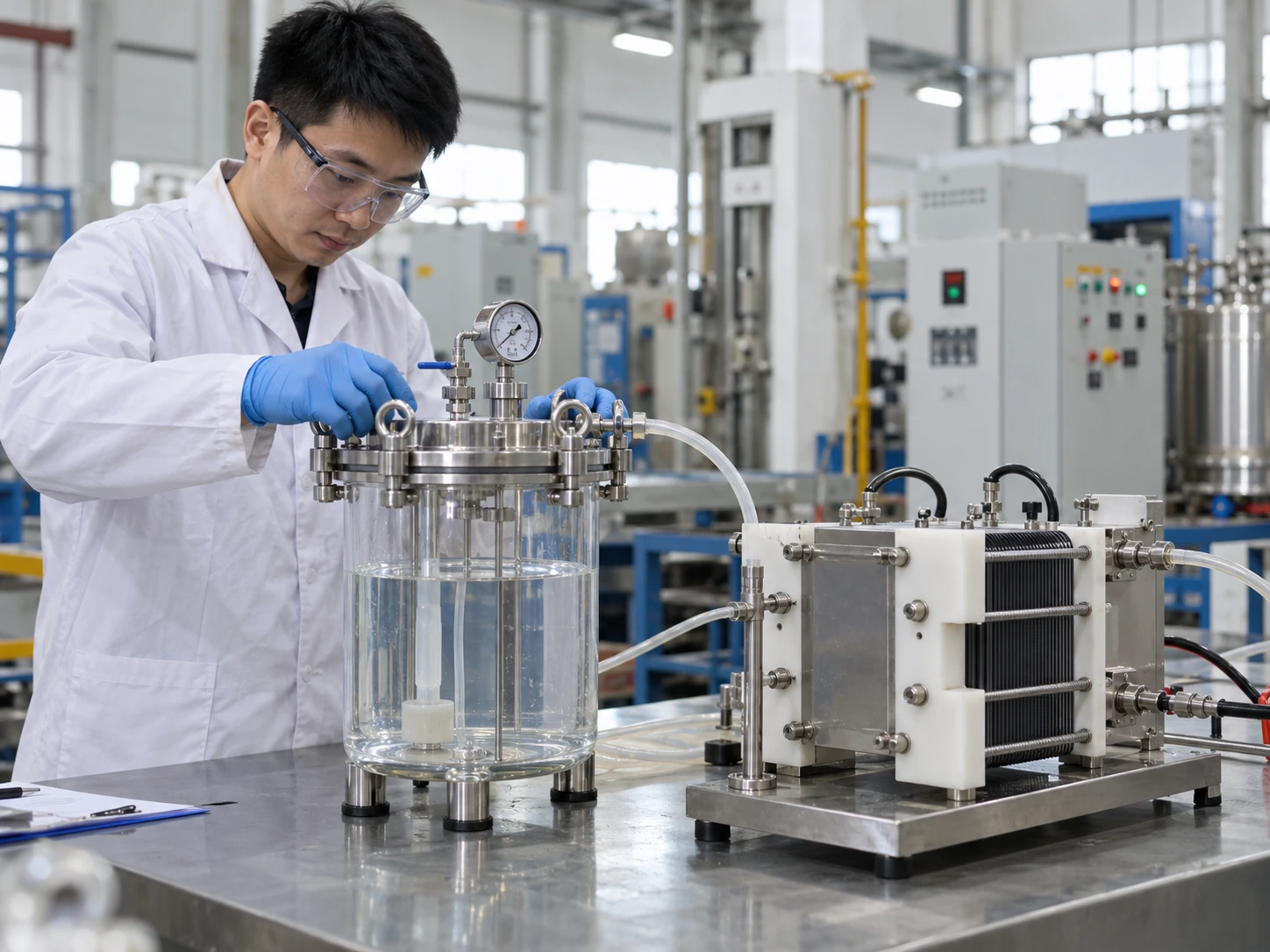
Titanium electrode hydrogen output can mean generated gas quantity, gas flow or dissolved concentration, and these are different measurements. State which one your equipment or product specification requires.
Which result will your customer accept?
Name the measurand. Use explicit units and sampling boundaries before running a trial. A concentration value without flow or collection context does not describe total production.
- Separate dissolved concentration from gas production rate.
- Identify sampling point and operating state.
| Check | Decision |
|---|---|
| Dissolved concentration | Hydrogen in a defined liquid sample |
| Gas production rate | Gas quantity over time |
Choose instrumentation after defining the required result. Key Takeaway: A useful output claim starts with an unambiguous measurement quantity.
2. Are Titanium electrode gas flow and dissolved gas equal?
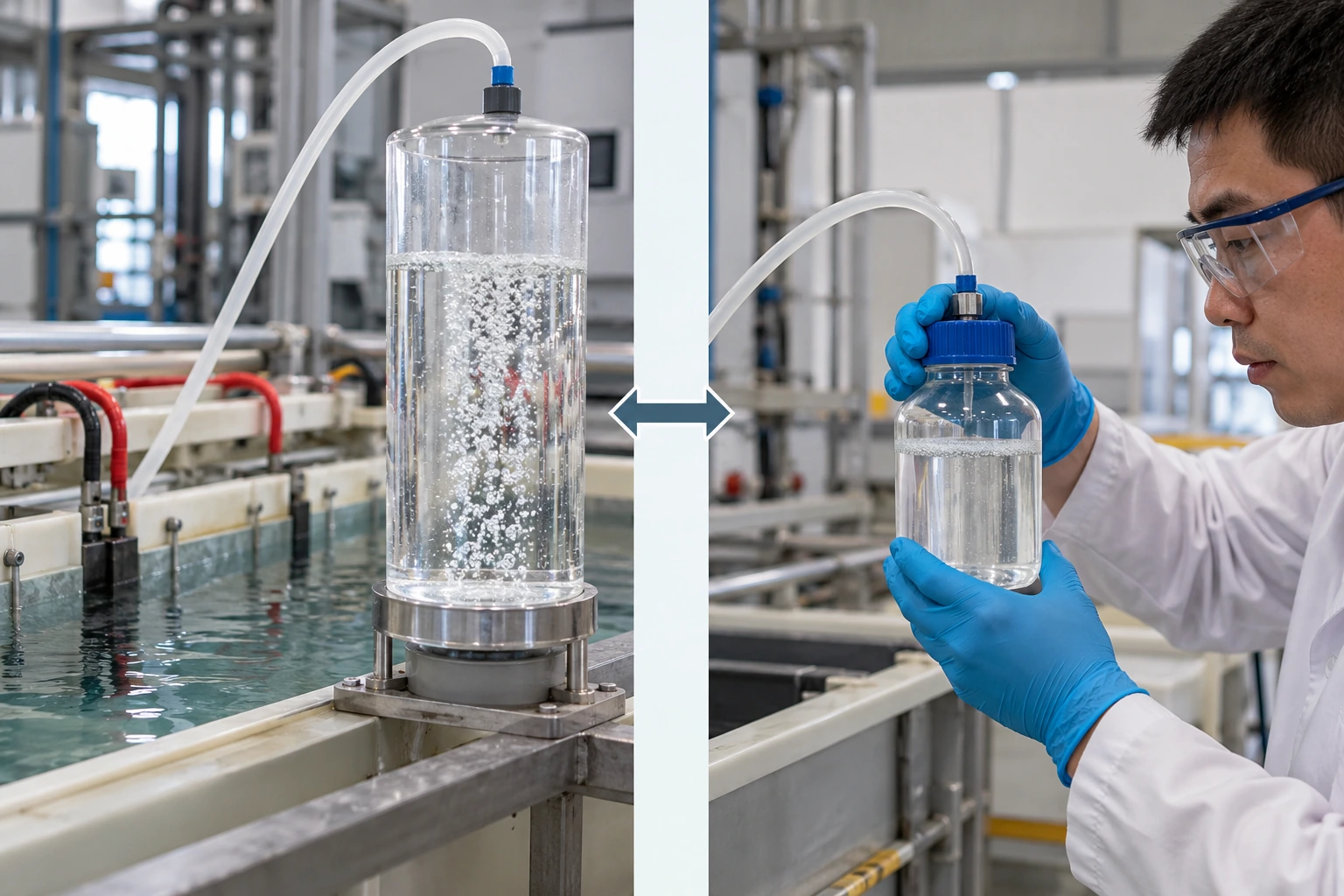
Titanium electrode gas flow and dissolved hydrogen are not equal because generated hydrogen can partition between gas and liquid phases. Transfer, pressure, temperature and residence time affect that partition.
Where does the generated gas go?
Draw the measurement boundary. Identify vented gas, dissolved product and any unmeasured pathways. Do not treat visible bubbling as a quantitative dissolved-hydrogen result.
- Record operating pressure and temperature.
- Distinguish generated gas from retained dissolved gas.
| Check | Decision |
|---|---|
| Visible bubbles | Qualitative gas observation |
| Validated dissolved measurement | Quantifies the defined liquid sample |
Keep phase behavior in your interpretation. Key Takeaway: More visible bubbles do not automatically mean higher dissolved concentration.
3. Can ORP measure Titanium electrode hydrogen concentration?

ORP cannot serve as a universal direct concentration measurement for Titanium electrode hydrogen output. Redox potential depends on chemical conditions and electrode response, so any conversion needs application-specific validation.
Can a negative ORP value become a hydrogen claim?
Use a hydrogen-specific method. Select a suitable calibrated sensor or validated analytical approach for your matrix. Keep ORP as a separate measurement unless a justified method establishes a defined relationship.
- Record pH and relevant matrix conditions.
- Avoid unsupported ORP-to-concentration conversions.
| Check | Decision |
|---|---|
| ORP reading | Measures a redox-potential response |
| Hydrogen method | Targets the specified hydrogen quantity |
Choose a method that answers the stated question. Key Takeaway: A redox reading alone cannot substantiate a dissolved-hydrogen concentration.
4. How should Titanium electrode water samples be collected?

Titanium electrode water samples should be collected with a validated procedure that controls gas loss and sampling delay. Container, headspace and transfer steps can change the measured concentration.
What happens between the outlet and the sensor?
Control the sampling chain. Include sample location, container and timing in a custom measurement-interface review. Use the laboratory or instrument supplier's validated method rather than an improvised open-cup comparison.
- Record collection and measurement times.
- Use consistent transfer and containment conditions.
| Check | Decision |
|---|---|
| Uncontrolled handling | Can change sample concentration |
| Defined handling protocol | Supports comparable results |
Treat sampling as part of the measurement method. Key Takeaway: Do not assign a handling loss to the electrode.
5. Why record Titanium electrode sample temperature?
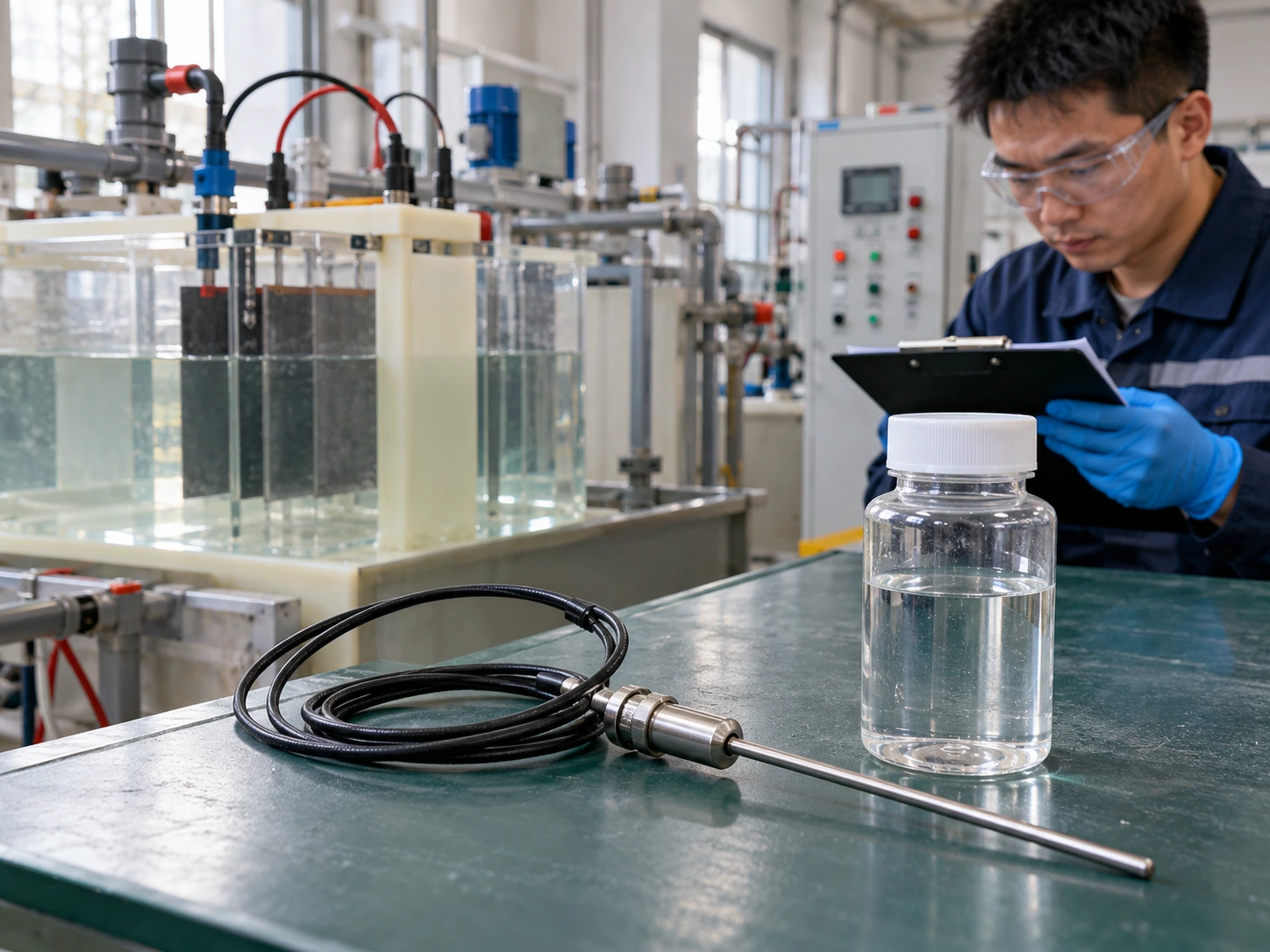
Titanium electrode sample temperature must be recorded because it affects gas-liquid behavior and may affect sensor calibration or response. Compare results under a defined temperature basis.
Were the samples measured under matching conditions?
Keep temperature with every reading. Follow the method's calibration and compensation instructions. Do not apply an assumed correction without confirming that it fits the selected sensor and sample matrix.
- Record process and measurement temperatures.
- Allow required instrument stabilization.
| Check | Decision |
|---|---|
| Temperature omitted | Comparison remains incomplete |
| Temperature documented | Supports method-aware interpretation |
Review temperature before interpreting small performance differences. Key Takeaway: A concentration comparison needs a thermal context.
6. Can tubing alter Titanium electrode hydrogen results?
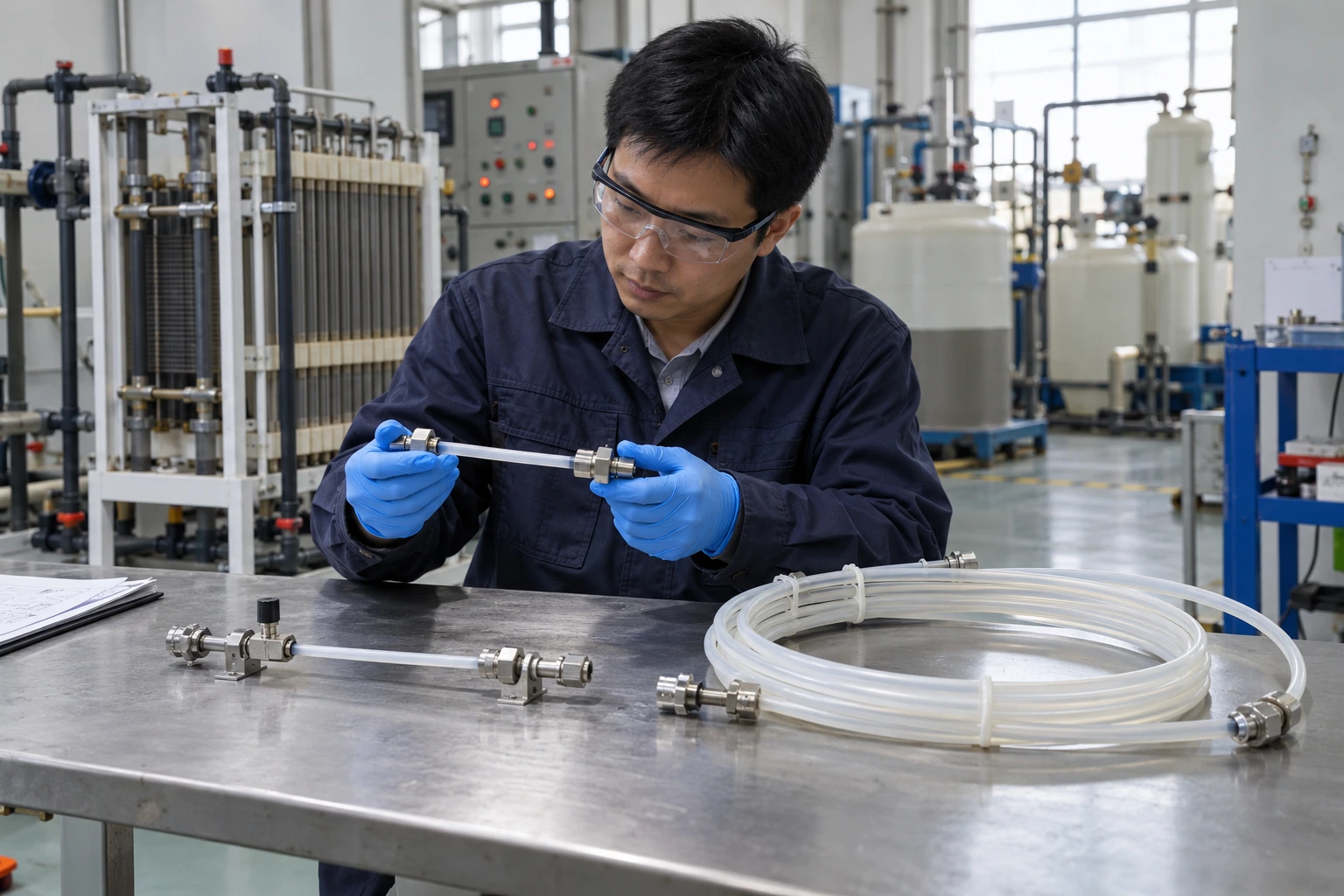
Tubing can alter Titanium electrode hydrogen results through gas transfer, dead volume or residence-time effects depending on material and arrangement. Sampling hardware therefore belongs in the validated configuration.
Did the sampling line change between tests?
Fix the transfer path. Record material, length and flow conditions for the sample line. If hardware changes, assess its influence before comparing a new reading with the old baseline.
- Identify fittings and potential leakage points.
- Keep sample residence time controlled.
| Check | Decision |
|---|---|
| Transfer path changed | May change the measured sample |
| Transfer path controlled | Reduces a comparison variable |
Include sampling hardware in change control. Key Takeaway: The result describes the sample delivered to the instrument, not an idealized outlet.
7. What validates Titanium electrode hydrogen measurements?

Titanium electrode hydrogen measurements need calibration, interference review and a method suitable for the intended concentration range. Instrument resolution alone does not establish accuracy or selectivity.
What evidence supports the reported number?
Ask for method performance. Review calibration checks, relevant interferences and reporting limits with the laboratory or instrument supplier. Keep the stated uncertainty with comparative results.
- Record calibration status and instrument identity.
- Check suitability for the actual liquid matrix.
| Check | Decision |
|---|---|
| Display resolution | Smallest displayed increment |
| Validated method performance | Supports measurement confidence |
Compare differences against the method's capability. Key Takeaway: More decimal places do not create stronger performance evidence.
8. How do you compare Titanium electrode operating settings?
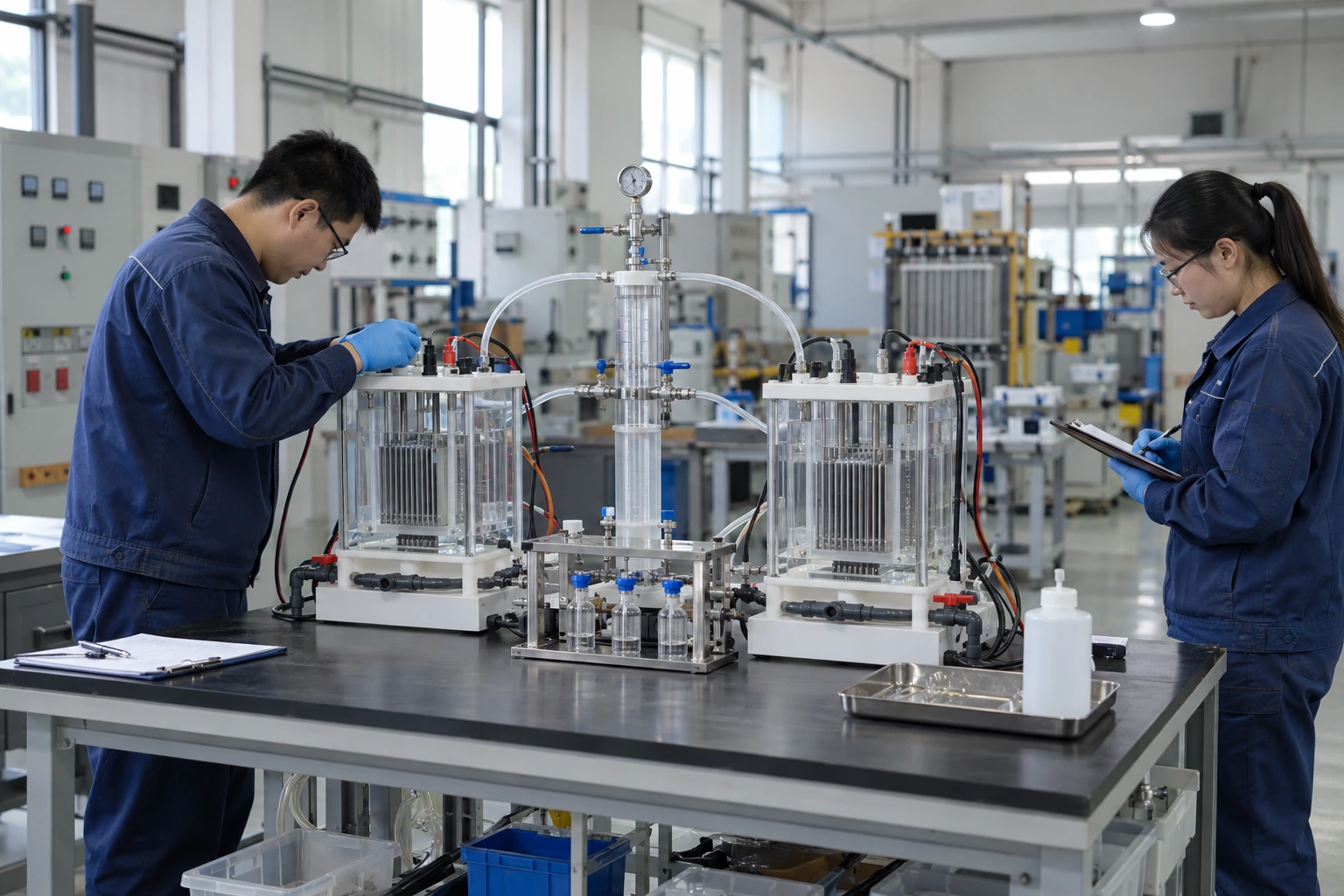
Titanium electrode operating settings should be compared using matched water chemistry, geometry and sampling conditions. A change in collection delay or pressure can confound an apparent electrical improvement.
What stays fixed during the trial?
Freeze the measurement protocol. For water-treatment equipment applications, record delivered concentration at the defined outlet alongside electrical input. Avoid claims about health effects or therapeutic benefits from engineering measurements.
- Use comparable module condition and test duration.
- State output units and energy boundary.
| Check | Decision |
|---|---|
| Matched measurement conditions | Supports a technical comparison |
| Changed sampling conditions | Limits interpretation |
Keep the trial focused on equipment performance. Key Takeaway: A reproducible engineering result does not establish a medical benefit.
9. What safety checks accompany Titanium electrode gas tests?
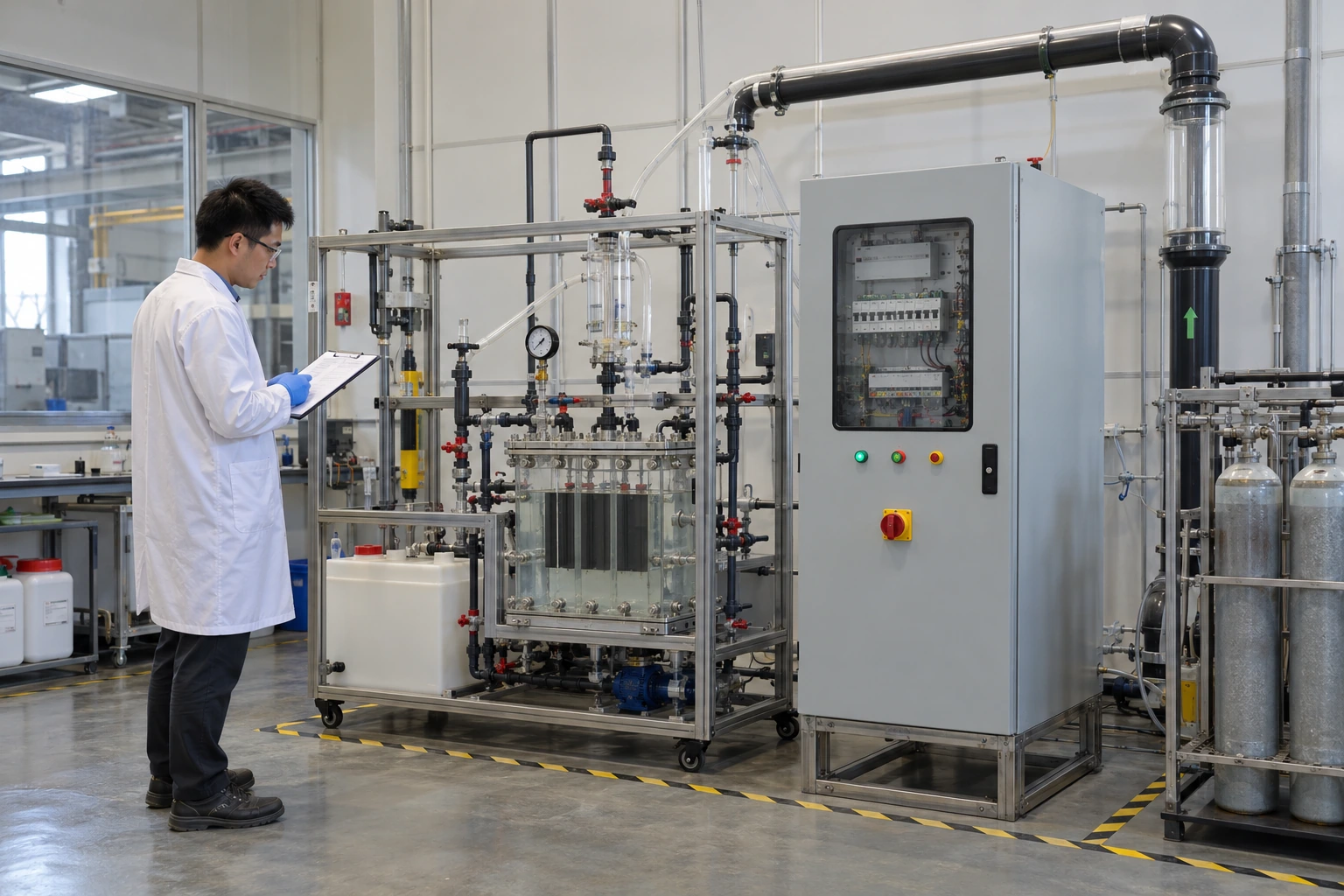
Titanium electrode gas testing requires approved management of generated gases, electrical hazards and any pressurized equipment. Sampling convenience must not compromise the system's protective design.
Does the test change the gas route?
Keep the safety boundary intact. Qualified personnel should approve collection equipment and vent arrangements. Do not block a vent or improvise a sealed collection setup to obtain a stronger reading.
- Use approved pressure-rated arrangements where required.
- Maintain required ventilation and protective functions.
| Check | Decision |
|---|---|
| Standard approved setup | Defined hazard controls |
| Modified collection setup | Needs engineering review |
Review measurement changes before operating the system. Key Takeaway: Gas measurement hardware is part of the process safety configuration.
10. What Titanium electrode test report should you request?

A Titanium electrode hydrogen report should state measurand, method, sampling protocol, conditions and uncertainty alongside the electrode configuration. These details distinguish module performance from measurement artifacts.
Ask for a reproducible output record
Send the protocol with the result. When you contact us today, we can review electrode configuration for your hydrogen-water equipment brief. Our position is that measurable equipment claims should stand independently of health marketing.
- Include calibration and sample timing records.
- Identify unmeasured gas or liquid pathways.
| Check | Decision |
|---|---|
| Result alone | Difficult to reproduce |
| Result with full method | Useful for engineering comparison |
Agree on the measurement basis before comparing quotations. Key Takeaway: Qualify the module against a defined hydrogen-output test.
Frequently Asked Questions
Can I use ORP to calculate hydrogen concentration? Not through a universal conversion. Use a hydrogen-specific validated method unless a defined application relationship has been established.
How do I know if my sample lost hydrogen? Review handling and timing controls. Compare validated collection methods rather than assuming every lower reading reflects electrode output.
What's the best test for dissolved hydrogen? Choose a validated method for your matrix and range. Sensor selectivity, calibration and sampling control all matter.
Can I compare bubbling intensity between modules? Only as a qualitative observation. Visible bubbles do not quantify dissolved concentration or useful delivery rate.
Can I use an output test to support health-benefit claims? No. Engineering output measurements do not establish clinical effects or therapeutic suitability.