
Your Titanium electrode cell needs a membrane when product separation or controlled ion transport is required and a qualified separator can meet that duty. A shared chamber may look cheaper until reaction products mix or a cathodic reaction consumes useful output. Adding a membrane later changes pressure balance, chemistry and maintenance. Decide what must remain separate before selecting cell hardware.
1. When does a Titanium electrode cell need separation?

A Titanium electrode cell needs separation when anode and cathode products must be kept apart or selective ion transport supports the process. The requirement should name the species and acceptable crossover.
What are you trying to keep apart?
Define the separation job. Specify product purity, gas handling and compartment chemistry before naming a membrane material. A separator cannot be selected responsibly from plate dimensions alone.
- Identify species that must not cross freely.
- State the required product sampling boundary.
| Check | Decision |
|---|---|
| Separation objective missing | Cell choice remains premature |
| Species and limits defined | Separator review can begin |
Use product requirements to guide the architecture. Key Takeaway: Choose a membrane for a defined transport problem.
2. How does an undivided Titanium electrode cell differ?
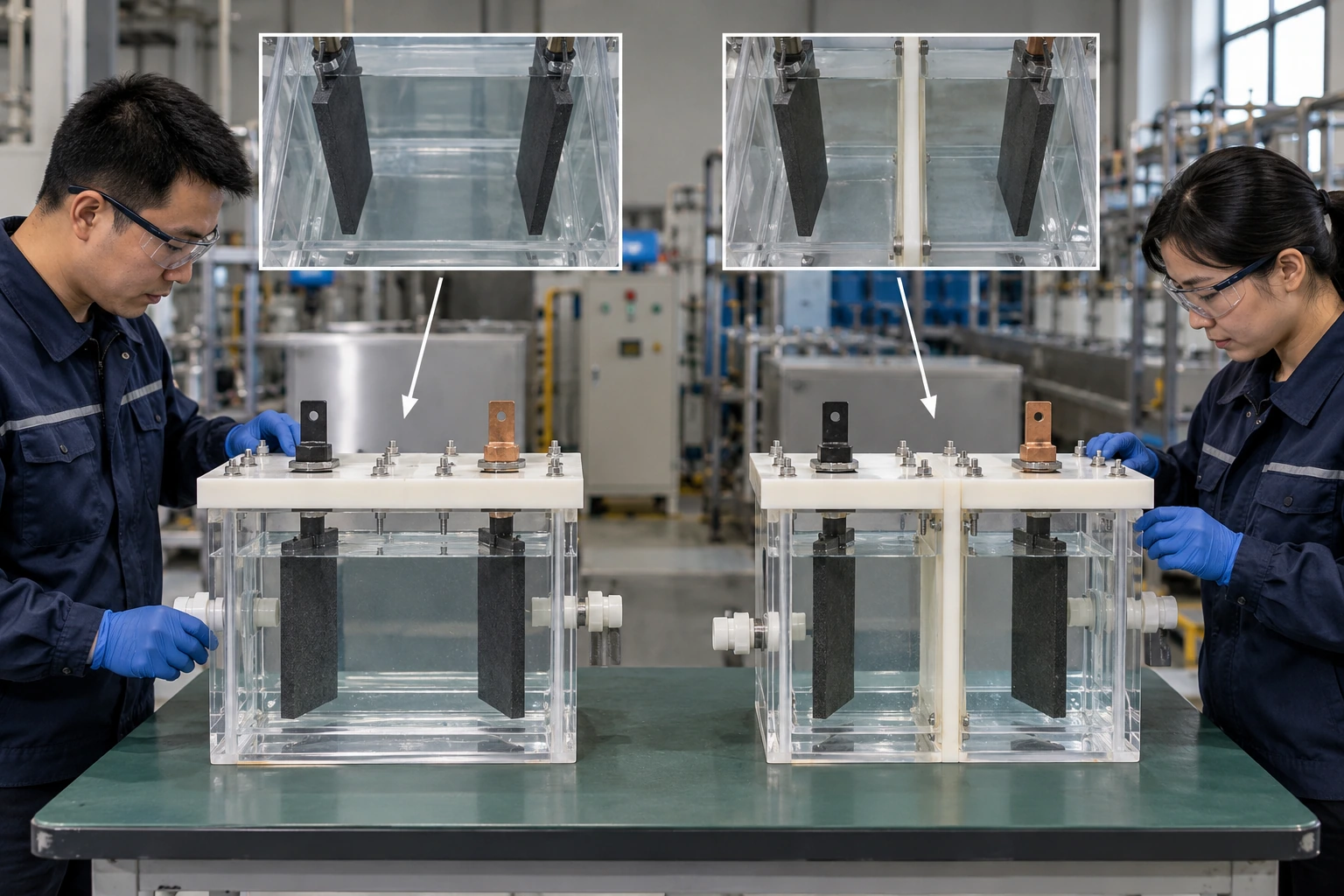
An undivided Titanium electrode cell shares electrolyte between electrode regions, allowing reactions and products to interact. Whether that interaction is acceptable depends on your intended chemistry.
Could mixing be part of the process?
Check the reaction pathway. Some processes use a shared liquid volume deliberately. Do not add a separator merely because another application uses one.
- Map desired and competing reactions.
- Identify required mixing or separation.
| Check | Decision |
|---|---|
| Undivided chamber | Shared electrolyte environment |
| Divided chamber | Additional transport boundary |
Neither layout is universally superior. Key Takeaway: Match chamber design to reaction and product requirements.
3. What can cross a Titanium electrode separator?

A Titanium electrode separator permits some transport and restricts other transport; it does not create perfect isolation. Ions, water or dissolved species may cross depending on material and operating conditions.
What does selective transport really allow?
Ask for measured crossover. Require data relevant to your electrolyte and pressure conditions. A generic membrane label cannot establish product purity in an untested process.
- State relevant species and concentration ranges.
- Include water transfer in the balance.
| Check | Decision |
|---|---|
| Material description | Identifies a membrane family |
| Application test | Evaluates actual transport behavior |
Translate transport claims into measurable acceptance checks. Key Takeaway: Plan product analysis even when a separator is installed.
4. Does separation raise Titanium electrode voltage?
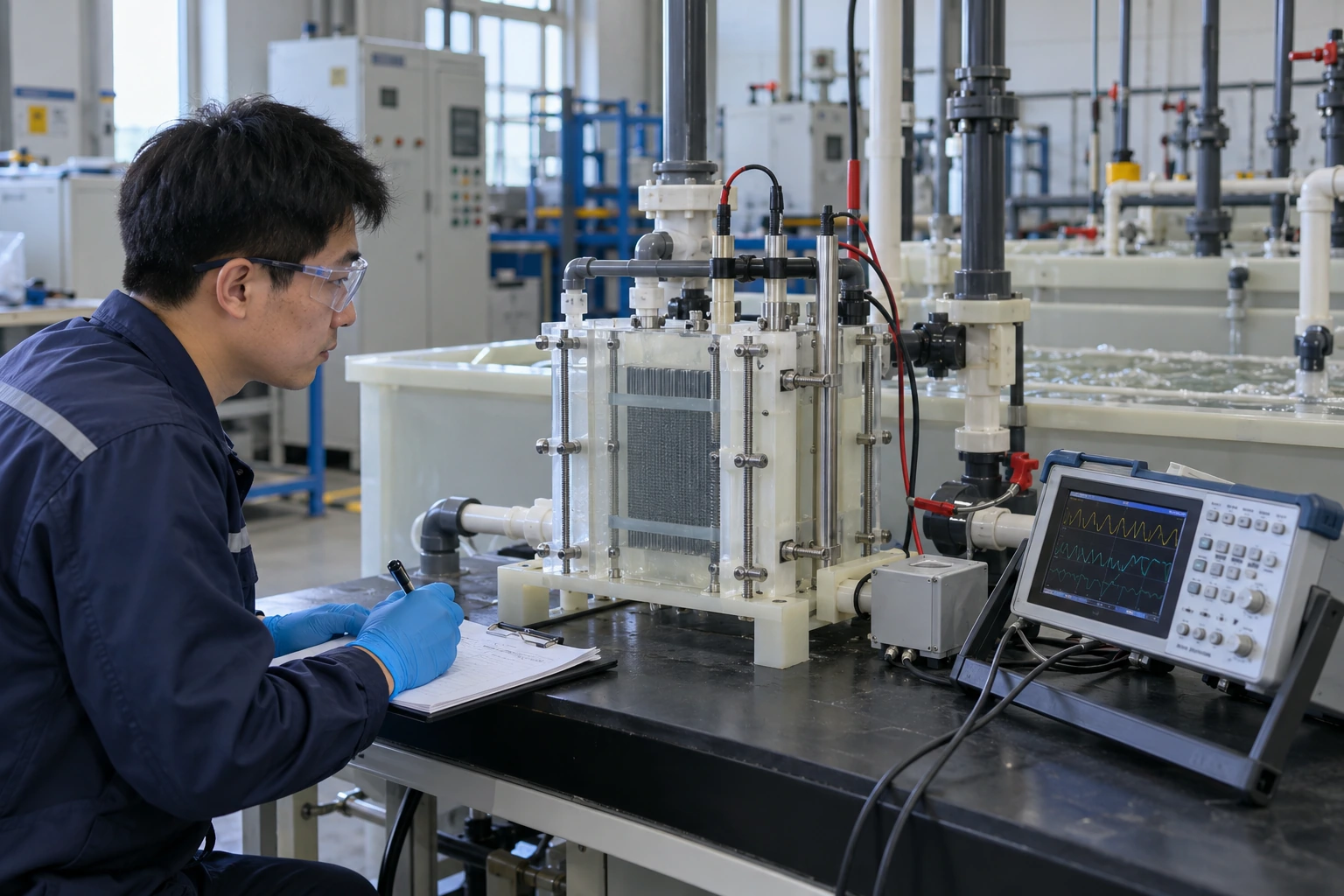
A membrane can add resistance to a Titanium electrode cell, but the voltage effect depends on material, electrolyte, geometry and condition. Separation benefits must be compared with this added system burden.
What does separation cost electrically?
Compare at equivalent output. Include separator condition and sensing points in a custom electrode review. Avoid comparing fresh divided-cell data against a fouled or differently loaded undivided cell.
- Use matched temperature and current basis.
- Record useful output alongside voltage.
| Check | Decision |
|---|---|
| Voltage comparison alone | Incomplete process comparison |
| Output and energy together | Shows the application tradeoff |
Evaluate the separated product you actually need. Key Takeaway: A useful separator may justify added voltage when separation delivers value.
5. How does pressure affect a Titanium electrode membrane?
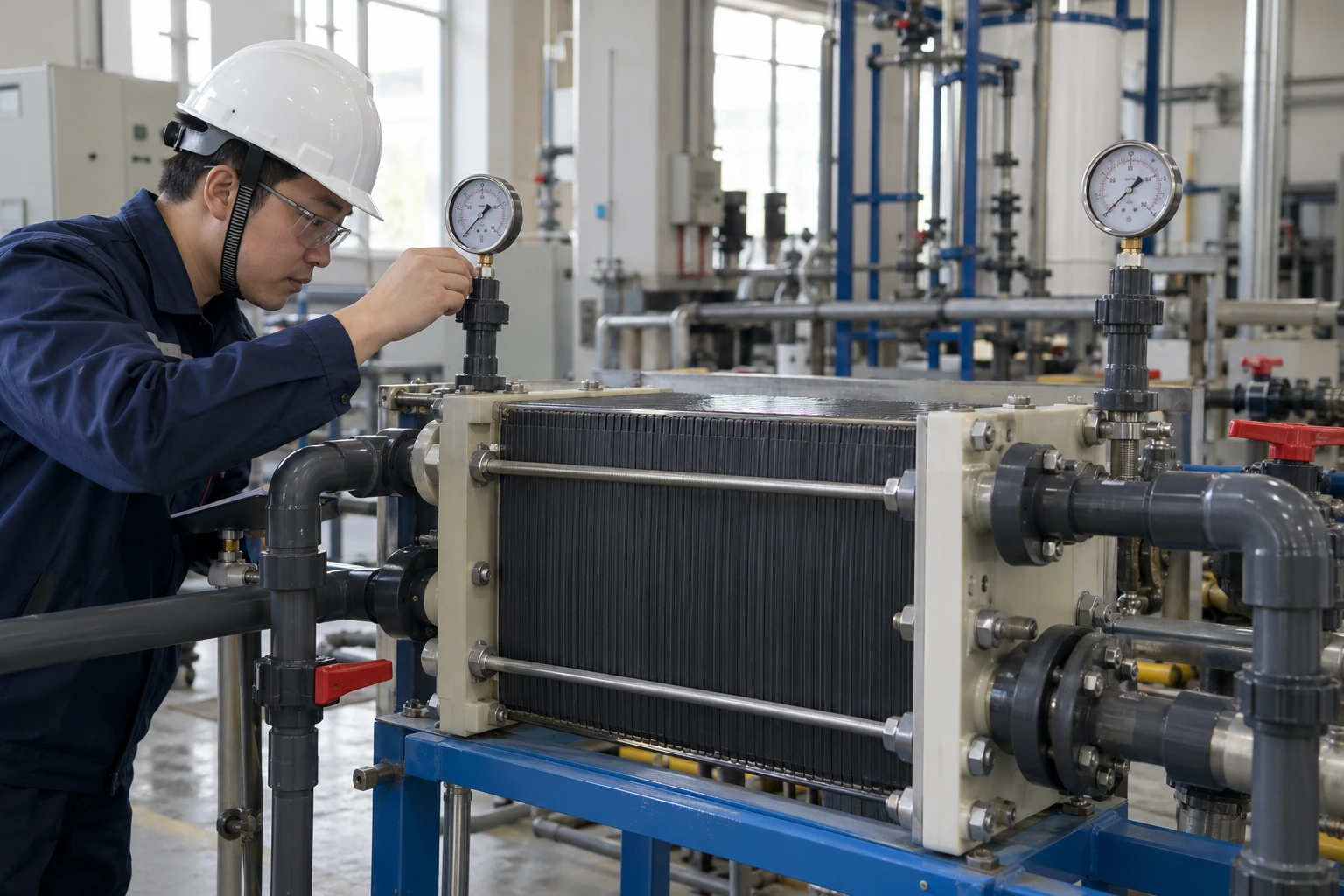
Pressure imbalance can affect a Titanium electrode membrane through deformation, leakage or increased transport across its boundary. Allowable differential pressure must come from the qualified cell and membrane design.
Are both compartments seeing the same conditions?
Review both hydraulic circuits. Include startup, blocked outlets and pump transitions in the pressure assessment. Do not copy a limit from an unrelated membrane module.
- Identify pressure sensing locations.
- Define approved responses to imbalance.
| Check | Decision |
|---|---|
| Balanced normal operation | Only one operating state |
| Transient or blockage | Needs separate review |
Pressure control belongs in the cell specification. Key Takeaway: A membrane needs a hydraulic operating envelope as well as chemical compatibility.
6. Can deposits block a Titanium electrode separator?
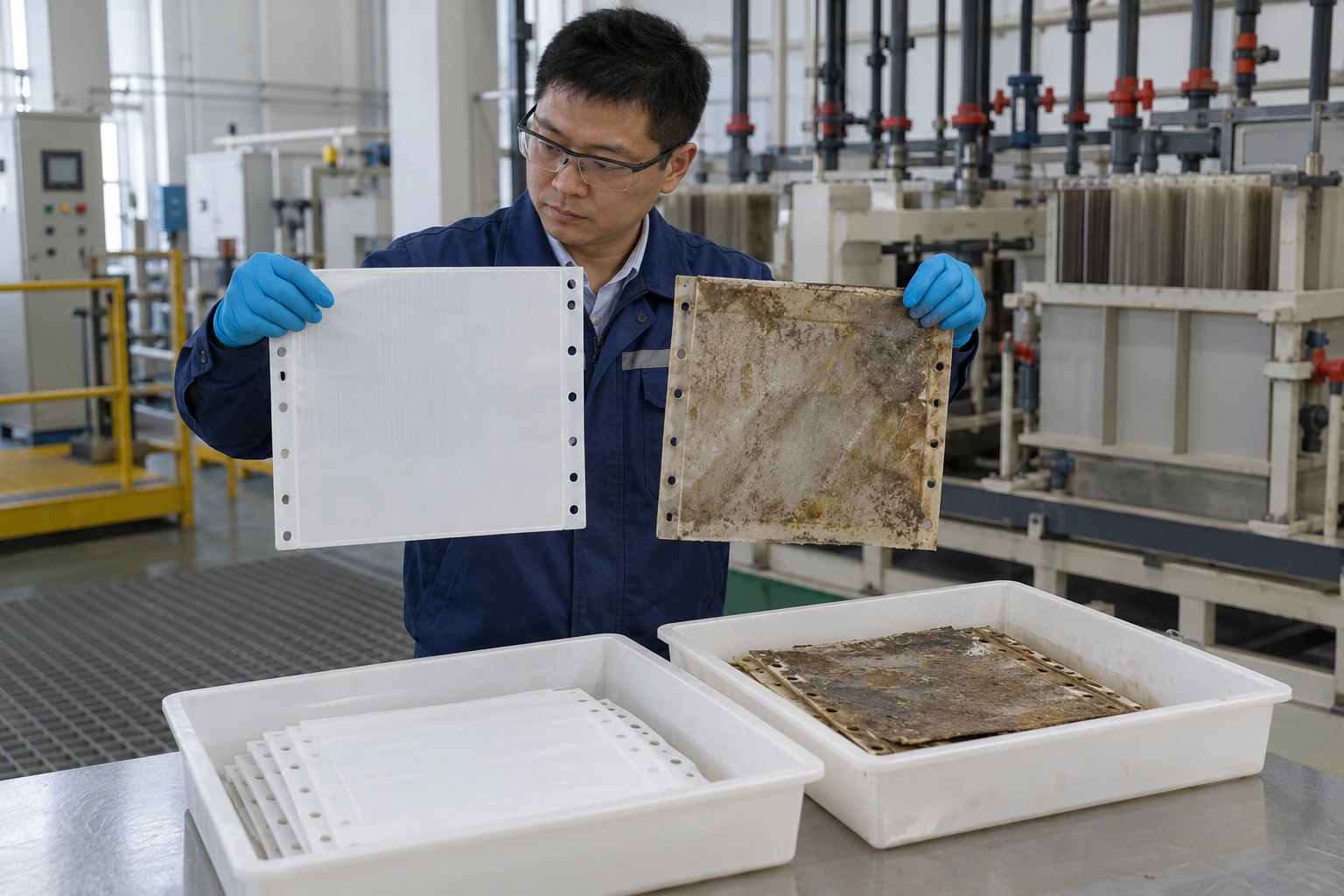
Deposits can obstruct a Titanium electrode separator or change its transport properties, depending on feed chemistry and local conditions. A rising voltage alone cannot identify which layer has fouled.
Where is the restriction building?
Inspect the complete interface. Review membrane, spacer and electrode evidence together. Any cleaning procedure must suit all affected materials, not merely the titanium substrate.
- Preserve feed and deposit samples when useful.
- Record which side shows deposits.
| Check | Decision |
|---|---|
| Separator fouling suspected | Check transport and condition |
| Electrode deposits suspected | Check surface and channel effects |
Separate competing explanations before selecting cleaning chemistry. Key Takeaway: Cleaning compatibility must cover the whole divided-cell assembly.
7. How does a membrane change Titanium electrode chemistry?
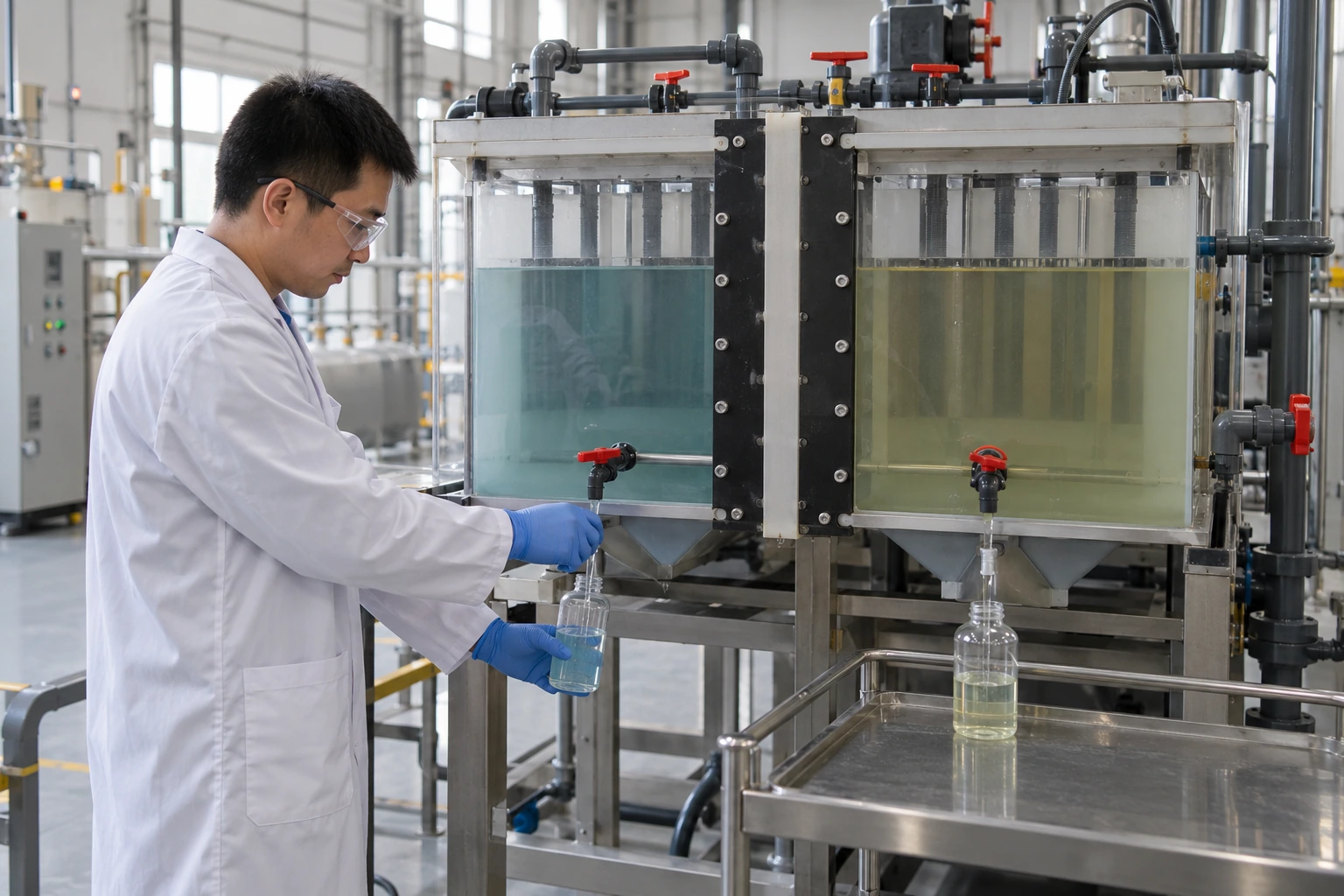
Separation can create distinct Titanium electrode compartment chemistries because reactions and selective transport change local composition. Bulk feed pH alone may not describe either electrode environment.
Which liquid actually contacts each face?
Sample each relevant compartment. Document pH, conductivity and constituents under representative duty. Use those conditions when reviewing coatings, seals and membrane compatibility.
- Label inlet and outlet samples by compartment.
- Record timing relative to operation.
| Check | Decision |
|---|---|
| Feed analysis | Describes incoming liquid |
| Compartment analysis | Describes actual material exposure |
Base compatibility on exposure at the component. Key Takeaway: A shared feed specification does not replace compartment-specific data.
8. What tests qualify a Titanium electrode separator?

A Titanium electrode separator trial should measure transport, leakage, electrical behavior and material condition under defined duty. Initial appearance alone is not a performance qualification.
What should the trial prove?
Set endpoints before testing. For hypochlorite-generation systems, distinguish chemical treatment results from membrane integrity. Define acceptable variation and stop criteria with responsible engineering and laboratory personnel.
- Measure relevant crossover or product impurities.
- Retain pre-test and post-test condition records.
| Check | Decision |
|---|---|
| Integrity test | Checks the specified barrier function |
| Process trial | Checks performance in the intended system |
Use both forms of evidence for acceptance. Key Takeaway: A leak check cannot answer every transport or chemistry question.
9. Who owns Titanium electrode membrane compatibility?

Titanium electrode membrane compatibility needs coordinated review by electrode, separator and system specialists. Component suppliers should state their evidence boundaries rather than imply complete-system approval.
Who approves the interfaces?
Assign each technical owner. Identify who accepts chemistry, pressure balance, seal design and product criteria. Resolve contradictory requirements before ordering production parts.
- Keep interface assumptions in one controlled document.
- Record unresolved qualification work explicitly.
| Check | Decision |
|---|---|
| Component supplier | Defines component capability |
| System designer | Approves integrated operation |
Close interface gaps before hardware release. Key Takeaway: Shared documentation prevents each supplier from assuming another owns the risk.
10. What Titanium electrode cell data should you share?
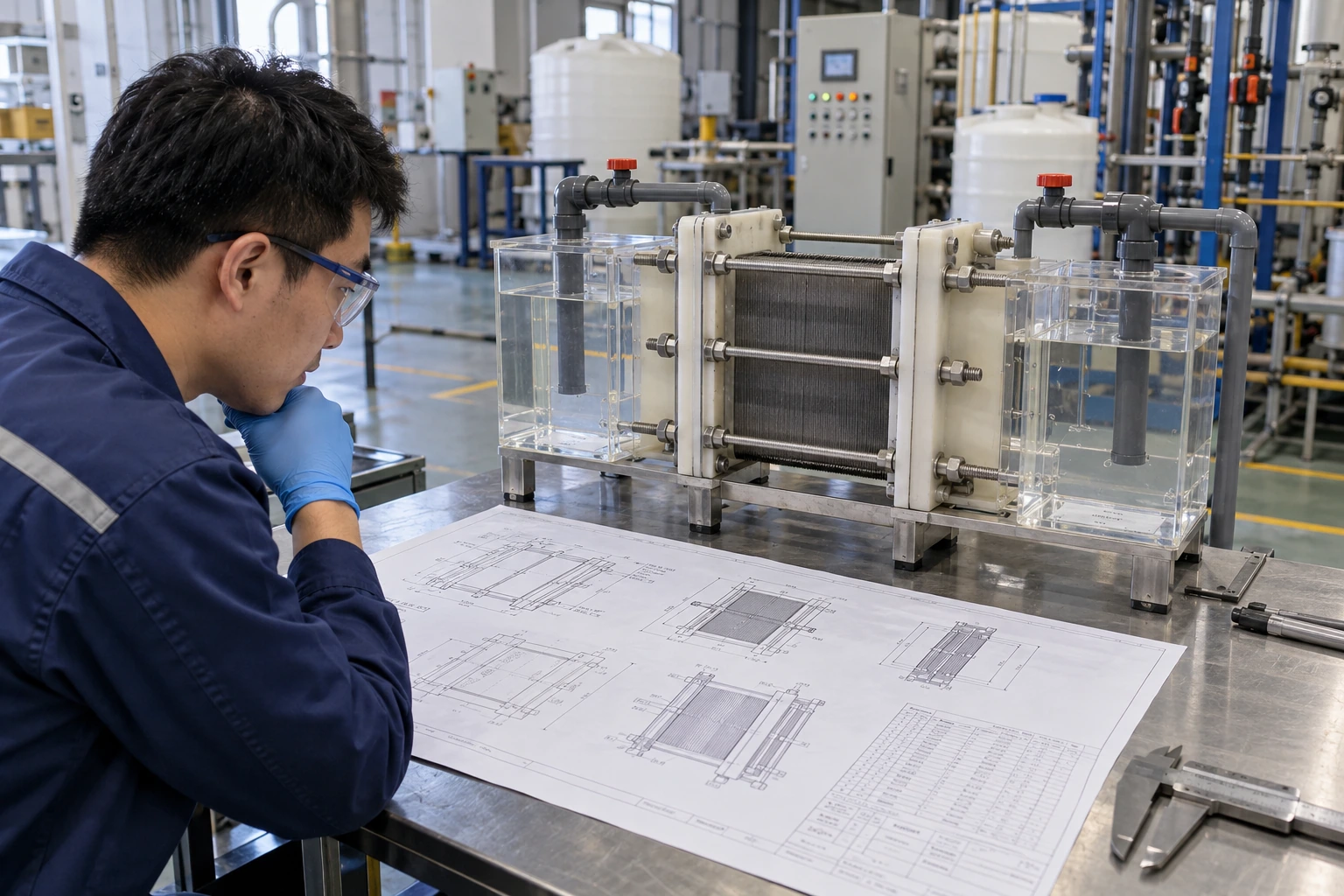
A Titanium electrode divided-cell review needs process chemistry, separation objectives, pressure conditions and an assembly drawing. This package lets you compare a justified membrane design with an undivided alternative.
Turn separation into a testable requirement
Bring the product requirement. When you contact us today, we can review electrode configuration and drawing-based interfaces for your intended cell. Our position favors verified compatibility over a membrane added by habit.
- Provide compartment and flow diagrams.
- Name the party approving system acceptance.
| Check | Decision |
|---|---|
| Clear separation target | Supports a focused review |
| Undefined purity claim | Needs a measurable specification |
Agree on what the separator must accomplish. Key Takeaway: Select the simplest cell architecture that meets your verified process requirements.
Frequently Asked Questions
Can I add a membrane to an existing open cell? Only after redesign review. Spacing, pressure balance, sealing and compartment chemistry may all change.
What's the best membrane for a titanium anode? There is no universal pairing. Select for transported species, electrolyte, temperature, pressure and electrode reactions.
Can I assume a membrane stops all contamination? No. Crossover and other contamination sources still require measurement under your operating conditions.
How do I know if a separator is fouled? Use combined evidence. Voltage, pressure, transport performance and inspection provide more information than appearance alone.
Can I buy electrodes before selecting a membrane? You can discuss preliminary scope. Freeze final dimensions and material requirements only after interface review.