
Plan Titanium electrode startup around verified process conditions before power, then use the equipment manufacturer's approved sequence for operation and shutdown. A pump-running light may look reassuring while a closed valve leaves your cell without useful circulation. Energizing at that moment creates a fault that no coating upgrade can solve. A written sequence with tested permissives makes commissioning repeatable and exposes missing interfaces.
1. What must precede Titanium electrode energization?
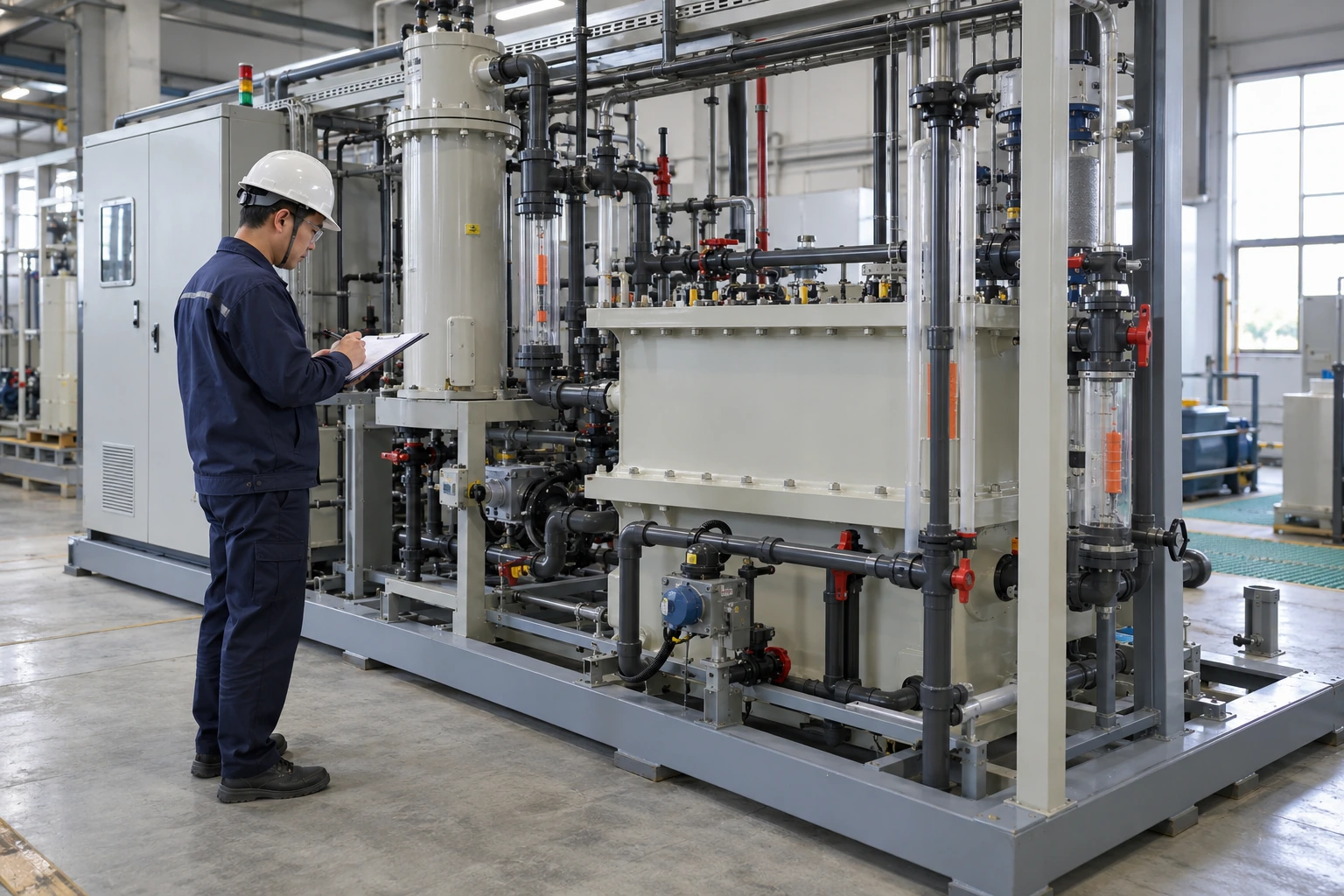
Titanium electrode energization must wait until the equipment-specific liquid, electrical and gas-management prerequisites are satisfied. This includes inspection and protection checks required by responsible system engineers.
What must be ready before enable?
Verify conditions, not intentions. A commanded pump or fan signal does not necessarily prove its required process function. Use approved feedback and acceptance checks for the actual installation.
- Confirm electrical isolation has been released correctly.
- Check required process permissives.
| Check | Decision |
|---|---|
| Command issued | Does not prove service availability |
| Condition verified | Supports the next approved sequence step |
Build startup around observable conditions. Key Takeaway: Power enable should depend on verified readiness.
2. What is a sound Titanium electrode startup sequence?
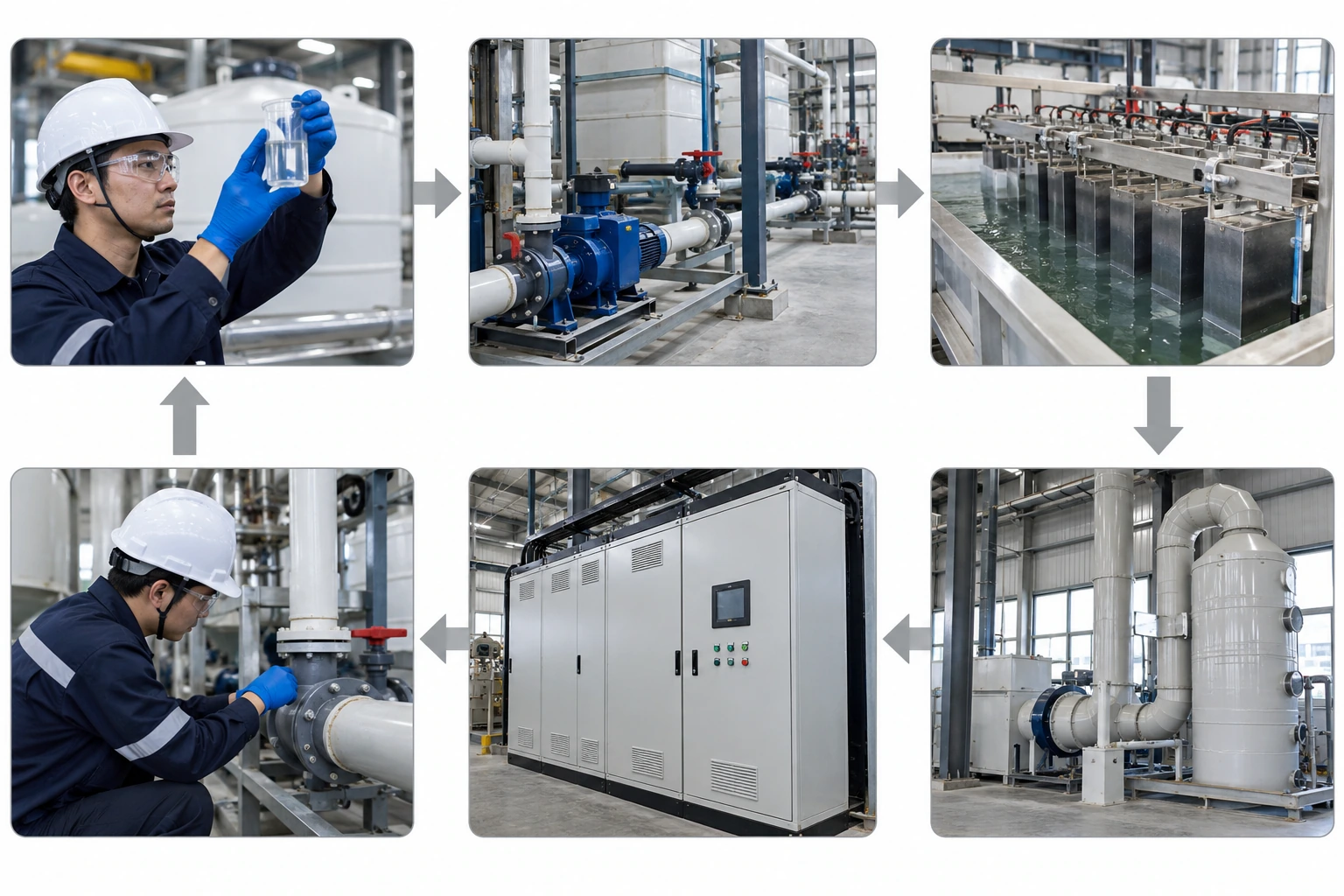
A sound Titanium electrode startup sequence establishes inspection clearance and required liquid and gas services before introducing electrical duty. The exact order and timing must follow the approved equipment procedure.
How should the sequence be recorded?
Make dependencies visible. A cause-and-effect diagram should show which conditions permit each action. Keep emergency responses separate from the routine sequence.
- Name prerequisite checks and their owners.
- Document stop conditions at each stage.
| Check | Decision |
|---|---|
| Routine sequence | Defines normal progression |
| Fault response | Defines protective interruption |
Review both paths during commissioning. Key Takeaway: A sequence needs explicit conditions, not merely a list of buttons.
3. Why verify Titanium electrode liquid coverage?
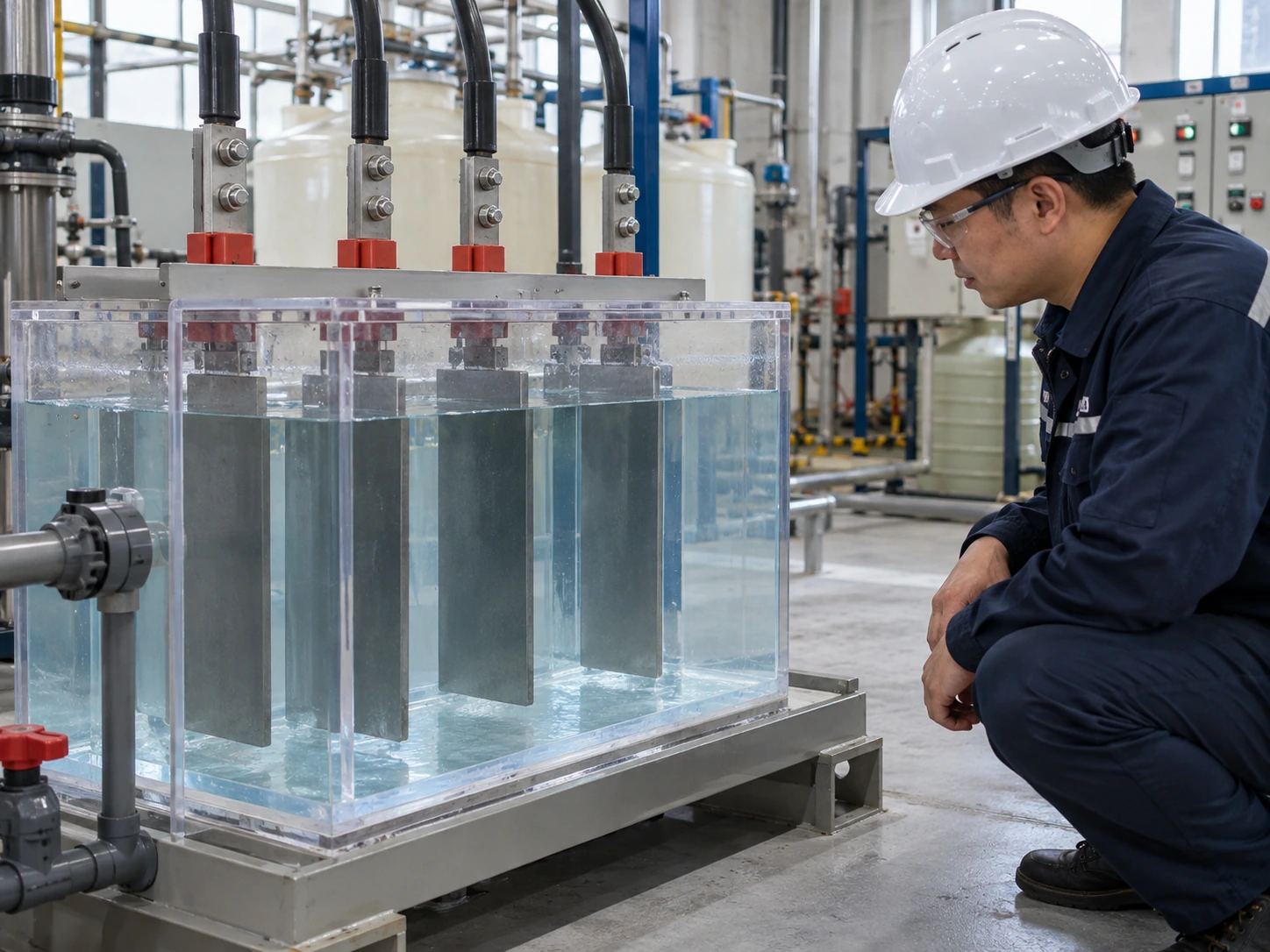
Titanium electrode liquid coverage must match the approved immersed active area before current is applied. A low level can change accessible area even when some circulation remains visible.
Could a plate be only partly wetted?
Check the chamber itself. Verify expected liquid level and trapped-gas clearance through approved means. Do not treat flow elsewhere in a skid as proof of complete cell filling.
- Confirm level sensing represents the active region.
- Check vent and fill arrangements as designed.
| Check | Decision |
|---|---|
| Flow exists | Does not establish full coverage |
| Coverage verified | Supports the approved area basis |
Use direct evidence of the required wetting condition. Key Takeaway: Startup current needs a verified immersed-area basis.
4. How should Titanium electrode current be introduced?

Titanium electrode current should be introduced according to an approved commissioning profile, with voltage and process conditions monitored during stabilization. No universal ramp rate applies to every coating and cell.
What defines a controlled ramp?
Agree on the profile beforehand. Include electrical limits and observation points in a custom cell review. Avoid improvising higher settings when an unexplained voltage or flow response appears.
- Record commanded and measured current.
- Keep voltage and temperature trends aligned.
| Check | Decision |
|---|---|
| Expected response | Continue within approved procedure |
| Unexplained excursion | Pause and review the cause |
Judge the response against an agreed envelope. Key Takeaway: A ramp is useful only when its acceptance conditions are defined.
5. What belongs in a Titanium electrode baseline?

A Titanium electrode startup baseline should record electrical duty, feed chemistry, temperature, flow and useful output after an agreed stabilization condition. That record supports later fault diagnosis and repeat commissioning.
What will you compare next month?
Save a reproducible reference. Record measurement locations and methods alongside readings. A photograph of one panel cannot capture sampling conditions or active-area assumptions.
- Identify instruments and sample points.
- Retain the approved hardware revision.
| Check | Decision |
|---|---|
| Readings alone | Limited comparison value |
| Readings with method and configuration | Reusable baseline |
Capture the conditions that produced an acceptable run. Key Takeaway: A documented baseline reduces guesswork during later troubleshooting.
6. How should routine Titanium electrode shutdown work?

Routine Titanium electrode shutdown must remove electrical duty and manage remaining liquid, gas and stored energy according to the equipment procedure. Some auxiliary services may need to continue after electrolysis stops.
What remains after current reaches zero?
Follow residual hazards through the system. Gas in piping and chemical solution in chambers do not disappear with a power command. Use the manufacturer's shutdown and isolation requirements.
- Distinguish process stop from maintenance isolation.
- Record required auxiliary run-on conditions.
| Check | Decision |
|---|---|
| Power command off | Electrolysis command removed |
| Verified safe state | Requires the complete approved sequence |
Treat shutdown as a process state change. Key Takeaway: Zero commanded current does not by itself establish safe access.
7. What changes after a Titanium electrode emergency stop?

After a Titanium electrode emergency stop, restart requires investigation and clearance of the initiating condition under site procedures. Resetting an alarm is not evidence that its cause has disappeared.
What must be cleared before restart?
Preserve the event record. Keep alarms, process trends and operator observations before resetting systems. Let responsible personnel approve inspection and restart scope.
- Identify the earliest relevant fault event.
- Document corrective action and release authority.
| Check | Decision |
|---|---|
| Alarm acknowledged | Records operator response |
| Cause cleared and verified | Supports controlled restart |
Keep acknowledgment and technical clearance distinct. Key Takeaway: A restart decision needs evidence that the original fault was resolved.
8. Should a Titanium electrode remain wet during standby?
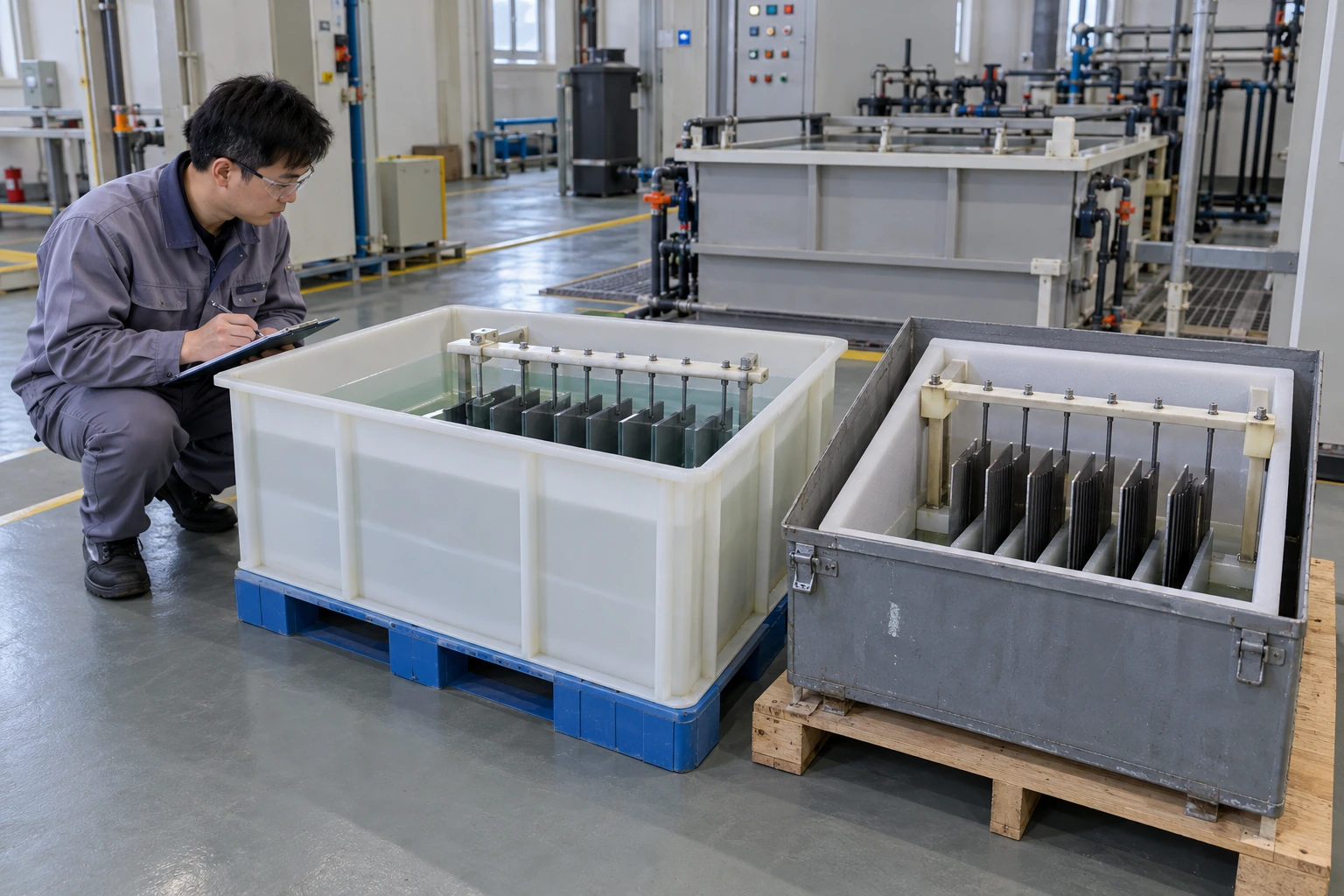
Whether a Titanium electrode remains wet during standby depends on coating, cell materials, process chemistry and manufacturer instructions. An idle filled chamber and a cleaned spare electrode have different storage requirements.
Which standby state are you planning?
Name the duration and condition. For water-treatment duty, distinguish short process interruptions from extended storage. Confirm compatible draining, rinsing and preservation steps without inventing a universal treatment.
- State expected standby duration.
- Record residual chemistry and attached materials.
| Check | Decision |
|---|---|
| Short interruption | Follow operating standby instructions |
| Extended storage | Use a reviewed preservation plan |
Select instructions for the actual equipment state. Key Takeaway: Standby requirements belong in commissioning documentation.
9. How do you restart a serviced Titanium electrode cell?

A serviced Titanium electrode cell needs configuration, sealing, connection and protective-function checks before its approved restart sequence. Replacement parts can change assumptions even when they fit physically.
What changed during maintenance?
Reconcile the work scope. Confirm electrode orientation, gasket revision and connection assembly against released drawings. Repeat affected acceptance checks before restoring operation.
- Review all replaced or adjusted components.
- Confirm required inspection sign-offs.
| Check | Decision |
|---|---|
| Like-for-like work | Still needs defined checks |
| Engineering change | May need broader requalification |
Let maintenance scope determine restart verification. Key Takeaway: Mechanical reassembly does not automatically restore qualified operation.
10. What Titanium electrode sequence should be documented?

Your Titanium electrode sequence document should cover prerequisites, normal operation, routine stop, emergency response, standby and restart approval. This links commissioning decisions with daily operating practice.
Make the sequence usable on shift
Close the interface gaps. Share your process sequence and electrode duty when you contact us today; we can review component requirements within that scope. We support operating instructions grounded in your actual cell configuration.
- Assign system and component responsibilities.
- Keep approved revisions available to operators.
| Check | Decision |
|---|---|
| Controlled sequence | Supports repeatable operation |
| Unassigned interface | Needs resolution before commissioning |
Use review findings to update the approved procedure. Key Takeaway: Commission a documented operating system, not an isolated electrode.
Frequently Asked Questions
Can I start current as soon as the pump turns on? Only after required conditions are verified. A pump command does not prove cell flow, liquid coverage or gas-management readiness.
What's the best current ramp rate? Use an equipment-specific approved profile. Coating, cell geometry and process conditions prevent a universal recommendation.
Can I stop every auxiliary when DC power stops? Not automatically. Residual gas, heat or chemistry may require continued services under the equipment procedure.
How do I know if restart after a trip is acceptable? Follow documented technical clearance. Investigate the initiating fault and verify corrective action before release.
Can I leave a used electrode in solution overnight? Only if approved standby instructions allow it. Residual chemistry and attached cell materials determine the suitable condition.