
EIS can help diagnose a Titanium electrode problem by separating frequency-dependent electrical responses, but a spectrum cannot identify every failure mechanism alone. A report may show a larger arc and call it coating damage without checking reference condition or changing electrolyte. That shortcut can send you toward an unnecessary replacement. Review measurement quality and corroborating evidence before assigning a cause.
1. What can EIS reveal about a Titanium electrode?
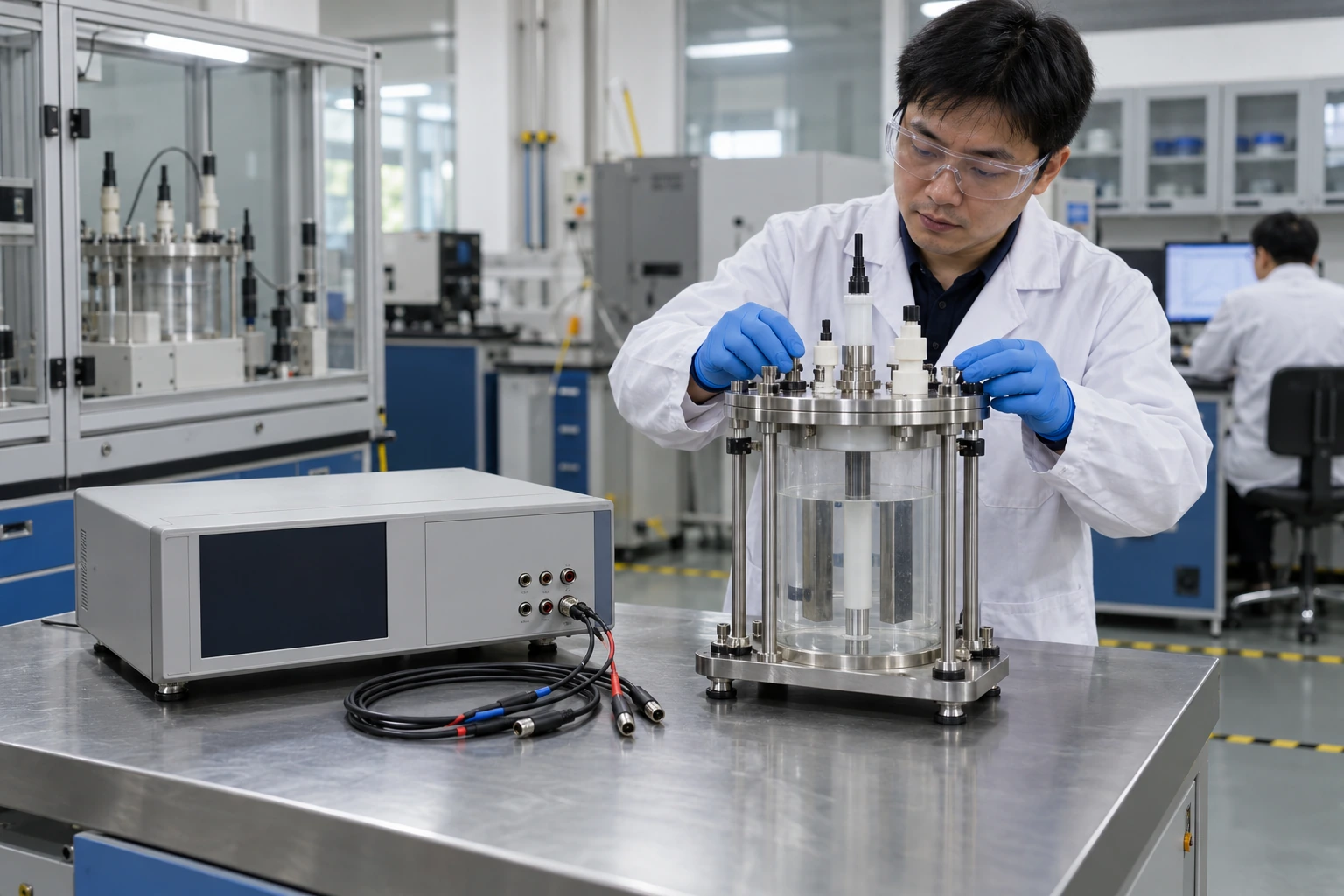
EIS can reveal changes in Titanium electrode electrical response across frequency under a defined operating condition. Interpretation requires an appropriate physical question and qualified analysis.
What question should the spectrum answer?
Start with a testable hypothesis. Possible questions include changed solution resistance or interface behavior. Keep a measured response distinct from the mechanism proposed to explain it.
- Define the suspected change.
- Record the operating point.
| Check | Decision |
|---|---|
| Spectrum | Measured frequency-dependent response |
| Mechanism | Interpretation requiring support |
Choose analysis around the diagnostic question. Key Takeaway: Use EIS to test a hypothesis rather than attach a fault label to a plot.
2. How does a Titanium electrode EIS test work?
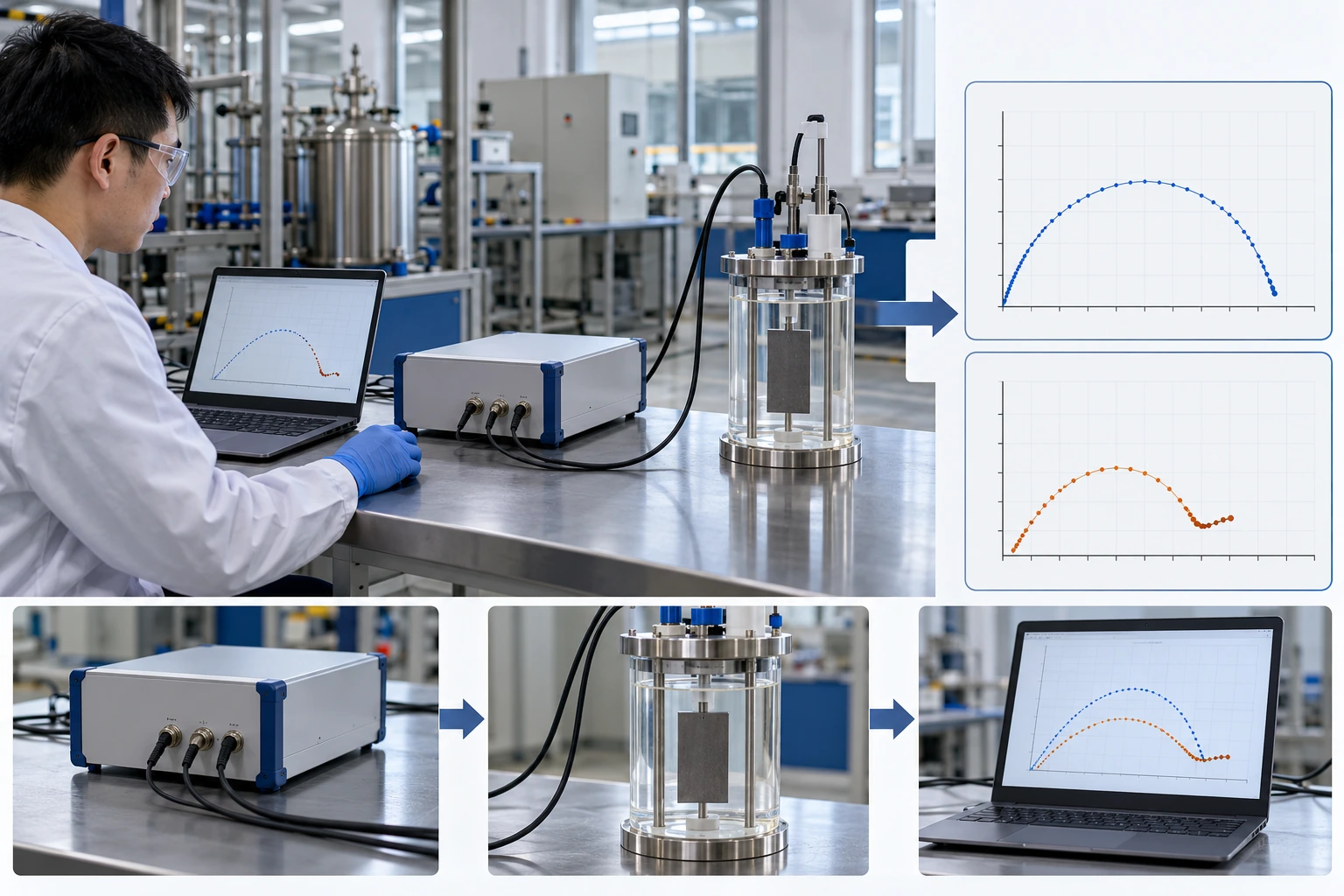
A Titanium electrode EIS test applies a suitably small perturbation and measures the response over frequency. The method relies on conditions consistent with its measurement and interpretation assumptions.
What does the instrument perturb?
State the control mode. Record whether potential or current perturbation was used and where the response was sensed. A laboratory instrument name alone does not define the experiment.
- Identify perturbation and sensing mode.
- Retain raw frequency-response data.
| Check | Decision |
|---|---|
| Defined excitation | Makes the experiment interpretable |
| Unspecified setup | Limits reproducibility |
Keep configuration details with every spectrum. Key Takeaway: A meaningful EIS record includes how the response was produced.
3. Why must Titanium electrode EIS conditions remain stable?

Titanium electrode EIS conditions must remain sufficiently stable because drift during acquisition can mix time-dependent changes with frequency response. Active fouling or changing gas coverage can complicate interpretation.
Did the cell change during measurement?
Check stability records. Review temperature, flow and operating-point trends over the acquisition period. A smooth fitted curve cannot demonstrate that the underlying experiment remained stationary.
- Record acquisition duration.
- Retain simultaneous operating trends.
| Check | Decision |
|---|---|
| Stable operating condition | Supports the intended analysis |
| Ongoing drift | Requires qualified interpretation or retesting |
Assess stability before fitting a model. Key Takeaway: A changing cell can produce a spectrum that does not support the assumed model.
4. Which Titanium electrode EIS settings belong in a report?

A Titanium electrode EIS report should state frequency range, perturbation, operating point, geometry and reference arrangement. Settings must suit the diagnostic objective rather than a generic instrument preset.
Could another laboratory reproduce it?
Request the full setup record. Include sample history and measurement boundaries in a custom engineering review. Keep any preprocessing, exclusions and fitting choices visible.
- Identify instruments and calibration checks.
- State data treatment and omitted points.
| Check | Decision |
|---|---|
| Plot image only | Limited repeatability |
| Setup and raw data | Supports independent review |
Make the experiment traceable before comparing results. Key Takeaway: A spectrum without settings is incomplete evidence.
5. Can an EIS arc prove Titanium electrode coating damage?
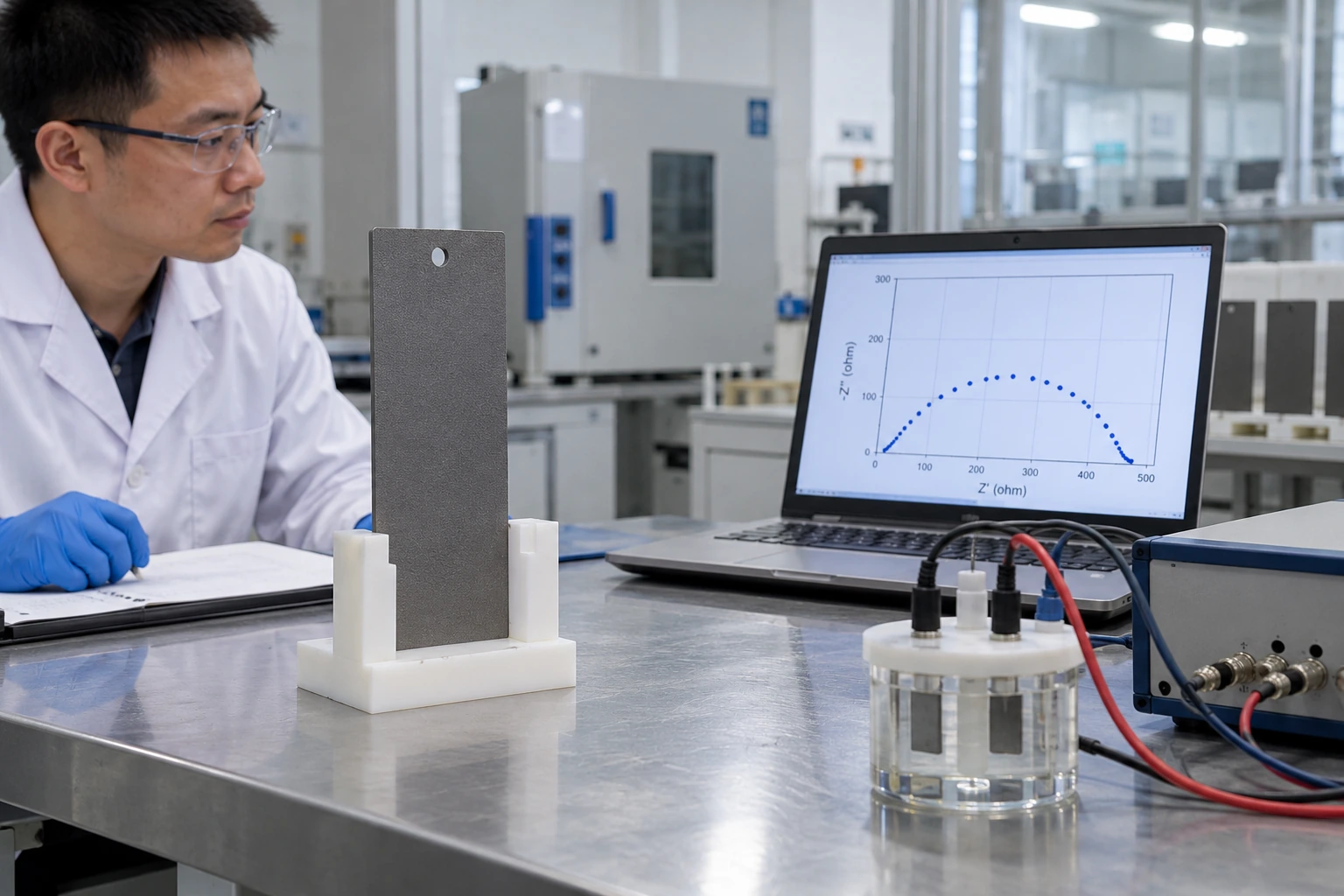
An EIS arc cannot prove Titanium electrode coating damage by itself because different processes and circuit representations can produce similar responses. Model parameters need corroboration.
Does the fitted element have a justified meaning?
Challenge the assignment. Ask why the chosen equivalent circuit represents this system. A statistically acceptable fit does not establish a unique physical mechanism.
- Review alternative explanations.
- Compare with surface and process evidence.
| Check | Decision |
|---|---|
| Good numerical fit | Shows agreement with a model |
| Supported mechanism | Needs additional physical evidence |
Separate fitting success from causal proof. Key Takeaway: Do not turn one arc into a universal coating-health indicator.
6. How does geometry affect Titanium electrode impedance?
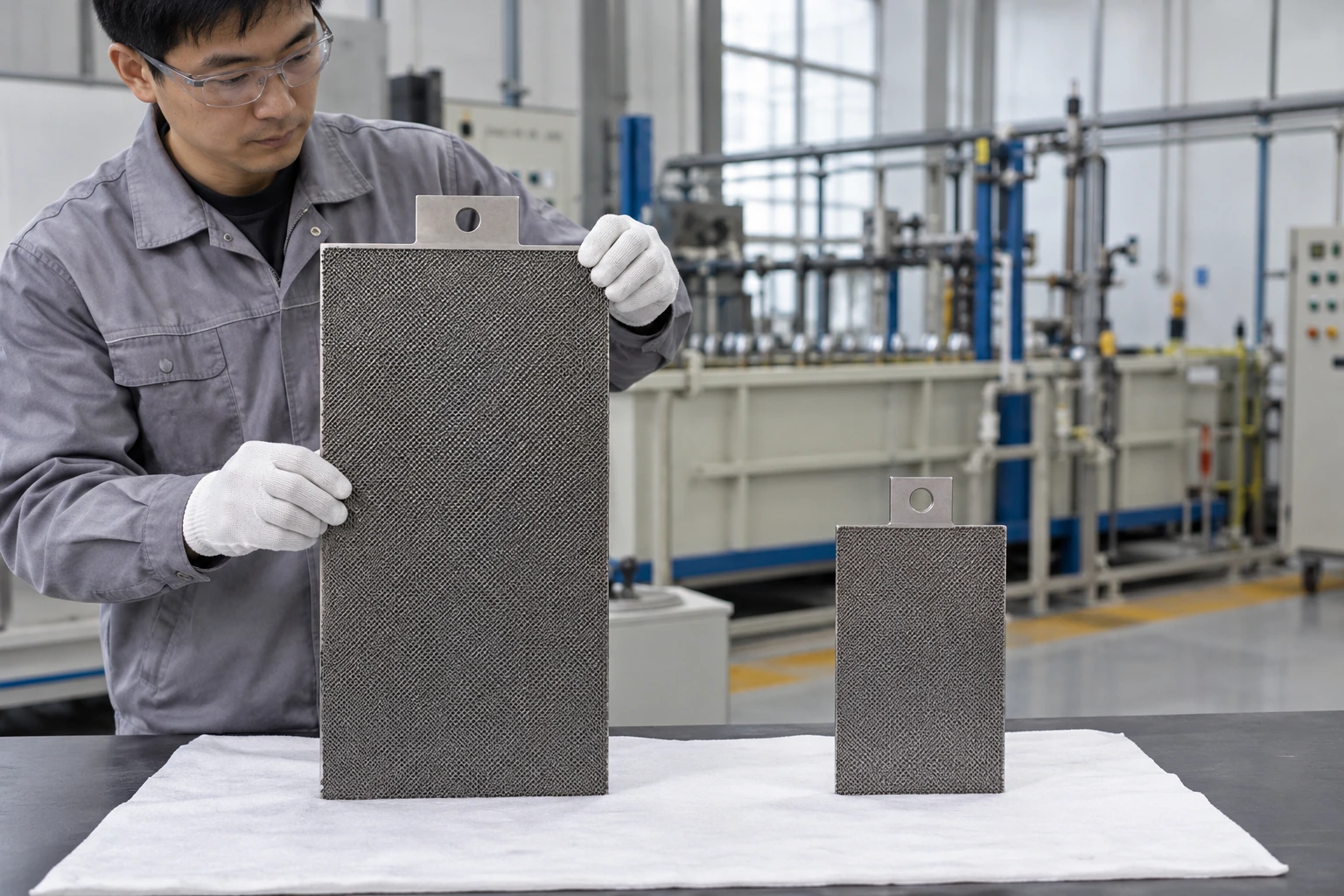
Geometry affects Titanium electrode impedance through area, spacing, current distribution and sensing arrangement. Raw spectra from unlike fixtures may differ without any material-quality change.
Are the specimens electrically comparable?
Align the geometry. Record immersed area and reference placement before comparing normalized results. State the normalization convention explicitly when mesh or curved surfaces are involved.
- Keep area conventions consistent.
- Record fixture and electrode spacing.
| Check | Decision |
|---|---|
| Different geometry | Adds a comparison variable |
| Controlled geometry | Narrows material interpretation |
Resolve dimensional differences before ranking samples. Key Takeaway: An impedance difference may belong to the fixture rather than the coating.
7. What can invalidate Titanium electrode EIS measurements?
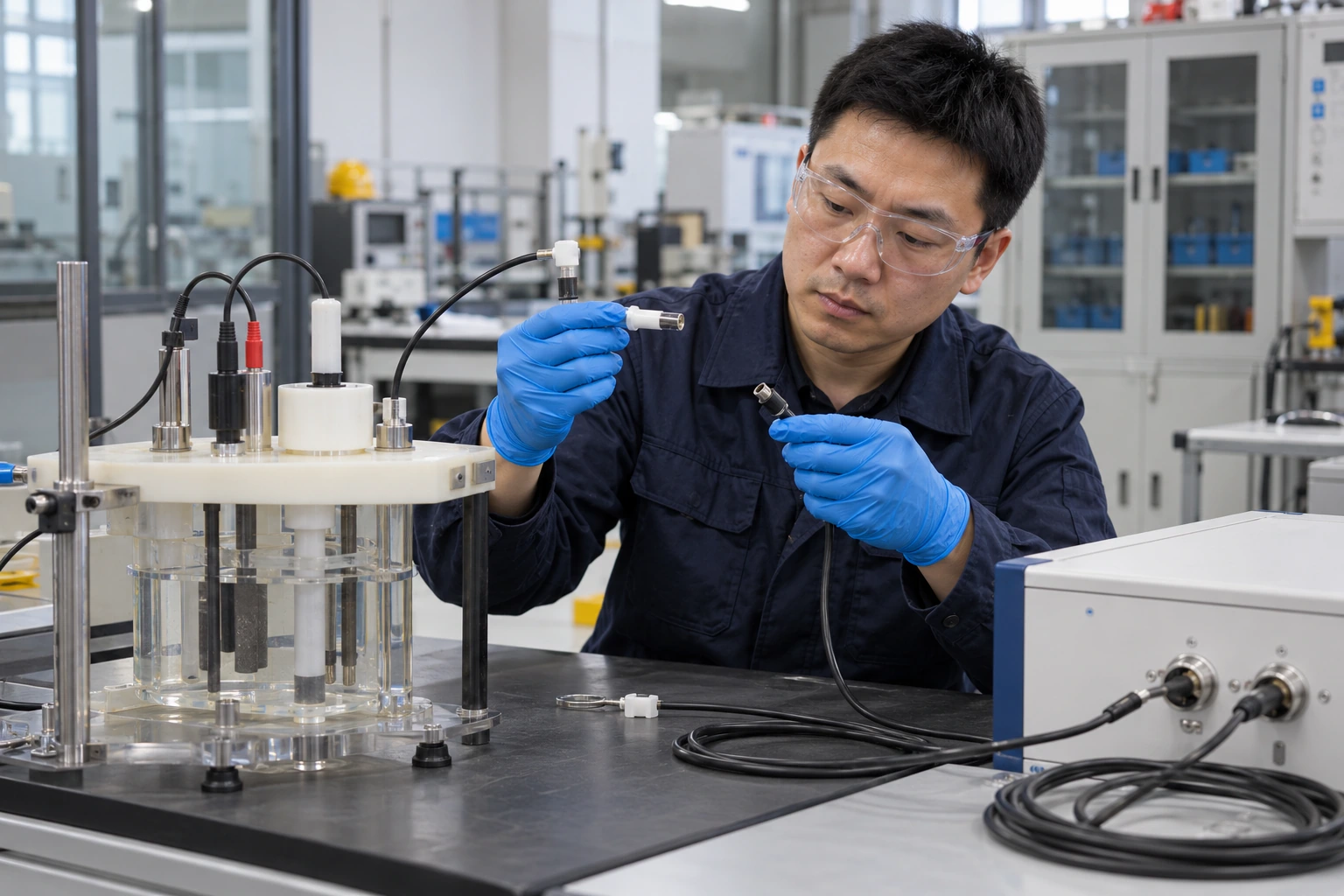
Titanium electrode EIS measurements can become unreliable through poor connections, reference problems, interference or instrument limitations. A qualified operator should assess measurement validity before interpreting chemistry.
Could the setup explain the response?
Inspect the measurement chain. Follow approved instrument verification and connection procedures. Do not repair a questionable spectrum by silently deleting inconvenient points.
- Record reference checks.
- Retain rejected-data reasons.
| Check | Decision |
|---|---|
| Unverified setup | Leaves instrument-related explanations open |
| Validated measurement chain | Supports further interpretation |
Establish data quality before drawing material findings. Key Takeaway: A plausible-looking plot can still originate from a faulty setup.
8. Should Titanium electrode EIS replace surface inspection?
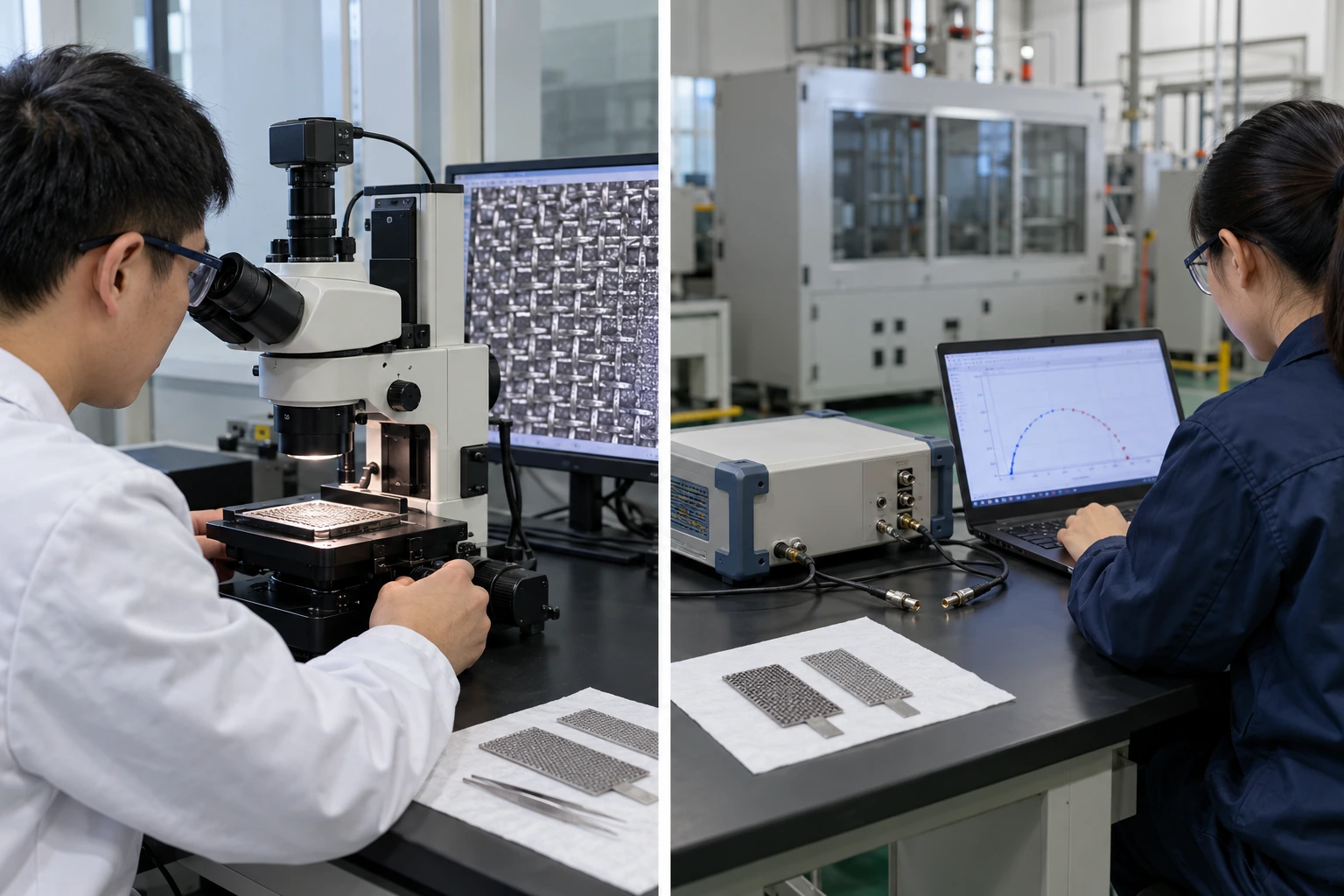
Titanium electrode EIS should complement surface inspection and output measurements rather than replace them. Each method observes different aspects of the component and process.
What evidence would challenge your interpretation?
Use independent checks. For water-treatment applications, compare spectra with coating condition and useful-output records. Agreement strengthens a hypothesis; disagreement should remain visible in the report.
- Compare photographs and process trends.
- Keep contradictory findings in scope.
| Check | Decision |
|---|---|
| Electrical response | One evidence stream |
| Independent observations | Test the proposed explanation |
Seek evidence that can distinguish competing mechanisms. Key Takeaway: Combine methods before making a replacement recommendation.
9. How should Titanium electrode EIS comparisons be planned?

Titanium electrode EIS comparisons should use matched samples, operating states and acquisition methods. Differences smaller than measurement variability may not support a supplier ranking.
What makes the comparison repeatable?
Plan repeats and controls. Agree on sample preparation and relevant baseline measurements. Keep the test within the qualified operating envelope of the equipment and materials.
- Use traceable sample identities.
- Define acceptance before testing.
| Check | Decision |
|---|---|
| One unexplained spectrum | Weak comparison basis |
| Controlled repeated measurements | More useful diagnostic evidence |
Compare differences against repeatability. Key Takeaway: A controlled comparison supports a narrower, more defensible interpretation.
10. What Titanium electrode EIS evidence supports a decision?

A Titanium electrode EIS decision needs raw spectra, methods, operating records and supporting observations. The report should state what was established and what remains uncertain.
Request evidence with its limits
Bring the diagnostic question. When you contact us today, we can review electrode configuration and sample requirements for your test scope. We favor traceable analysis over a single fitted health score.
- Attach raw data and model rationale.
- Identify the qualified analyst.
| Check | Decision |
|---|---|
| Model output alone | Insufficient cause evidence |
| Complete review package | Supports a technical decision |
Choose the next check from the remaining uncertainty. Key Takeaway: Use EIS as one part of a cause-based electrode review.
Frequently Asked Questions
Can I identify coating damage from one semicircle? No. Similar responses can have different causes and need supporting evidence.
What's the best equivalent circuit? Use a physically justified model for the actual system; no circuit fits every electrode meaningfully.
How do I know if drift affected a spectrum? Review operating trends and measurement-validity checks over the acquisition period.
Can I compare raw spectra from different electrode sizes? Only with geometry and normalization explicitly addressed.
Can I replace inspection with an EIS test? No. Electrical response and physical condition provide complementary evidence.