
A Titanium electrode supports electrochemical descaling as part of a cell that changes local chemistry and collects precipitated minerals. In many designs, hardness precipitation occurs near a cathode, while a coated titanium anode supports the balancing reaction. If your cooling circuit still scales after installing a cell, electrode selection alone may not explain the result. Check water chemistry, hydraulic contact, solids removal, and the actual treatment objective together.
1. What Does a Titanium electrode Do in Descaling?
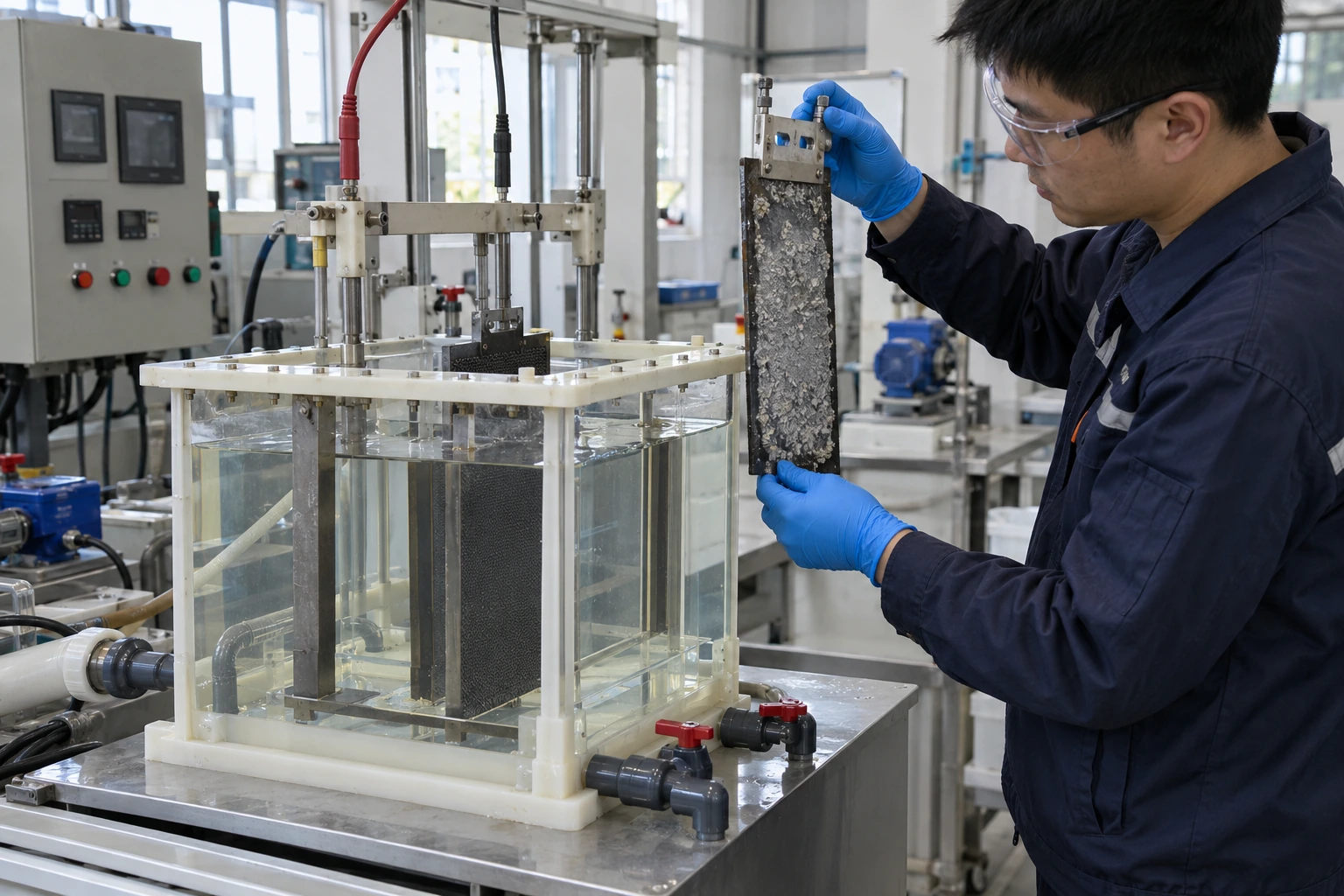
A coated Titanium electrode commonly provides an anodic reaction in an electrochemical descaling cell, while hardness precipitation may occur near a separate cathode. Confirm the role of every electrode in the selected design.
Why does electrode identity matter?
Locate the precipitation zone. A dark coated plate is not automatically the surface intended to collect scale. The cell layout and reactions determine where local conditions favor deposition.
- Identify anode and cathode materials.
- Mark the intended deposit-collection surface.
- Describe how solids leave the system.
| Check | Decision |
|---|---|
| Anodic component | Supports its specified oxidation reaction |
| Cathodic region | May promote local mineral precipitation |
Confusing electrode roles can lead to the wrong replacement specification. Key Takeaway: Ask for a process diagram before choosing a coating.
2. How Does Titanium electrode Descaling Differ from EDR?
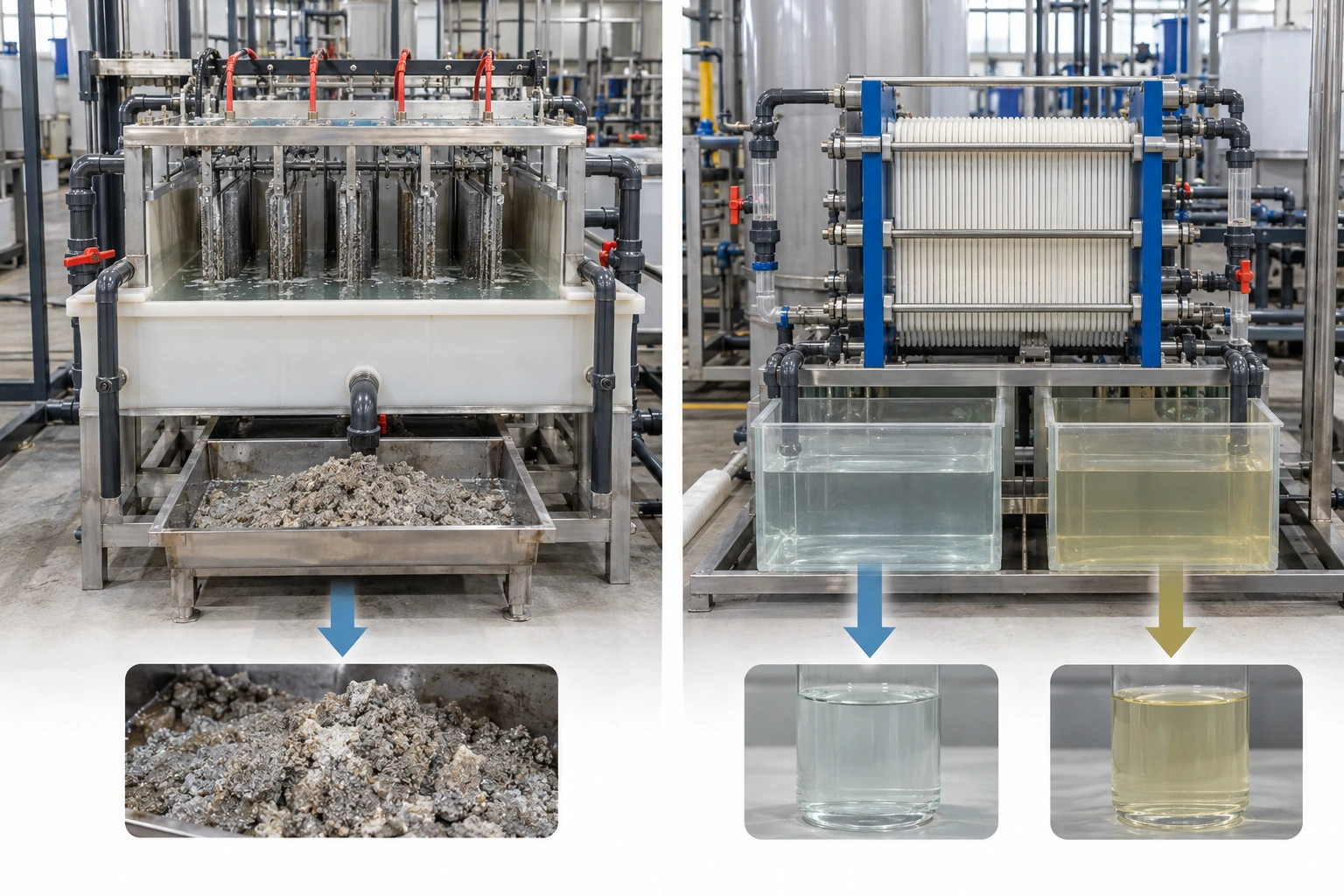
A Titanium electrode in electrochemical precipitation serves a different process from electrodialysis reversal, which uses ion-selective membranes and electrical driving forces. These technologies should not share an undifferentiated performance claim.
Which process does your equipment actually use?
Follow the mineral's route. Precipitation produces solids that must be removed. Electrodialysis transfers ions between streams through membranes, with its own concentration and maintenance requirements.
- Check whether membrane compartments are present.
- Identify solids, concentrate, and treated-water outlets.
- State which water-quality parameter must change.
| Check | Decision |
|---|---|
| Electrochemical precipitation | Collects precipitated mineral solids |
| Electrodialysis | Transfers ions between membrane-separated streams |
The same broad application label can conceal different equipment duties. Key Takeaway: Specify the process before discussing electrode options.
3. Which Water Data Guide Titanium electrode Selection?
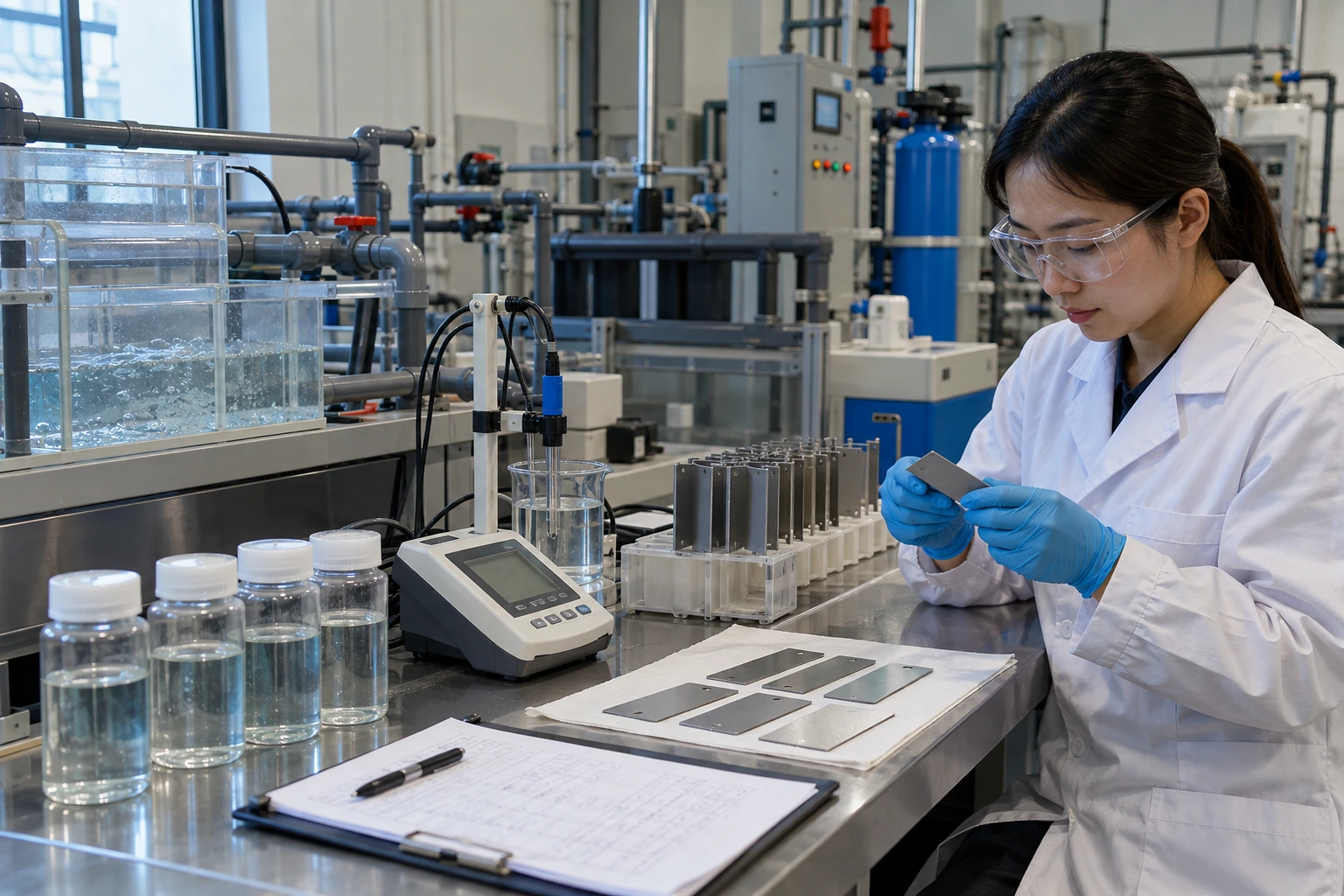
Titanium electrode selection for descaling needs water composition, temperature, flow, and the intended mineral-control objective. Hardness alone does not describe precipitation behavior.
Which analysis should accompany an inquiry?
Send the water balance as well as the sample report. Calcium, magnesium, alkalinity, conductivity, pH, chloride, and suspended solids can affect process behavior. Include concentration changes in recirculating service.
- Provide makeup and circulating-water data.
- Describe chemical additives and treatment steps.
- State normal and seasonal operating ranges.
| Check | Decision |
|---|---|
| Single feed sample | Describes one moment |
| Operating chemistry range | Supports a realistic design basis |
A cell tested in one water sample may behave differently in a concentrating cooling loop. Key Takeaway: Use representative chemistry for both selection and validation.
4. How Does Current Affect Titanium electrode Descaling?
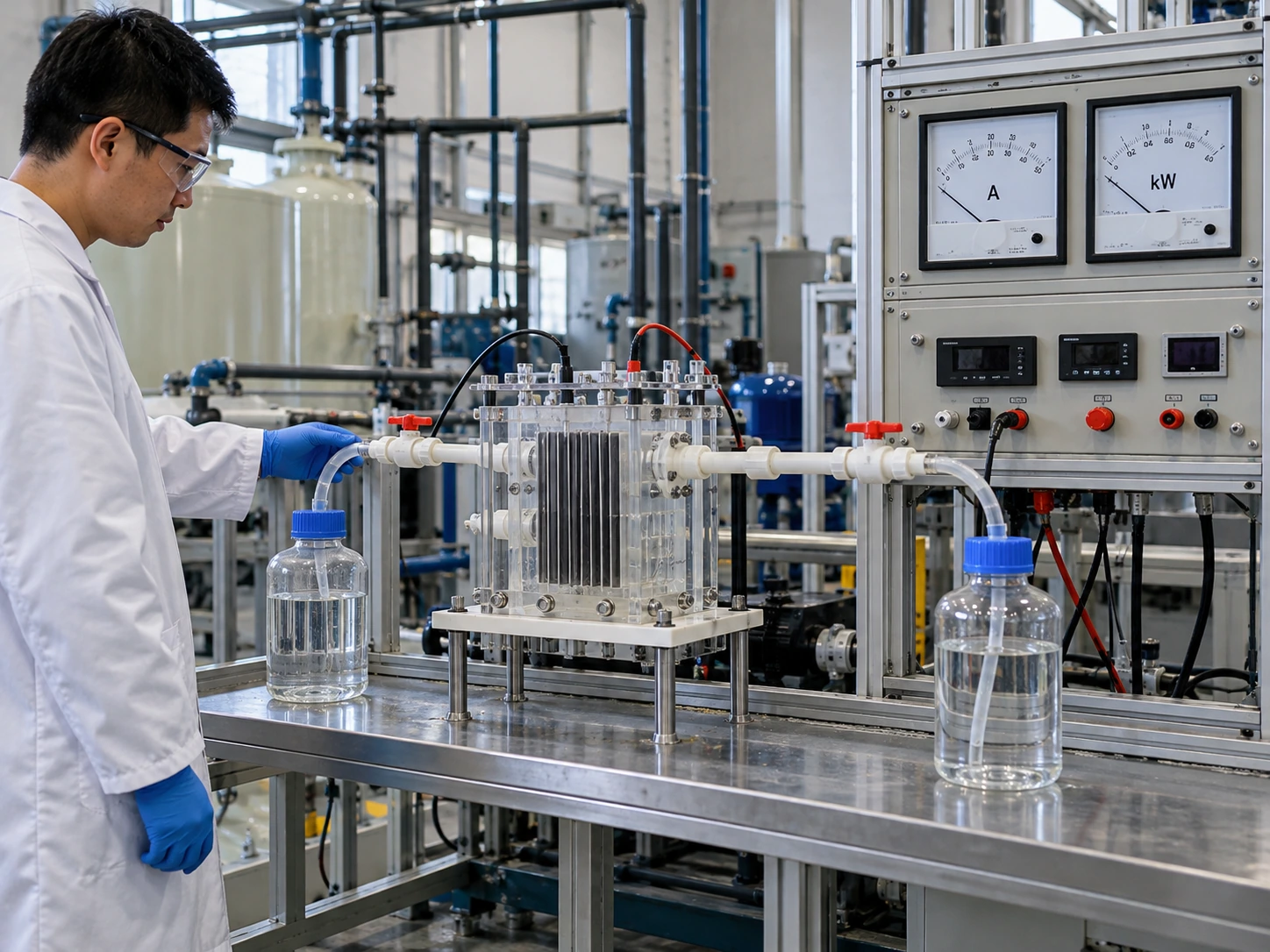
Current affects Titanium electrode reactions and local chemistry, but greater current does not guarantee proportionally greater useful mineral removal. Transport, available ions, side reactions, and heat can limit the result.
What should a current trial compare?
Measure removal and electricity together. A cell customization review should define current-density basis and sampling methods. Compare treatment response per unit water and energy under matched conditions.
- Record flow, current, voltage, and temperature.
- Measure inlet and outlet chemistry consistently.
- Track solids collected and residual scaling tendency.
| Check | Decision |
|---|---|
| Higher current | Changes reaction rate and power input |
| Useful treatment result | Needs measured chemistry and solids evidence |
Electrical input is not a substitute for a mineral-removal measurement. Key Takeaway: Select current from a representative pilot rather than a generic range.
5. Which Titanium electrode Coating Fits Descaling Duty?
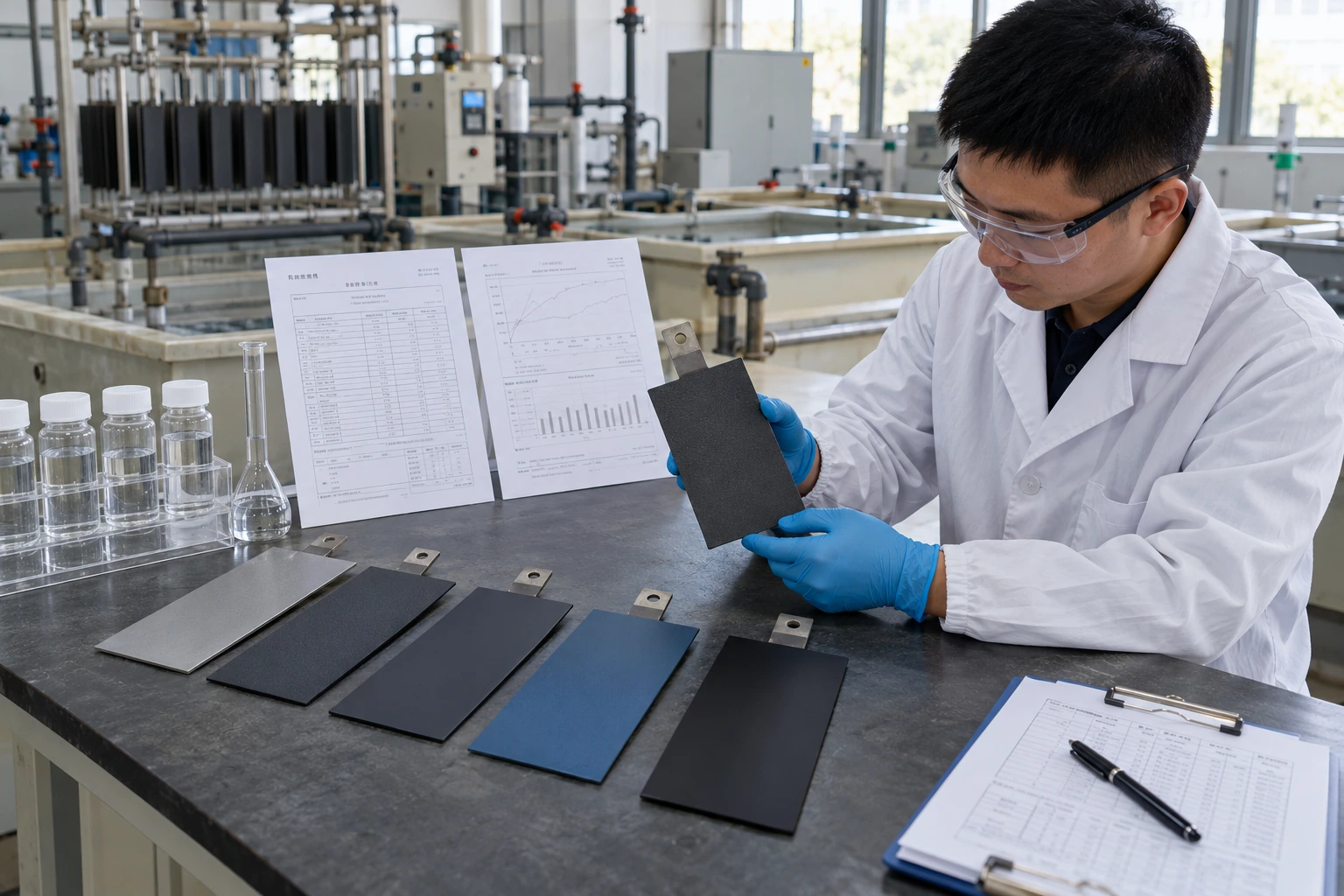
A Titanium electrode coating for descaling must fit the intended anodic reaction and actual water chemistry. Chloride-containing water can introduce competing reactions that require review.
What should coating selection address?
Name the desired reaction and the unwanted products. The anode's task may differ from the cathode's deposit-collection task. Review process chemistry and monitoring with the responsible water-treatment engineer.
- State chloride and other relevant ions.
- Identify product-water and discharge requirements.
- Specify operating temperature and current profile.
| Check | Decision |
|---|---|
| Reaction compatibility | Guides coating choice |
| Byproduct assessment | Checks process consequences |
A coating chosen only for corrosion resistance may not meet treatment objectives. Key Takeaway: Select the active surface against a defined reaction duty.
6. How Does Flow Change Titanium electrode Descaling?
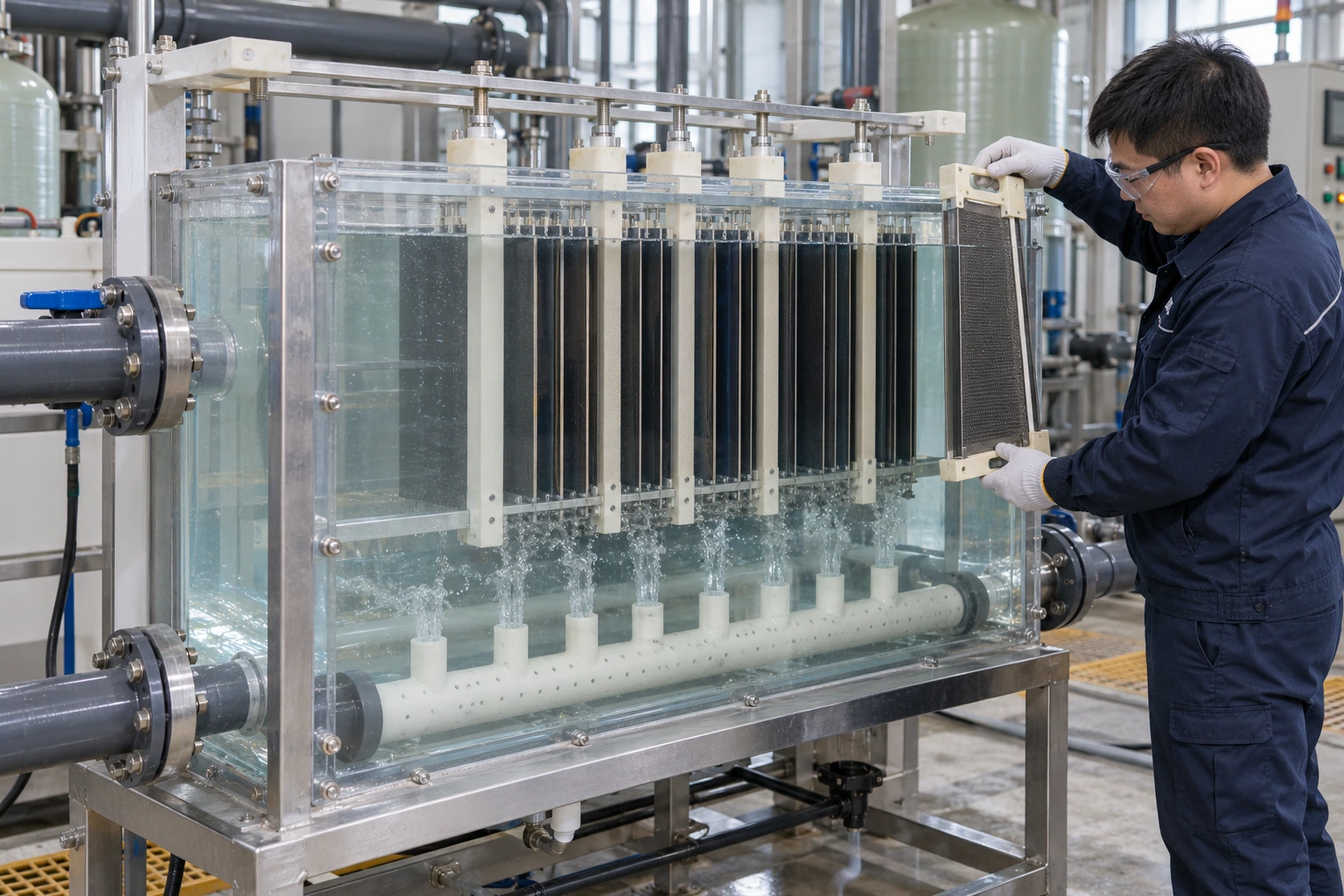
Flow changes transport, residence time, gas removal, and solids behavior around a Titanium electrode cell. A high flow rate can improve transport yet reduce contact time in a fixed volume.
Which hydraulic checks are useful?
Test the actual flow path. Bypass, dead zones, and uneven distribution can reduce treatment even when total flow matches the design value. Record how the cell connects to the circulating system.
- Measure flow through the treatment cell.
- Inspect inlet distribution and outlet restriction.
- Check solids accumulation during extended operation.
| Check | Decision |
|---|---|
| Residence time | Relates cell volume to treated flow |
| Distribution | Determines which surfaces receive water |
A flowmeter reading cannot reveal every internal bypass. Key Takeaway: Include hydraulic inspection in the pilot plan.
7. How Do You Remove Scale Around a Titanium electrode?
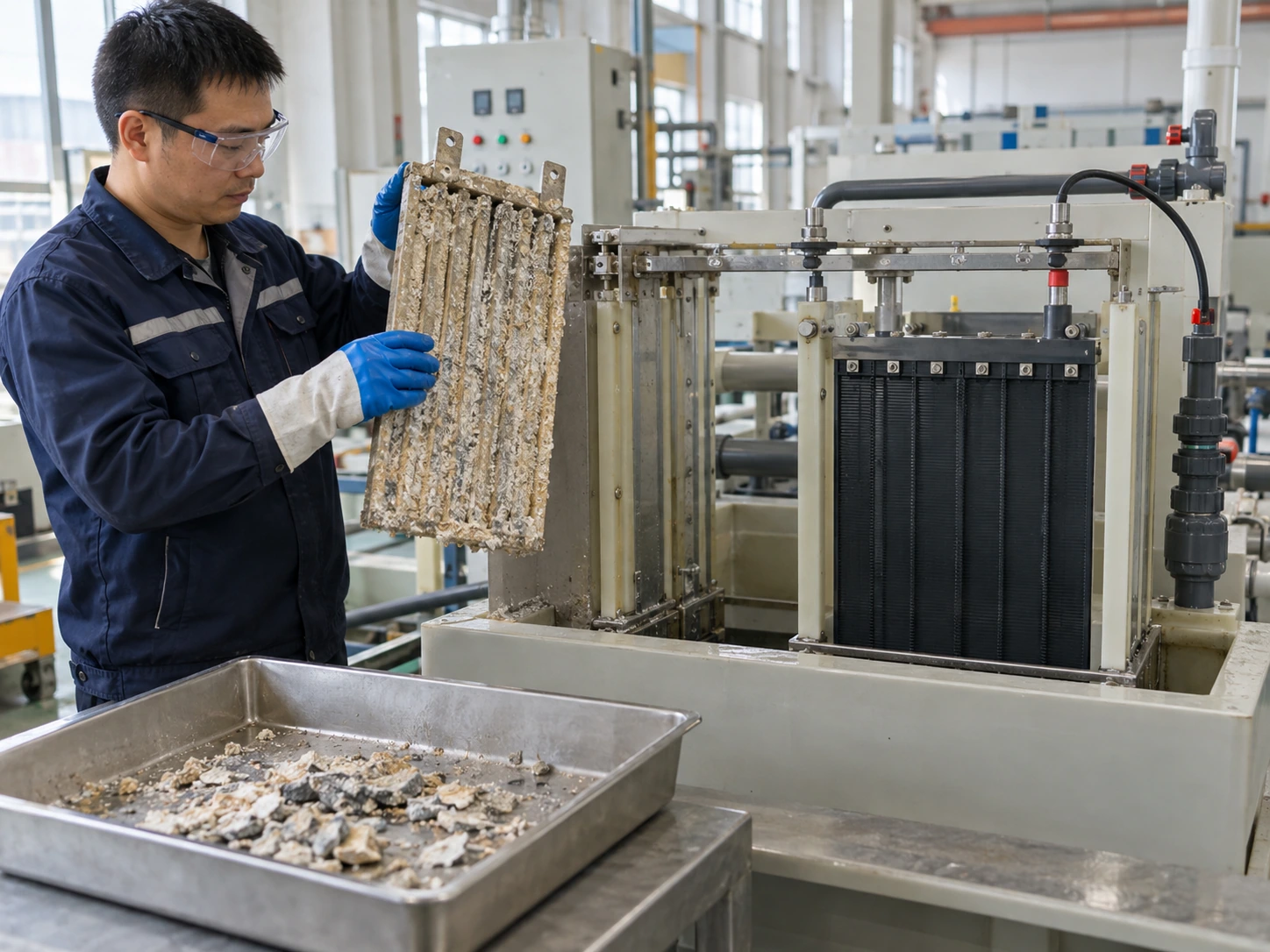
Remove collected scale using the cell's approved mechanical, hydraulic, or chemical method while protecting coated Titanium electrode surfaces. The designated collection electrode may have different maintenance rules.
What should a service-access review cover?
Separate the collection surface from the catalytic surface. A method intended for a removable cathode may damage a coated anode. Show technicians which parts are serviced and how.
- Identify removable collection components.
- Provide solids capture and waste handling.
- Keep cleaning tools and chemicals within approved procedures.
| Check | Decision |
|---|---|
| Deposit-collection component | Uses its designated removal method |
| Coated active component | Requires coating-compatible handling |
A shared maintenance label can hide different material limits. Key Takeaway: Write component-specific cleaning instructions.
8. What Should a Titanium electrode Descaling Pilot Measure?
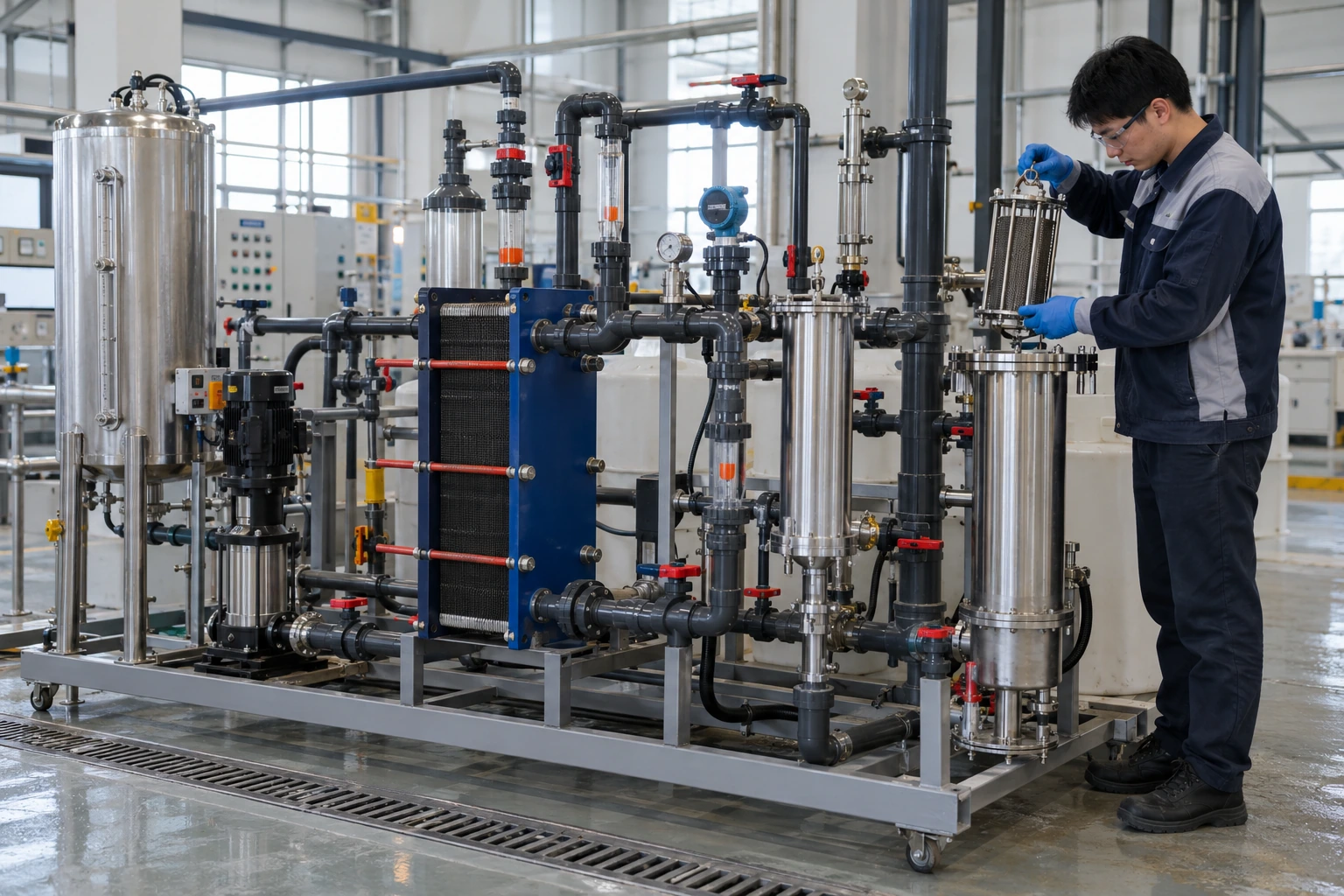
A Titanium electrode descaling pilot should measure treatment response, energy, maintenance, and water chemistry under representative conditions. Reduced visible scale on one surface does not establish full-system performance.
How should you compare before and after?
Use matched sampling and a clear objective. Retain quality-control documentation for electrode identity and dimensions. Your process measurements should distinguish hardness removal from changes in where minerals precipitate.
- Track inlet and outlet chemistry over time.
- Measure collected solids and cleaning effort.
- Observe downstream heat-transfer or scaling indicators where relevant.
| Check | Decision |
|---|---|
| Cell measurements | Describe local operation |
| System measurements | Check the treatment objective |
The pilot must show whether mineral deposition moved or useful control improved. Key Takeaway: Define success with system-level evidence.
9. When Does Titanium electrode Descaling Need Redesign?
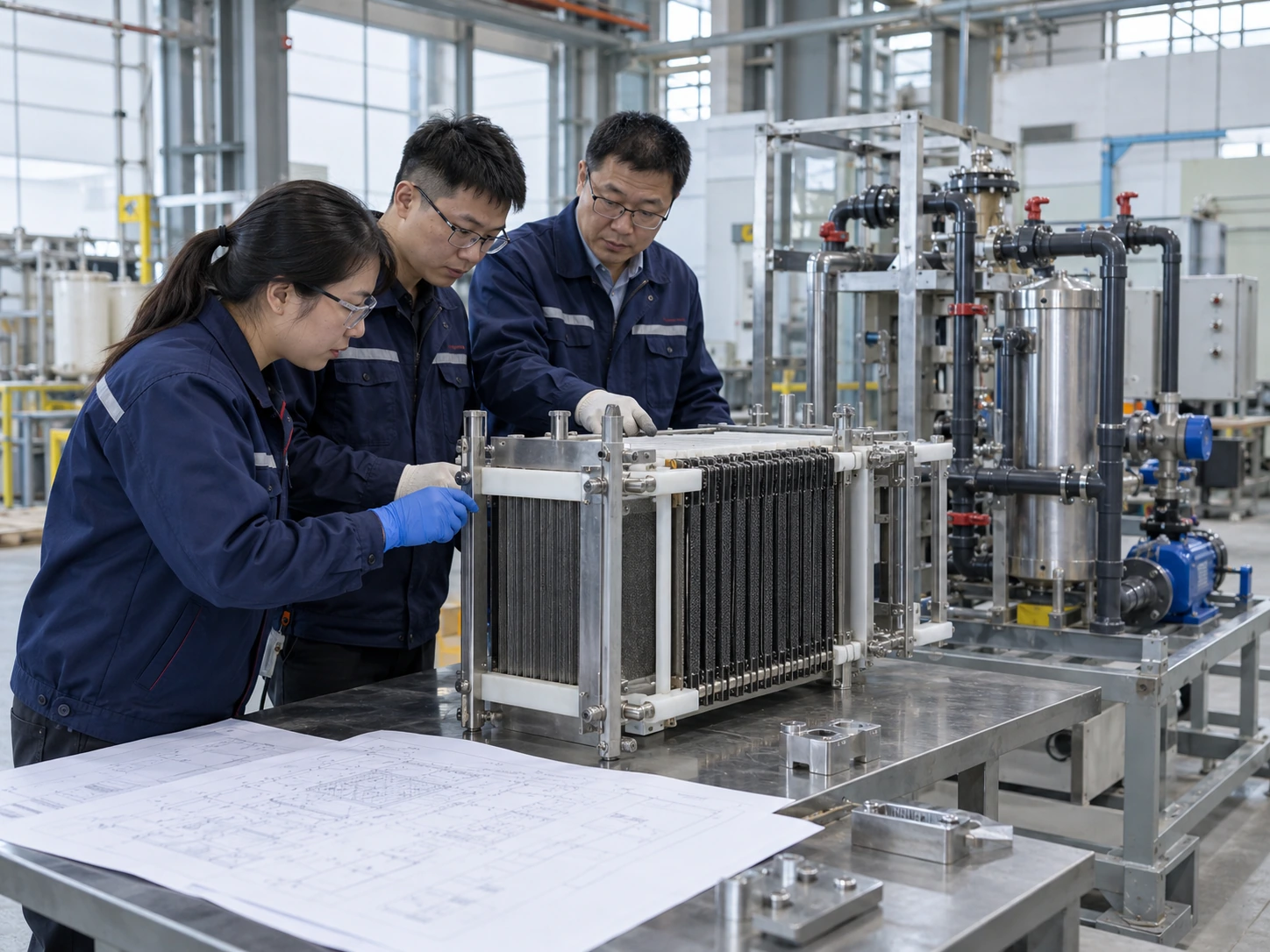
A Titanium electrode descaling installation needs review when treatment, maintenance, or energy targets are missed despite operation within the agreed window. The cause may involve chemistry, geometry, or integration.
Which changes deserve priority?
Use the failed criterion to guide the redesign. Poor solids removal calls for a different response from uneven current or excessive pressure loss. Change one defined variable where practical and retain comparable records.
- Identify the specific unmet target.
- Check operating assumptions against field data.
- Retest the modified design against the same criteria.
| Check | Decision |
|---|---|
| Chemistry mismatch | Review process suitability |
| Mechanical or hydraulic constraint | Review cell integration |
A replacement coating alone may leave the dominant process constraint unchanged. Key Takeaway: Redesign from measured causes.
10. What Titanium electrode Descaling Data Should You Send?

Send Titanium electrode role, water analysis, cell drawing, electrical duty, flow, and target treatment result for a useful inquiry. Include how deposits will be collected and removed.
How can we support your equipment project?
Bring the water and electrode specifications together. We can review custom electrode geometry and coating options against your stated process; contact us today with the pilot requirements. Our position is that descaling claims should be supported by water and operating measurements.
- Attach the process and electrical diagrams.
- Define sampling, energy, and maintenance criteria.
- Identify unresolved chemistry or byproduct questions.
| Check | Decision |
|---|---|
| Water and process data | Establish the application |
| Electrode and test data | Support a component proposal |
This package connects electrode supply with the treatment result your equipment must deliver. Key Takeaway: Approve components within a measured process trial.
Frequently Asked Questions
Can I use a titanium anode alone to remove all hardness? No. Descaling depends on the complete electrochemical process, including electrode roles, chemistry, flow, and solids removal.
What's the best coating for electrochemical descaling? It depends on the anodic reaction and water chemistry. Chloride, temperature, current, and unwanted products require review.
How do I know if descaling actually works? Measure the intended system result. Track chemistry, deposits, energy, maintenance, and relevant downstream performance.
Can I treat electrochemical descaling and electrodialysis as the same process? No. Precipitation and membrane ion transfer require different cell layouts and acceptance evidence.
Can I copy a published laboratory operating point? Use it only as research context. Your water chemistry, scale, geometry, and hydraulic conditions need their own validation.