
A Titanium electrode can handle polarity reversal only when its coating and complete cell have been qualified for that duty. Your controller offers a self-cleaning setting, so enabling reversal seems like a simple maintenance improvement. Yet a fixed-duty anode may face a new electrochemical environment when it becomes cathodic. Review the electrode, waveform, and process together before adopting that operating mode.
1. Can Every Titanium electrode Reverse Polarity?
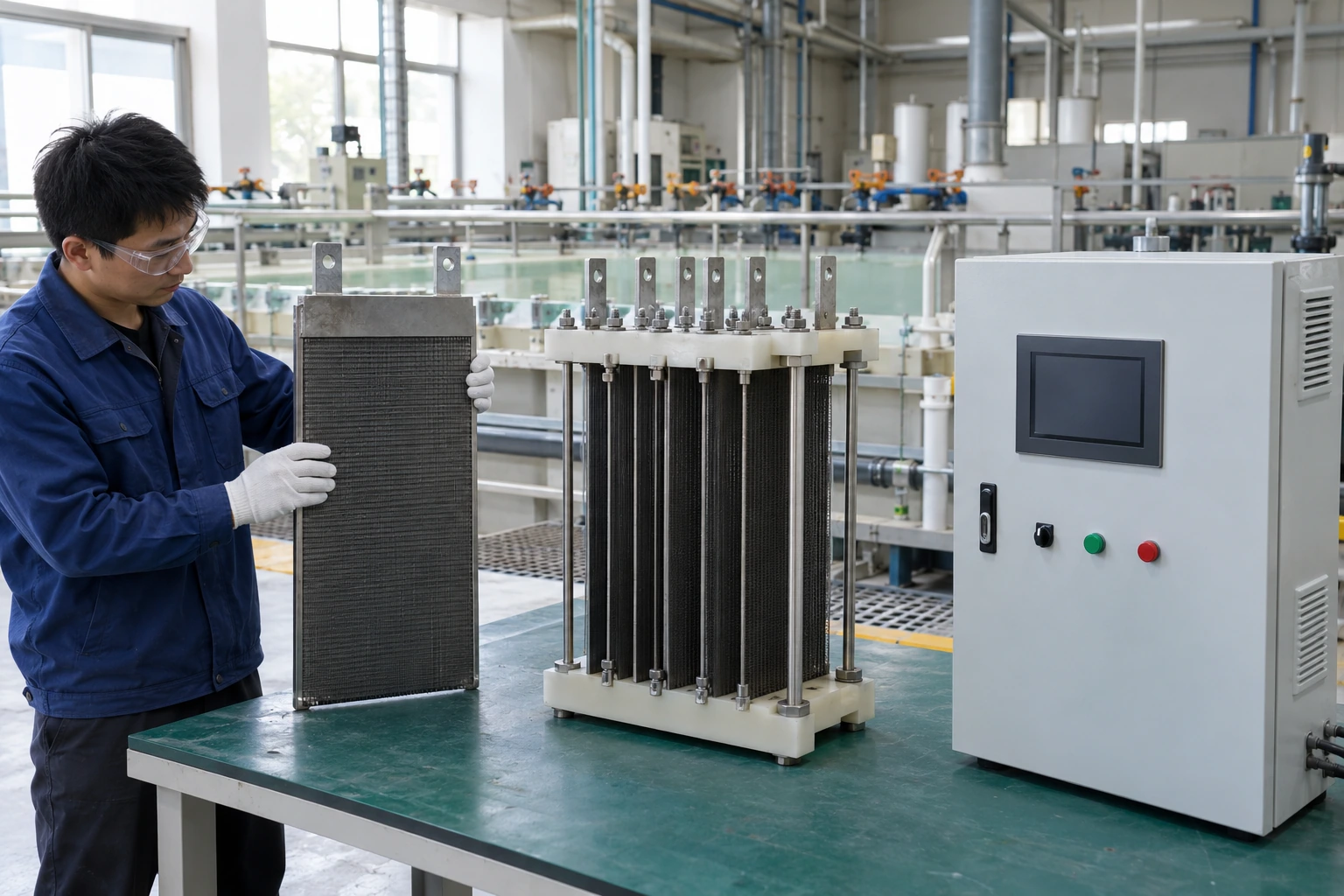
Only a Titanium electrode qualified for both electrical directions should operate under polarity reversal. Coating stability and reaction duty vary by design, so a familiar substrate does not establish bidirectional compatibility.
What should a supplier confirm?
Ask about both electrical directions. Obtain the permitted current, duration, chemistry, and cycling conditions for each direction. A vague self-cleaning claim does not describe that operating window.
- Identify coating and substrate configuration.
- State forward and reverse duty separately.
- Request evidence for the intended cycle.
| Check | Decision |
|---|---|
| Fixed anodic duty | Does not imply reversal capability |
| Qualified reversible duty | Has defined conditions in both directions |
A controller feature cannot qualify an electrode material. Key Takeaway: Require a reversal-specific design basis.
2. How Does Reversal Change a Titanium electrode?
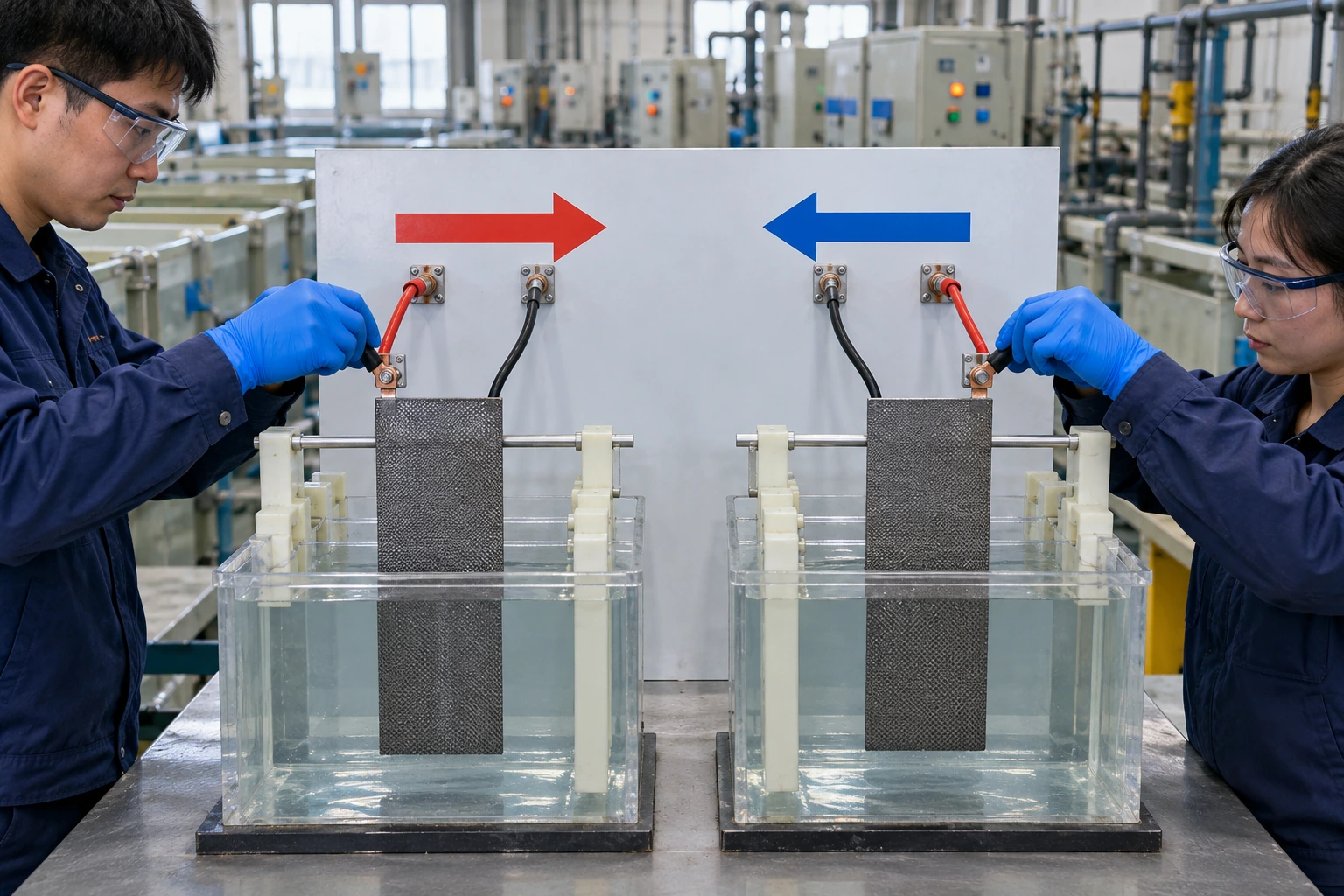
Reversal changes a Titanium electrode from anodic to cathodic duty, or the reverse, and can change reactions, surface conditions, gas evolution, and deposits. The exact response depends on chemistry and construction.
What does the role change mean?
Follow the reaction at each face. An assembly designed for one polarity may behave differently when roles switch. Track both electrodes and every affected chamber rather than reviewing one plate alone.
- Identify which reactions occur in each phase.
- Check gas and liquid routing for both directions.
- Review materials exposed to the changed local chemistry.
| Check | Decision |
|---|---|
| Forward phase | Has its own reaction and limits |
| Reverse phase | Needs separate compatibility review |
Switching wires changes electrochemical duty even when mechanical geometry stays constant. Key Takeaway: Treat reversal as a two-direction process specification.
3. Why Can Reversal Damage a Titanium electrode?

Reversal can damage a Titanium electrode when cathodic exposure, cycling, or transient conditions fall outside its qualified limits. Some coating systems tolerate designed reversal while others do not.
Which details should an investigation preserve?
Record what the controller actually delivered. A programmed value may differ from measured current during switching. Keep waveform evidence and identify the timing of any surface or output change.
- Capture forward, reverse, and switching behavior.
- Record electrolyte and temperature during the event.
- Preserve damaged parts before cleaning.
| Check | Decision |
|---|---|
| Approved reversal window | Defines acceptable exposure |
| Unexpected reverse event | Requires diagnosis |
A universal damage time would ignore differences in coating and operating conditions. Key Takeaway: Investigate the measured event rather than assuming all reversal behaves alike.
4. Does Reversal Clean Every Titanium electrode System?
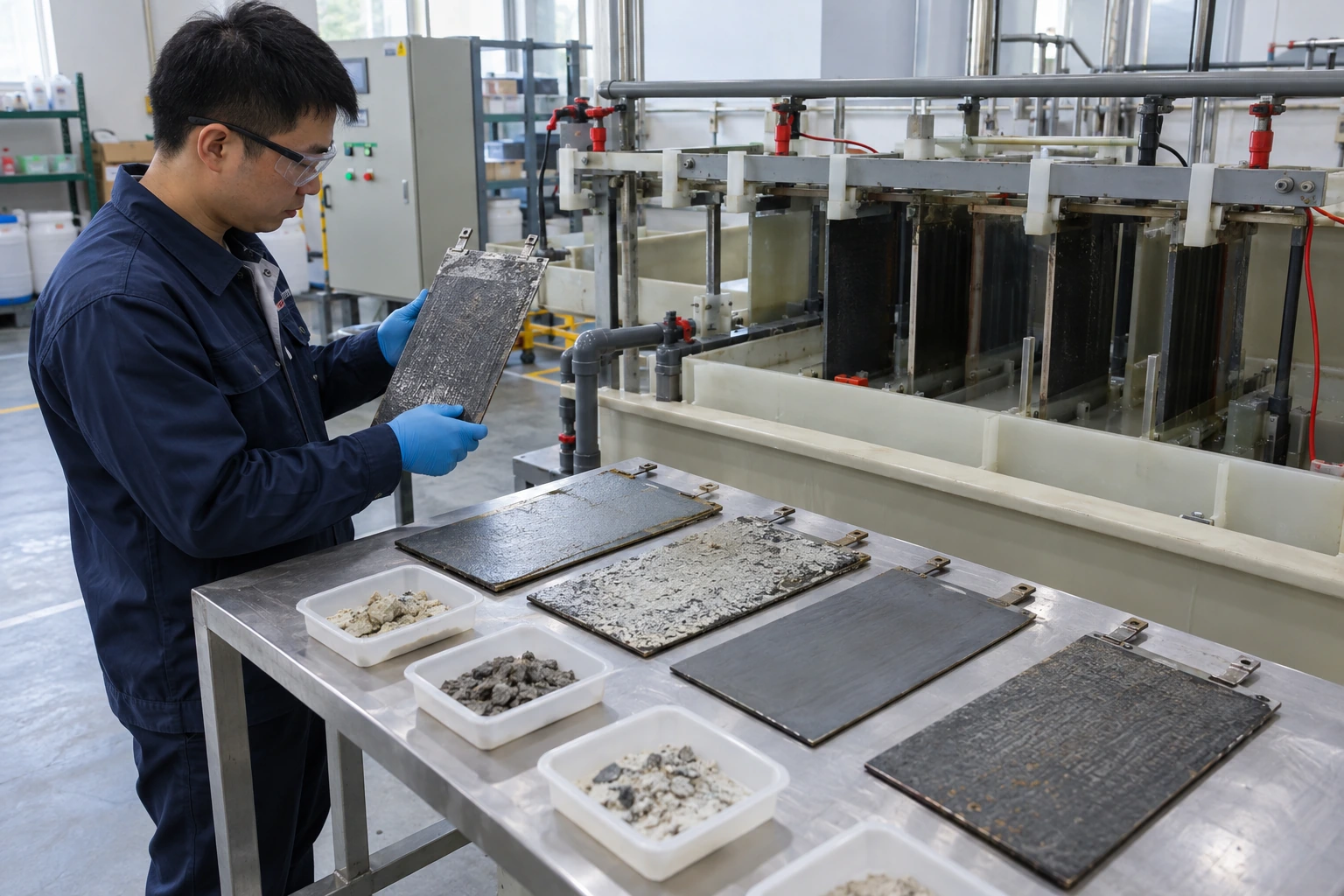
Reversal does not clean every Titanium electrode system because deposits and electrode designs differ. A purpose-built process may manage certain scale mechanisms, but it does not remove all fouling.
What should a self-cleaning claim demonstrate?
Name the deposit the cycle is intended to control. In electrodialysis and descaling applications, distinguish membrane-stack reversal from a generic anode-cleaning cycle. Evaluate removal, output stability, and electrode wear together.
- Identify deposit composition and location.
- Check residual solids and downstream handling.
- Compare cleaning benefit with electrode condition.
| Check | Decision |
|---|---|
| Validated deposit control | Supports a specific maintenance claim |
| Unknown fouling mechanism | Needs testing before adoption |
Less visible scale does not automatically establish longer electrode life. Key Takeaway: Qualify self-cleaning against your actual deposit and process.
5. What Waveform Does a Titanium electrode Supplier Need?

A Titanium electrode supplier needs current or potential direction, amplitude, duration, duty cycle, switching behavior, and operating chemistry. Average current alone hides the exposure that determines reversal suitability.
Which values belong in the operating sheet?
Send a waveform and a table. Include steady phases, rests, ramps, and any measured transients. Describe startup and shutdown separately if their behavior differs.
- State control mode and current limits.
- Record phase durations and reversal frequency.
- Attach measured waveform evidence where available.
| Check | Decision |
|---|---|
| Average value | Supports general accounting |
| Full waveform | Describes directional and transient exposure |
Two cycles with identical averages may impose different surface stresses. Key Takeaway: Request qualification against the complete waveform.
6. How Does Chemistry Affect Titanium electrode Reversal?

Chemistry affects Titanium electrode reversal through available reactions, local pH, dissolved species, and deposit behavior. A qualified cycle in one electrolyte may not transfer to another.
What changes require another review?
Compare the full liquid composition. Chloride level, hardness, impurities, and additives can change what happens near each electrode. Include normal variation and process upsets.
- Provide feed and circulating-liquid analysis.
- Identify intended products and unwanted byproducts.
- Review membrane, seal, and housing compatibility.
| Check | Decision |
|---|---|
| Matched chemistry | Supports comparison with prior trials |
| Changed chemistry | Requires renewed compatibility assessment |
Nominal salt concentration alone cannot describe every relevant species. Key Takeaway: Recheck reversal after a meaningful chemistry change.
7. How Should Titanium electrode Reversal Controls Behave?
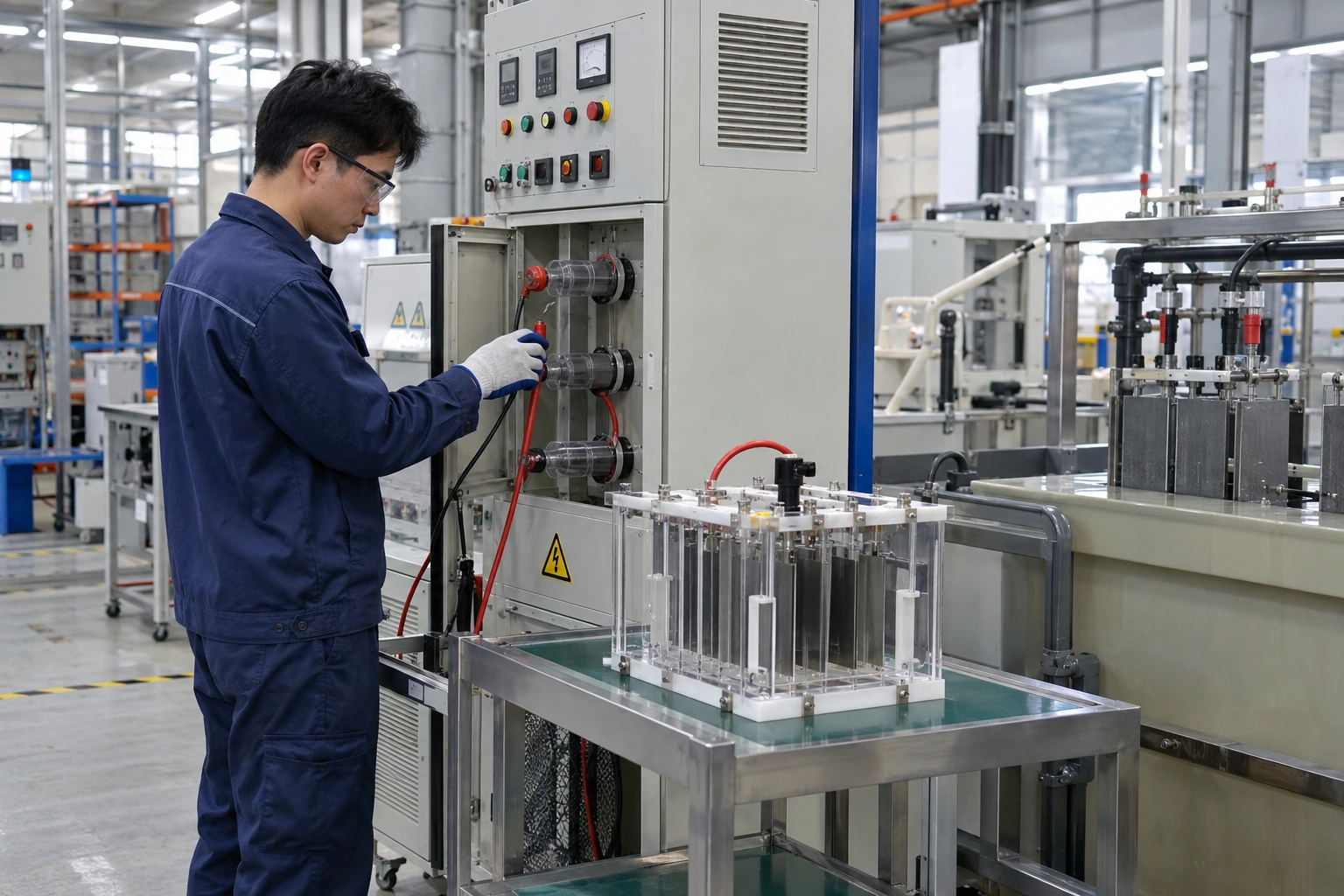
Titanium electrode reversal controls should deliver the qualified waveform and manage interlocks, fault states, and restart behavior. Electrical capability alone does not establish process suitability.
Which control cases need testing?
Include faults and interruptions in commissioning. Confirm behavior after power loss, communication failure, and maintenance. Qualified engineers should review switching hardware and protective functions.
- Verify polarity and direction at the cell.
- Test the intended safe state under faults.
- Document settings and access control for changes.
| Check | Decision |
|---|---|
| Normal cycle | Matches the approved operating profile |
| Fault response | Prevents uncontrolled exposure |
A well-qualified electrode can still face unqualified duty after a controller change. Key Takeaway: Validate controls and electrodes as one system.
8. What Tests Qualify a Reversible Titanium electrode?

Tests qualify a reversible Titanium electrode only for the recorded chemistry, geometry, waveform, and acceptance criteria. A short demonstration cannot establish long-term cycling durability.
What should your pilot plan measure?
Test both performance and condition over repeated cycles. A custom design review should connect the test to your production operating pattern. Inspect output, voltage behavior, deposits, and coating condition at planned intervals.
- Record actual cycle count and directional charge.
- Measure output under defined sampling conditions.
- Inspect surfaces and connections after the test.
| Check | Decision |
|---|---|
| Functional cycling test | Checks repeated operating behavior |
| Condition inspection | Finds accumulated changes |
A stable early cycle does not describe later degradation. Key Takeaway: Use a documented cycling plan before series deployment.
9. What If a Titanium electrode Was Connected Backwards?
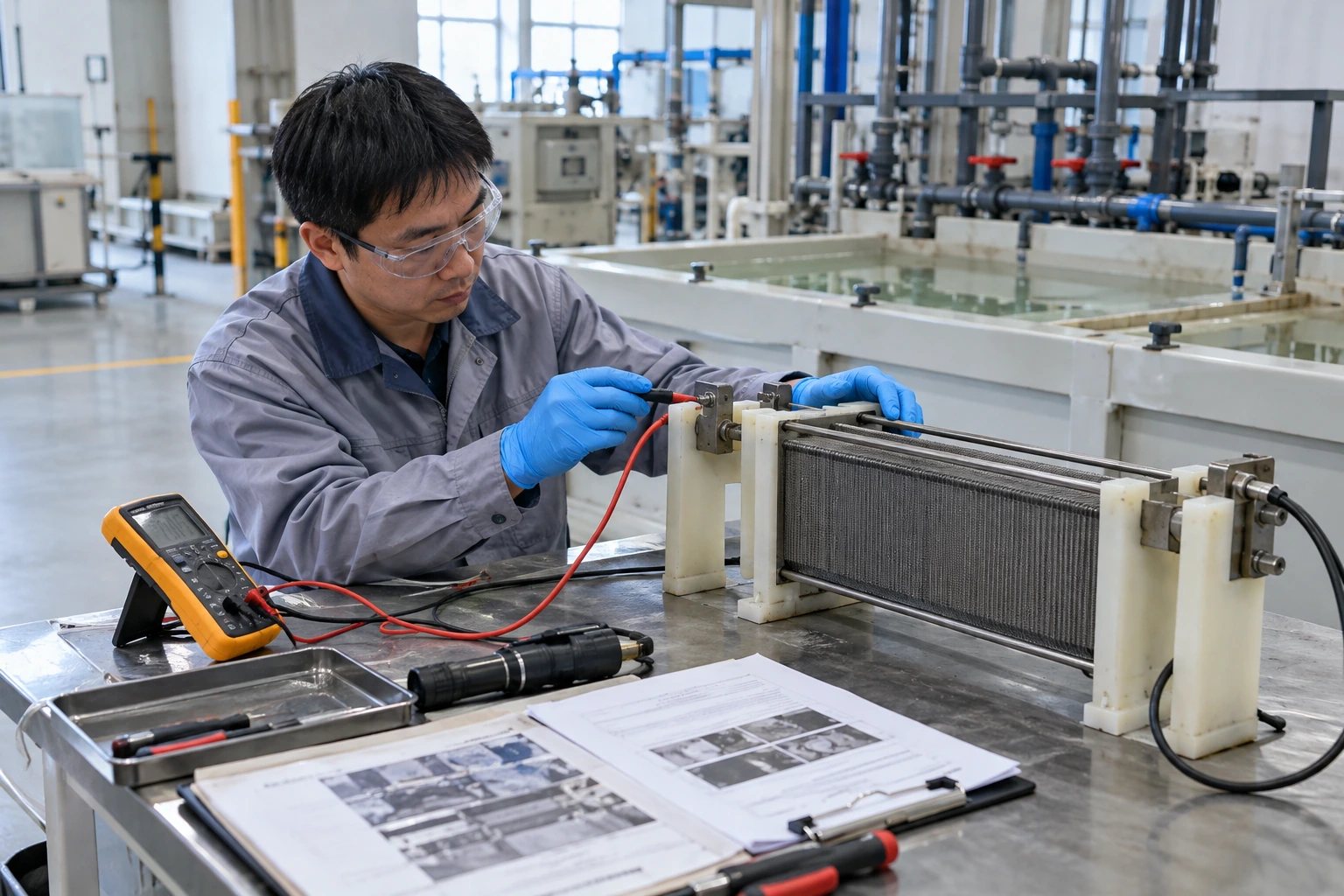
If a Titanium electrode was connected backwards, isolate it under the equipment procedure and document the event before deciding whether it can return to service. Damage cannot be judged from elapsed time alone.
Which evidence supports the disposition?
Preserve the part and its operating history. Record current, duration, chemistry, temperature, and observed effects. Ask engineering to define inspection and functional checks before restarting.
- Identify the affected part and wiring path.
- Record alarms and controller logs.
- Correct the cause and verify terminal polarity.
| Check | Decision |
|---|---|
| Event record | Defines exposure |
| Inspection and test | Support return-to-service decisions |
A corrected wire does not prove that the electrode remains qualified. Key Takeaway: Use an evidence-based disposition after accidental reversal.
10. How Do You Specify a Reversible Titanium electrode?

Specify a reversible Titanium electrode with both directional duties, chemistry, geometry, controls, and a validation plan. That package connects self-cleaning expectations with measurable electrode behavior.
What should your inquiry ask us to review?
Describe the cycle before requesting the coating. We can review custom electrode requirements against your stated reversible duty; contact us today with waveform and cell drawings. Our position is that reversal capability must be demonstrated for the intended application.
- Attach forward and reverse operating limits.
- State deposit-control and production objectives.
- Agree cycle testing and replacement criteria.
| Check | Decision |
|---|---|
| Duty package | Defines the required behavior |
| Validation plan | Defines how suitability will be checked |
This approach resolves the gap between a controller setting and a qualified process. Key Takeaway: Approve reversal through a complete application trial.
Frequently Asked Questions
Can I reverse any MMO anode for cleaning? No. Reversal requires a coating and cell qualified for that specific duty.
What's the best reversal interval? There is no universal interval. Deposit behavior, coating stability, chemistry, and waveform must be tested together.
How do I know if my controller is suitable? Check measured behavior against the approved cycle. Include switching transients, faults, and restart conditions.
Can I use a reversible coating in different water chemistry? Only after review. Hardness, chloride, additives, and impurities can change reactions and deposits.
Can I restart after accidental reverse wiring? Only after a documented assessment. Correct polarity and acceptable electrode condition both need verification.