
A Titanium electrode electrochlorination cell generates hydrogen at its cathode, so gas separation and a designed vent path belong in the system review. Some hydrogen can travel with product as entrained or dissolved gas. Follow manufacturer-approved design and qualified site engineering rather than a generic vent recipe.
1. Why Does a Titanium electrode Cell Generate Hydrogen?
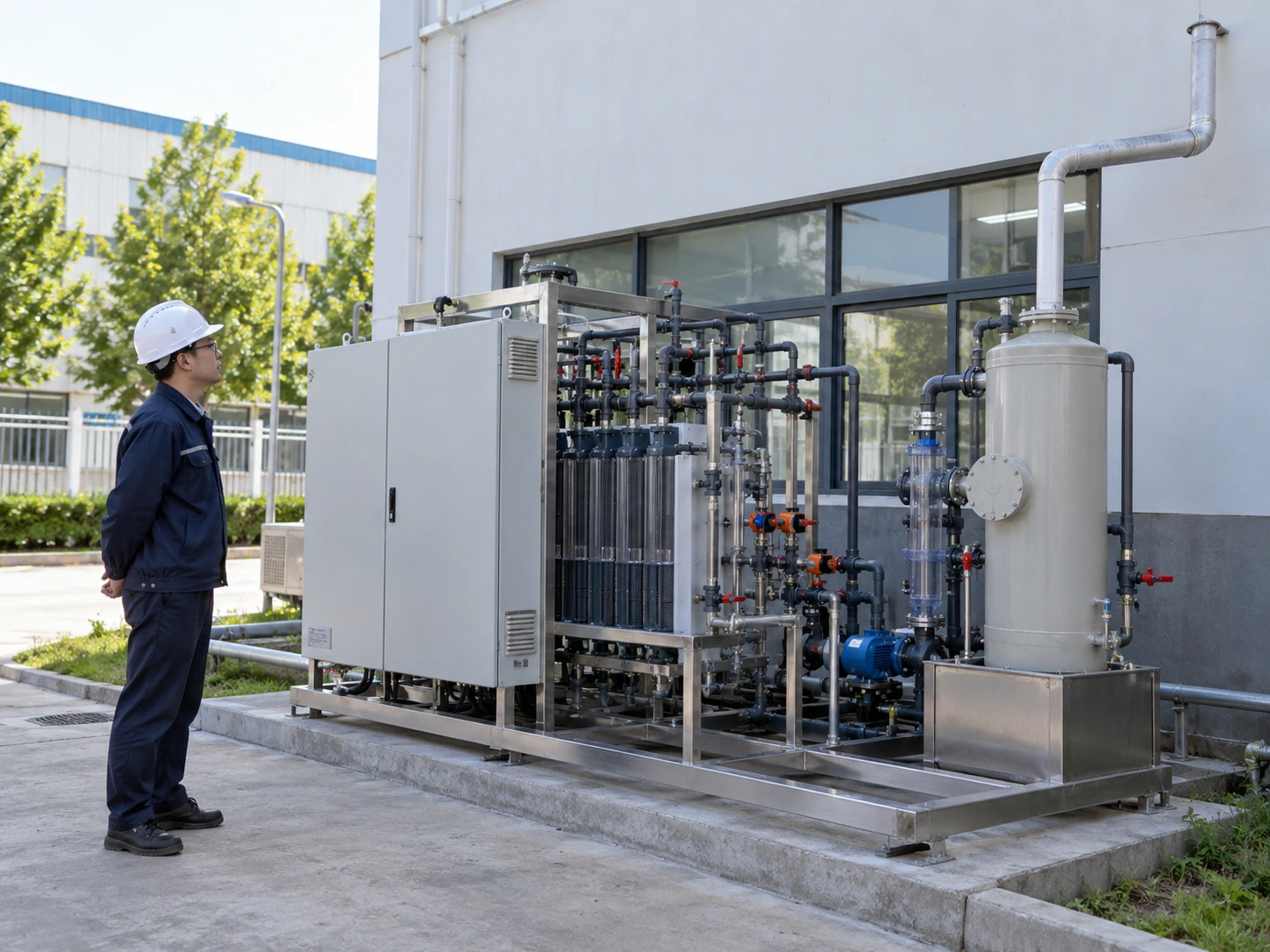
A Titanium electrode electrochlorination cell generates hydrogen at the cathode as water accepts electrons during operation. That gas must remain within a reviewed process and facility safety boundary.
Locate the gas-producing reaction
A cathode reaction forms hydrogen, while anodic chemistry supports hypochlorite production within a cell. Start review at the cathode. Cell layout, liquid coverage, current, and fluid flow affect how gas leaves the reaction zone, so a drawing needs electrode and gas-path context.
- Mark anode, cathode, liquid path, gas separation, and product outlet on one process sketch.
- Use manufacturer operating documents for that specific cell boundary.
| Check | Decision |
|---|---|
| Reaction location | Cathode surface |
| Review boundary | Cell plus gas path |
Understanding where hydrogen forms helps teams review where it can move next. Key Takeaway: Show gas routing, cell layout, and product flow on one drawing.
2. How Does Gas Move Through a Titanium electrode Cell?
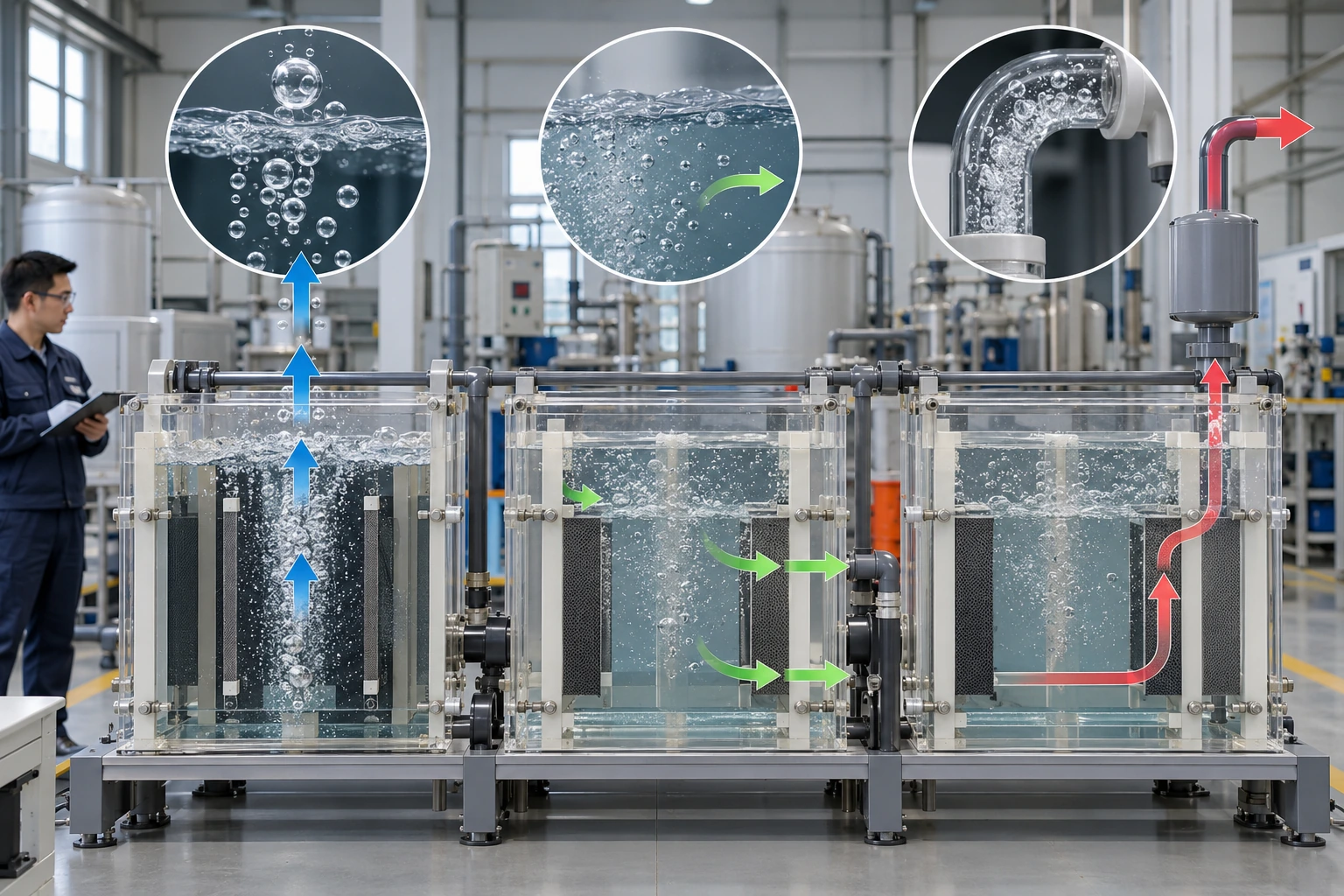
A Titanium electrode system can carry hydrogen as bulk gas, bubbles within product, or gas dissolved in liquid.
Follow each gas phase through the process
Bulk gas may separate from liquid, while smaller entrained bubbles and dissolved hydrogen can move downstream and release later. Trace more than the visible stream. Review outlet, connecting path, separator, storage tank, and each point where gas can collect or leave solution.
- Identify where bulk separation occurs and where remaining product is held.
- Ask the system designer how entrained and dissolved gas are handled after separation.
| Check | Decision |
|---|---|
| Bulk gas | Visible separate phase |
| Entrained or dissolved | May release downstream |
A clear outlet does not prove that all hydrogen has left the liquid. Key Takeaway: Review the complete gas-liquid path through storage and transfer.
3. Why Separate Gas Before a Titanium electrode Vent?
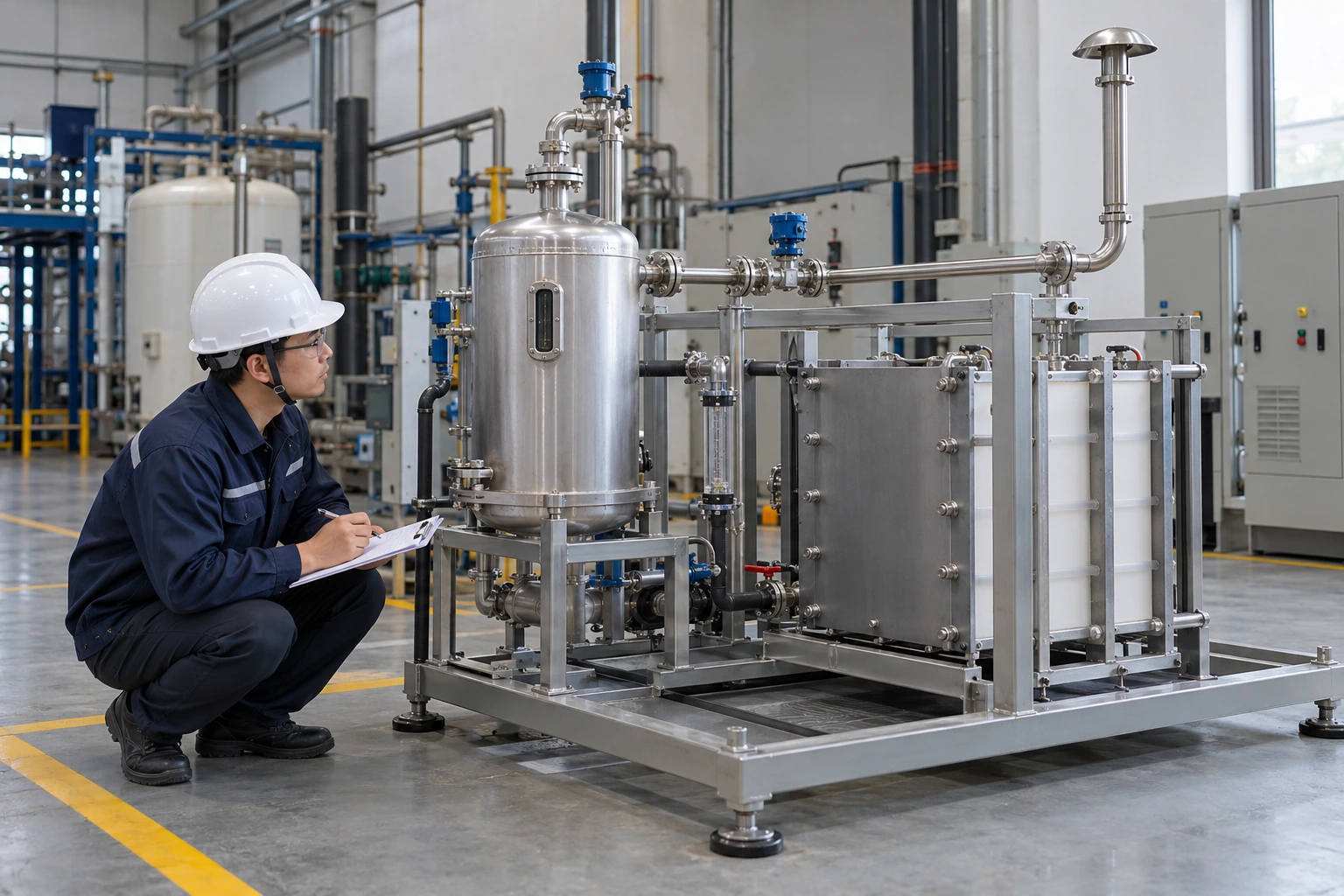
A Titanium electrode cell needs a gas-separation boundary before any vent route is reviewed for the facility.
Keep separation and discharge routing distinct
Separation manages gas leaving liquid, while a vent route carries gas away from process equipment. Keep both process boundaries visible on drawings. Their configuration depends on the selected generator, tank arrangement, room conditions, materials, and applicable engineering requirements.
- Show the process gas outlet separately from general room ventilation on design drawings.
- Assign an engineer to review discharge location and possible gas accumulation zones.
| Check | Decision |
|---|---|
| Separator | Gas-liquid process boundary |
| Vent route | Facility discharge boundary |
A gas separator and a room ventilation system solve related but different problems. Key Takeaway: Do not approve a vent path from a cell sketch alone.
4. Which Conditions Change Titanium electrode Gas Release?

A Titanium electrode gas-release profile depends on its cell and operating conditions, so project documents must define a qualified envelope.
Connect gas handling with operating conditions
Current, liquid flow, cell configuration, production schedule, and product tank arrangement may affect where or when gas appears. Read the operating envelope as one package. For a custom cell review, provide a cell drawing and its manufacturer's limits for intended process conditions.
- List the operating modes and process changes expected during normal service.
- Ask the equipment supplier which conditions alter gas separation or release behavior.
| Check | Decision |
|---|---|
| Process inputs | Current, flow, cell form |
| Design evidence | Qualified operating envelope |
A gas review based on one steady operating case may miss another approved mode. Key Takeaway: Review gas behavior across the intended operating range before design release.
5. What Does Dissolved Gas Mean for a Titanium electrode System?
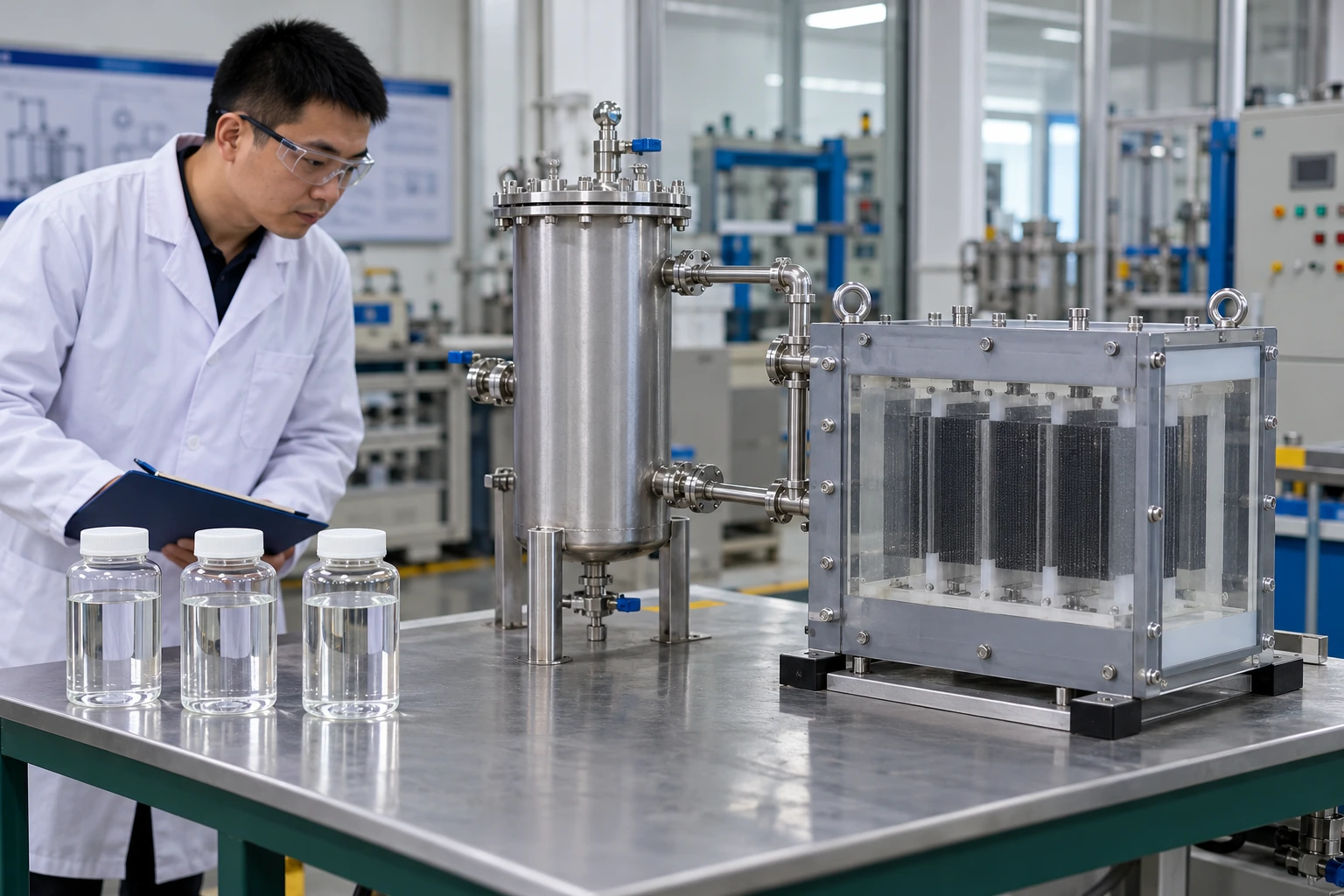
A Titanium electrode product can retain hydrogen after bulk separation because some gas remains dissolved or entrained in liquid.
Account for delayed release from product
As product moves or waits in a tank, retained gas can leave liquid over time. Follow stored product through storage. That behavior makes tank headspace and engineered ventilation part of system review, not merely an accessory around the cell.
- Trace product from cell outlet through tank, transfer line, and feed point.
- Confirm who owns gas handling at each process and facility boundary.
| Check | Decision |
|---|---|
| Cell outlet | Bulk gas plus product |
| Storage tank | Potential later release |
A design that checks only the cell can overlook gas behavior after product reaches storage. Key Takeaway: Include storage and transfer equipment in the gas safety review.
6. Where Should a Titanium electrode Gas Detector Be Reviewed?

For a Titanium electrode system, gas-detector placement, when required by project review, should follow a qualified site-specific hazard analysis.
Treat detection as one part of a safety design
Detector placement depends on room, equipment, airflow, and credible release locations. Let site hazard analysis place a sensor. Detection does not replace generator separation, venting, or facility ventilation provisions.
- Ask the responsible safety engineer to document detection coverage and maintenance ownership.
- Confirm which event or process boundary each detector is intended to monitor.
| Check | Decision |
|---|---|
| Detection plan | Site-specific locations |
| Ventilation design | Separate engineered function |
A detector can report a condition without controlling how gas enters or leaves a room. Key Takeaway: Review detection, ventilation, and process venting as coordinated functions.
7. How Does Titanium electrode Cell Venting Differ from Room Air?
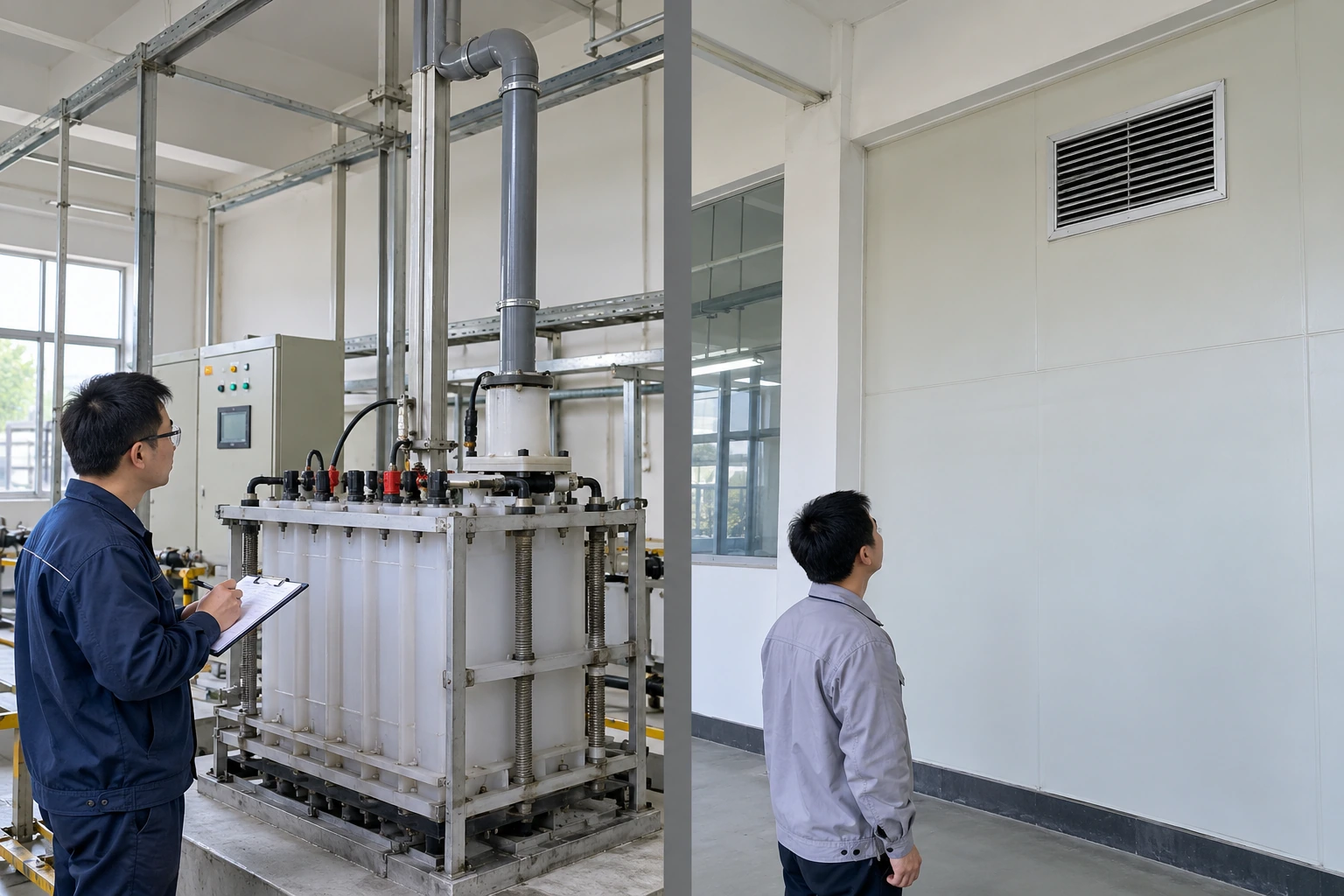
A Titanium electrode process vent carries gas from equipment, while room ventilation manages air movement across an occupied or service space.
Separate equipment venting from room air movement
A process route can collect gas at an outlet; room ventilation addresses its surrounding enclosure and operating conditions. Draw both systems on coordinated plans. Keep discharge points, failure review, and maintenance responsibilities clear in project documents.
- Show equipment vents and general ventilation on separate, coordinated drawings.
- Ask qualified reviewers to assess accumulation, discharge, access, and maintenance conditions.
| Check | Decision |
|---|---|
| Process vent | Equipment gas path |
| Room ventilation | Enclosure air movement |
The word ventilation can hide two different design scopes. Key Takeaway: Name each air and gas path before assigning design responsibility.
8. What Belongs in a Titanium electrode Vent Design Review?

A Titanium electrode vent design review needs cell, storage, facility, and discharge boundaries plus the responsible engineering owners.
Make the design review responsibility explicit
A system supplier defines product-specific instructions; facility engineers assess building conditions and applicable safety requirements. Keep each owner in scope. For a water-treatment duty, share a flow drawing, cell model, tank arrangement, gas-handling documents, and site constraints before selecting an electrode interface.
- Request current installation and operating documents for the exact generator model.
- Record which party approves process vent, room ventilation, detection, and discharge routing.
| Check | Decision |
|---|---|
| Supplier evidence | Unit-specific instructions |
| Facility evidence | Site conditions and review |
A component supplier cannot certify an unreviewed building gas-handling design. Key Takeaway: Close design boundaries with system suppliers and qualified facility reviewers.
9. What Should Operators Record About Titanium electrode Gas?

A Titanium electrode operating log should connect generation mode, storage status, ventilation observations, alarms, and maintenance events over time.
Preserve evidence for every operating mode
A useful record can show whether a cell was producing, where product waited, and whether required ventilation equipment operated as specified. Keep the sequence intact in operating records. Follow site procedures for alarms and inspections; do not substitute a log entry for required safety action.
- Record operating mode, product tank state, ventilation status, alarm events, and service history.
- Escalate abnormal indications through site-approved response procedures.
| Check | Decision |
|---|---|
| Operating record | Mode and tank state |
| Safety record | Status and response events |
A time-linked record helps reviewers compare a gas concern with system state. Key Takeaway: Use the site's approved operating and emergency procedures for abnormal conditions.
10. What Should Buyers Ask About Titanium electrode Gas Handling?

A Titanium electrode gas-handling inquiry should identify the generator model, cell boundary, storage arrangement, facility review owner, and evidence required.
Request a bounded product-interface review
Share the equipment data sheet, current process drawing, product-tank layout, expected operating modes, and site review requirements. Keep system scope visible in the request. For a titanium electrode inquiry, contact us today with the intended cell interface and drawings; ARY Titanium's product scope does not establish a turnkey gas-safety design.
- Attach cell and tank drawings plus the exact generator installation documents.
- Separate electrode fit from ventilation, hazardous-area, and facility safety approvals.
| Check | Decision |
|---|---|
| Buyer input | Cell and facility boundary |
| Review outcome | Interface fit or open scope |
Gas safety remains tied to the complete selected system and facility design. Key Takeaway: Confirm gas-handling design with its qualified owner before procurement.
Frequently Asked Questions
Can I vent hydrogen based on a generic rule of thumb? No; gas flow and facility conditions require a qualified, system-specific design review.
What's the best place to separate hydrogen from product? A suitable location depends on generator and storage design. Follow its approved documents and review later release from liquid product.
How do I know if dissolved gas still matters after separation? Review the manufacturer's gas-liquid design and product path. Hydrogen may remain entrained or dissolved, then release during storage or transfer.
Can I use room ventilation instead of a cell gas vent? No; equipment venting and room air movement serve different functions.
How do I know if our site has assigned detector placement? Project documents should name a qualified facility safety engineer and record hazard review, detector purpose, and maintenance responsibility.