
Storage can lower available chlorine in a Titanium electrode product, so equal metered volumes may deliver different oxidant doses. Compare representative samples and actual turnover before changing a dosing plan; no single shelf-life number fits every installation.
1. How Does a Titanium electrode Product Change in Storage?

A Titanium electrode product can lose available chlorine while stored, so equal pump volume may deliver a different active strength over time. The change depends on solution and storage conditions.
Separate tank age from pump volume
On-site generation commonly sends product to a separate tank before metering it into process water. Track product beyond its cell outlet each day. Each added hold between generation and injection makes sample timing and strength verification part of dose review.
- Map the generation outlet, storage tank, transfer path, and injection point on one flow sketch.
- Record whether product moves continuously, by batch, or after a tank-level trigger.
| Check | Decision |
|---|---|
| Generated strength | Measured near cell outlet |
| Fed strength | Measured near dosing point |
Pump setting describes liquid flow, while available chlorine describes product strength. Key Takeaway: Track both product strength and metered volume before comparing delivered dose.
2. Which Storage Conditions Affect a Titanium electrode Product?
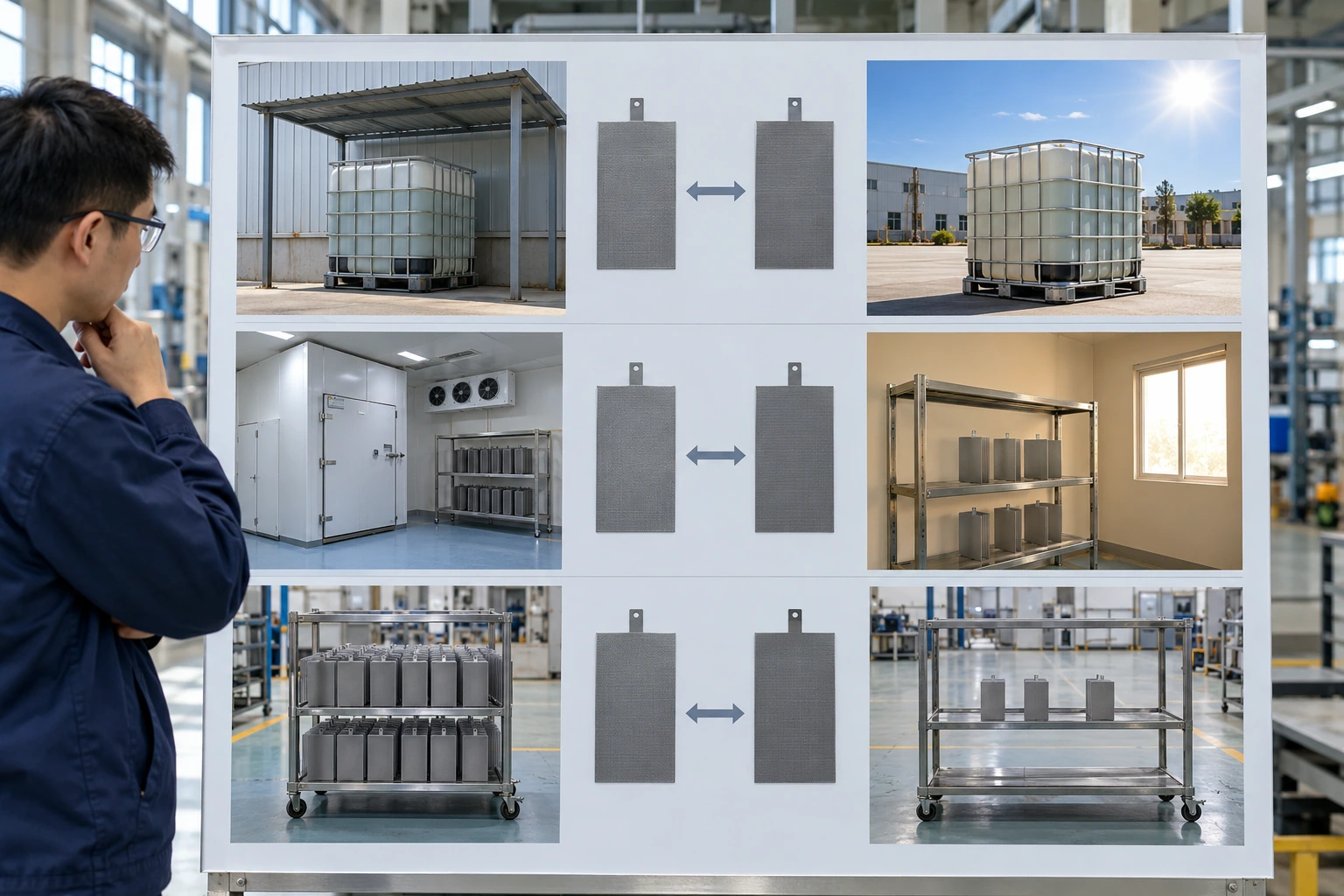
A Titanium electrode product's storage stability depends on temperature, light, concentration, pH, impurities, and container conditions.
Compare conditions that change product age
Warm storage, light exposure, contaminants, and longer residence can change available chlorine; their effects vary with solution chemistry. Compare conditions as a group. A visual tank inspection cannot confirm strength, so pair a storage review with a suitable assay at defined locations.
- Record temperature exposure, tank coverage, product age, concentration basis, and unusual contamination events.
- Compare actual storage history instead of borrowing a neighboring plant's shelf-life assumption.
| Check | Decision |
|---|---|
| Storage factor | Evidence to collect |
| Temperature and light | Location and exposure history |
One favorable condition cannot cancel an unknown concentration or contamination history. Key Takeaway: Build a storage record around the factors that can change solution strength.
3. How Does Tank Turnover Affect a Titanium electrode Dose?

A Titanium electrode tank's turnover affects how long product waits before use and how broad its age distribution may become.
Treat turnover as a process variable
A tank with variable demand can hold some product longer than a simple average suggests, especially when a heel remains during repeated top-ups. Look at the oldest fraction. Compare delivered volume with tank inventory and generation events rather than relying only on nominal tank capacity.
- Track tank level, generation batches, withdrawals, and periods of low demand.
- Check whether mixing or recirculation changes which sample represents product leaving a tank.
| Check | Decision |
|---|---|
| Rapid turnover | Shorter average hold |
| Persistent heel | Older product may remain |
Average daily use can hide a small volume that has stayed in the tank much longer. Key Takeaway: Review inventory history before changing generation scheduling or storage volume.
4. When Should a Titanium electrode Solution Be Sampled?

A Titanium electrode solution should be sampled where its strength question arises, with collection time tied to the solution's generation and storage history.
Take matched samples at process boundaries
A cell-outlet sample, tank sample, and pump-feed sample represent different points in product history. Keep sample locations clearly distinct. Follow the selected method's handling rules; for a custom cell review, provide sample timing and boundaries with cell and tank drawings.
- Label sample location and collection time before comparing available-chlorine results.
- Use a consistent method and handling path for repeat samples.
| Check | Decision |
|---|---|
| Cell outlet | Near generation time |
| Pump feed | After storage and transfer |
A result without a point in the tank-to-feed path cannot locate where strength changed. Key Takeaway: Set sample locations before using concentration data to alter feed settings.
5. Can One Shelf-Life Fit Every Titanium electrode System?

A Titanium electrode system cannot use one shelf-life number safely across every product strength, temperature, tank, and operating pattern.
Replace fixed age rules with measured strength
Storage guidance for commercial hypochlorite describes stability as condition-dependent, while on-site product may differ in concentration and holding pattern. Use strength data to answer age questions. Use local measurements and supplier guidance to set review intervals; do not treat a general estimate as a guarantee.
- Define a review interval from product conditions and the consequence of strength drift.
- Confirm an out-of-range result before changing a feed plan or declaring product unusable.
| Check | Decision |
|---|---|
| Single shelf-life | May miss site conditions |
| Measured history | Supports local review |
Product age alone cannot show how much available chlorine remains. Key Takeaway: Use condition-specific evidence instead of a universal expiry assumption.
6. Why Can a Titanium electrode Tank Sample Differ from Feed?

A Titanium electrode tank sample may differ from product at the dosing point because concentration, transfer, top-up, or sampling time may differ.
Trace the difference through the feed path
A tank sample taken after a fresh batch can differ from product drawn from an older section or line. Follow the actual product route. Check whether water entered during cleaning or dilution, whether recent product blended fully, and whether a feed-line sample reflects current flow.
- Compare tank, transfer, and pump-suction samples under documented operating conditions.
- Review top-ups, flushing, dilution, and stagnant-line periods near a result change.
| Check | Decision |
|---|---|
| Tank assay | Bulk stored solution |
| Feed-line assay | Product at use point |
Different sample points can reveal where strength drift or dilution entered the process. Key Takeaway: Investigate the path between two results before recalculating a dose.
7. Which Checks Guide Titanium electrode Feed Changes?

A Titanium electrode feed adjustment should follow a verified strength result and process demand review, not a pump setting alone.
Check product strength before changing feed
A metering pump can deliver its planned liquid volume while product strength has changed in storage. Verify both sides of the calculation. Compare assay, pump evidence, process flow, and dose objective with a responsible operator.
- Confirm analyte basis and method before comparing a new result with a target.
- Record the reason and approving process owner for each feed change.
| Check | Decision |
|---|---|
| Pump evidence | Volume delivered |
| Product assay | Available strength |
A correct pump stroke cannot compensate for an unknown product concentration. Key Takeaway: Resolve strength uncertainty before changing operating settings.
8. How Do Materials Affect a Titanium electrode Storage Review?
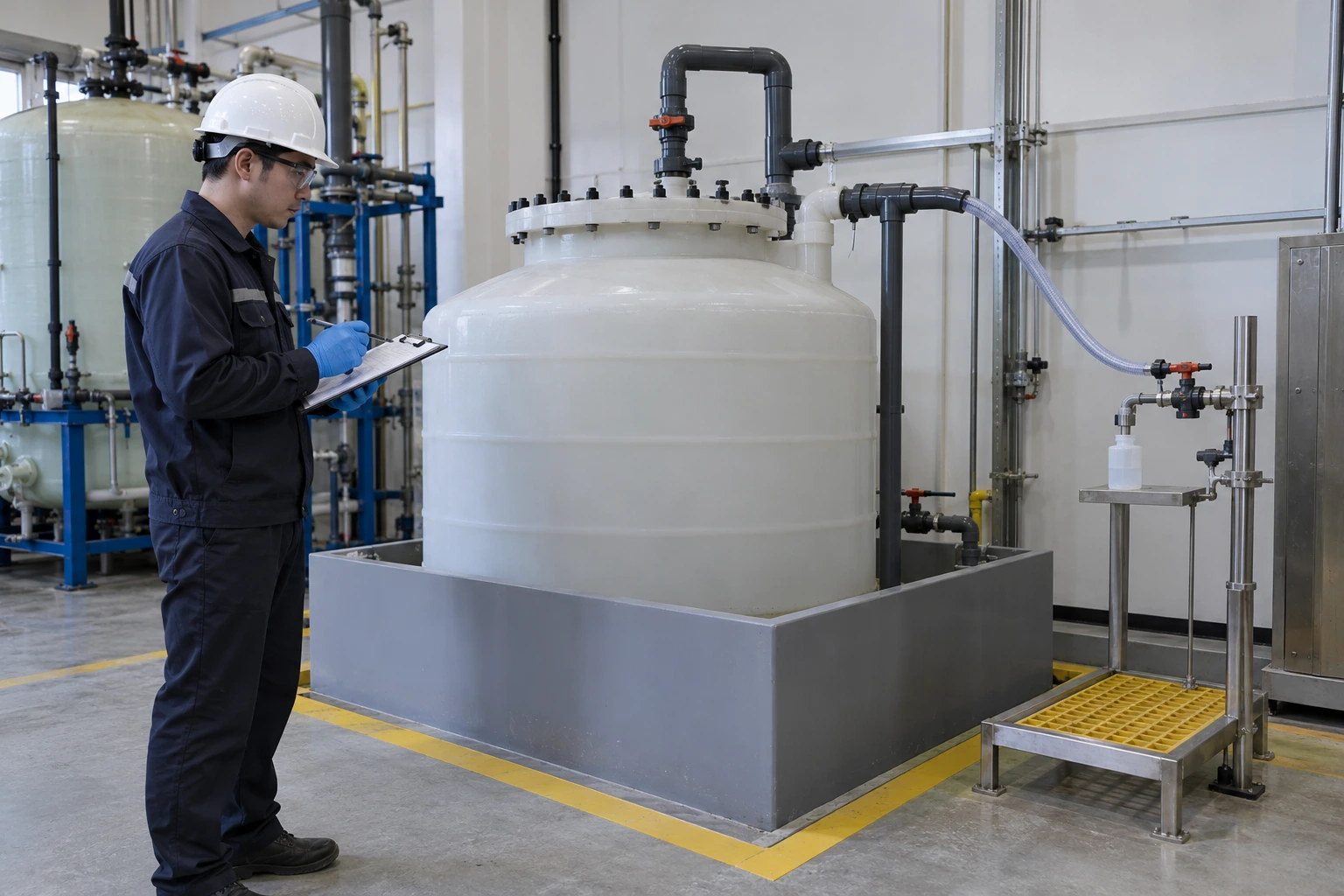
A Titanium electrode storage review should check wetted materials, transfer components, contamination pathways, and process boundaries around its tank.
Review every wetted surface and transfer point
Some contaminants can accelerate decomposition, so one unsuitable fitting or dirty sampling tool can matter beyond tank walls. Trace every wetted contact surface. For a water-treatment duty, share tank materials, transfer layout, and cleaning history with the process team; do not infer compatibility from appearance.
- List tank, piping, pump, valve, hose, and sample-tool materials for supplier review.
- Keep sample handling and cleaning practices within approved chemical procedures.
| Check | Decision |
|---|---|
| Tank shell | Material and condition |
| Transfer path | Fittings and contamination risk |
Strength loss can begin outside storage if transfer equipment introduces a catalyst or contaminant. Key Takeaway: Review the full wetted path with chemical and equipment owners.
9. What Data Explain Titanium electrode Dose Drift?

A Titanium electrode dose-drift investigation needs a time-linked record of product strength, inventory, generation, and downstream feed.
Build a useful drift timeline
Compare samples with tank level, batch or operating events, ambient conditions, pump records, and process demand over the same period. Put evidence on one timeline. This helps separate product decay from a feed change, a new water demand, or a sample-method difference.
- Use one time basis for sample collection, product generation, and process feed records.
- Flag missing data instead of filling gaps with an assumed decay rate.
| Check | Decision |
|---|---|
| Product record | Age and assay |
| Process record | Flow and feed setting |
A time sequence often explains a mismatch that isolated samples leave unresolved. Key Takeaway: Keep storage and process records linked during dose troubleshooting.
10. What Should Buyers Share for a Titanium electrode Review?

A Titanium electrode storage review needs product concentration history, tank conditions, demand variation, sample locations, and responsibility for feed decisions.
Send the tank-to-process boundary
Share tank volume and materials, generation mode, turnover history, analytical method, feed point, and requested operating evidence; make the sample path visible. To discuss component fit, contact us today with a flow sketch and available product data. A titanium electrode review cannot promise solution shelf life or treatment performance.
- Attach storage and feed drawings with representative assay records.
- Identify who owns product handling, process demand, and dose acceptance criteria.
| Check | Decision |
|---|---|
| Buyer input | Tank, assay, demand |
| Review decision | Component fit or data gap |
A product component review cannot set a site's storage life or dose without process evidence. Key Takeaway: Request a review after defining the sample points and operating boundary.
Frequently Asked Questions
Can I assume on-site hypochlorite keeps one fixed shelf life? No; strength change depends on solution and storage conditions, so verify concentration under actual site conditions.
What's the best place to sample stored product? A useful point depends on the question. Compare a generation outlet, representative tank sample, and dosing point when locating strength change.
How do I know if storage changed my delivered dose? Compare available-chlorine assays with pump output and process flow at matched times, then review tank age and transfer events.
Can I adjust the pump when a stored product assay drops? Only after confirming the method, process objective, and operating authority. A concentration change may require a process review before any setting changes.
How do I know if tank turnover is adequate? Compare inventory history and oldest product hold with measured strength and process demand; nominal tank volume alone cannot answer that question.