
A titanium electrode supports EDR as a terminal current-transfer surface, and its polarity duty changes when the system reverses. Buyers who review only a metal plate can miss a valve, stream, or rinse mismatch during reversal. This guide follows the operating sequence from polarity change through restart. Begin with a Titanium electrode drawing and approved process-flow logic.
1. How Does a Titanium electrode Support EDR Sequence?
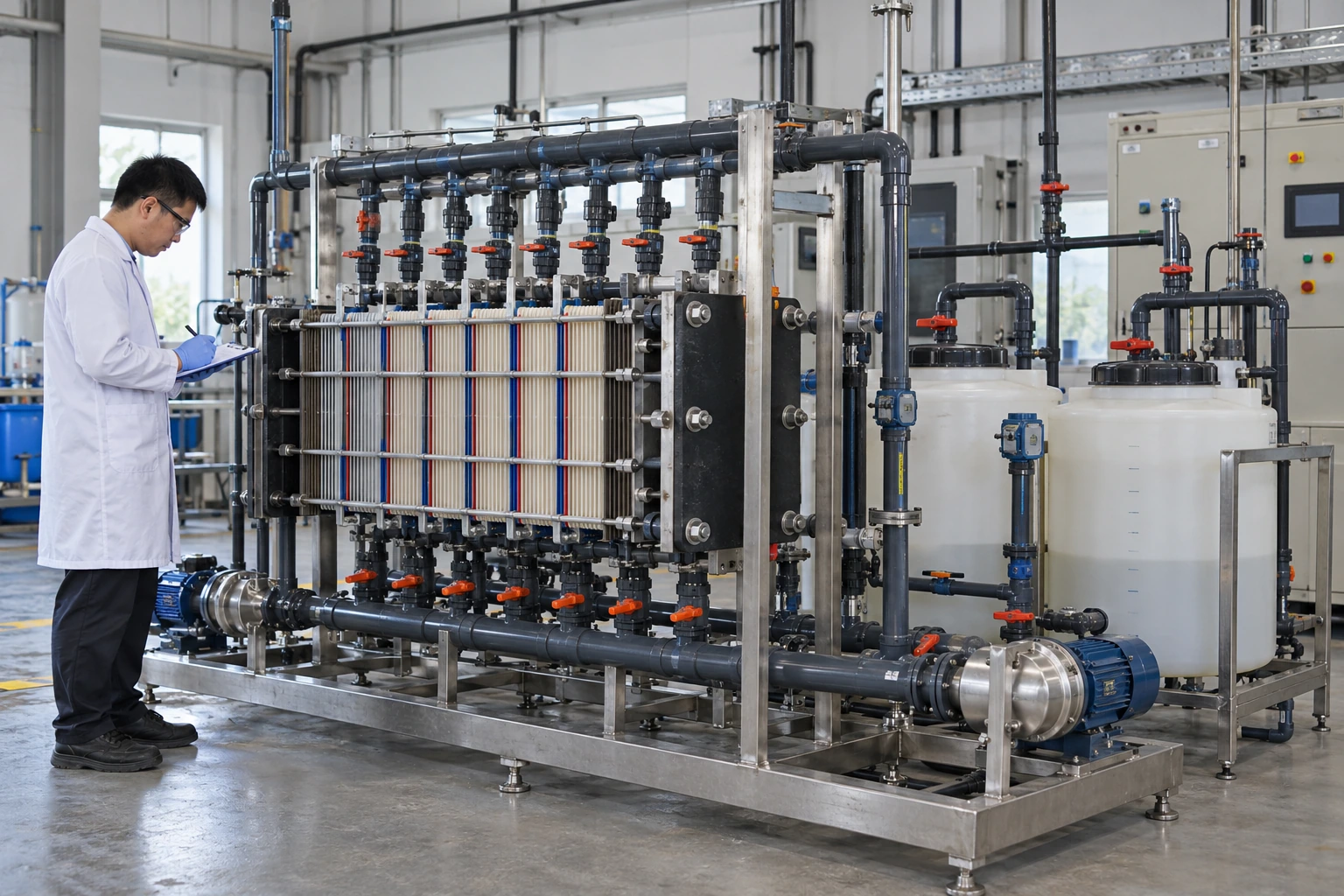
A Titanium electrode supports EDR by carrying terminal reactions while the stack periodically reverses electrical polarity and ion movement.
Start with the operating sequence
Follow one complete cycle. EDR uses an electrodialysis membrane stack, then reverses polarity so ionic migration changes direction. Electrodes exchange anode and cathode roles; control logic and stream routing manage transition.
- Mark normal operation, reversal command, transition state, and return to stable operation.
- Show how product and concentrate identities are handled through each state.
| Check | Decision |
|---|---|
| Electrical sequence | Polarity change redirects ion migration |
| Hydraulic sequence | Valves or stream assignments follow plant design |
EDR performance depends on coordination between stack, controls, and process streams. Key Takeaway: Review the sequence diagram before specifying terminal-electrode details.
2. What Changes Around a Titanium electrode During Reversal?

A Titanium electrode changes from anode to cathode duty when polarity reverses, and process streams may also exchange product and concentrate roles.
Track each role change
Tie electrical state to fluid identity. Reversal changes ion-movement direction, and control logic must keep flow destinations consistent with that state. Some systems change valve positions or stream assignments by design; routing remains plant-specific.
- Use a state table that pairs polarity, valve position, and stream destination.
- Identify where off-spec transition water goes until process conditions stabilize.
| Check | Decision |
|---|---|
| Polarity reversal | Changes electrode roles and ion direction |
| Stream routing | Must match the system's defined transition logic |
A polarity command without a matching stream map leaves product identity ambiguous. Key Takeaway: Ask the system designer for a complete transition-path review.
3. How Should Water Routing Track a Titanium electrode?

A Titanium electrode sits at the electrical stack end, while hydraulic routing controls which channels carry feed, product, concentrate, or rinse.
Map the process routes
Draw pipes beside electrode leads. A polarity reversal can change which flow channels act as diluate or concentrate. Hydraulic paths may keep moving continuously while their process identity changes, so valve timing, sampling points, and product diversion need a clear map.
- Label all manifolds by both physical port and process role.
- Show rinse circulation separately from product and concentrate routing.
| Check | Decision |
|---|---|
| Fixed hardware | Ports, electrodes, membranes, and flow channels |
| Changing state | Polarity, ion direction, and stream identity |
The physical pipe layout can remain fixed while stream duties change. Key Takeaway: Confirm port names against the control sequence and current stack drawing.
4. How Does a Titanium electrode Handle Role Changes?

A Titanium electrode may alternate between anodic and cathodic conditions in EDR, so coating, connection, and rinse exposure need review in both states.
Check both electrode duties
Review the surface at each polarity. The anodic and cathodic ends experience different reactions and local chemistry. A custom stack-interface review should include both connections, exposed coatings, end compartments, and rinse paths rather than a single static electrode view.
- Confirm polarity labels for both normal and reversed operation.
- Ask whether the rinse, coating, and connection remain within approved conditions after reversal.
| Check | Decision |
|---|---|
| Anodic state | Review oxidation-side exposure and connection |
| Cathodic state | Review reduction-side exposure and connection |
A component approved for one operating state is not automatically approved for the other. Key Takeaway: Request a two-state interface review before accepting the electrode drawing.
5. Which Rinse Conditions Matter at a Titanium electrode?
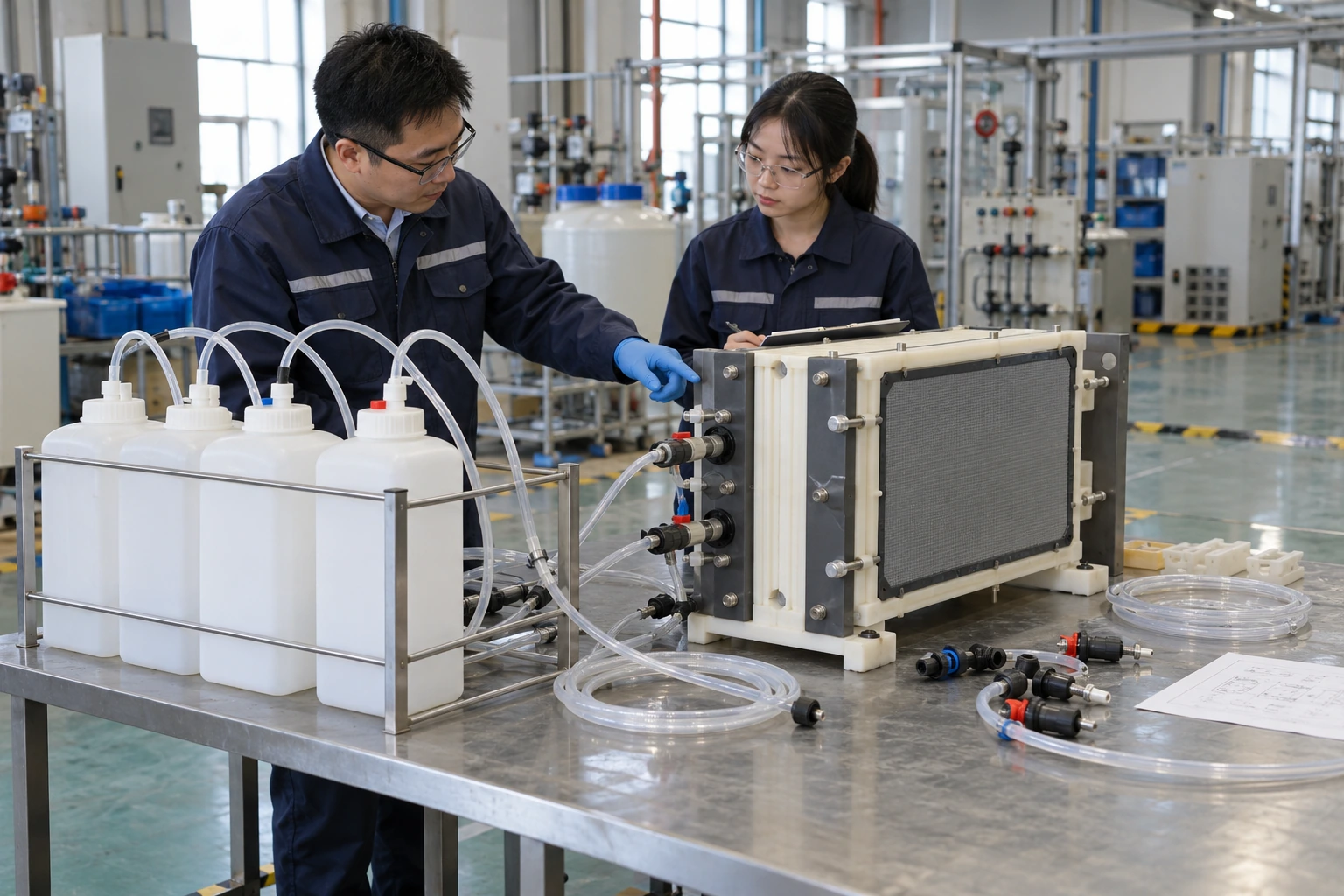
A Titanium electrode must remain compatible with its rinse compartment across the defined EDR sequence, including reversal and transition periods.
Check rinse continuity
Rinse duty follows the control state. A closed loop can see changing electrode polarity, temperature, conductivity, and reaction products. Confirm whether flow remains continuous during switching and whether the plant has a defined response to abnormal rinse conditions.
- Record rinse composition, flow path, tank connections, and monitoring points.
- Identify how rinse chemistry is checked after extended runs or operating changes.
| Check | Decision |
|---|---|
| Normal period | Rinse chemistry under the usual terminal polarity |
| Reversal period | Rinse flow and reaction conditions during transition |
A rinse system is part of the electrode duty, not a background utility. Key Takeaway: Include rinse routing and chemistry in the reversal review package.
6. How Can a Titanium electrode Affect Restart?
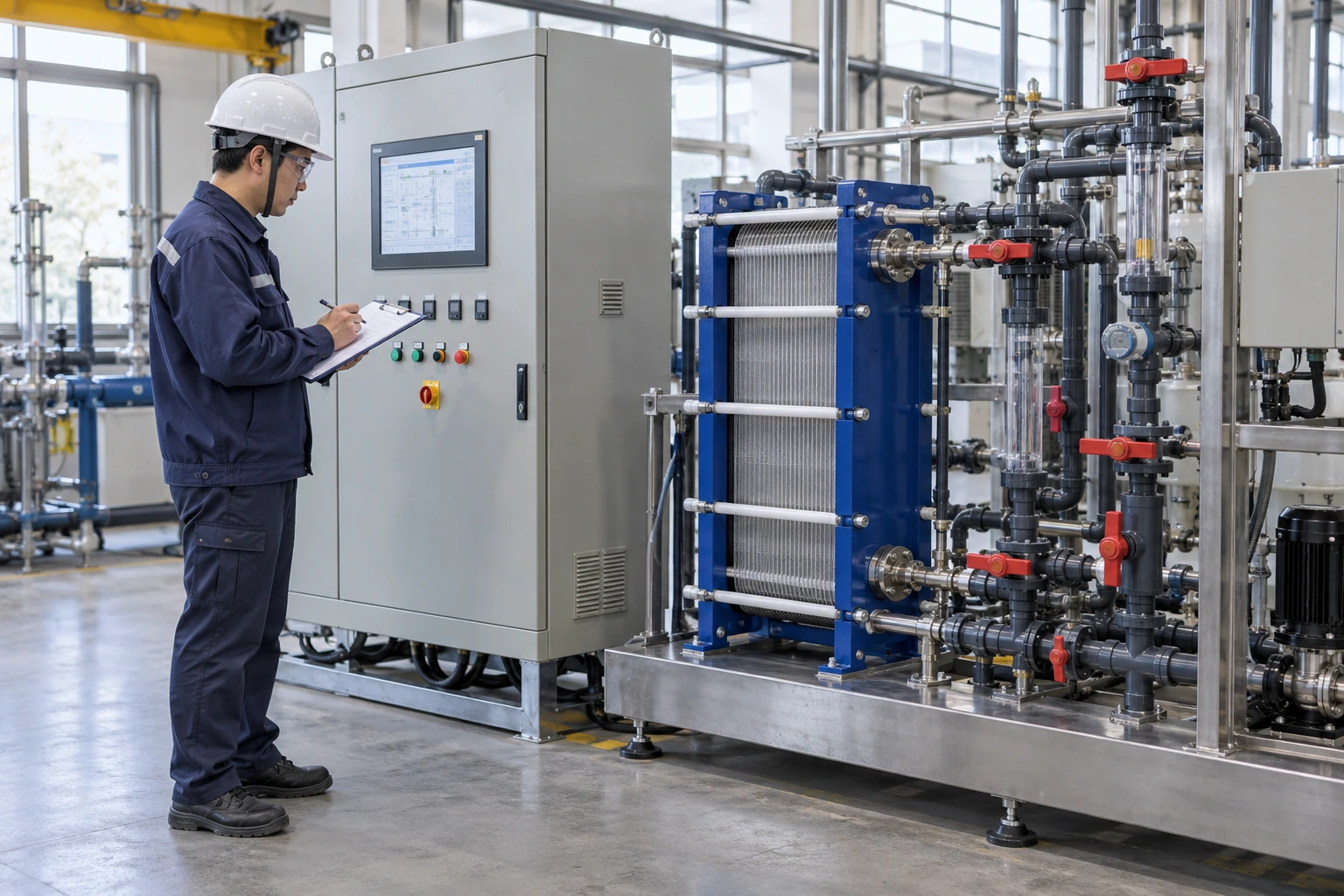
A Titanium electrode can affect restart behavior through terminal voltage and reaction conditions, while valve state and membrane channels shape process recovery.
Plan the return to stable operation
Define what stable means. After reversal, current, flow, and product identity may need time to settle under the plant's control limits. The restart plan should identify how operators recognize stable output and where transition water goes until then.
- Name the instrument signals used to confirm a settled process state.
- Keep diversion and restart decisions within the plant's approved control procedure.
| Check | Decision |
|---|---|
| Electrical check | Polarity, current, and stack voltage status |
| Process check | Valve position, stream identity, and product quality signal |
A restart criterion should describe process evidence rather than a timer alone. Key Takeaway: Review transition limits with the equipment designer before field operation.
7. What Should Operators Record Around a Titanium electrode?

A Titanium electrode review is easier when operators record polarity state beside flow, pressure, conductivity, and sampling time.
Keep a state-linked log
Pair every sample with a moment. An inlet or outlet result can be misleading if its polarity state or valve position is unknown. Log normal duty, reversal, transition, and recovery separately, then relate measurements to the same stream identity.
- Record state changes, valve positions, current, voltage, and relevant alarms.
- Tag samples with port, stream role, time, and whether flow was stable.
| Check | Decision |
|---|---|
| Event log | Polarity and hydraulic state changes |
| Sample log | Port identity, time, chemistry, and process state |
State-linked records help distinguish expected switching behavior from an interface fault. Key Takeaway: Agree on a shared log format before commissioning or troubleshooting.
8. How Does EDR Fit Water Treatment with a Titanium electrode?

A Titanium electrode may serve an EDR water-treatment stack, but feed composition, reversal logic, and the plant's product target determine application fit.
Connect EDR with water-treatment duty
Treat application and electrode scope separately. EDR can remove charged species from a feed stream by membrane transport, with reversal used as part of fouling management. See water-treatment applications, then confirm target ions, concentrate handling, and control logic for the actual plant.
- Describe source-water chemistry and expected changes across seasons or operating modes.
- Map product, concentrate, transition water, and rinse destinations.
| Check | Decision |
|---|---|
| Treatment objective | Target ions, product boundary, and concentrate plan |
| Electrode objective | Stable terminal behavior through both polarities |
Application fit cannot be inferred from the electrode material name. Key Takeaway: Review treatment duty and switching sequence before requesting an electrode quotation.
9. What Should Buyers Specify for a Titanium electrode in EDR?

A Titanium electrode buyer should specify geometry, coating, connection, rinse exposure, and polarity states the component must tolerate.
Give suppliers the reversal context
Send both states, not one snapshot. Include the normal and reversed circuit diagrams, electrode orientation, current duty, process chemistry, and rinse conditions. Mark which requirements come from the stack designer and which remain open for review.
- Attach the end-frame drawing, connection detail, and polarity-state table.
- List transition conditions, acceptance records, and unresolved control questions.
| Check | Decision |
|---|---|
| Mechanical input | Dimensions, ports, mount, and connection |
| Operating input | Polarity states, rinse chemistry, and sequence |
A polarity-aware request lets reviewers see how the component will be used over time. Key Takeaway: Ask for clarification before treating a single-state drawing as final.
10. How Should a Titanium electrode EDR Interface Be Reviewed?

A Titanium electrode EDR review should cover both polarity states, stream routing, rinse duty, and approved limits from a stack supplier.
Make the sequence reviewable
Keep the handoff bounded. A drawing-based discussion can check electrode geometry and connection details against a supplied sequence. For a project-specific review, contact us today with a circuit sketch, process-flow diagram, and reversal-state table.
- Send current drawings and identify the document revision used by controls and operations.
- Keep membrane performance, full control design, and plant acceptance under their assigned owners.
| Check | Decision |
|---|---|
| Supplier review | Electrode dimensions, coating, and connection |
| System review | Reversal logic, hydraulic routing, and stream acceptance |
Clear ownership helps prevent a component drawing from being mistaken for process approval. Key Takeaway: Confirm the system integrator's limits before releasing a production interface.
Frequently Asked Questions
Can I reverse the polarity on any titanium electrode? No. The electrode coating, connections, electrolyte, and full stack must be approved for both anodic and cathodic conditions.
What's the best reversal interval for EDR? Use a design-approved interval for that feed and stack. A universal switching schedule would ignore fouling, routing, and control limits.
How do I know if EDR flow routing matches the reversal? Compare each polarity state with valve positions, stream identity, diversion logic, and sample-port labels in the approved sequence diagram.
Can I keep product and concentrate pipe labels after reversal? Physical pipes may keep their labels, while process roles change. The plant's control and sampling records must make that mapping explicit.
How do I know if EDR reversal cleaned a titanium electrode? Reversal changes electrical and ion-migration direction; it does not by itself confirm electrode cleanliness or remove every deposit.