
Requalify a Titanium electrode change whenever it could alter a previously approved function, exposure or interface. A replacement batch may look identical while its coating process, raw material or gasket boundary has changed. If you release it on appearance alone, the next process difference becomes difficult to trace. Identify changed characteristics, assess their consequences and agree on evidence before accepting the revision.
1. What counts as a Titanium electrode engineering change?

A Titanium electrode engineering change is a controlled revision to a characteristic or process that can affect the supplied component or its application. It may be invisible in a finished-part photograph.
What changed beyond the outline?
Ask for a precise change description. Compare old and proposed specifications rather than accepting a statement that quality remains equivalent. Identify affected drawings, process records and acceptance criteria.
- Name the changed characteristic and reason.
- Record old and proposed revision identities.
| Check | Decision |
|---|---|
| Appearance unchanged | Does not prove functional equivalence |
| Change defined | Allows a targeted risk review |
Start with the actual difference. Key Takeaway: A meaningful change review needs more than a reassurance letter.
2. Which Titanium electrode changes carry different risks?
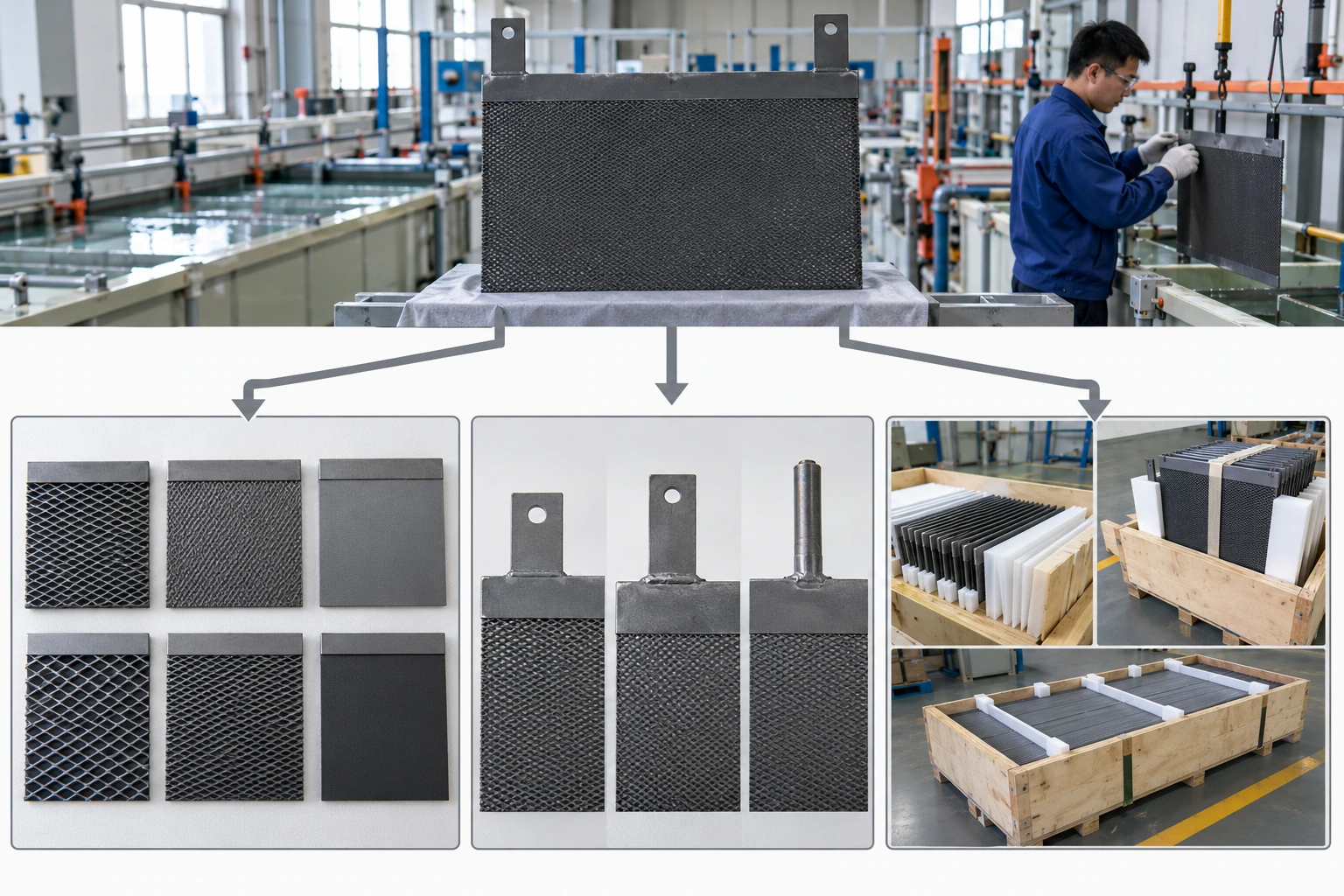
Titanium electrode changes carry different risks depending on whether they affect coating, geometry, connections, packaging or traceability. Validation scope should follow those consequences instead of applying one test to everything.
Which function could the change disturb?
Map change to function. A packaging revision may need transport verification, while a coating revision may need process testing. Document why each selected check addresses the changed characteristic.
- Identify affected performance and interface requirements.
- Separate direct effects from plausible downstream effects.
| Check | Decision |
|---|---|
| Change-to-function mapping | Defines the review question |
| Selected verification | Provides evidence for that question |
Match the evidence to the risk being reviewed. Key Takeaway: Proportionate validation is more useful than an unrelated standard checklist.
3. Does a coating change need Titanium electrode testing?

A coating change may require Titanium electrode testing because reaction behavior, durability or product compatibility can differ. The necessary scope depends on the actual formulation or manufacturing change and available evidence.
What evidence survives the revision?
Separate inherited from new evidence. Ask which previous results still apply and why. Do not assume an unchanged generic coating name establishes equivalence.
- Maintain sample and batch traceability.
- Define relevant electrical, chemical and surface endpoints.
| Check | Decision |
|---|---|
| Old test result | Applies to its qualified configuration |
| Equivalence evidence | May justify specific carryover claims |
Review the logic behind any reduced retest scope. Key Takeaway: Carry evidence forward only where the changed characteristic permits it.
4. Can geometry changes alter Titanium electrode duty?

Geometry changes can alter Titanium electrode active area, flow distribution, spacing or connection loading even when the part still fits. Drawing review should identify each affected operating assumption.
Could a small dimension change alter the process?
Check the functional dimensions. Include revised area calculations and interface details in a custom engineering review. Review electrical and hydraulic consequences alongside dimensional inspection.
- Identify changes to active and immersed area.
- Check seal lands and connection geometry.
| Check | Decision |
|---|---|
| Fit maintained | Does not establish equal duty |
| Functional effects reviewed | Supports a broader equivalence assessment |
Treat fit as one acceptance criterion. Key Takeaway: A mechanically interchangeable component may still need operating requalification.
5. What if Titanium electrode raw material changes?

A raw-material change needs Titanium electrode review when grade, condition, composition or traceability could affect manufacturing or service. The response depends on what changed and which requirements rely on it.
Does the replacement material meet the same basis?
Compare the material specification. Review certificates against the released purchase requirements. Avoid accepting another grade solely because both materials are sold as titanium.
- Record grade and relevant material condition.
- Link heat or batch identity to finished parts.
| Check | Decision |
|---|---|
| Same general metal name | Insufficient equivalence evidence |
| Specification and traceability checked | Supports material acceptance |
Resolve material differences before production release. Key Takeaway: Material identity should be traceable through the finished electrode.
6. How should Titanium electrode process changes be reviewed?

A manufacturing-process change may affect Titanium electrode quality even when nominal design requirements remain unchanged. Relevant process controls and verification results should support the proposed release.
Which controlled step changed?
Review the affected process output. Ask how the supplier will verify that changed equipment or processing still meets agreed characteristics. Respect proprietary details while requiring enough evidence for application acceptance.
- Identify affected inspection or test results.
- Agree on notification and approval requirements.
| Check | Decision |
|---|---|
| Process detail confidential | Does not remove acceptance obligations |
| Relevant verification supplied | Supports a controlled release decision |
Focus on evidence needed for the approved requirement. Key Takeaway: You can protect supplier know-how while retaining meaningful change control.
7. What trial supports Titanium electrode change approval?

A Titanium electrode change trial should compare defined revisions under matched conditions and measure the characteristics that motivated review. Acceptance criteria and sample selection must be agreed before testing.
What will make the result decisive?
Write the decision rule. State how results support acceptance, further testing or rejection. Include observed variation instead of comparing only one attractive data point from each revision.
- Use traceable samples from identified revisions.
- Control chemistry, geometry and measurement methods.
| Check | Decision |
|---|---|
| Unplanned comparison | Often leaves ambiguous results |
| Predefined criteria | Supports an auditable decision |
Design the test around the release question. Key Takeaway: A requalification trial should end with a defined decision.
8. How do you separate Titanium electrode revisions in stock?

Titanium electrode revisions should remain distinguishable in stock until approved release and replacement rules are clear. Mixing visually similar parts can erase the traceability needed for later diagnosis.
Can the storeroom separate the revisions?
Control identity at the package level. When supplying parts for water-treatment applications, keep revision and application status linked to each batch. Do not relabel unapproved stock as equivalent without a documented decision.
- Segregate pending and approved revisions.
- Define treatment of remaining older stock.
| Check | Decision |
|---|---|
| Mixed unidentified stock | Complicates traceability |
| Controlled revision stock | Supports targeted release and investigation |
Include inventory handling in the change plan. Key Takeaway: Engineering approval must remain visible through purchasing and storage.
9. Who signs a Titanium electrode change release?

A Titanium electrode change release should be approved by the parties responsible for affected component and system requirements. Responsibilities should reflect the change scope and your quality process.
Who can accept the remaining uncertainty?
Name the technical approvers. Purchasing confirmation alone may not address process or product risks. Record open issues and the authority deciding whether further evidence is required.
- Identify component, process and quality owners.
- Retain the approval basis and effective date.
| Check | Decision |
|---|---|
| Administrative acknowledgment | Confirms receipt |
| Technical release | Accepts defined evidence and conditions |
Keep acknowledgment separate from acceptance. Key Takeaway: A controlled release names who approved what and on which evidence.
10. What Titanium electrode change request should you send?

A Titanium electrode change request should include the difference, affected functions, validation plan and stock-transition rules. This makes revision control useful beyond a drawing-number update.
Close the change before mixing production
Send the old and proposed basis. When you contact us today, we can review drawing-based electrode changes and identify component questions for qualification. Our position favors traceable revisions over silent substitutions.
- Provide comparison drawings and affected requirements.
- Agree on approval before production use.
| Check | Decision |
|---|---|
| Change description | Defines what differs |
| Release package | Defines why and where it is accepted |
Keep the approved package with the delivered batch. Key Takeaway: Release a revision only after its affected requirements have a documented disposition.
Frequently Asked Questions
Can I accept a new batch because it looks identical? Not as proof of equivalence. Invisible material or process changes may affect previously qualified requirements.
What's the best requalification test? Choose tests for the changed functions. Geometry, coating and packaging changes rarely need the same evidence.
How do I know if old test data still applies? Review the changed characteristic and test basis. Carryover needs a documented technical justification.
Can I mix old and new revisions after approval? Only under defined transition rules. Keep part identity and application compatibility traceable.
Can I request evidence without proprietary process details? Yes. Agree on relevant verification and notification requirements without demanding unnecessary proprietary information.