
Useful Titanium electrode failure diagnosis starts with preserved condition, operating history and a controlled comparison, not a photograph alone. A removed electrode may be cleaned before anyone records where deposits or discoloration appeared. That erases clues while leaving the production team waiting for an explanation. Preserve evidence safely, define the failure symptom and separate observations from proposed causes.
1. What should you preserve after Titanium electrode failure?
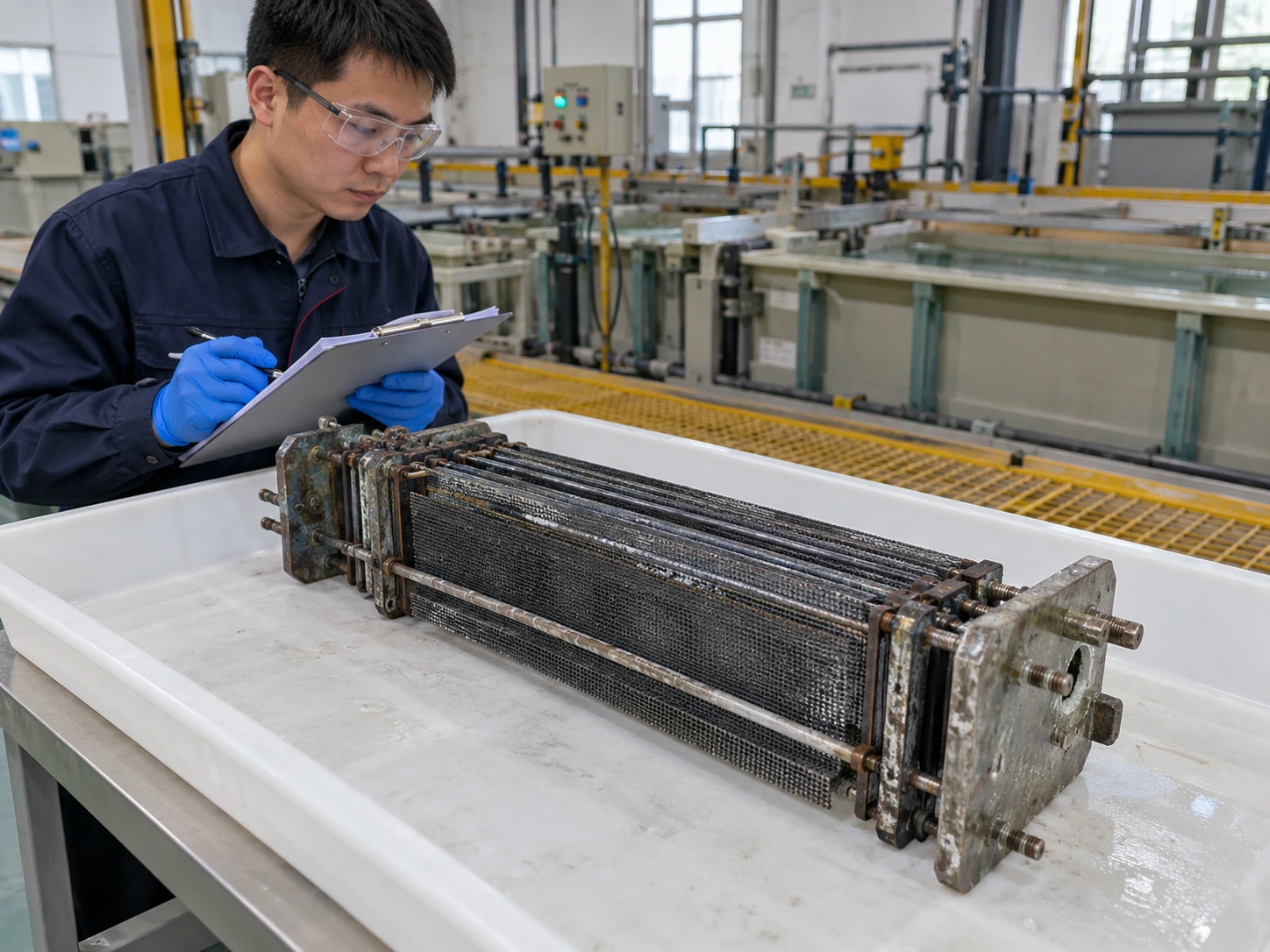
After Titanium electrode failure, preserve the as-found condition and relevant records once equipment is safely isolated under site procedures. Required safety and decontamination steps take priority over evidence preservation.
What can you retain without creating another hazard?
Record before altering where safe. Photograph accessible surfaces and retain operating logs before approved cleaning or disposal. Tell the reviewer which interventions occurred before the sample reached inspection.
- Define the observed failure symptom.
- Record isolation and handling history.
| Check | Decision |
|---|---|
| As-found evidence | Supports later interpretation |
| Intervention record | Explains what may have changed |
Preserve context as carefully as the component. Key Takeaway: A safe evidence record helps reviewers distinguish service damage from later handling.
2. How should Titanium electrode evidence be grouped?
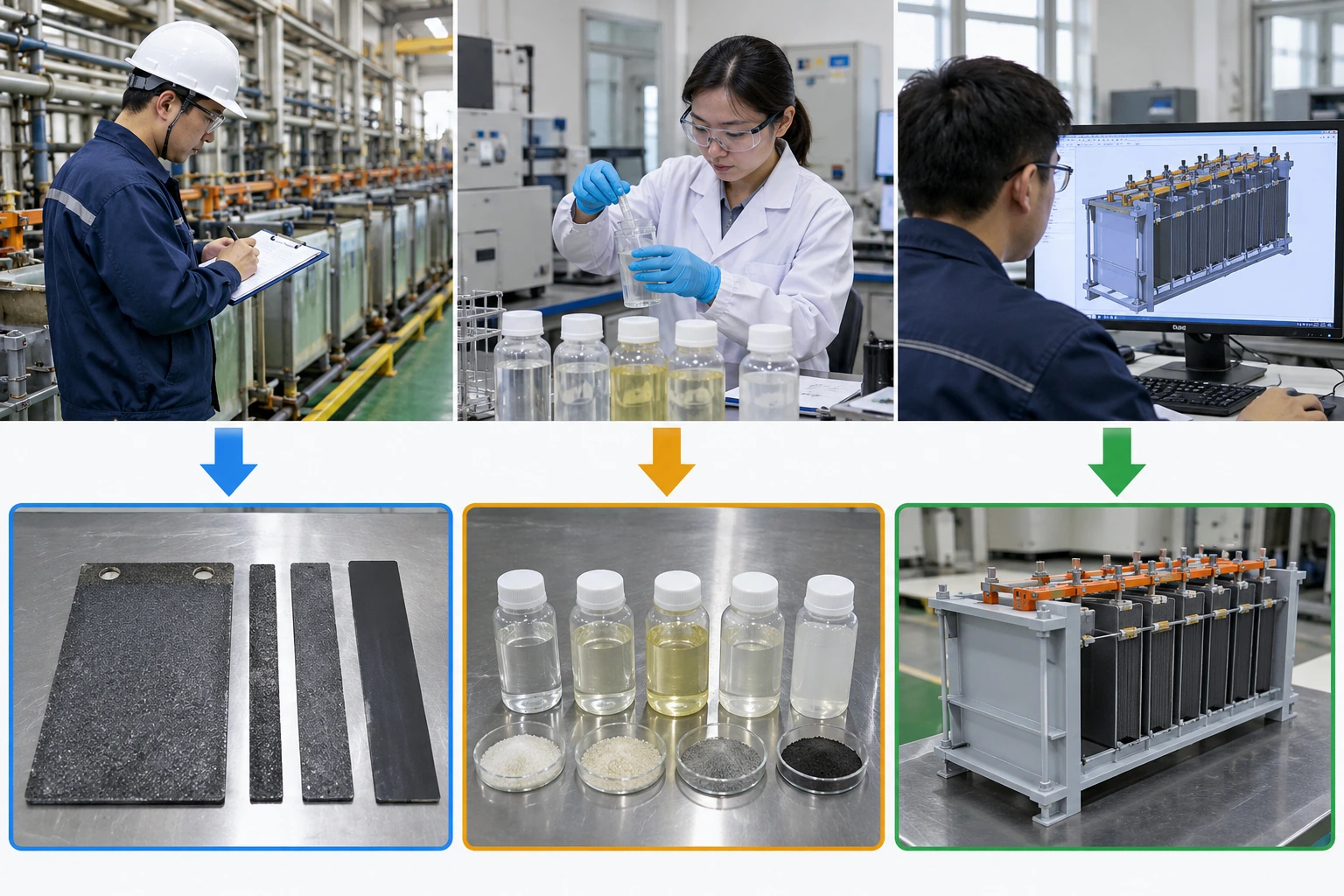
Titanium electrode evidence should be grouped into component condition, operating history, chemistry and cell configuration. No single category normally establishes the complete failure mechanism.
Which part of the story is missing?
Build an evidence map. Link each proposed cause with observations that support or challenge it. Keep missing information visible rather than filling gaps with a confident narrative.
- Separate observations from hypotheses.
- Identify the next test that could distinguish causes.
| Check | Decision |
|---|---|
| Observation | What was directly measured or seen |
| Hypothesis | A proposed explanation needing support |
Use the map to choose further work. Key Takeaway: A useful review tests explanations instead of collecting only confirming evidence.
3. Why photograph a Titanium electrode before cleaning?
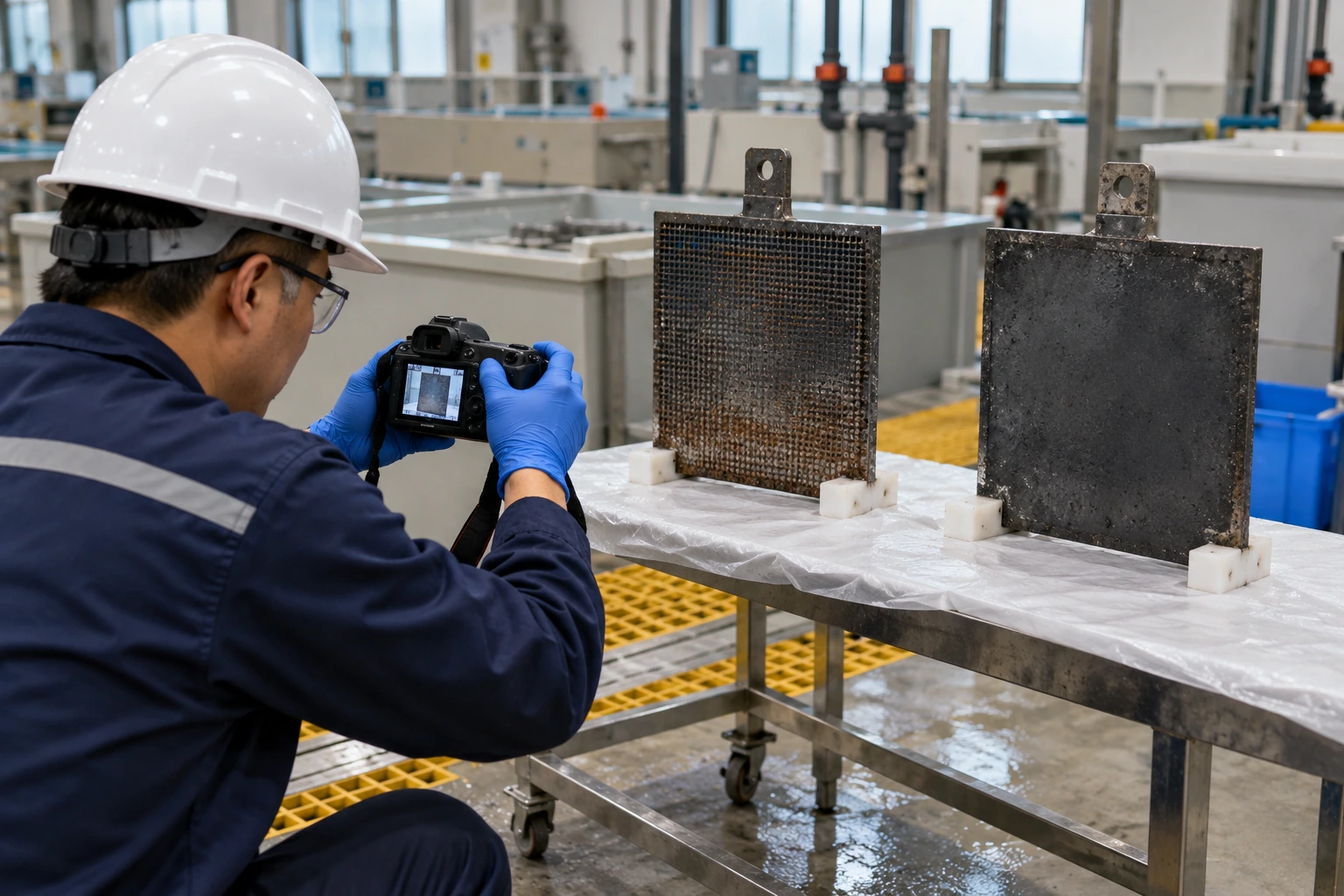
Photographing a Titanium electrode before cleaning preserves deposit patterns, localized damage and orientation clues that treatment may remove. Images need scale and location context without damaging active surfaces.
Can another reviewer locate each defect?
Keep a consistent orientation. Record both faces, edges, terminals and assembly position. Add a reference scale beside the sample rather than dragging tools across its coating.
- Include whole-part and close-up views.
- Identify inlet, outlet and polarity orientation.
| Check | Decision |
|---|---|
| Unlocated close-up | Difficult to relate to operation |
| Mapped photographs | Supports spatial diagnosis |
Connect each image with a known component location. Key Takeaway: Photographs become evidence when their location and timing are traceable.
4. Which Titanium electrode logs narrow the cause?

Titanium electrode current, voltage, flow, temperature and fault logs can narrow causes when they cover the period before the symptom appeared. Later stable readings may miss the initiating event.
What happened before the failure became visible?
Save the lead-up period. Include relevant feed and maintenance events in a custom engineering review. State logger intervals and missing periods so reviewers understand the record's limits.
- Align timestamps across available systems.
- Retain raw data where practical.
| Check | Decision |
|---|---|
| Post-failure snapshot | Shows the later condition |
| Pre-event timeline | May reveal the initiating change |
Use timing to test the proposed sequence. Key Takeaway: The most useful record may precede the operator's failure report.
5. Can deposits reveal Titanium electrode operating history?
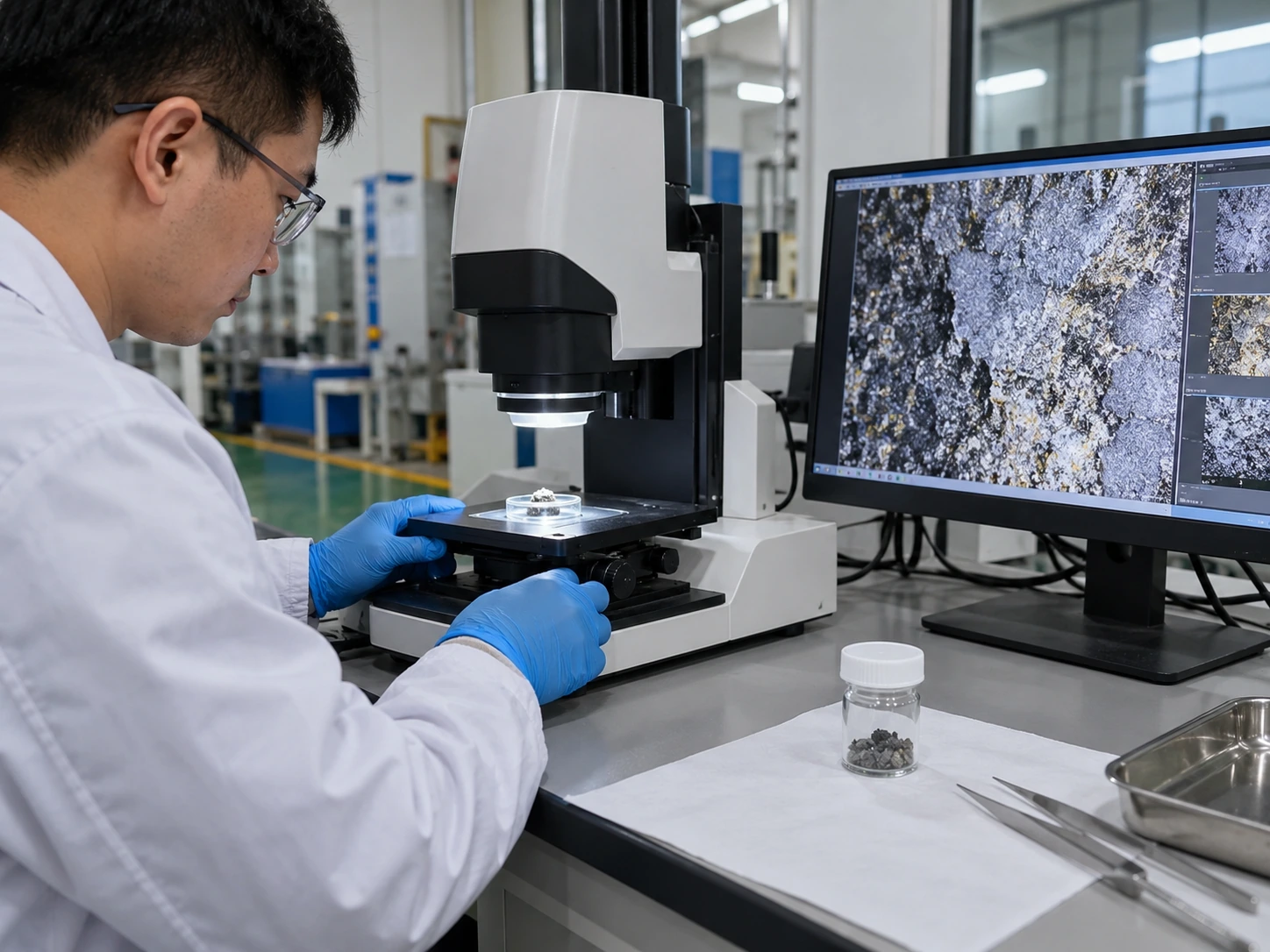
Deposits can provide clues about Titanium electrode exposure, but their composition and location need interpretation alongside feed and operating history. Visual color alone cannot identify a chemical mechanism reliably.
What can a deposit sample answer?
Choose analysis for a question. Ask whether the investigation needs composition, structure or distribution information. Preserve representative material through a laboratory-approved collection method.
- Record exact sample location.
- Avoid mixing deposits from unrelated areas.
| Check | Decision |
|---|---|
| Color or texture | Preliminary observation |
| Targeted analysis | Can test a specific composition hypothesis |
Connect analytical work with a defined cause question. Key Takeaway: Deposit analysis is most useful when sampling context survives.
6. What does Titanium electrode surface analysis establish?
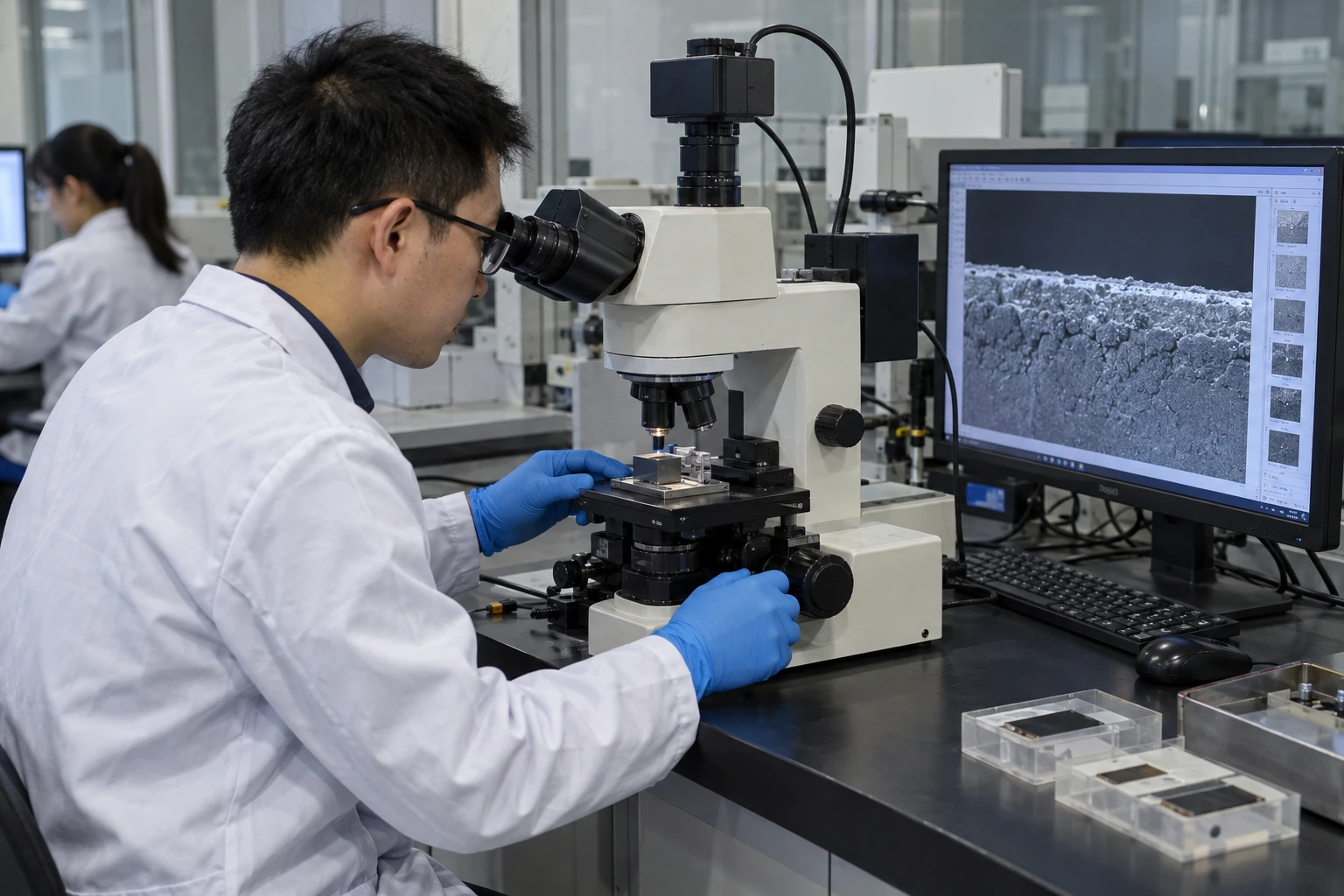
Titanium electrode surface analysis can establish measured characteristics such as morphology or local composition within a method's limits. It does not automatically prove when or why a change occurred.
Does a microscope image establish root cause?
Separate condition from chronology. Compare appropriate reference samples and operating evidence where available. Avoid interpreting one selected area as representative of every coated surface.
- Document sampling and preparation methods.
- State analytical resolution and limitations.
| Check | Decision |
|---|---|
| Surface observation | Describes examined material |
| Root-cause finding | Requires broader supporting evidence |
Keep causal claims within the combined evidence. Key Takeaway: A detailed image can still support only a limited finding.
7. Why compare both Titanium electrode cell partners?
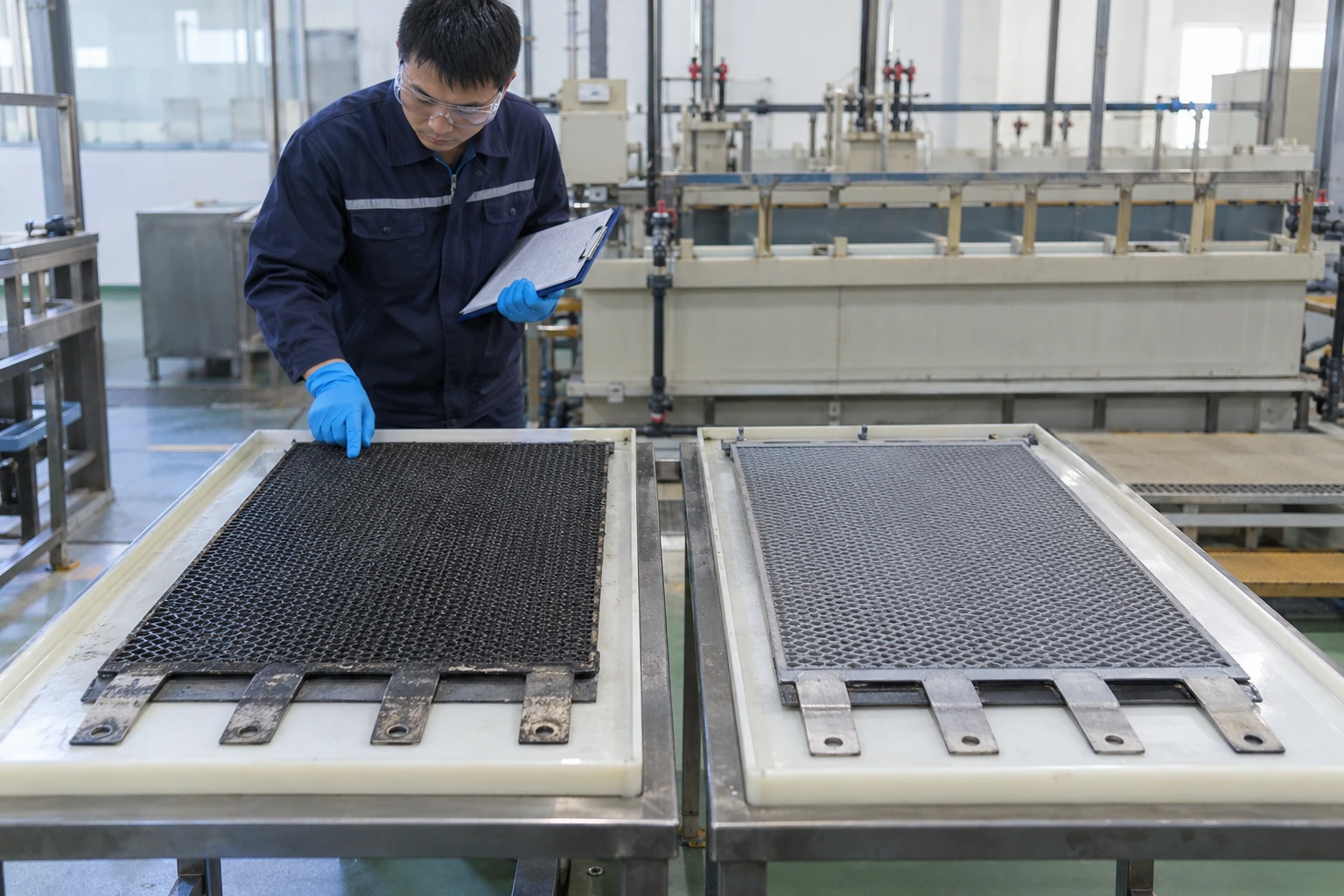
Both electrodes should be compared during Titanium electrode failure review because whole-cell symptoms may originate at either interface or their connections. Similar spatial patterns may also point toward common process conditions.
What does the companion surface show?
Inspect the pair in context. Record cathode deposits, spacing and connection condition alongside the anode. Do not discard the companion electrode before deciding whether it carries useful evidence.
- Keep orientation consistent between photographs.
- Record contact and spacer condition.
| Check | Decision |
|---|---|
| Anode-only evidence | Leaves alternative causes open |
| Paired assembly evidence | Supports a broader fault review |
Use the complete cell condition to test explanations. Key Takeaway: An anode complaint may require evidence from other components.
8. How should a Titanium electrode return be packaged?
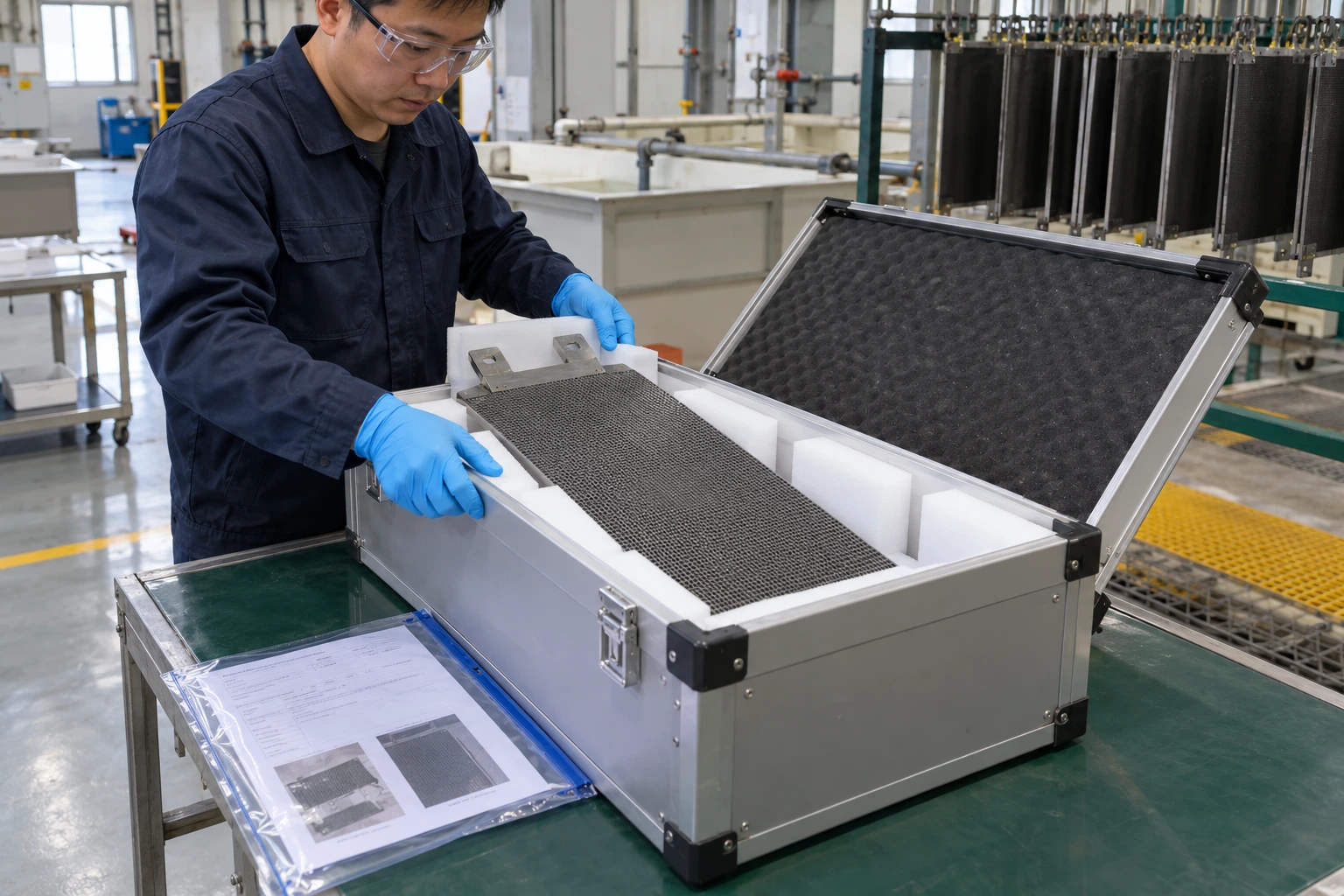
A returned Titanium electrode must be packaged according to its verified decontamination status and applicable transport requirements. Never send an unknown contaminated sample as ordinary clean hardware.
What must the receiving laboratory know?
Declare condition before shipment. Arrange handling and acceptance with the receiver, including relevant exposure information for water-treatment applications. Preserve identification and support the component without rubbing active surfaces.
- Confirm decontamination and handling documentation.
- Obtain receiver instructions for any retained residues.
| Check | Decision |
|---|---|
| Clean documented component | Use approved protective packaging |
| Residual hazard uncertain | Resolve classification and handling before shipment |
Safety and sample integrity both belong in the return plan. Key Takeaway: A technically useful return must also be safe and properly documented.
9. What belongs in a Titanium electrode failure report?

A Titanium electrode failure report should state observed facts, tested hypotheses, remaining uncertainty and recommended corrective actions. A confident cause label without evidence is not a useful closure.
What would make the report actionable?
Ask for the reasoning chain. Each recommendation should address an identified mechanism or a defined evidence gap. Distinguish confirmed findings from plausible explanations that still need testing.
- Reference samples, records and analytical methods.
- Assign owners and verification criteria to actions.
| Check | Decision |
|---|---|
| Cause asserted | Hard to audit or act on |
| Evidence-linked findings | Supports targeted corrective work |
Use the report to define verification, not just blame. Key Takeaway: A useful failure review explains what evidence supports each next action.
10. What Titanium electrode information speeds a useful review?

A Titanium electrode review moves faster when it receives a clear symptom, incident timeline, drawings and safely preserved sample evidence. These inputs narrow competing explanations before replacement or redesign decisions.
Prepare an evidence-led review request
Send the case as one package. When you contact us today, we can review electrode specification and component evidence within the supplied process context. Our position favors documented findings over premature fault attribution.
- State which inspections and cleaning steps already occurred.
- List questions the review must answer.
| Check | Decision |
|---|---|
| Complete evidence package | Reduces repeated clarification |
| Defined review questions | Focuses the next analytical step |
Agree on the scope and limits of the review. Key Takeaway: Use failure evidence to choose a verifiable corrective action.
Frequently Asked Questions
Can I clean the electrode before sending photographs? Record its condition beforehand where safe. Required safety and decontamination procedures still take priority.
How do I know if a coating defect caused failure? You need combined evidence. Surface condition, process history and controlled comparisons help distinguish cause from consequence.
What's the best information to send with a failed part? Provide the symptom, timeline, operating records, drawings and handling history. Include mapped photographs of both electrodes.
Can I ship a used electrode without decontamination details? Do not assume it is ordinary clean hardware. Confirm residual hazards, receiving requirements and transport handling before shipment.
Can I expect a laboratory to identify one root cause? No. Evidence may support several mechanisms or remain incomplete, and a sound report should state that uncertainty.