
Store a spare Titanium electrode according to its supplier-approved condition, with the coating protected and its identity traceable. A replacement can spend months in a storeroom before anyone notices that packing rubbed an active face or its drawing revision no longer matches the cell. That turns planned spare coverage into another delay. Separate new and used storage requirements, protect interfaces and review fit before installation.
1. What threatens a stored Titanium electrode?
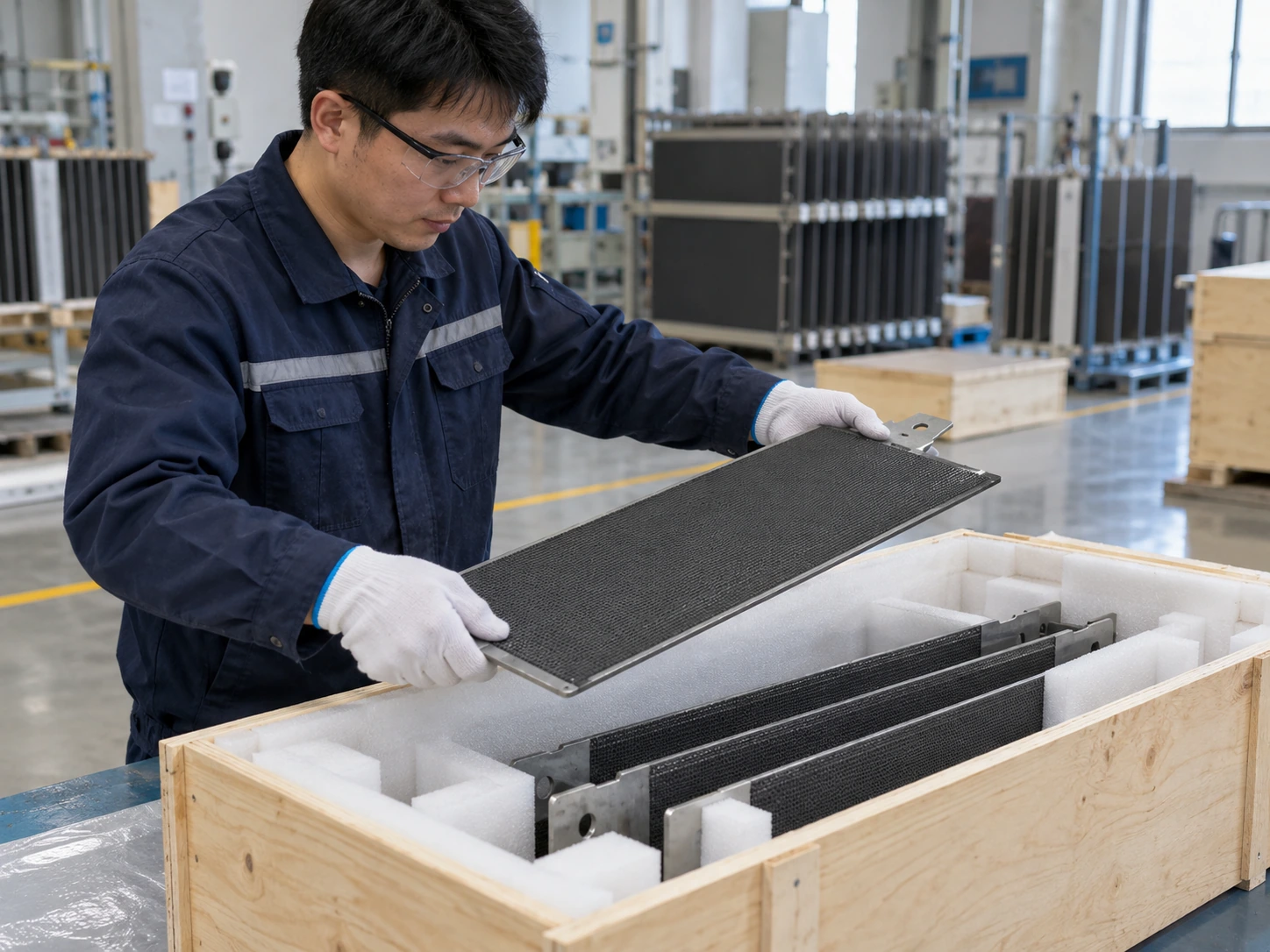
A stored Titanium electrode can be compromised by physical damage, contamination, unsuitable residual chemistry or lost identification. Storage suitability depends on the complete assembly, not only titanium's corrosion resistance.
What could make a spare unusable before installation?
Inspect the storage risks. Consider contact with other metal parts, chemical vapors and movement inside packaging. Include seals or attached components that may have different storage requirements.
- Protect active faces from abrasion.
- Maintain component and revision identity.
| Check | Decision |
|---|---|
| Metal substrate condition | Only one part of readiness |
| Coating and assembly condition | Also determines suitability |
Assess the spare as a finished component. Key Takeaway: A titanium part can remain intact while its functional surface becomes unsuitable.
2. Should new Titanium electrode spares be wet or dry?
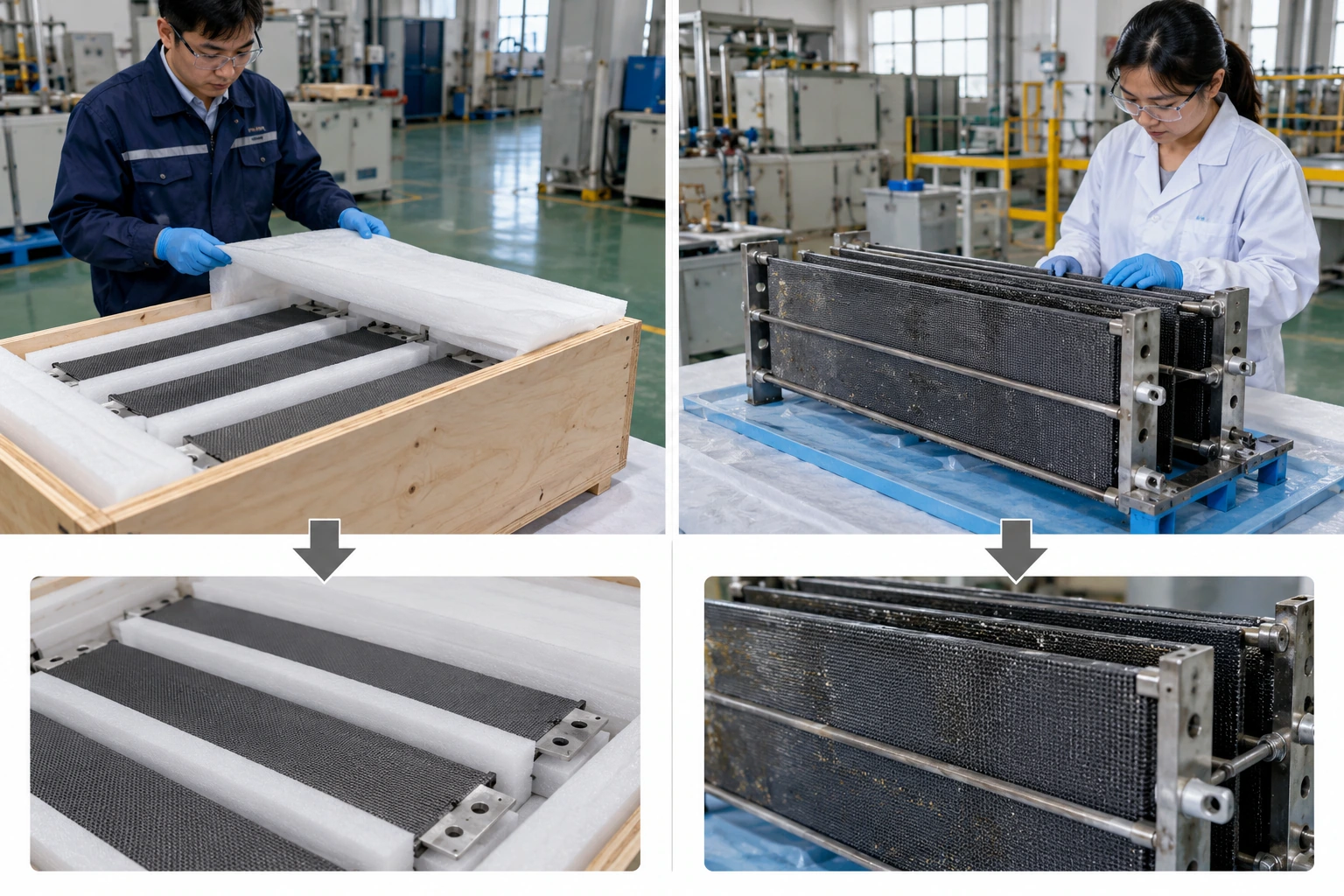
New and used Titanium electrode spares may require different storage conditions, so wet or dry storage must follow the applicable supplier instructions. Residual process liquid changes the question for returned equipment.
Which condition are you preserving?
Separate new stock from used parts. Identify whether the electrode is new, cleaned, contaminated or still part of an assembled cell. Do not apply a generic storage instruction across all four states.
- Record service and decontamination status.
- Request coating- and assembly-specific instructions.
| Check | Decision |
|---|---|
| New spare | Use its delivery and storage specification |
| Used component | Review residual chemistry and condition |
Choose instructions that match the actual part state. Key Takeaway: Wet-versus-dry decisions need a defined component history.
3. How do you protect Titanium electrode coatings?

A Titanium electrode coating should be protected from rubbing, impact and unapproved surface contact during storage. Packaging must support the part without loading fragile or active regions improperly.
Where does the package carry the weight?
Check the support points. Use the supplier-approved packing arrangement and maintain separation between parts. Avoid stacking coated faces directly together or applying adhesive labels to active surfaces.
- Support approved edges or nonactive features.
- Prevent movement inside the package.
| Check | Decision |
|---|---|
| Uncontrolled surface contact | Creates abrasion risk |
| Defined support and clearance | Protects the functional area |
Inspect how handling forces reach the electrode. Key Takeaway: Packaging should support the component without using its coating as a bearing surface.
4. Can storage surroundings contaminate a Titanium electrode?

Storage surroundings can contaminate a Titanium electrode through dust, machining debris or unsuitable chemical exposure. A clean dedicated area reduces avoidable handling and contamination variables.
What happens nearby?
Review the storage location. Include environment and protective packaging in a custom engineering review when spare parts will be held for extended periods. Do not assume ordinary workshop shelving suits every finished coating.
- Separate spares from grinding and chemical mixing.
- Keep approved packaging intact until inspection or use.
| Check | Decision |
|---|---|
| Uncontrolled workshop shelf | Exposure depends on nearby activity |
| Dedicated protected storage | Reduces avoidable contamination |
Choose storage controls for the actual surrounding activities. Key Takeaway: Clean storage protects more than appearance.
5. How should Titanium electrode terminals be protected?

Titanium electrode terminals should be protected against damage and contamination using the approved connection and packaging specification. Protective products must not introduce residues incompatible with later electrical assembly.
Will protection interfere with installation?
Use removable approved protection. Keep dry connection surfaces identified and avoid applying unapproved oils or compounds. Record any removal or preparation step required before installation.
- Protect threads and contact geometry.
- Keep preparation instructions with the spare.
| Check | Decision |
|---|---|
| Unspecified coating or grease | May complicate connection preparation |
| Approved protection | Supports predictable installation |
Consider the next assembly step when choosing protection. Key Takeaway: A protected terminal should remain compatible with its intended connection procedure.
6. What traceability should follow a Titanium electrode spare?
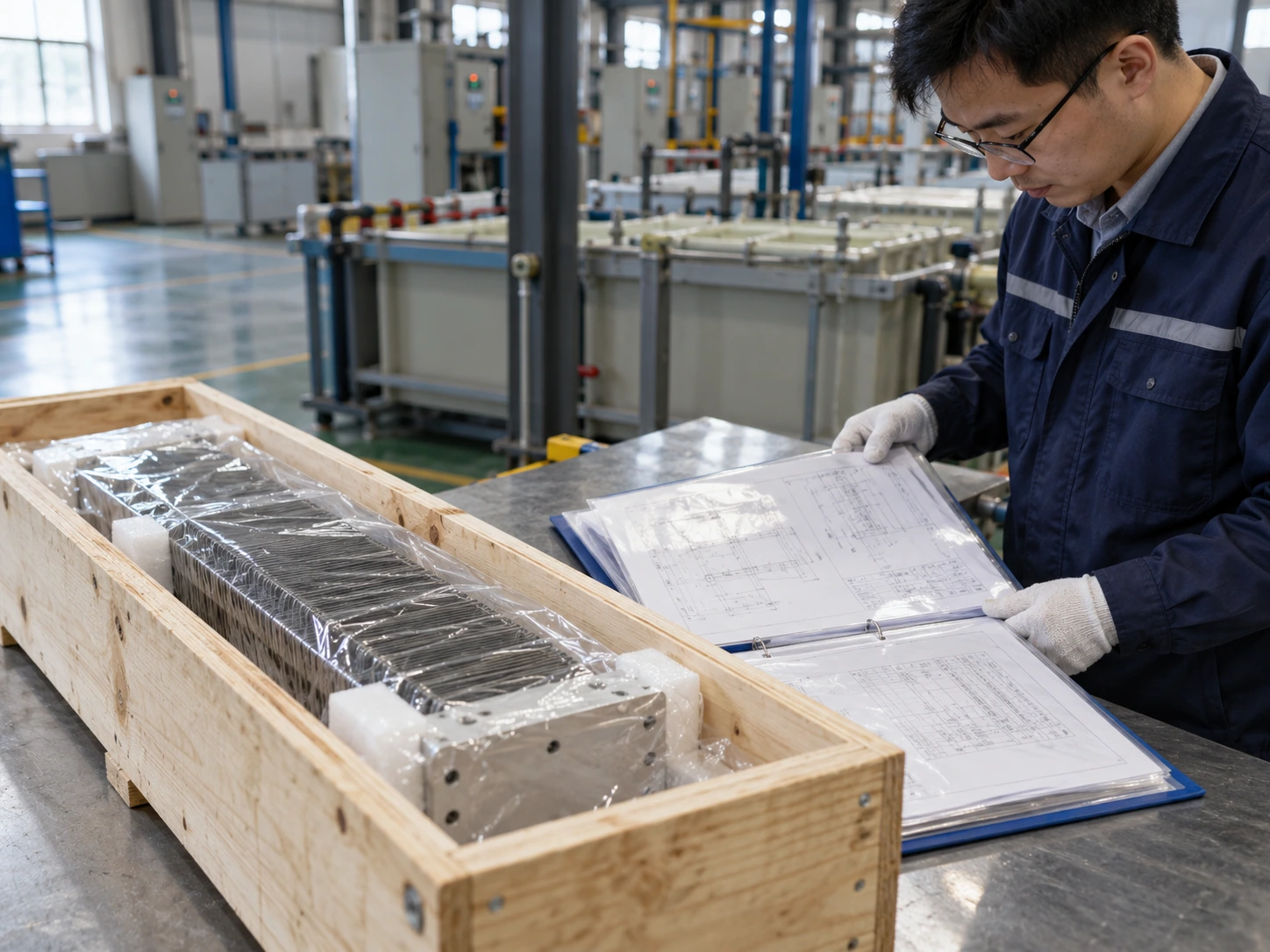
A Titanium electrode spare should retain part number, drawing revision, coating identity and relevant batch or inspection records. These details help distinguish a ready spare from a similar-looking unqualified component.
Can you identify the part without opening every file?
Link package and records. Use external identification that does not damage active surfaces. Keep its location and inspection status visible in your spare-parts system.
- Record approved drawing and batch references.
- Retain supplier storage and installation instructions.
| Check | Decision |
|---|---|
| Appearance-based identification | Risk of mistaken substitution |
| Traceable part identity | Supports controlled release |
Check identity before scheduling the replacement job. Key Takeaway: A spare is useful only when its specification can be confirmed.
7. Does a stored Titanium electrode need periodic inspection?

A stored Titanium electrode may need periodic inspection according to supplier instructions and your storage risk assessment. Inspection scope should avoid unnecessary unpacking that itself risks damage.
What can be checked without disturbing the coating?
Inspect packaging before opening. Look for movement, moisture exposure or damaged supports. If conditions are uncertain, follow a defined review process rather than repeatedly handling the active surface.
- Record inspection date and observations.
- Escalate damaged packaging or lost identification.
| Check | Decision |
|---|---|
| Packaging intact and conditions controlled | Follow planned inspection scope |
| Evidence of exposure or movement | Review component condition |
Let observed risk determine the next check. Key Takeaway: Inspection should reduce uncertainty without creating handling damage.
8. Can an old Titanium electrode spare fit a revised cell?

An older Titanium electrode spare may not fit a revised cell specification even if its external dimensions look similar. Coating duty, seal interfaces and connection details can change between revisions.
Has the equipment changed since purchase?
Compare released revisions. For water-treatment applications, confirm current chemistry and operating duty as well as physical fit. A stored component approved for an earlier design needs a documented equivalence review.
- Check drawing and specification revisions.
- Review changes to seals and electrical connections.
| Check | Decision |
|---|---|
| Physical fit confirmed | Only part of compatibility |
| Current-duty equivalence confirmed | Stronger release basis |
Resolve revision differences before the maintenance window. Key Takeaway: Spare readiness includes compatibility with the current equipment configuration.
9. What checks precede Titanium electrode installation?
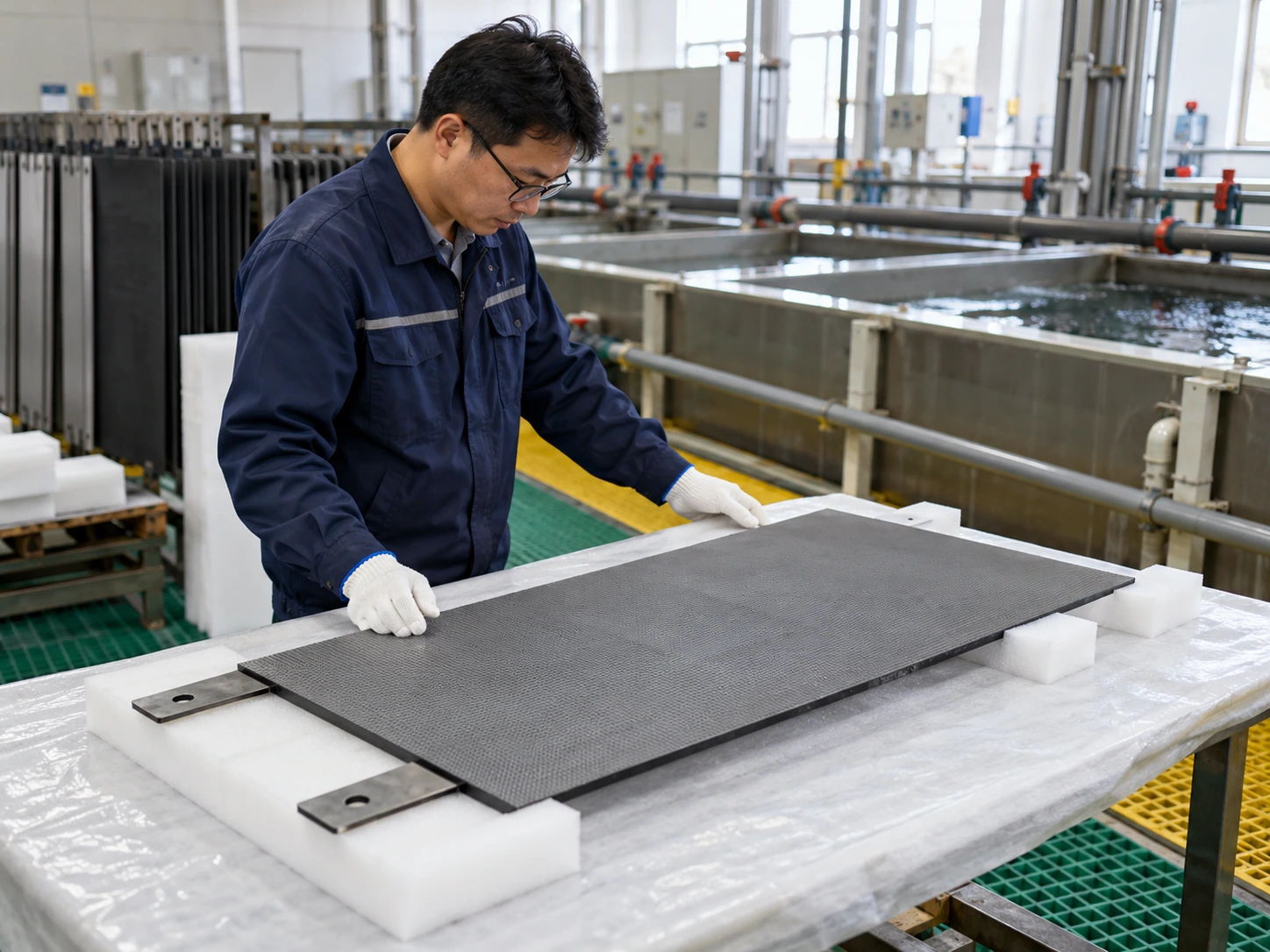
Before installation, a Titanium electrode spare needs identity, condition and interface checks under the approved maintenance procedure. Storage records should inform whether additional supplier review is needed.
What must be cleared before fitting?
Use a release checklist. Verify protected surfaces, terminals and attached components without unapproved cleaning or repair. Keep acceptance decisions with the maintenance record.
- Confirm the current approved part specification.
- Document damage, exposure or missing records.
| Check | Decision |
|---|---|
| Checks complete | Supports controlled installation |
| Condition uncertain | Requires review before use |
Avoid turning an urgent outage into an undocumented substitution. Key Takeaway: Release the spare on evidence, not availability alone.
10. What Titanium electrode storage instructions should you request?

A Titanium electrode storage request should state part condition, attached materials, expected duration and surrounding environment. This supports instructions specific enough for your maintenance team to follow.
Make spare coverage dependable
Plan storage when you order. When you contact us today, we can review electrode configuration and packaging requirements for your spare-parts brief. Our position is that a replacement should arrive with identifiable, maintainable requirements.
- Request storage and installation documentation.
- Assign responsibility for revision and condition checks.
| Check | Decision |
|---|---|
| Purchase complete | Part delivered |
| Spare plan complete | Part remains traceable and reviewable |
Include readiness checks in the stocking plan. Key Takeaway: Store a qualified replacement with its instructions, not an unidentified metal component.
Frequently Asked Questions
Can I store every titanium electrode dry? No universal instruction applies. New parts, used parts and assembled cells may need different supplier-approved conditions.
What's the best packaging for a coated spare? Use an approved support arrangement. Prevent rubbing, movement and contact with active surfaces while protecting connections.
How do I know if an old spare remains usable? Review identity, condition and current-duty compatibility. Storage time alone cannot answer all three questions.
Can I clean a dusty coating before installation? Only with an approved method. Improvised wiping or chemicals can damage or contaminate the active surface.
Can I claim a fixed shelf life for every coating? No. Shelf-life statements require supplier evidence and defined storage conditions for the specific finished component.