
Titanium electrode mesh orientation can matter when opening direction changes flow, support or current distribution in your cell. Two panels may share external dimensions yet arrive with their diamond openings rotated. If that direction was absent from the drawing, both parts may appear compliant while behaving differently in assembly. Specify orientation and test the actual installed geometry before accepting interchangeability.
1. Why does Titanium electrode mesh orientation matter?

Titanium electrode mesh orientation matters when its directional geometry affects mechanical support, fluid passage or electrical paths. The consequence depends on the complete assembly.
Which function depends on direction?
Start with the installed position. Record how the mesh sits relative to flow, supports and current entry. Do not assume a rotated panel is either better or worse without application evidence.
- Mark flow and support directions.
- Identify the current-entry edge.
| Check | Decision |
|---|---|
| External outline | Does not define mesh direction |
| Installed orientation | Connects geometry with function |
Use the assembly as the comparison basis. Key Takeaway: Mesh direction belongs in the specification when it affects a required function.
2. What are the two Titanium electrode mesh directions?
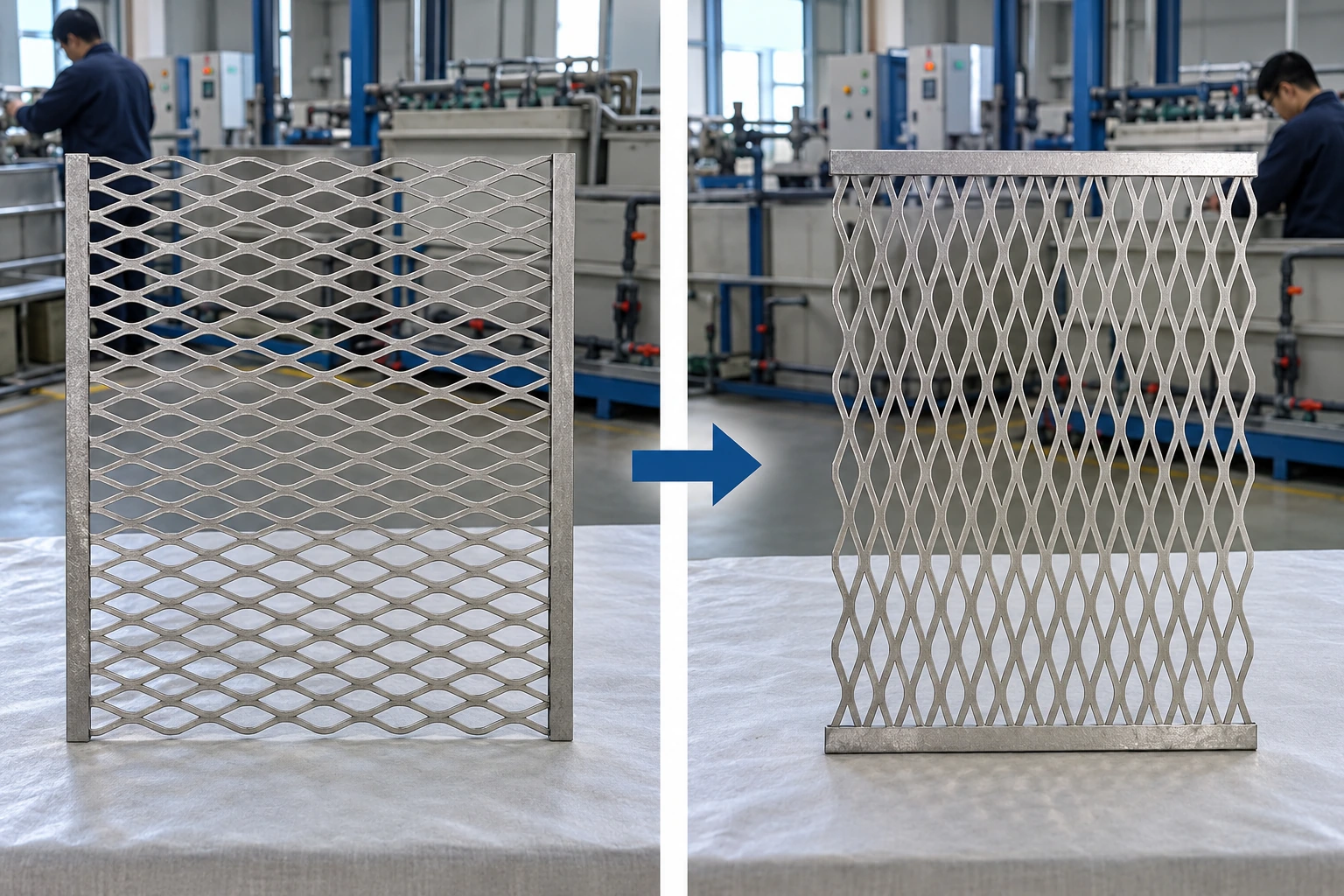
Expanded Titanium electrode mesh has distinct long and short opening directions that should be identified unambiguously. Supplier terminology must match the dimensions and views on your drawing.
Could the mesh arrive rotated?
Show the opening axes. Include a small orientation sketch and named dimensions. Avoid relying on a photograph whose viewing angle obscures which direction aligns with the panel length.
- Define long and short opening dimensions.
- Tie direction to a drawing datum.
| Check | Decision |
|---|---|
| Opening dimensions only | May leave orientation unclear |
| Dimensions with axis sketch | Supports consistent interpretation |
Confirm the convention before sample manufacture. Key Takeaway: An orientation sketch prevents an otherwise plausible rotated part.
3. How does Titanium electrode open area affect a cell?
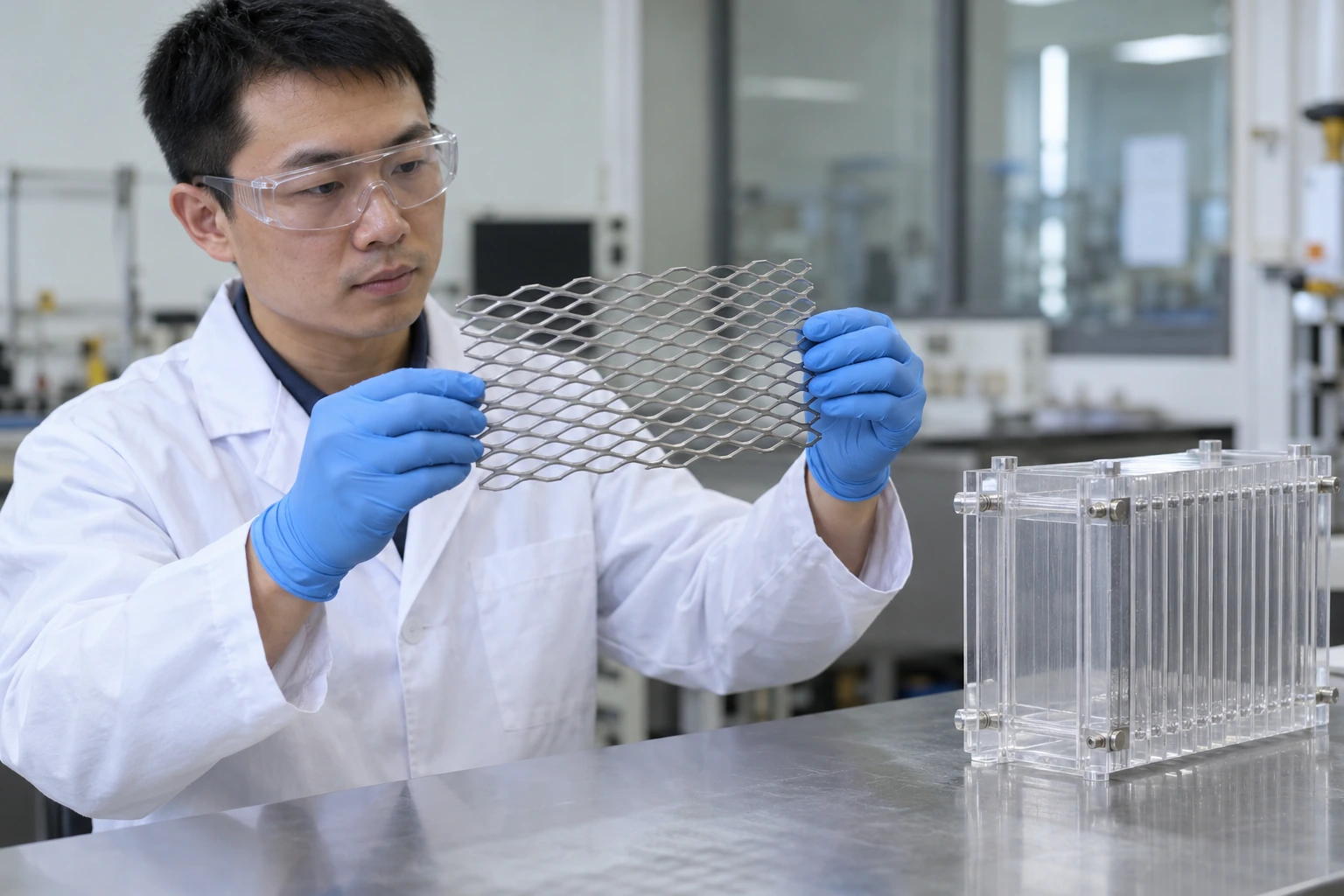
Titanium electrode open area describes the fraction of a declared area occupied by openings, but it does not alone establish flow performance. Strand shape, thickness and installed spacing also matter.
What does the percentage leave out?
Compare the full geometry. Ask how open area was calculated and inspect the associated strand dimensions. Similar open-area values can belong to different hydraulic and mechanical structures.
- Record strand dimensions and thickness.
- Keep the calculation basis explicit.
| Check | Decision |
|---|---|
| Open-area percentage | One geometric descriptor |
| Complete mesh geometry | Supports application review |
Use more than one number for mesh selection. Key Takeaway: Open area cannot replace a drawing or a representative flow assessment.
4. Does mesh area change Titanium electrode current calculations?

Titanium electrode mesh area conventions change current-density calculations because projected area and developed surface area are different quantities. Both can be useful if clearly defined.
Which area was used in the test?
Align the normalization basis. Include coated faces and immersion details in a custom engineering review. Do not compare a mesh result normalized one way with a plate result normalized another way.
- State projected or developed area.
- Record active wetted regions.
| Check | Decision |
|---|---|
| Current | Measured electrical input |
| Current density | Current divided by a declared area |
Keep one basis through specification and testing. Key Takeaway: Area definitions must travel with every mesh current-density value.
5. Can mesh orientation affect Titanium electrode flow?
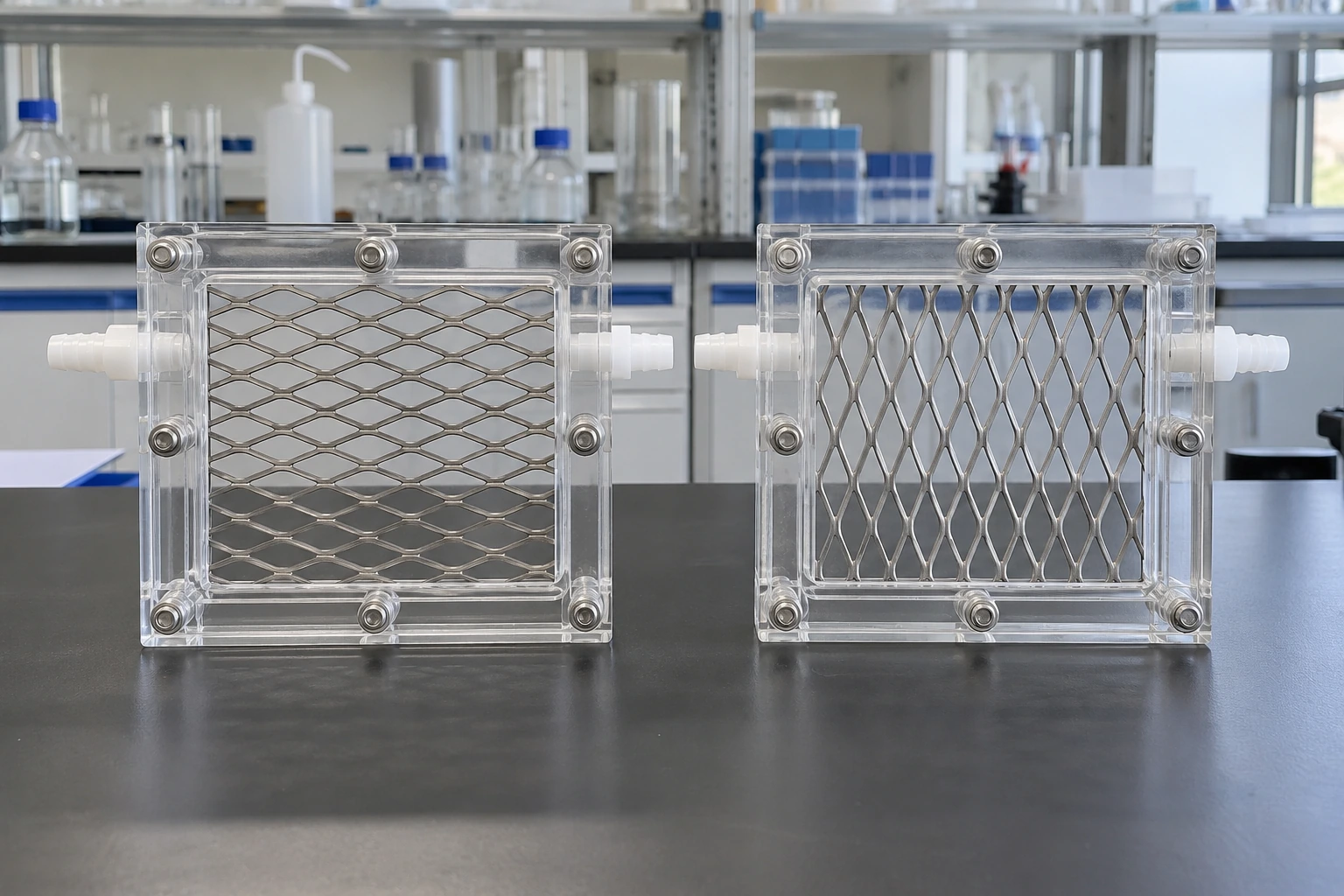
Rotating Titanium electrode mesh can affect flow where strand geometry interacts with channel direction and spacing. The size and significance of that effect require a representative assessment.
Does the rotated mesh change the channel?
Test the installed arrangement. Compare matched flow conditions while changing orientation alone. Avoid claiming universal pressure-loss or bubble-removal benefits from diamond direction.
- Keep spacing and feed properties fixed.
- Record pressure and distribution observations.
| Check | Decision |
|---|---|
| Orientation-only trial | Supports a focused comparison |
| Several geometry changes | Confounds the result |
Keep claims within the tested assembly. Key Takeaway: Use a controlled comparison to determine whether orientation matters in your cell.
6. How does current enter a Titanium electrode mesh panel?
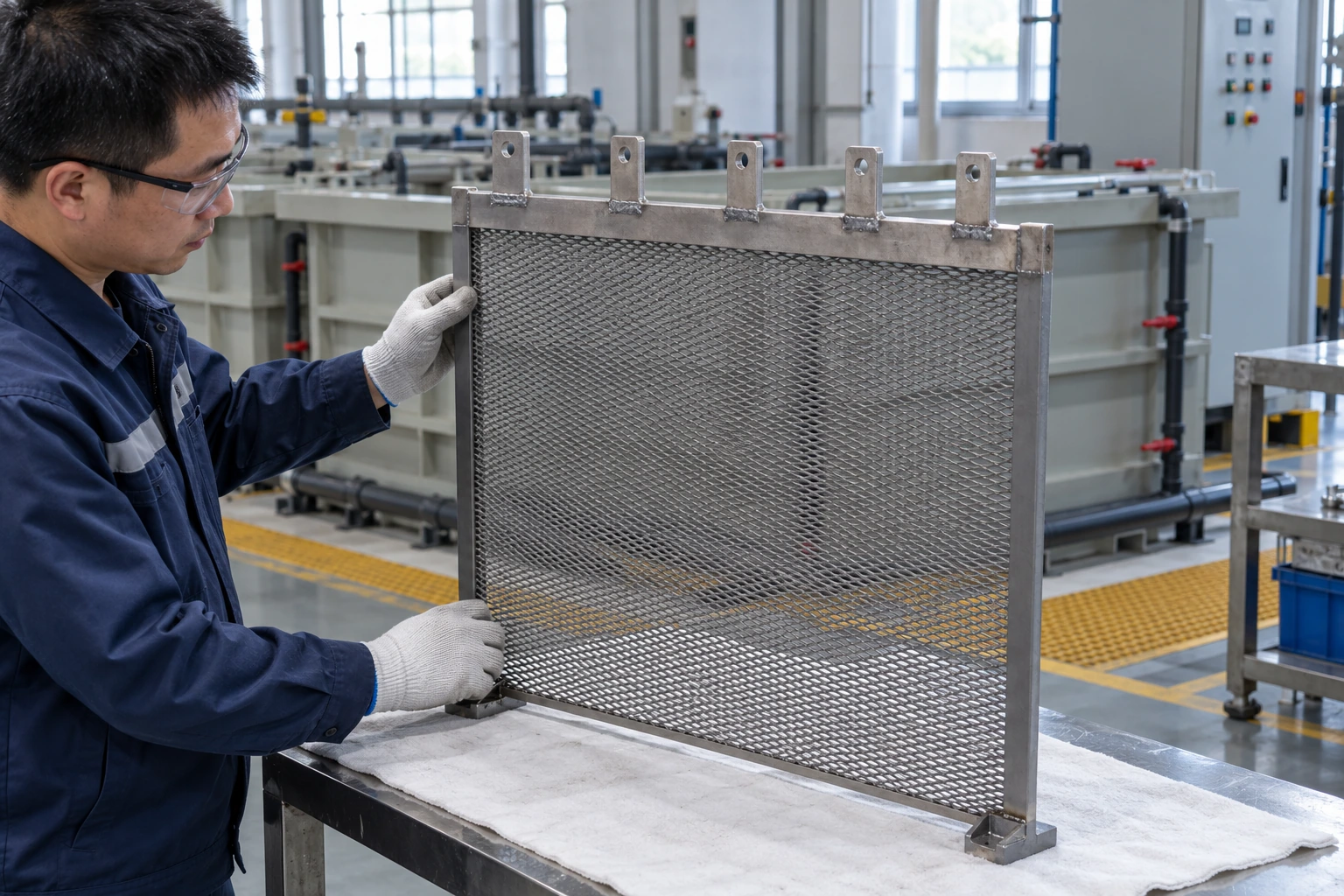
Current enters a Titanium electrode mesh panel through its specified connection and conductive structure. Terminal placement and mesh geometry can influence current distribution.
Where does current reach the active region?
Review the dry connection path. Show welds, tabs and supported edges on the drawing. Qualified designers should assess distribution where geometry or loading makes it consequential.
- Define terminal location and interface.
- Record connection inspection requirements.
| Check | Decision |
|---|---|
| Terminal drawing | Defines current entry |
| Mesh structure | Defines paths across the panel |
Review the connection and active region together. Key Takeaway: A mesh panel's electrical duty depends on more than its coating.
7. Can forming distort Titanium electrode mesh openings?

Forming a Titanium electrode mesh can alter opening geometry, flatness or local coating condition depending on manufacturing sequence. The formed part needs its own dimensional and surface acceptance.
What changes after bending?
Specify the final shape. Agree on the manufacturing sequence and inspection criteria with the supplier. Do not assume flat-mesh data automatically describes a curved finished component.
- State final radius or profile.
- Inspect relevant openings after forming.
| Check | Decision |
|---|---|
| Flat mesh specification | Defines incoming geometry |
| Formed-part specification | Defines installed geometry |
Judge the delivered shape against its own requirements. Key Takeaway: Forming is a design and manufacturing variable that needs review.
8. What should a Titanium electrode mesh drawing specify?

A Titanium electrode mesh drawing should define opening axes, strand dimensions, thickness, panel outline and coating boundaries. Orientation relative to installation must remain clear.
Could another reviewer reproduce the part?
Include the application interfaces. For water-treatment applications, show flow direction, supports and any exposed connection regions. Resolve terminology differences before drawing release.
- Use stable datums and views.
- State coating and masking regions.
| Check | Decision |
|---|---|
| Mesh catalogue description | May omit assembly details |
| Released component drawing | Defines the required finished part |
Use the drawing as the purchasing reference. Key Takeaway: A complete mesh specification links catalogue geometry with actual installation.
9. How do you qualify Titanium electrode mesh orientation?
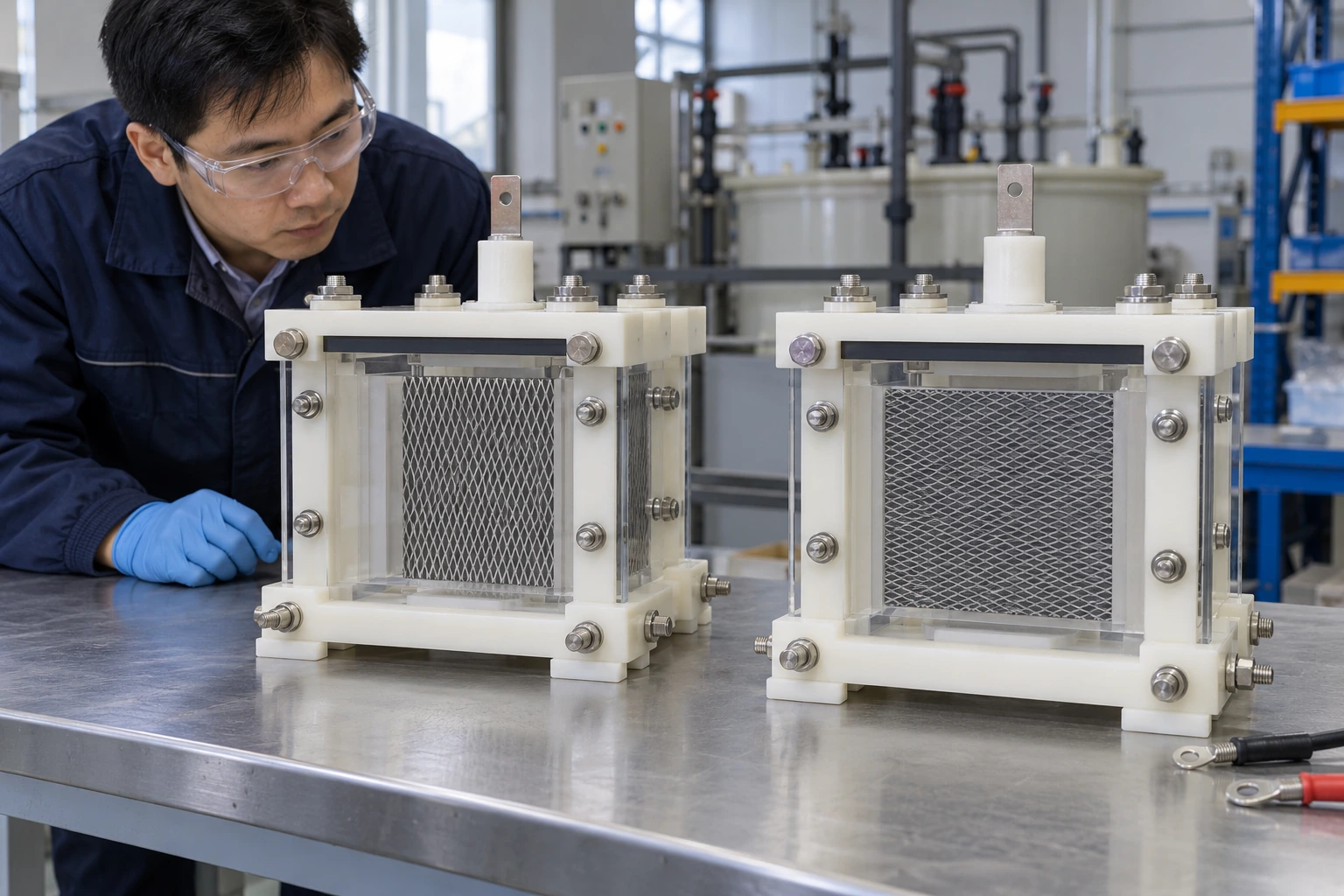
Titanium electrode mesh orientation should be qualified through inspections and tests that address its intended function. Visual similarity alone cannot establish equivalent flow or electrical behavior.
What would demonstrate interchangeability?
Define acceptance before comparison. Select relevant dimensional, hydraulic and process checks. Keep geometry, chemistry and duty controlled so the orientation question remains isolated.
- Use traceable matched samples.
- Record limits of the trial.
| Check | Decision |
|---|---|
| Visual match | Limited geometric evidence |
| Function-specific validation | Supports a defined equivalence claim |
Choose tests around the affected requirement. Key Takeaway: Interchangeability is an evidence-based decision, not a resemblance judgment.
10. What Titanium electrode mesh sample should you approve?
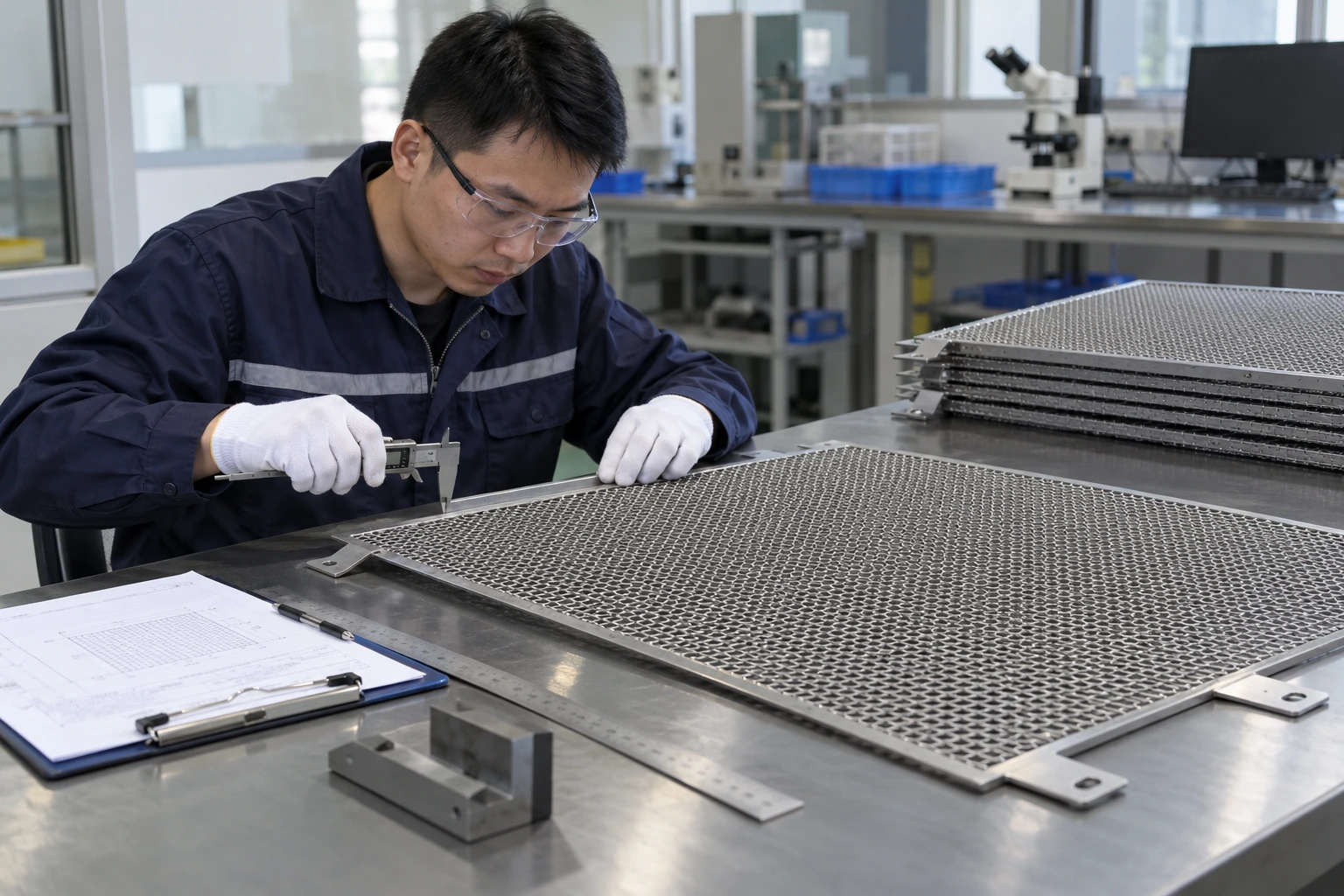
A Titanium electrode mesh approval should identify the exact drawing, orientation and tested conditions. Keep the approved sample linked to production inspection requirements.
Approve a reproducible mesh specification
Send the installed orientation. When you contact us today, we can review drawing-based mesh and coating requirements. We favor clear directional specifications over assumptions made from panel photographs.
- Attach the opening-axis sketch.
- State the active-area convention.
| Check | Decision |
|---|---|
| Approved sample identity | Preserves the reference |
| Controlled drawing | Makes production repeatable |
Resolve orientation before releasing the order. Key Takeaway: Approve the mesh as it will be installed and operated.
Frequently Asked Questions
Can I rotate a mesh panel without review? Only if the approved design permits it and affected functions remain qualified.
What's the best diamond direction? It depends on flow, supports and current entry in your actual assembly.
Can I compare meshes using open area alone? No. Strand geometry, thickness and installation also affect suitability.
How do I know if my mesh area basis is correct? Use the declared area convention linked to the test drawing and immersed coating.
Can I use flat-mesh data for a formed panel? Only with a justified equivalence review covering geometry and surface condition.