
Test Titanium electrode product contamination with a validated analytical plan that compares feed, blanks and process output under defined conditions. A metal result in one outlet sample can trigger an electrode complaint even when piping or source water contributed it. Replacing a component before locating the source leaves product acceptance unresolved. Define analytes, sampling controls and reporting limits before assigning responsibility.
1. What can contaminate Titanium electrode process output?

Titanium electrode process output can receive contaminants from feed, wetted hardware, handling and electrode surfaces. A complete source inventory is needed before attributing a detected substance to coating release.
Which materials touch the sampled stream?
Map the contact chain. Include tanks, piping, fittings, seals and sampling equipment. Record relevant material identity and maintenance changes rather than focusing only on the most visible component.
- List feed and wetted-material sources.
- Identify cleaning and handling exposures.
| Check | Decision |
|---|---|
| Single suspected component | Narrow starting hypothesis |
| Complete source inventory | Supports a fair investigation |
Use the inventory to design comparative samples. Key Takeaway: A product impurity has several possible entry points.
2. How do you separate Titanium electrode contamination sources?
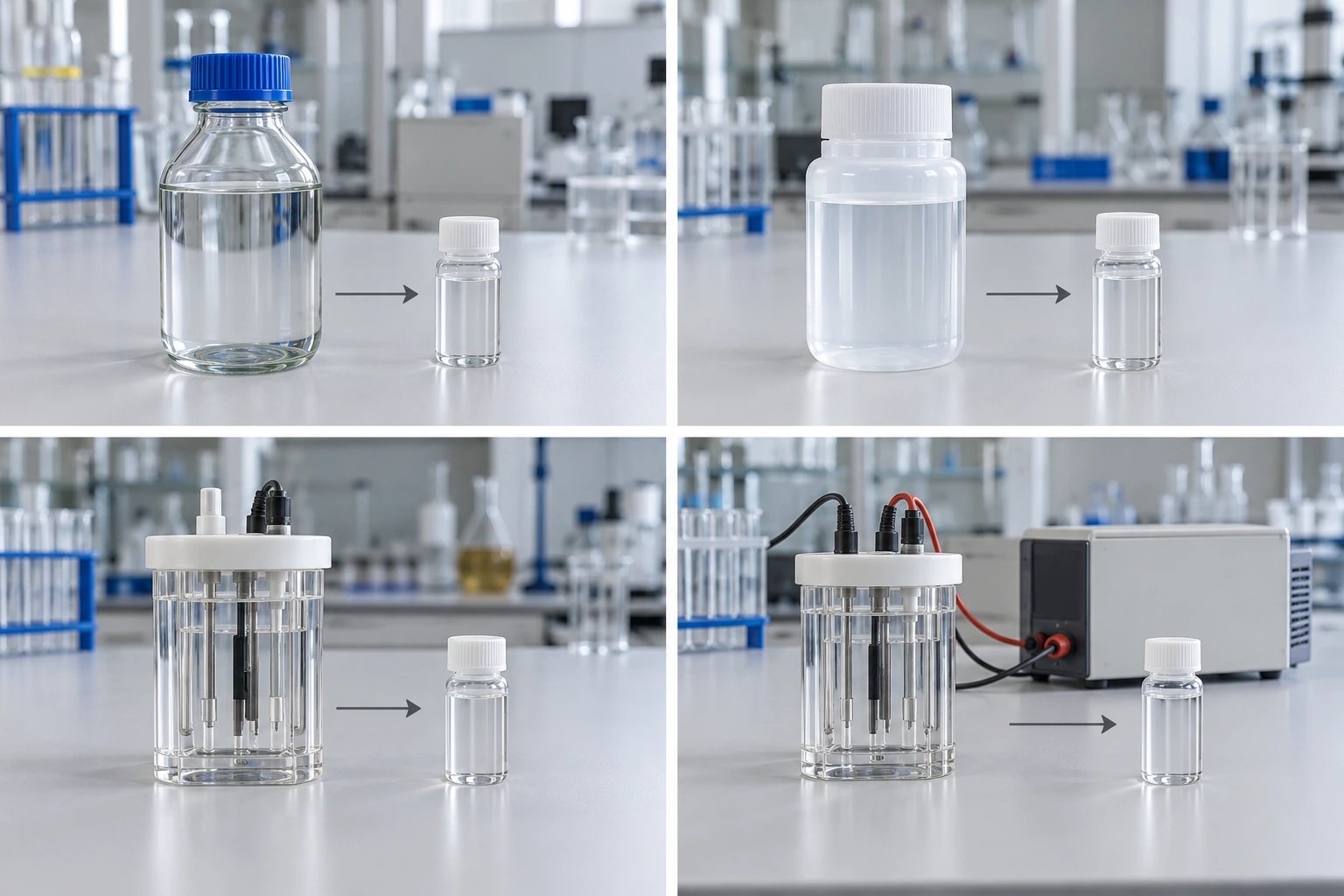
Titanium electrode contamination sources can be investigated with appropriately designed feed, blank, idle-contact and operating samples. Each control must answer a defined question without introducing another uncontrolled difference.
What can each sample distinguish?
Build controls around hypotheses. An idle-contact sample may reveal material release without electrical operation, while energized duty adds electrochemical exposure. Interpretation still requires matched chemistry and handling.
- Use consistent sampling equipment and timing.
- Record which system components each sample contacts.
| Check | Decision |
|---|---|
| Feed or blank | Checks background contributions |
| Controlled process comparison | Tests added exposure pathways |
Interpret controls within their actual contact boundaries. Key Takeaway: Source attribution requires a comparison, not one isolated result.
3. Which elements need Titanium electrode output testing?

Titanium electrode output testing should target elements relevant to supplied materials and product requirements using methods validated for each analyte and matrix. A generic metals panel may omit a coating constituent of interest.
Does the laboratory method cover your question?
Request the analyte list. Confirm suitability for titanium and any relevant coating or hardware elements rather than assuming all ICP methods cover them equally. Ask about interferences and reporting limits for your sample.
- Provide material information to the laboratory.
- Specify required analytes and reporting basis.
| Check | Decision |
|---|---|
| Generic instrument name | Does not define analyte coverage |
| Validated analyte-method pair | Supports the intended measurement |
Check method scope before collecting samples. Key Takeaway: Choose analysis around the materials and acceptance question.
4. Does an ICP result prove Titanium electrode coating loss?

An ICP result measures specified elements under a defined method, but it does not by itself prove Titanium electrode coating loss. Feed, hardware and sampling sources need comparison before assigning origin.
What does the result establish directly?
Separate detection from attribution. Include feed and material-contact controls in a custom engineering review. A detected element may narrow the investigation while leaving release mechanism and source unresolved.
- Retain blank and duplicate information.
- Review sample preparation and matrix effects.
| Check | Decision |
|---|---|
| Element measured | Supports a concentration statement |
| Source assigned | Needs additional comparative evidence |
Keep the analytical claim distinct from the causal claim. Key Takeaway: A laboratory number cannot identify its source without context.
5. How do particles change Titanium electrode test design?

Particles change Titanium electrode test design because dissolved, filtered and total-recoverable fractions answer different questions. Sampling and preparation must follow the selected validated method.
Which fraction does your specification require?
Define the fraction before sampling. Ask the laboratory how filtration, preservation or digestion affects the reported result. Do not compare unlike fractions as if they measured the same quantity.
- State whether particles are part of acceptance.
- Keep preparation steps with every result.
| Check | Decision |
|---|---|
| Dissolved fraction | Method-defined filtered or dissolved basis |
| Broader prepared fraction | May include additional particulate contribution |
Match the analytical fraction to the product requirement. Key Takeaway: Different preparation methods can produce different valid answers.
6. What sampling controls suit Titanium electrode trials?

Titanium electrode sampling controls should address contamination from containers, collection equipment and handling. Laboratory instructions should define suitable materials, blanks, preservation and transport for the intended method.
Could the sample bottle add the analyte?
Control the collection chain. Use containers and procedures selected for your analytes and matrix. Keep sampling personnel, locations and timing documented so unexpected results can be investigated.
- Include appropriate field or equipment blanks.
- Maintain sample identity and chain of custody where required.
| Check | Decision |
|---|---|
| Uncontrolled collection | Can obscure the process source |
| Documented controlled sampling | Supports interpretation and repeat testing |
Treat sampling quality as part of analytical quality. Key Takeaway: A precise instrument cannot repair a contaminated sample.
7. Can low results clear a Titanium electrode application?

A low or nondetected Titanium electrode contamination result does not automatically clear an application if reporting limits exceed its acceptance requirement. Nondetection also does not mean absolute absence.
Is the method sensitive enough for the specification?
Compare limits explicitly. Review reporting limits, uncertainty and matrix effects with the laboratory. A result below a method's reporting threshold may leave a stricter product criterion unanswered.
- State required acceptance units and basis.
- Retain qualifiers and uncertainty information.
| Check | Decision |
|---|---|
| Nondetected | Below the stated method threshold |
| Requirement satisfied | Needs an appropriate threshold and decision rule |
Check analytical capability before interpreting a pass. Key Takeaway: A method must be capable of answering your acceptance question.
8. How should Titanium electrode duty affect sampling?
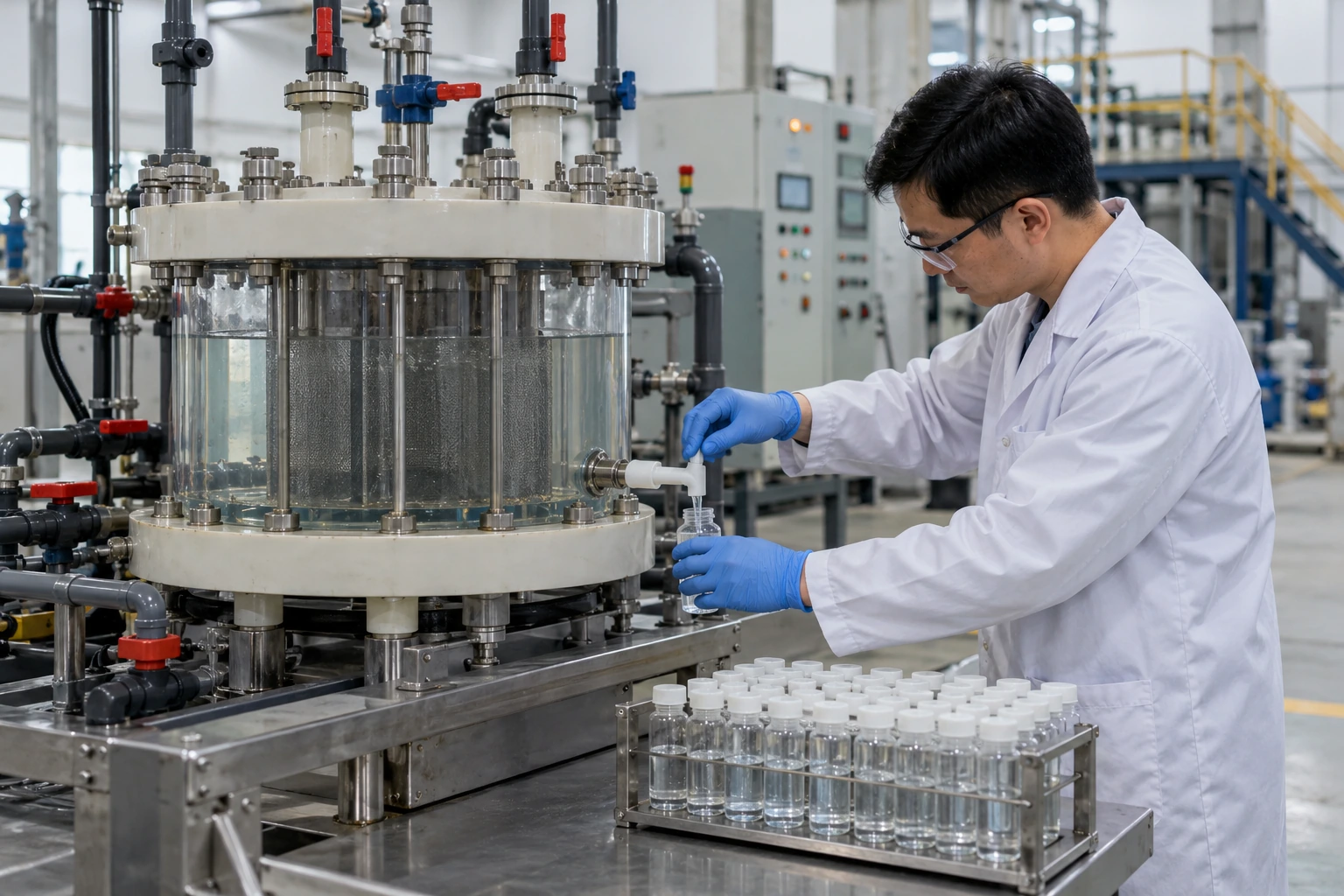
Titanium electrode sampling should cover operating states relevant to the acceptance claim, rather than only one convenient steady-state sample. Startup, changed duty or maintenance may warrant separate review.
Which operating state does the claim cover?
Match samples to the duty. In water-treatment applications, consider the intended product-contact period and process variation. Do not generalize a short clean run into unrestricted lifetime purity.
- Record current, chemistry and sample timing.
- Define repeat sampling and relevant exposure intervals.
| Check | Decision |
|---|---|
| One operating sample | Limited condition-specific evidence |
| Defined duty-based plan | Supports a broader but bounded claim |
Keep the finding within the sampled conditions. Key Takeaway: Product-purity claims need an exposure basis as well as an analytical result.
9. Who defines Titanium electrode product acceptance limits?

Titanium electrode product acceptance limits should come from the responsible product, process and compliance requirements for the intended use. An electrode supplier should not invent a universal safe concentration.
Who decides whether the result is acceptable?
Identify the governing requirement. Have qualified specialists confirm applicable criteria and laboratory decision rules. Drinking-water, food-contact and industrial process uses may require different evidence.
- Record the applicable specification and revision.
- Identify who approves compliance interpretation.
| Check | Decision |
|---|---|
| Component test result | Provides technical evidence |
| Application acceptance | Applies the relevant product requirements |
Keep measurement and approval responsibilities distinct. Key Takeaway: A metal analysis alone does not certify complete application compliance.
10. What Titanium electrode purity report should you request?

A Titanium electrode purity report should combine material identity, sampling controls, validated methods, reporting limits and operating conditions. That package supports product decisions without overclaiming a contamination source.
Ask for evidence you can interpret
Send the acceptance question. When you contact us today, we can review electrode material information and component requirements for your analytical plan. Our position is that purity claims should remain traceable to defined tests and conditions.
- Include analytes, fractions and required limits.
- Separate detected concentration from proposed source.
| Check | Decision |
|---|---|
| Complete analytical context | Supports a defensible interpretation |
| Unqualified purity statement | Does not answer a defined requirement |
Agree on the plan before collecting the comparison samples. Key Takeaway: Qualify product contamination through controlled evidence, not assumptions about titanium.
Frequently Asked Questions
Can I blame an electrode when a metal appears in output? Not from one sample. Compare feed, wetted materials and sampling controls before assigning the source.
What's the best laboratory method for coating metals? Choose a validated method for each analyte and matrix. A generic ICP label does not establish all-element coverage.
How do I know if a nondetect result is sufficient? Compare the reporting limit with your acceptance criterion. Nondetection means below a stated threshold, not absolute absence.
Can I compare filtered and unfiltered results directly? Only with their preparation basis understood. They may represent different material fractions and answer different questions.
Can I use a clean short trial to prove lifetime purity? No. It supports the tested duty and sampling conditions, while longer or different exposure needs appropriate validation.