
Uneven flow can limit a Titanium electrode cell even when total flow meets its nominal target. Your skid passes a flow check, yet one channel collects deposits and voltage drifts during production. Increasing pump speed may conceal distribution problems while creating another hydraulic burden. Compare useful channel flow, bypass routes and pressure behavior before redesigning your electrode assembly.
1. Why does Titanium electrode flow distribution matter?
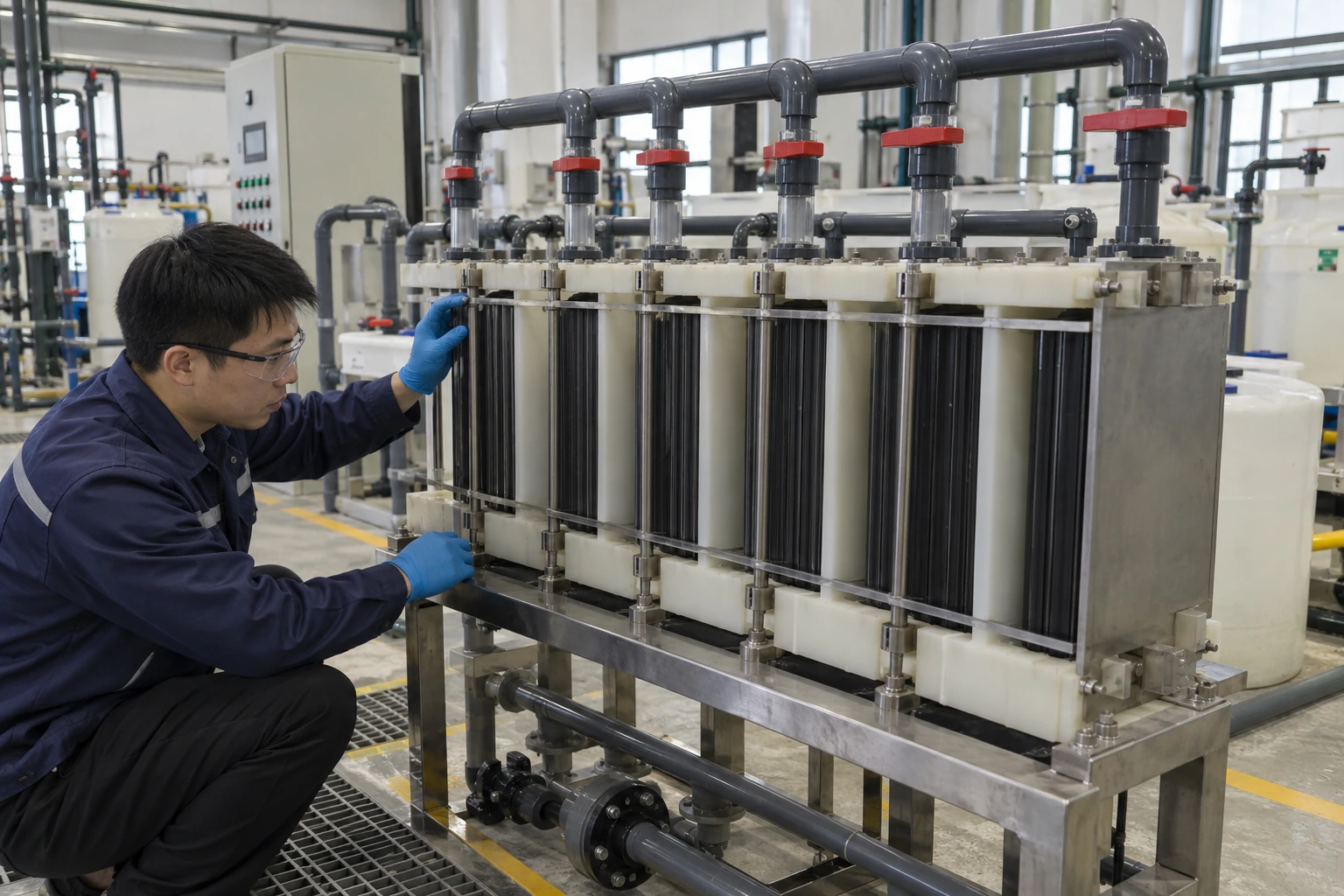
Titanium electrode flow distribution matters because individual channels need suitable reactant supply, product removal and thermal conditions. Total flow cannot describe how that liquid divides between parallel paths.
Where does the process actually occur?
Follow flow through the active region. Distinguish liquid passing near your skid from liquid moving through its reaction channels. Local conditions can differ substantially from the inlet sample.
- Map active channels and parallel routes.
- Identify gas-removal and outlet paths.
| Check | Decision |
|---|---|
| Total flow | Describes the combined stream |
| Channel distribution | Describes delivery within the cell |
Use both views when assessing performance. Key Takeaway: An acceptable total flow does not prove acceptable local service.
2. Can total flow hide Titanium electrode channel problems?
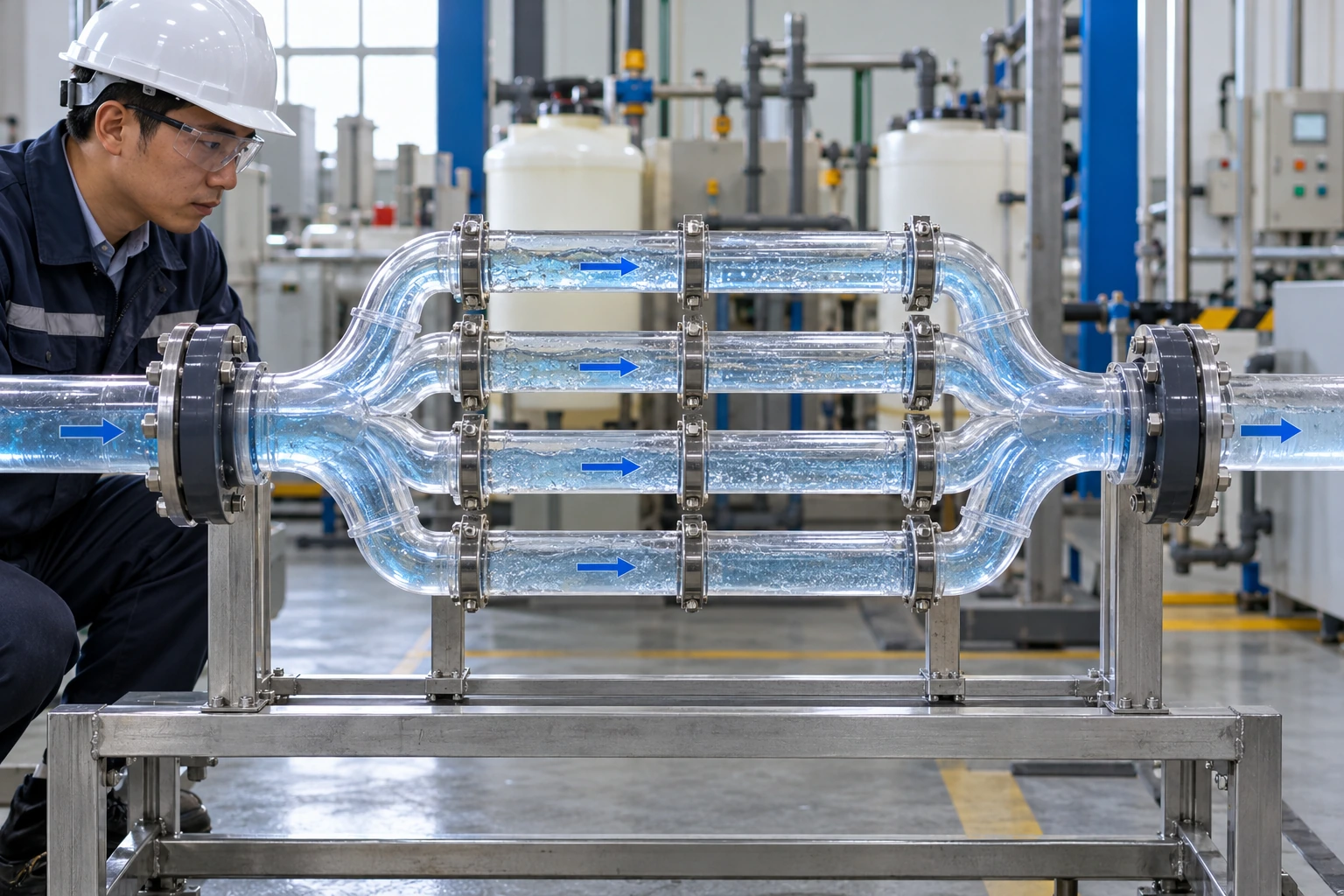
Total Titanium electrode flow can hide restrictions when liquid redistributes through easier parallel or bypass paths. The main meter may remain steady while one channel receives less liquid.
What does the main meter miss?
Compare parallel paths. Ask which measurements or validated flow models describe distribution. Avoid assuming equally sized channels receive equal flow under every assembled condition.
- Record channel dimensions and tolerances.
- Check inlet and outlet manifold symmetry.
| Check | Decision |
|---|---|
| One combined meter | Cannot resolve every branch |
| Distribution evidence | Can expose unequal channel service |
Identify what your instrumentation cannot see. Key Takeaway: Flow acceptance should reflect the channels that carry reaction duty.
3. Where do Titanium electrode bypass paths form?
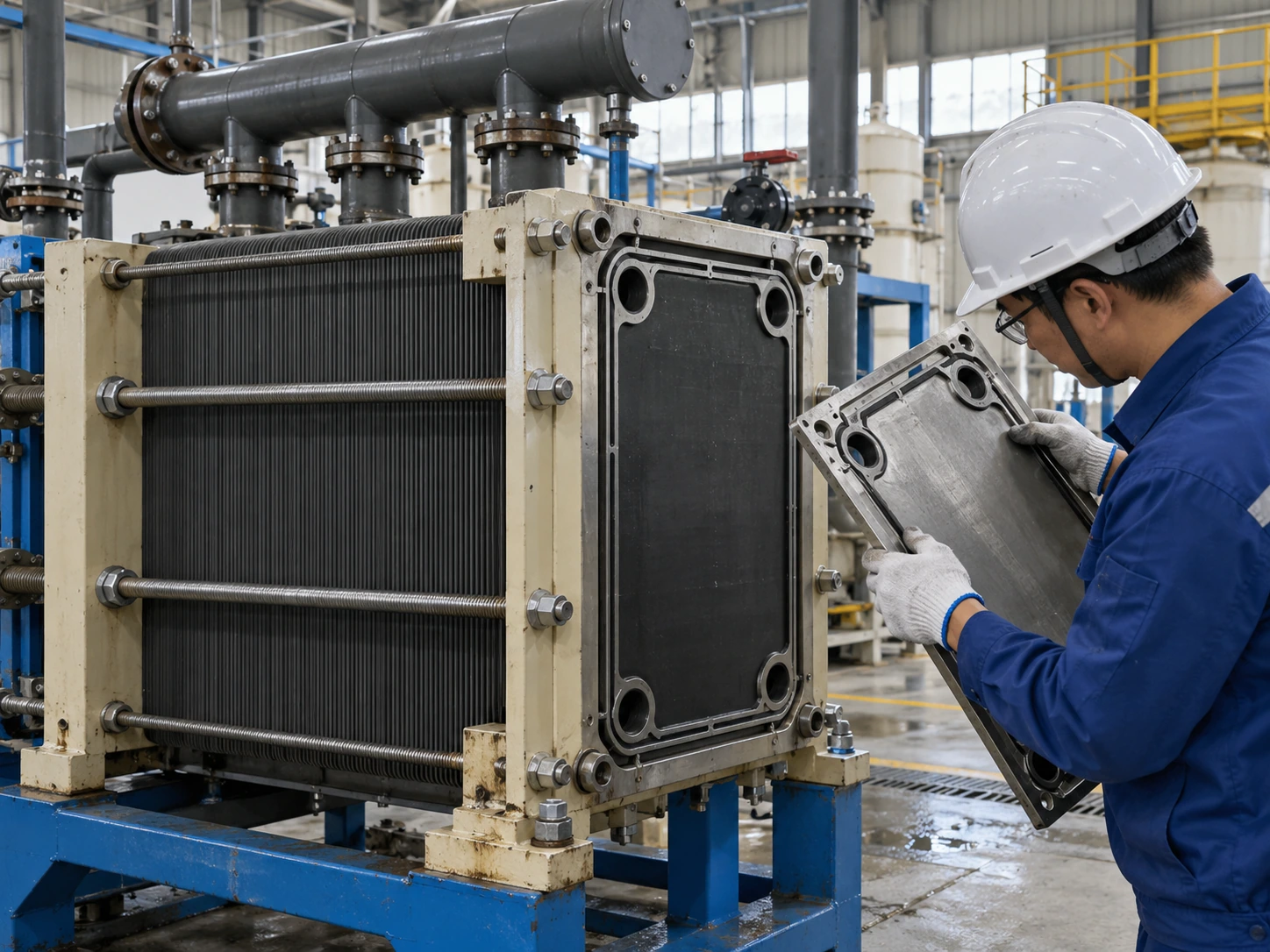
Titanium electrode bypass paths may form through intended passages, assembly gaps or sealing problems that divert liquid away from active channels. Their effects depend on the actual pressure network.
Is every route shown on the drawing?
Inspect the assembled path. Compare released drawings with gasket placement, spacer orientation and valve positions. A correctly manufactured electrode can still operate inside a misassembled flow route.
- Check sealing boundaries and channel entry points.
- Record any field modifications.
| Check | Decision |
|---|---|
| Intended bypass | Include it in the flow balance |
| Unintended route | Investigate assembly or sealing |
Use as-built geometry rather than assumptions. Key Takeaway: Diagnose the complete flow path before changing plate dimensions.
4. How can gas affect Titanium electrode channel flow?
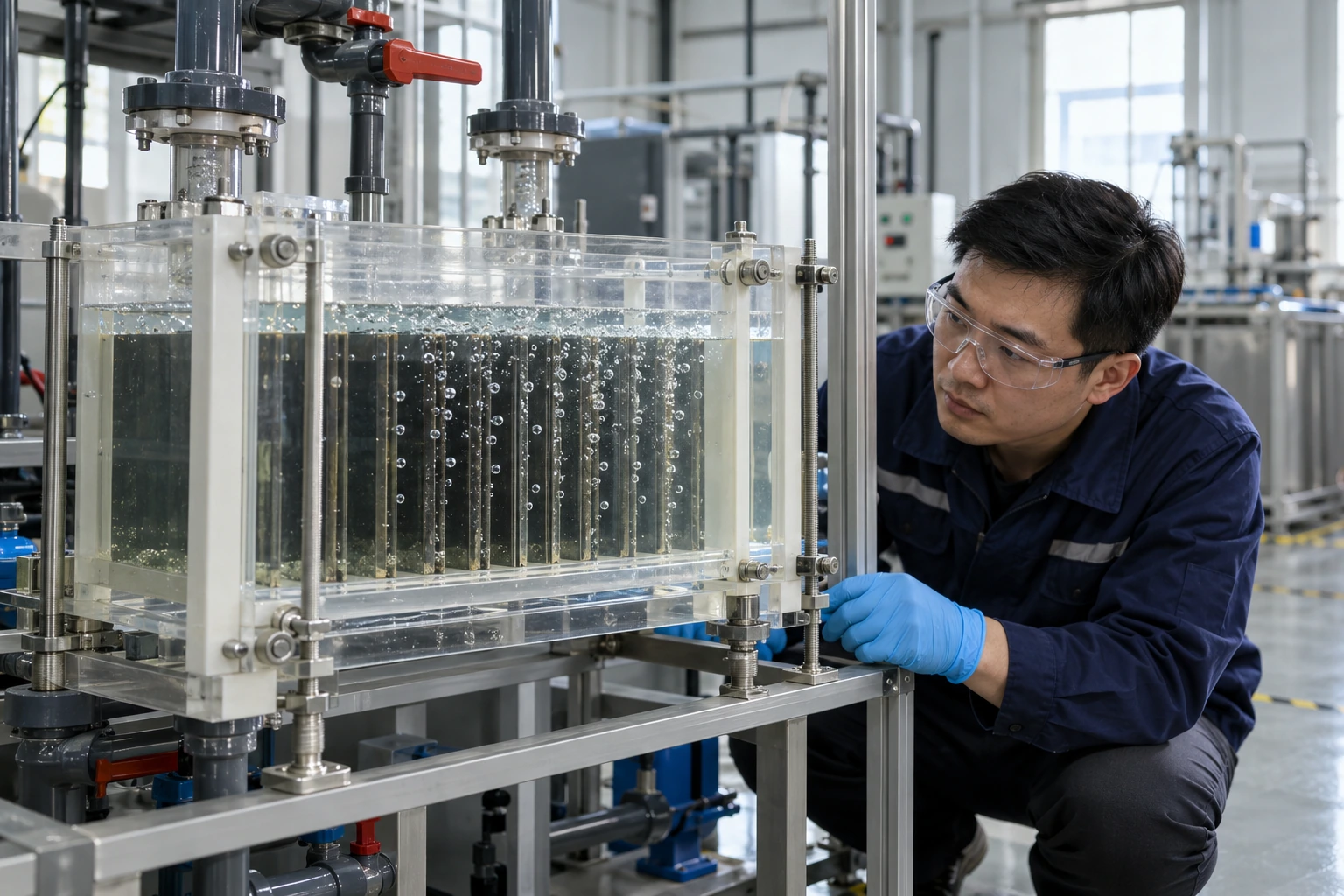
Gas can affect Titanium electrode channel flow by occupying volume, collecting in high points or changing local resistance to liquid movement. The effect depends on orientation, generation rate and outlet design.
Can the outlet clear what the cell produces?
Review the gas route. Include orientation and vent arrangements in a custom electrode review. Do not improvise vent modifications or increase electrical duty to clear a suspected gas pocket.
- Record observed gas behavior from safe locations.
- Compare startup and steady-operation conditions.
| Check | Decision |
|---|---|
| Free exit path | Supports intended gas removal |
| Persistent accumulation | Needs a system-design review |
Treat gas and liquid movement as coupled behavior. Key Takeaway: A channel design must handle products as well as incoming liquid.
5. What measurements locate Titanium electrode restrictions?
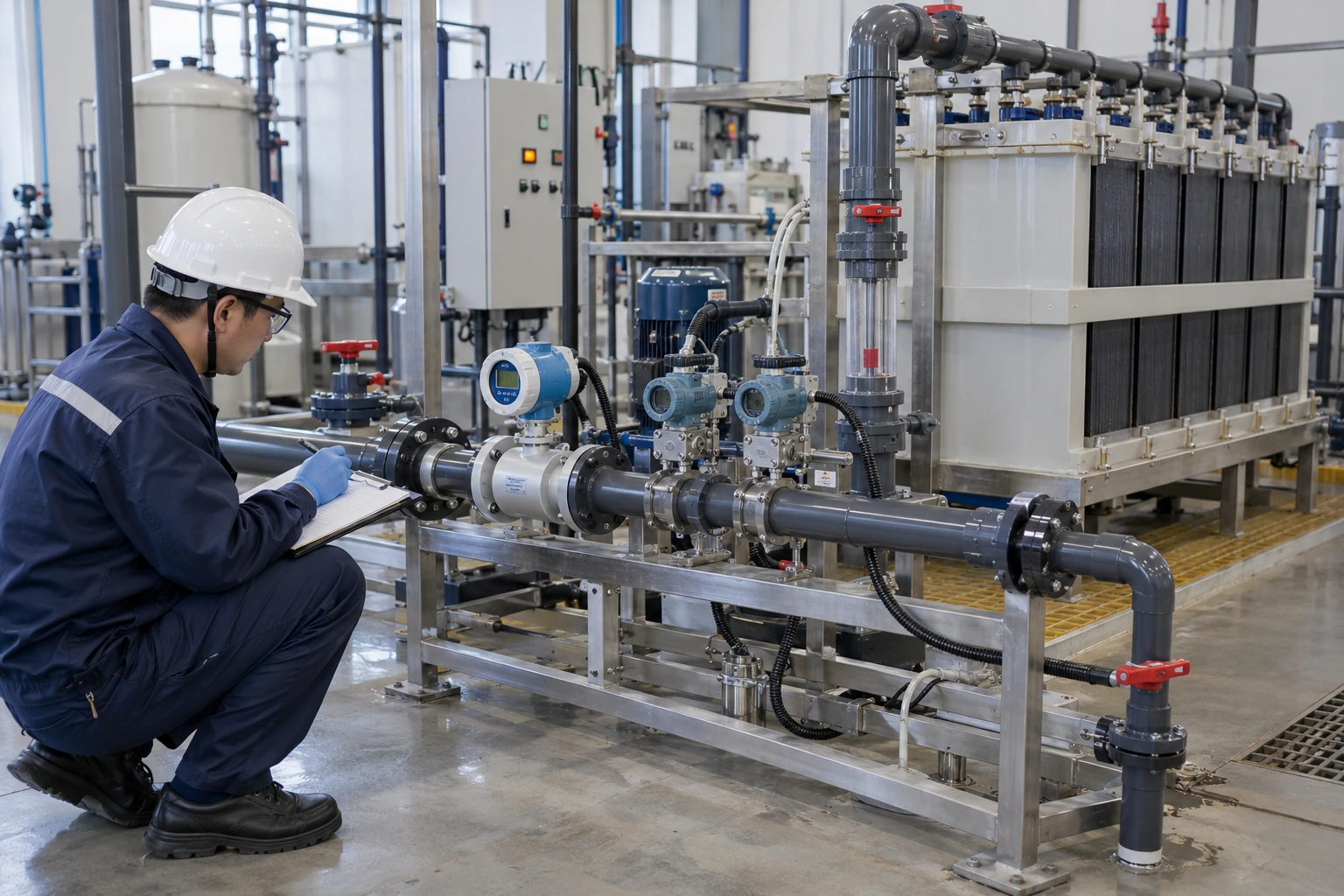
Pressure and flow measurements can help locate Titanium electrode restrictions when sensing points and operating conditions are consistent. A pressure change needs interpretation alongside flow, temperature and gas state.
Which pressure difference are you measuring?
Mark both pressure taps. Compare like operating points and keep instrument ranges documented. Pressure loss across an entire skid cannot automatically be assigned to its electrode channels.
- Separate cell, filter and piping boundaries.
- Record valve positions during comparison.
| Check | Decision |
|---|---|
| Skid pressure loss | Combines several components |
| Cell pressure loss | Narrows the hydraulic boundary |
Choose measurement boundaries that match your diagnostic question. Key Takeaway: A pressure trend becomes useful when you know what lies between its taps.
6. Can you inspect Titanium electrode channels visually?
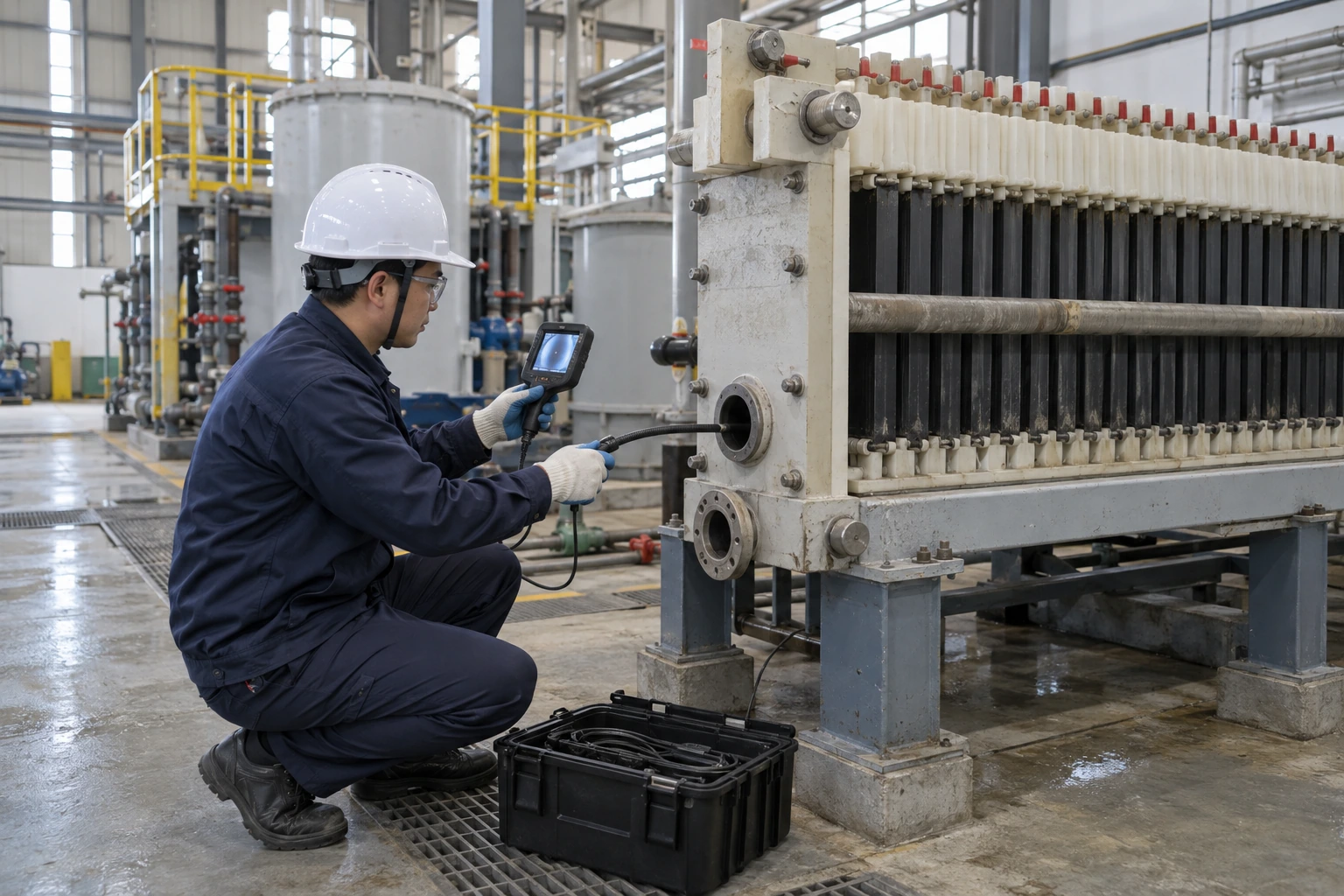
Titanium electrode channels can sometimes be inspected directly after safe draining and isolation, but access depends on equipment design. Visual inspection must avoid damaging coatings, seals or alignment surfaces.
What can inspection establish?
Document before disturbing. Photograph deposits, gasket intrusion and debris before removal under an approved procedure. A clear channel after cleaning does not show how it operated beforehand.
- Use noncontact inspection where practical.
- Keep channel identity and orientation in photographs.
| Check | Decision |
|---|---|
| Before intervention | Preserves fault evidence |
| After approved cleaning | Supports restoration checks |
Compare both records when evaluating the cause. Key Takeaway: Preserve the as-found condition before maintenance changes it.
7. How do you compare Titanium electrode manifold designs?
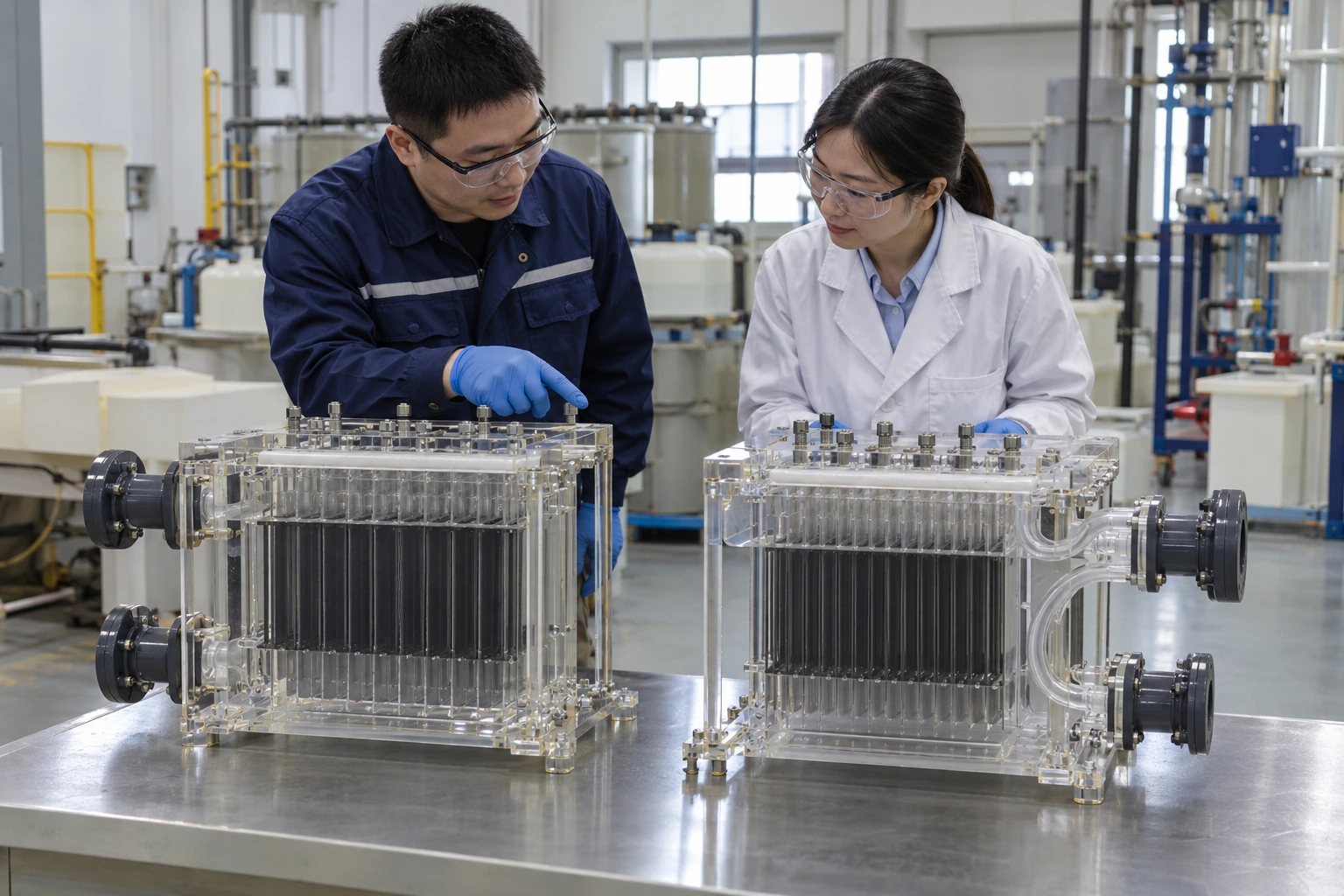
Titanium electrode manifold designs should be compared through a defined hydraulic test or validated model relevant to the intended cell. Attractive symmetry or a larger inlet alone does not establish even distribution.
What would demonstrate a better design?
Define the comparison method. Agree on representative flow, fluid properties and assembly conditions. Use an appropriate nonreactive test where qualified engineers determine that it answers the intended question.
- Keep plate and spacer geometry controlled.
- Record measurement uncertainty and model assumptions.
| Check | Decision |
|---|---|
| Geometry claim | Needs supporting evidence |
| Representative test or validated model | Supports a distribution assessment |
Keep findings within the tested configuration. Key Takeaway: Require evidence of distribution before accepting a manifold improvement claim.
8. What should a Titanium electrode flow trial hold constant?
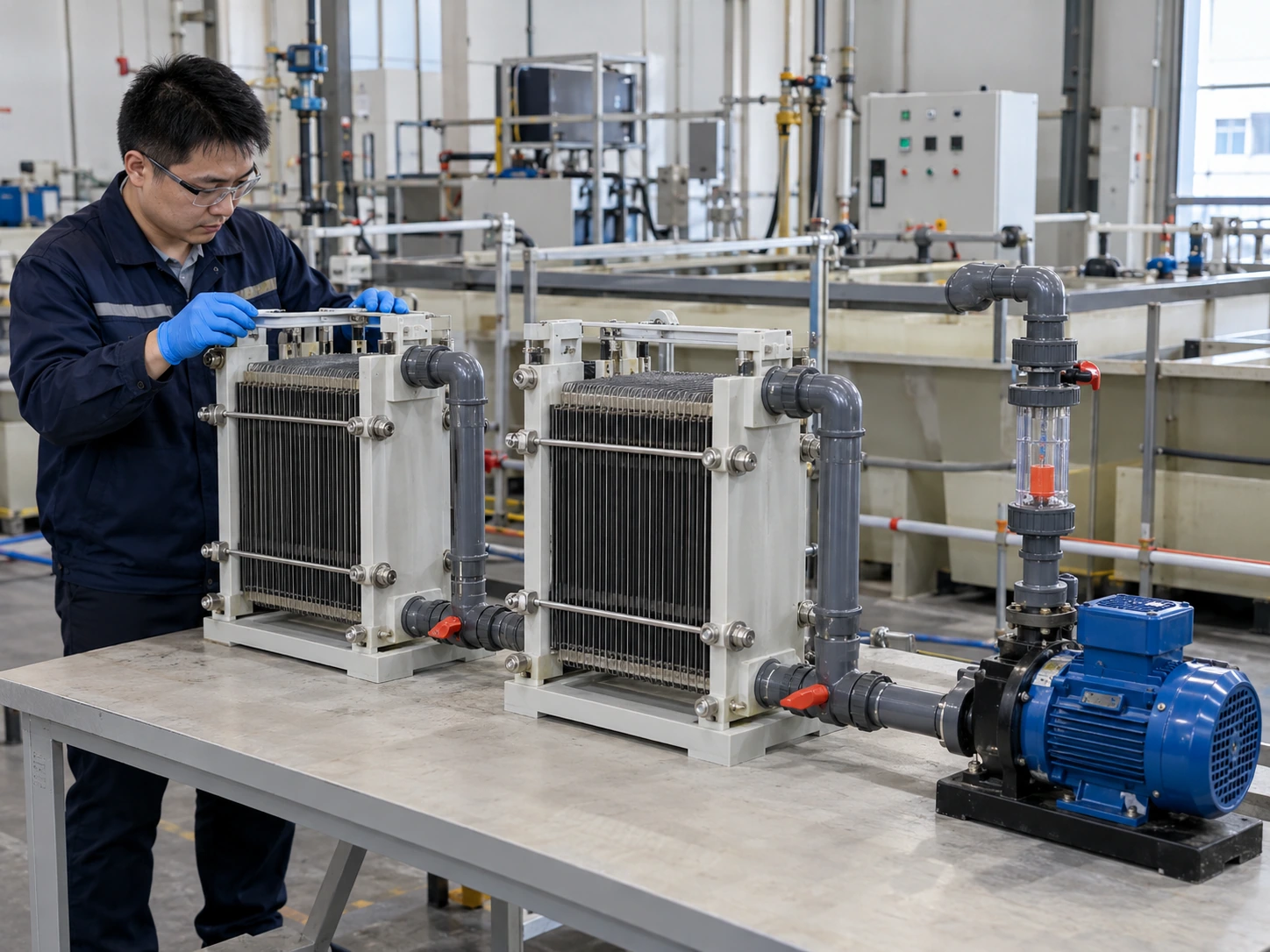
A Titanium electrode flow trial should hold chemistry, current basis, temperature and electrode condition consistent while changing the intended hydraulic variable. Otherwise, output differences remain difficult to interpret.
Are you changing more than flow?
Freeze the other conditions. When adapting a design for hypochlorite-generation systems, include gas generation and product sampling in the trial plan. Record any unavoidable departures from the comparison basis.
- Use matched electrodes and active areas.
- Keep product measurement methods consistent.
| Check | Decision |
|---|---|
| Several changes at once | Confounded comparison |
| Defined hydraulic change | More focused evidence |
Use controlled conditions to support a narrow claim. Key Takeaway: A flow trial needs the same discipline as a coating trial.
9. When should Titanium electrode cleaning be reviewed?
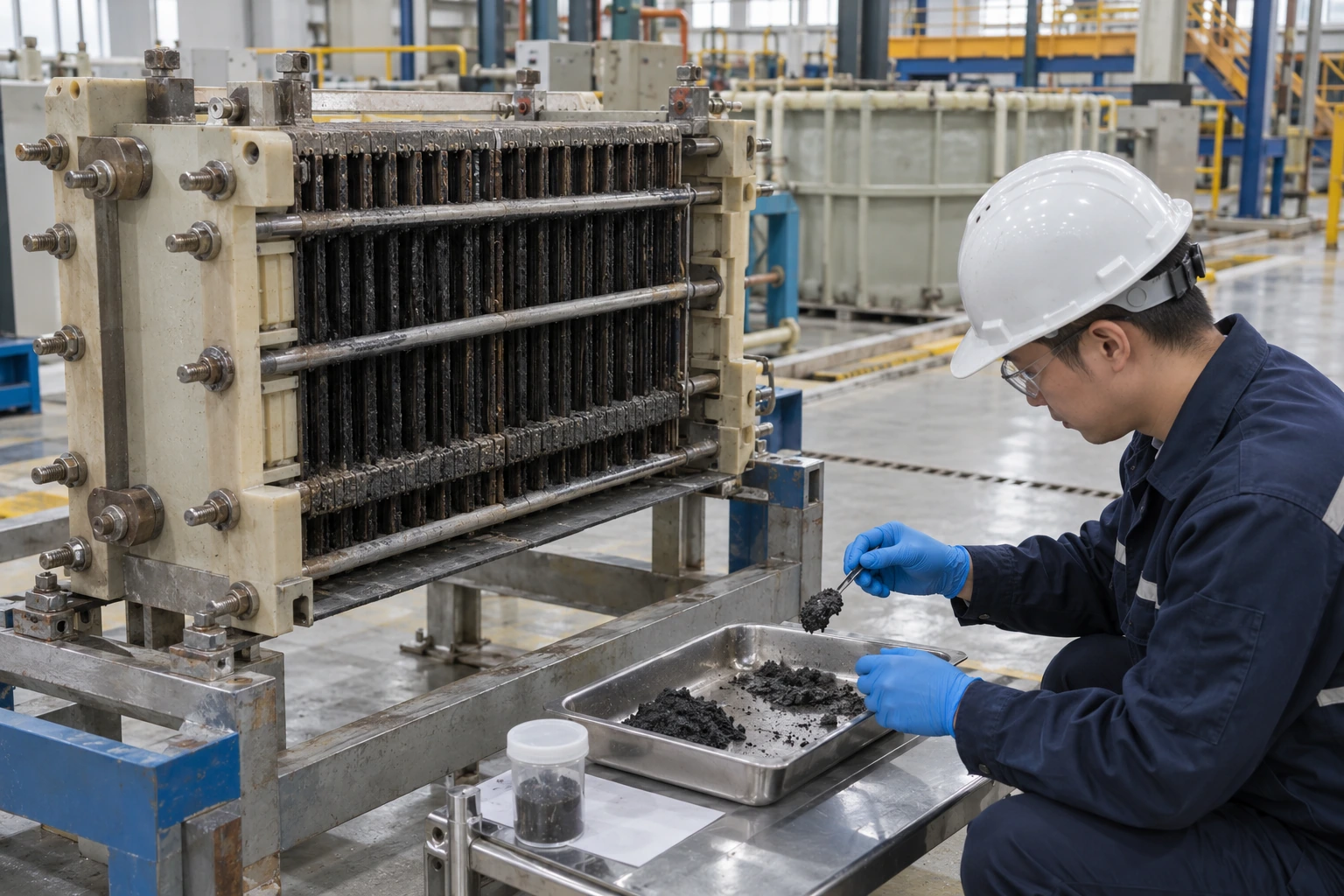
Titanium electrode cleaning should be reviewed when deposits or debris are supported by inspection and operating evidence. Cleaning chemistry and procedure must be compatible with the entire assembly.
Would cleaning solve the original cause?
Separate removal from prevention. Identify whether feed quality, geometry or operation caused accumulation. Cleaning without that review may restore flow temporarily while leaving repeated blockage likely.
- Retain deposit analysis where justified.
- Review feed and maintenance records together.
| Check | Decision |
|---|---|
| Deposit removal | Restores a condition |
| Cause correction | Addresses recurrence |
Track whether the corrected system maintains its baseline. Key Takeaway: Use cleaning as part of a cause-based maintenance plan.
10. What Titanium electrode flow data supports redesign?
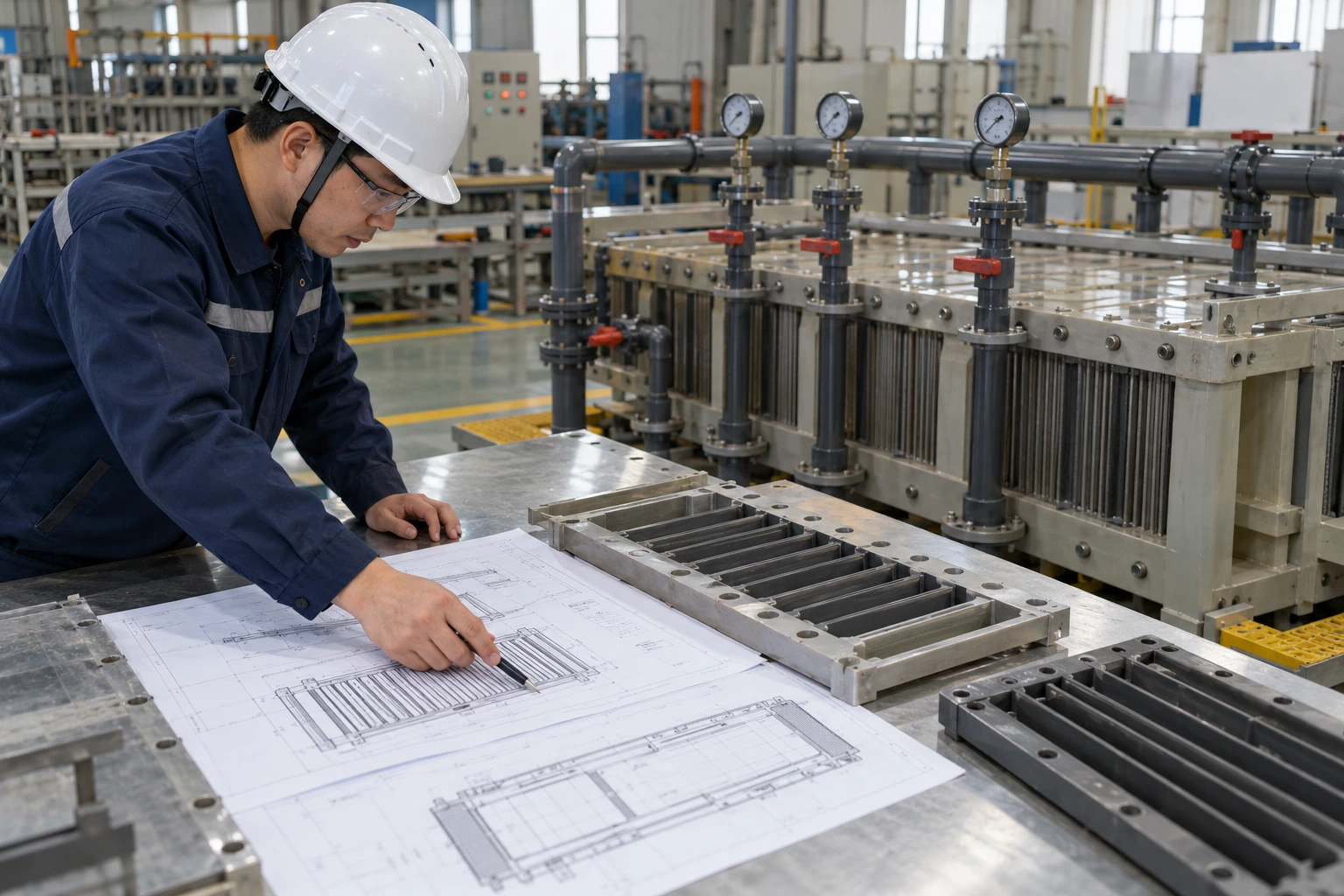
A Titanium electrode flow redesign needs as-built channels, manifold drawings, pressure-flow records and evidence of local restrictions. These inputs connect symptoms with changes that can be tested.
Make the redesign question specific
Share the troublesome path. You can contact us today with drawings and operating evidence for a review of electrode geometry and cell interfaces. We support measurable design changes rather than unexplained increases in pump duty.
- Show measurement points and flow direction.
- Include before-and-after maintenance records.
| Check | Decision |
|---|---|
| Hydraulic evidence | Locates the performance question |
| Component drawing | Defines the manufacturable change |
Agree on a validation test for the proposed revision. Key Takeaway: Redesign around a documented flow problem and verify the result.
Frequently Asked Questions
Can I solve uneven flow with a bigger pump? Not reliably. More total flow may leave distribution problems unresolved and change pressure or gas behavior.
How do I know if one channel is blocked? Use channel-relevant evidence. Pressure, approved inspection and distribution measurements can narrow the location.
What's the best inlet shape for uniform flow? It depends on the complete geometry. Validate a proposed manifold under representative fluid and operating conditions.
Can I compare flow tests without powering the cell? Sometimes, for defined hydraulic questions. A nonreactive test may not capture gas generation or electrochemical effects.
Can I clean only the visibly blocked area? Follow the approved maintenance procedure. Local cleaning must not damage coatings or overlook a broader feed or sealing problem.