
Prevent Titanium electrode dry running by verifying required liquid coverage and flow, then using validated protective functions to remove power when those conditions fail. Your return line can still show flow while a trapped pocket exposes part of an electrode. A current-controlled supply may continue delivering charge through the remaining wetted area. Review chamber geometry, sensor placement and fault response as one protection problem.
1. Why is low liquid a Titanium electrode risk?

Low liquid creates a Titanium electrode risk because it changes wetted area, heat removal and local process conditions. Whether damage occurs depends on current, geometry and the duration of exposure.
What changes when the level falls?
Look at the remaining wet region. Current may redistribute through a smaller area before a simple panel alarm appears. Avoid assuming that a partly filled cell behaves like its qualified full-coverage condition.
- Identify minimum approved operating level.
- Record active-area and cooling assumptions.
| Check | Decision |
|---|---|
| Full qualified coverage | Matches the design basis |
| Partial coverage | Changes the operating condition |
Treat lost coverage as a process fault. Key Takeaway: Do not infer continued suitability from current still flowing.
2. Does Titanium electrode immersion change current density?
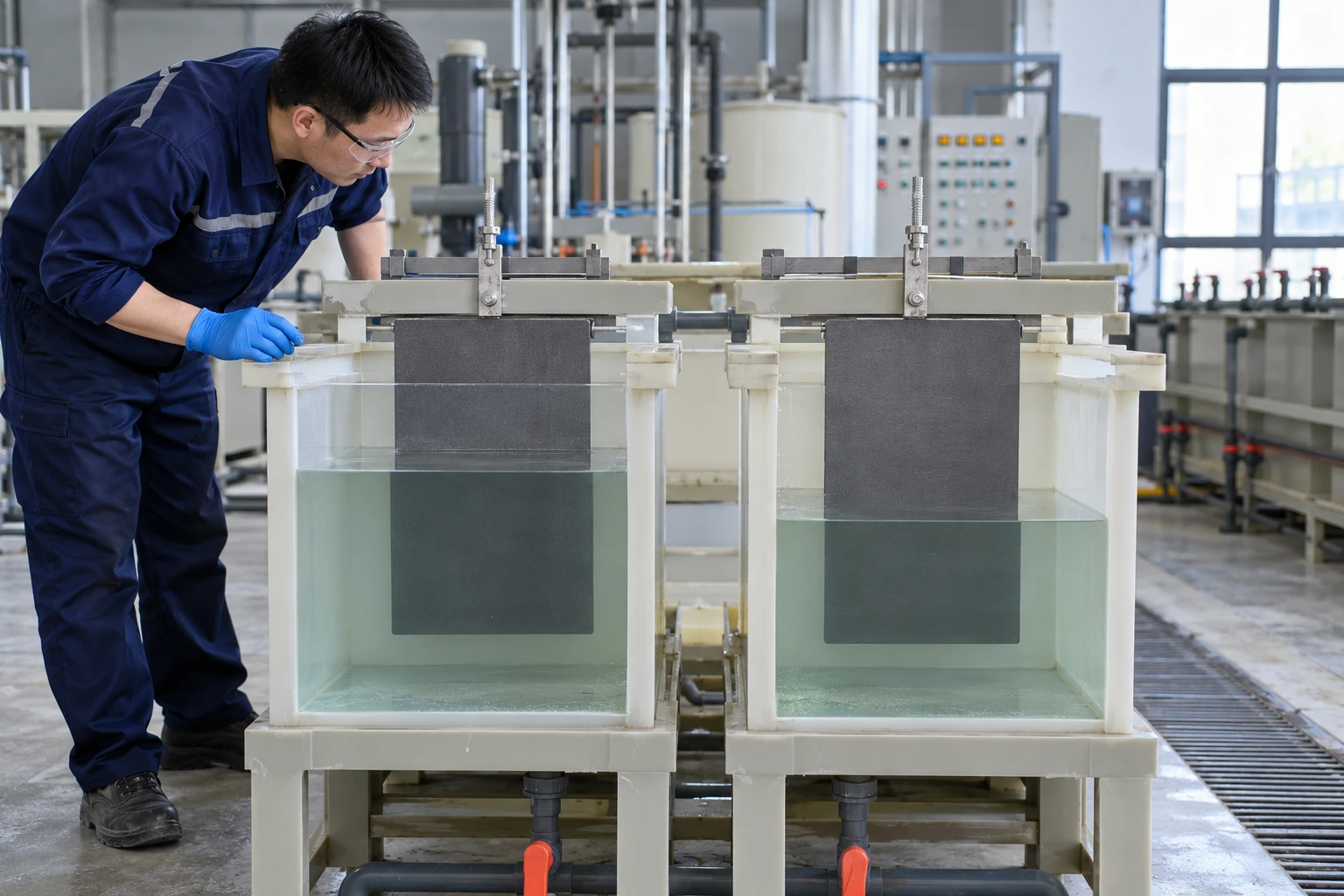
Titanium electrode immersion affects average current density whenever it changes the active wetted area carrying current. Local distribution can be less uniform than a simple area calculation suggests.
Which area is actually carrying current?
Use the immersed coating area. Exclude dry sections and masked surfaces from your stated basis. Have responsible engineers assess local effects rather than relying only on an average.
- Document liquid-level dependence of active area.
- Separate projected area from actual wetted surfaces.
| Check | Decision |
|---|---|
| Fixed total current | Does not fix local current density |
| Reduced active area | Can increase average loading on remaining area |
Review the changed area before discussing allowable current. Key Takeaway: A current setting belongs to a defined immersion condition.
3. Which sensors protect Titanium electrode liquid coverage?
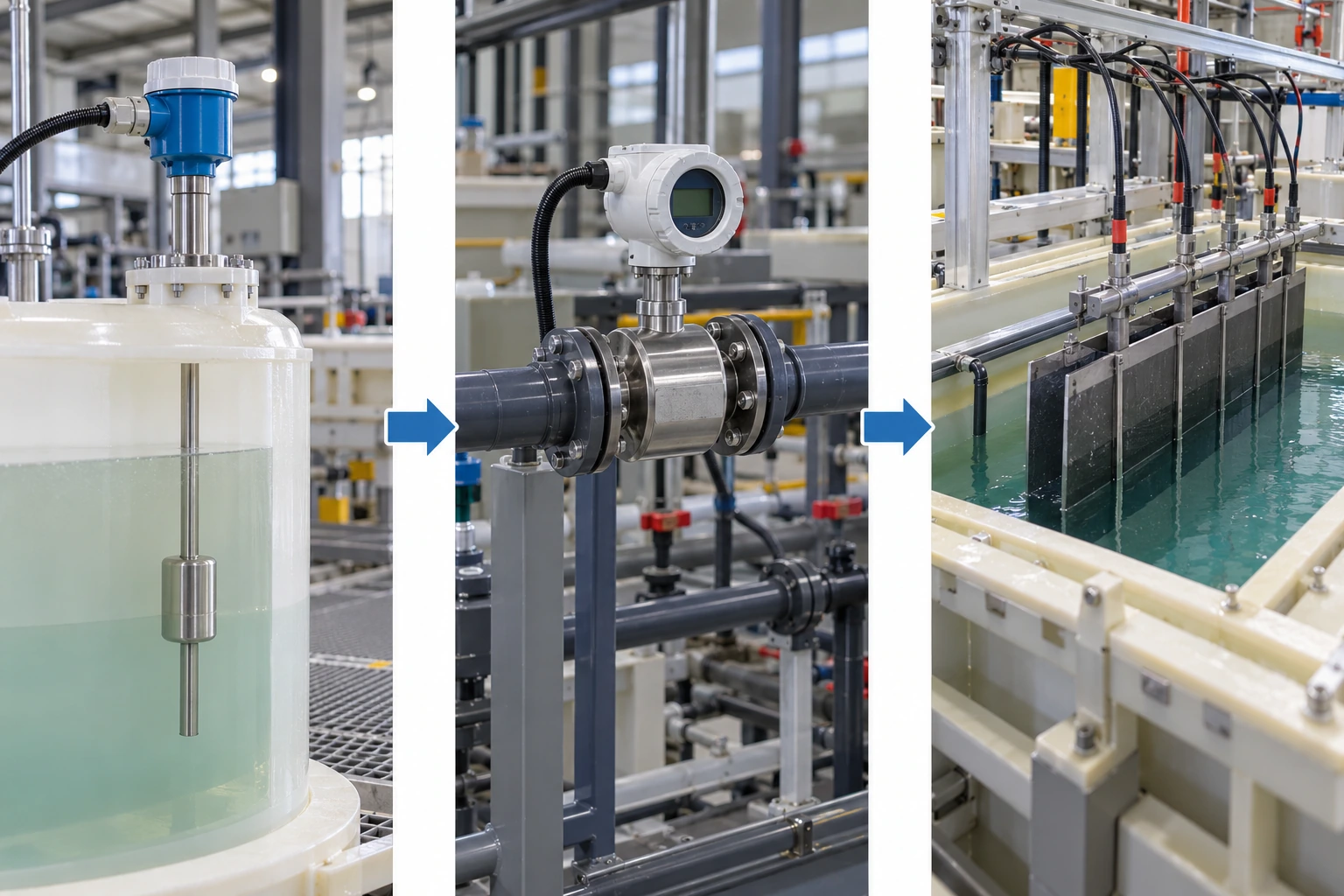
Titanium electrode coverage may need level, flow and other application-specific sensing because each measurement describes a different condition. No single sensor automatically proves every required service.
What does each sensor actually detect?
Assign one clear question per signal. Flow sensing detects movement at its location; level sensing describes liquid position near its measurement region. Protection design should account for failures and misleading readings.
- List required process conditions separately.
- Document each sensor's limitations.
| Check | Decision |
|---|---|
| Flow measurement | Movement at a defined location |
| Level measurement | Liquid position at a defined location |
Combine evidence according to the hazard assessment. Key Takeaway: Sensor count matters less than whether required conditions are represented.
4. Can flow exist around a dry Titanium electrode zone?
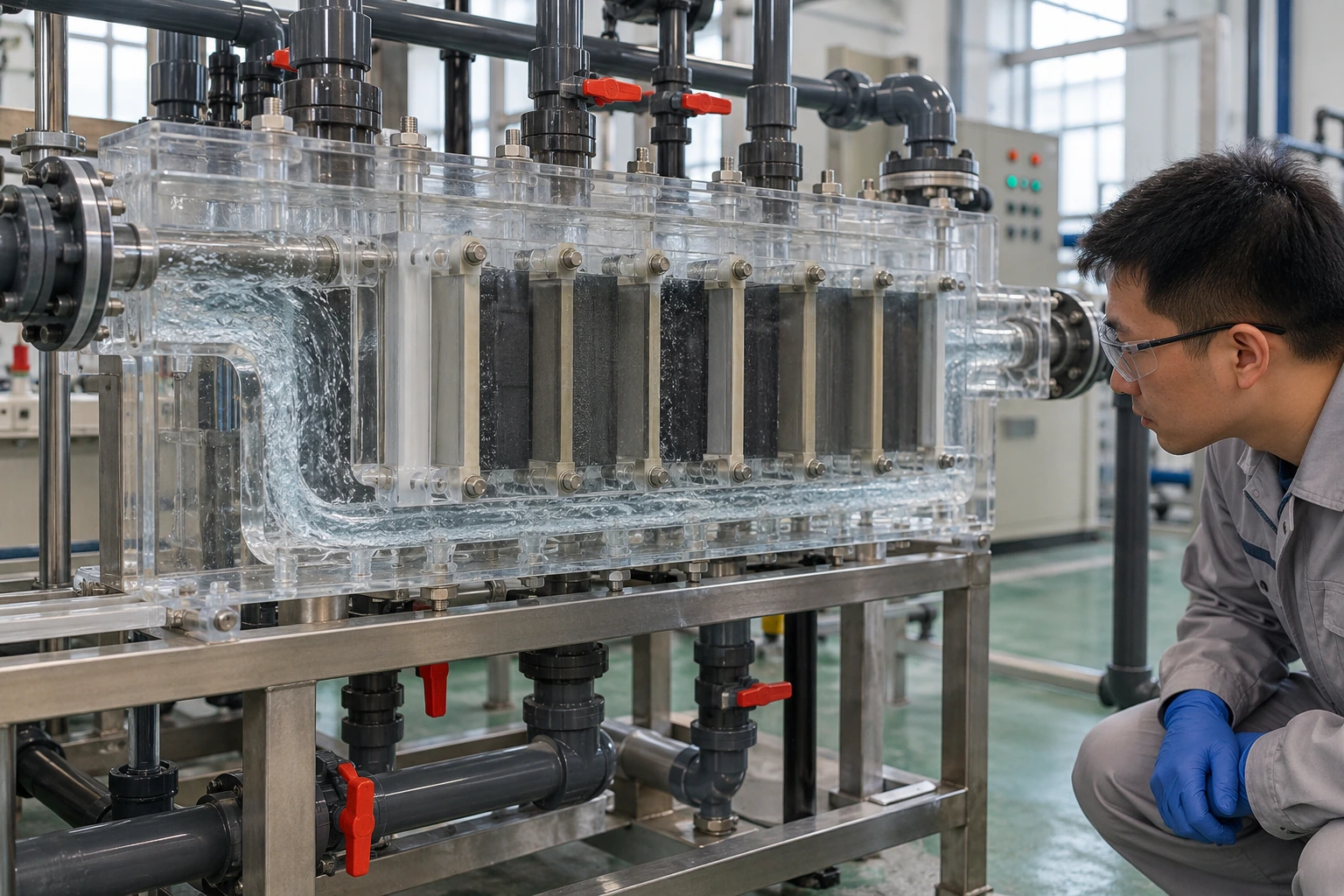
Flow can bypass a partly dry Titanium electrode region through alternate paths or poorly distributed channels. A normal main-line reading therefore cannot establish full wetting throughout a cell.
Where could liquid avoid the active surface?
Trace possible bypasses. Include channel, vent and return geometry in a custom cell review. Check trapped-gas and orientation effects during an approved commissioning review.
- Show all parallel and bypass routes.
- Identify high points where gas can collect.
| Check | Decision |
|---|---|
| Bulk flow normal | Channel coverage remains unproven |
| Cell-specific evidence | Supports a coverage assessment |
Inspect the region that needs protection. Key Takeaway: A useful flow measurement must relate to the protected cell volume.
5. Where should Titanium electrode level sensing sit?
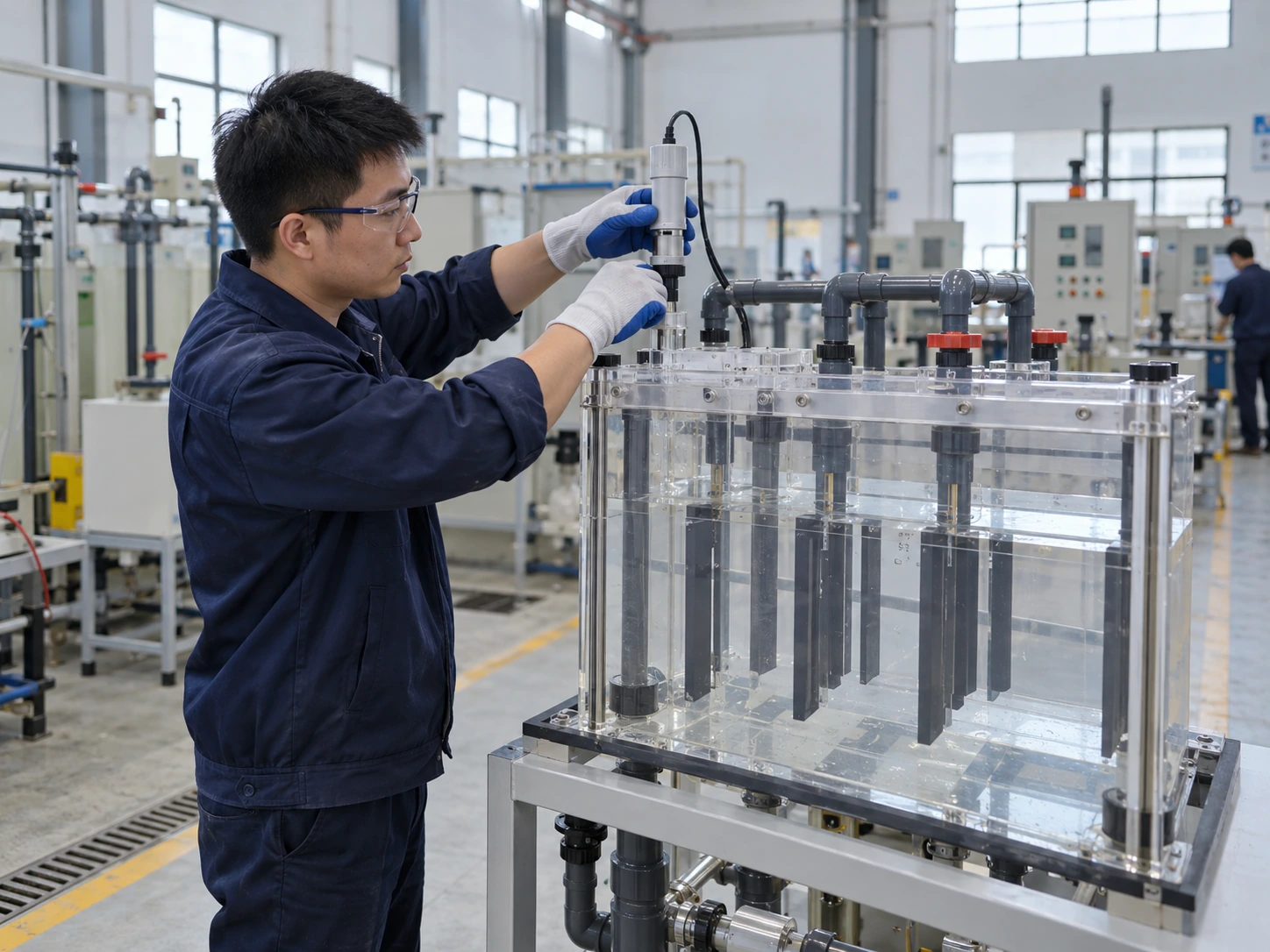
Titanium electrode level sensing should represent the liquid condition that governs safe active-area coverage, not merely an easy mounting position. Suitable placement depends on chamber shape, turbulence and the sensor principle.
Does the signal represent the lowest usable level?
Review geometry and response together. Account for expected tilt, transients and trapped liquid around sensing hardware. Use approved testing to confirm the signal changes before an unacceptable condition develops.
- Mark sensor elevation on the assembly drawing.
- Include expected operating orientation.
| Check | Decision |
|---|---|
| Convenient location | May not represent active coverage |
| Validated location | Relates signal to the protected condition |
Prove the relationship during commissioning. Key Takeaway: Placement validation is part of sensor qualification.
6. How should a Titanium electrode low-level trip respond?

A Titanium electrode low-level trip should trigger the approved safe response and prevent unauthorized re-energization while the fault remains. The complete action must be defined by responsible system engineers.
What happens after detection?
Test the entire response path. Detection, logic, power removal and restart behavior all need verification. A sensor that changes state without stopping the hazardous duty is an incomplete protective function.
- Document required power-stage response.
- Specify fault acknowledgment and restart authority.
| Check | Decision |
|---|---|
| Sensor changes state | Detection only |
| Safe response verified | Complete protective action tested |
Follow the signal through to actual equipment behavior. Key Takeaway: Protection requires a verified action, not just an alarm icon.
7. Can foam mislead Titanium electrode level measurement?

Foam, deposits or trapped liquid can mislead some Titanium electrode level measurements, depending on sensor technology and installation. Select and test sensing methods against the real process environment.
Which process conditions can imitate liquid?
Challenge the sensing assumption. Ask the sensor supplier about foam, conductivity and fouling effects for the chosen model. Include expected upset conditions in your validation plan.
- List known fouling and foam conditions.
- Define inspection and proof-test requirements.
| Check | Decision |
|---|---|
| Clean-water demonstration | Limited evidence |
| Representative process challenge | More relevant sensing evidence |
Match sensor testing with expected service conditions. Key Takeaway: A successful bench reading does not qualify every process fluid.
8. What checks follow Titanium electrode liquid loss?
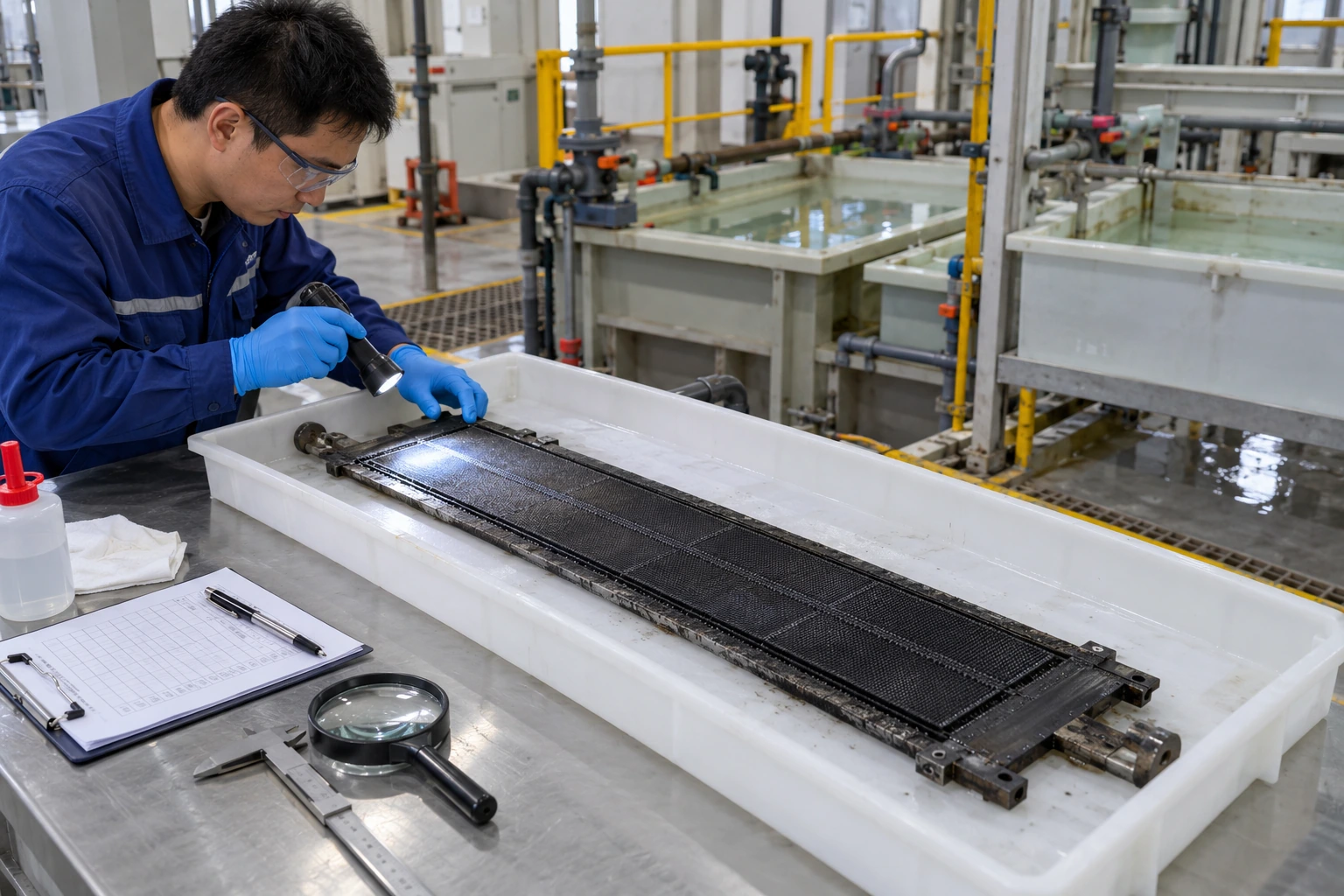
After Titanium electrode liquid loss, inspection should follow isolation and review of electrical exposure, temperature and event duration. Restart should wait for the equipment's approved fault-clearance procedure.
What evidence should you preserve?
Keep the incident time window. In water-treatment duty, capture feed interruption and power records together. Photograph components before any approved cleaning or replacement changes the evidence.
- Retain level, flow and current trends.
- Record visible condition without abrasive inspection.
| Check | Decision |
|---|---|
| Exposure history known | Supports targeted review |
| History missing | Leaves greater uncertainty |
Use the record to define inspection scope. Key Takeaway: A short event still deserves a documented restart decision.
9. How do you test Titanium electrode protection safely?

Titanium electrode protection can be tested through approved low-energy simulation or other engineered methods without deliberately operating a production electrode dry. Test design must cover real sensing and final protective action.
Can you prove the trip without causing damage?
Separate simulation from validation gaps. A logic simulator may verify software but not actual sensor placement. Plan complementary checks under qualified commissioning control.
- Keep power-stage hazards controlled during testing.
- Record which parts of the function were tested.
| Check | Decision |
|---|---|
| Logic simulation | Tests configured response logic |
| Installation validation | Tests real process representation |
Close both evidence gaps before acceptance. Key Takeaway: Avoid destructive fault demonstrations when engineered tests can verify protection.
10. What Titanium electrode protection brief should you send?

A Titanium electrode protection brief should include chamber geometry, active-area limits, sensor locations, fault actions and restart criteria. This makes low-liquid protection reviewable before equipment reaches production.
Specify the protected condition clearly
Bring geometry and logic together. When you contact us today, we can review electrode dimensions and immersion assumptions against your intended assembly. We support component decisions that leave system protection responsibilities explicit.
- Include normal and fault liquid states.
- Identify the engineer approving trip behavior.
| Check | Decision |
|---|---|
| Electrode scope | Area and interface review |
| System scope | Protective-function design and approval |
Resolve the boundary between component and system requirements. Key Takeaway: Prevent dry-running through verified system behavior, not coating claims.
Frequently Asked Questions
Can I rely on a pump-running signal? No. It reports a command or equipment state, not necessarily useful flow and complete electrode coverage.
How do I know if the electrode was damaged? Use a qualified review of exposure and condition. Duration, current, temperature and inspection evidence all affect the assessment.
What's the best sensor for low-liquid protection? It depends on geometry and fluid behavior. Compare sensing principles against foam, deposits, conductivity and required response.
Can I test protection by draining a powered cell? Do not use an improvised live dry-run test. Qualified engineers should define controlled simulation and installation-verification methods.
Can I restart immediately after refilling? Only after approved fault clearance. Refilling does not establish that electrical, thermal or material conditions remain acceptable.