
Use pH as one input in Titanium electrode selection, together with electrolyte composition, temperature, current and reaction duty. Two liquids can share a pH reading while exposing a coating to different chemicals. If a supplier receives only that number, the recommendation may rest on assumptions your process never meets. Describe the complete chemical window and verify it in a representative trial.
1. Why Does pH Matter for a Titanium electrode?
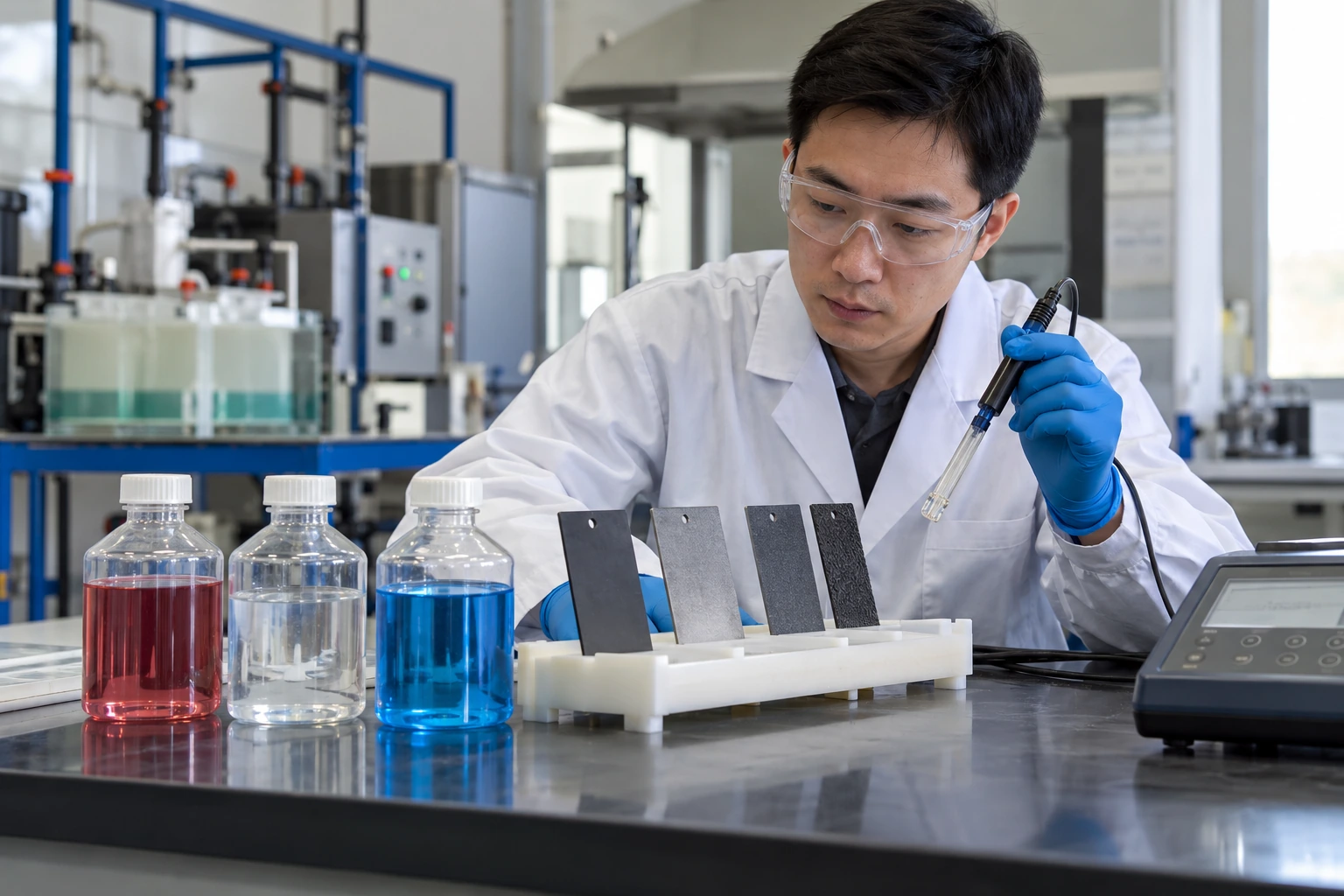
pH matters for a Titanium electrode because it helps describe acidity and reaction conditions. It does not independently establish material compatibility or performance.
What should accompany the pH value?
Describe the chemical mixture behind the reading. Include relevant ions, additives and impurities. State whether the value comes from fresh feed or circulating liquid.
- Record composition and concentration ranges.
- Identify sampling location and temperature.
| Check | Decision |
|---|---|
| pH reading | Describes one chemical property |
| Full analysis | Supports application review |
A useful pH specification belongs within a complete electrolyte description. Key Takeaway: Send chemistry and pH together.
2. Can Titanium electrode Surface pH Differ from Bulk pH?
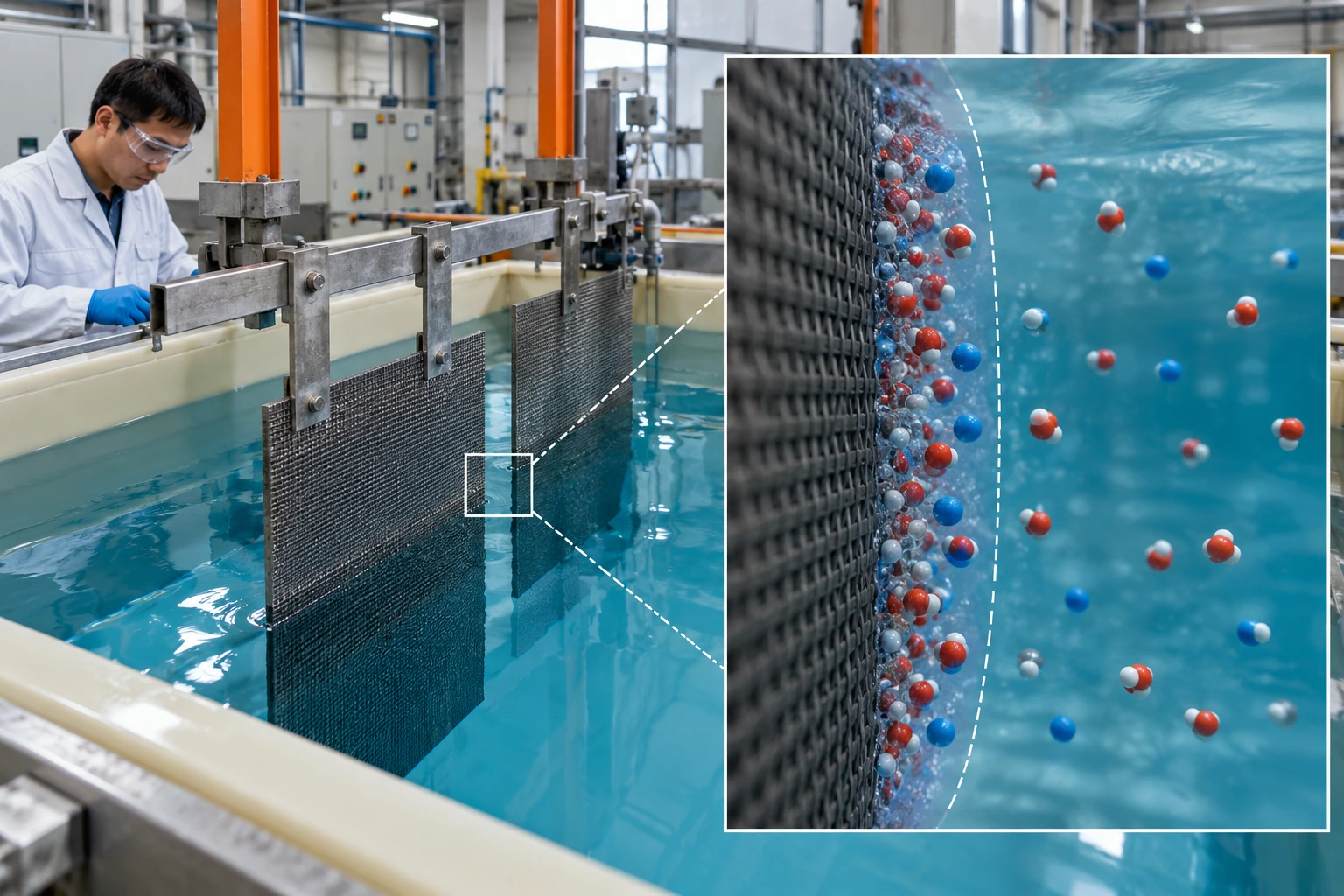
A Titanium electrode surface can experience local conditions different from bulk pH because reactions and transport affect the nearby liquid. A tank reading may miss those conditions.
How should engineers interpret the difference?
Consider the boundary region around each electrode. Flow, buffering and current can affect local chemistry. Avoid treating bulk measurements as direct proof of surface conditions.
- Identify anodic and cathodic duties.
- Review flow and concentration gradients.
| Check | Decision |
|---|---|
| Bulk measurement | Describes sampled liquid |
| Local environment | Depends on reaction and transport |
The distinction helps explain why apparently similar baths can behave differently. Key Takeaway: Review pH within the complete cell design.
3. Does Titanium electrode pH Define the Whole Electrolyte?

Titanium electrode pH does not define the whole electrolyte because different mixtures can produce the same reading. Relevant ions and contaminants still require identification.
Which differences may affect selection?
Compare composition before comparing ratings. Chloride-bearing water and another electrolyte can impose different reactions at similar pH. Ask which constituents govern the coating review.
- Include additives and recycled liquids.
- Identify expected impurity variation.
| Check | Decision |
|---|---|
| Matching pH | Does not prove matching chemistry |
| Matching composition | Supports a more useful comparison |
A rating from another bath cannot transfer on pH alone. Key Takeaway: Compare the complete chemical basis.
4. How Should You Measure Titanium electrode Operating pH?
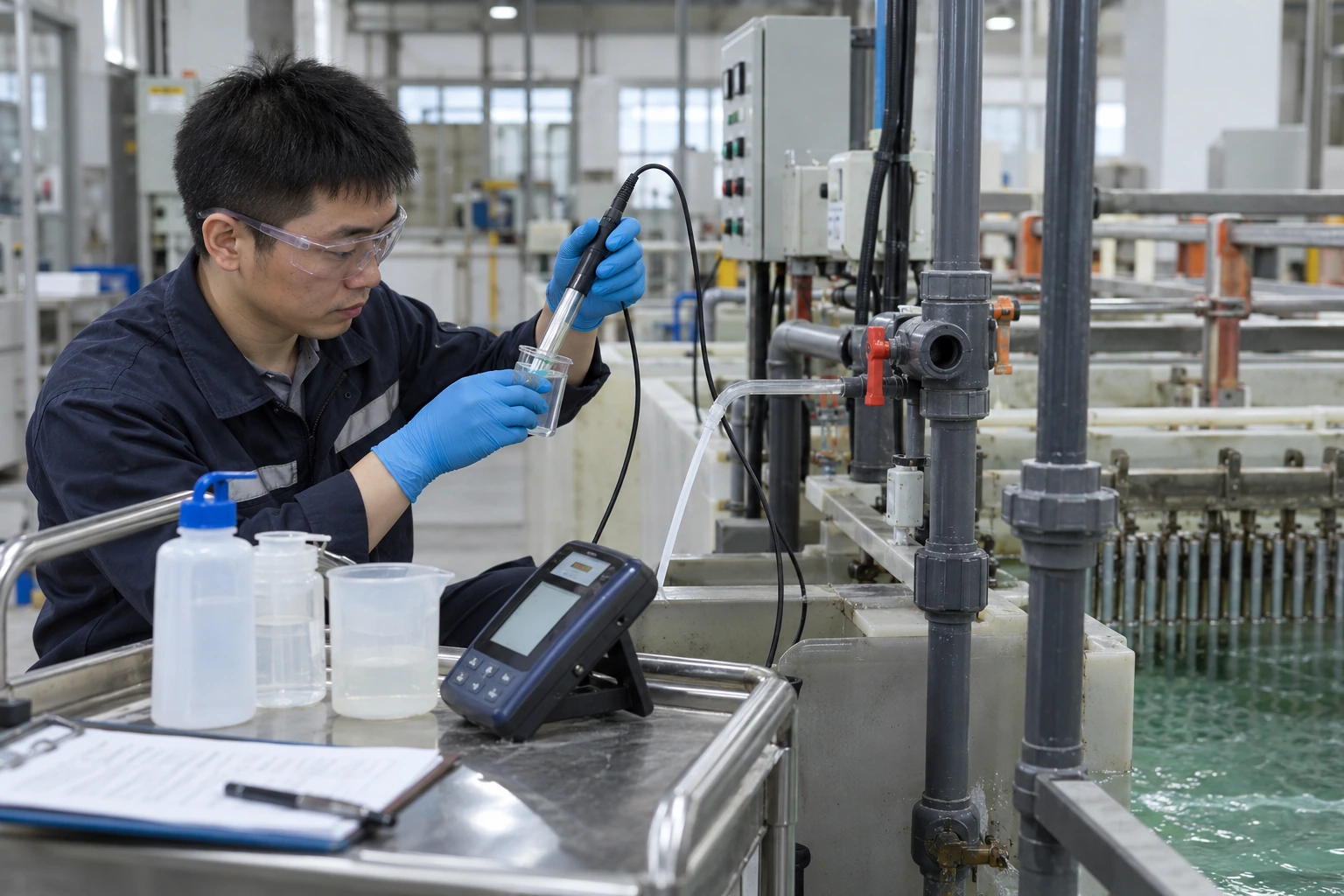
Measure Titanium electrode operating pH using a suitable calibrated instrument and a representative sample. Document temperature, sampling method and handling delay.
What should the measurement procedure control?
Keep the method consistent across trials. A custom engineering review needs comparable records. Check probe suitability for the liquid and follow the instrument's maintenance procedure.
- Record calibration and probe condition.
- Use a defined sampling point.
| Check | Decision |
|---|---|
| Controlled method | Improves comparability |
| Changed handling | Can alter interpretation |
A numerical trend has limited value when its measurement method changes. Key Takeaway: Retain the method with the readings.
5. How Does pH Guide Titanium electrode Coating Selection?
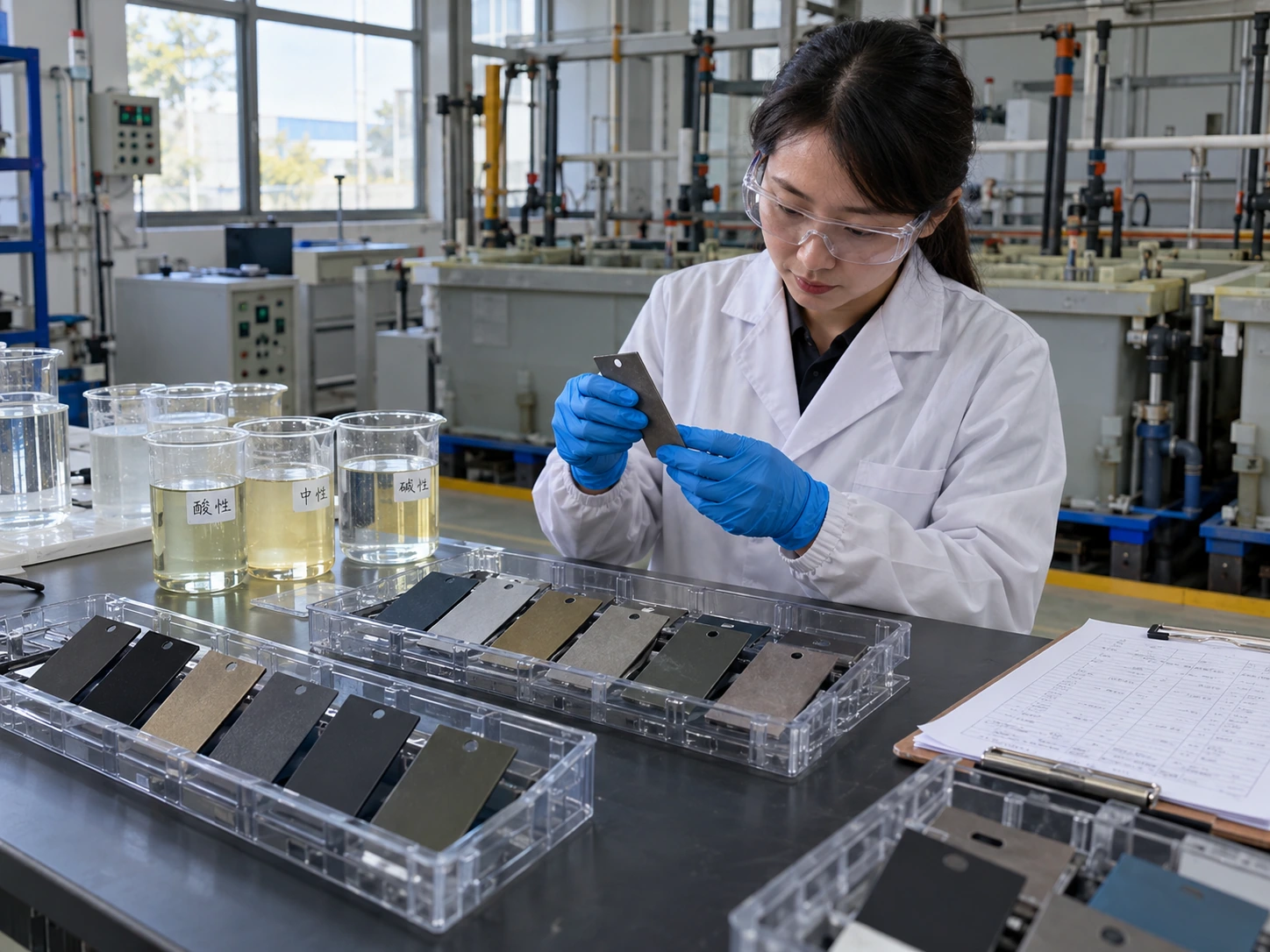
pH guides Titanium electrode coating selection as part of chemistry and reaction duty, not as a standalone coating chart. The finished surface needs a qualified operating range.
What should the supplier explain?
Ask which reaction the coating supports. Then review the liquid composition and operating limits. A broad family name does not establish suitability for every acidic or alkaline bath.
- Identify the coating designation.
- State current and temperature ranges.
| Check | Decision |
|---|---|
| Reaction duty | Guides active-surface choice |
| Chemical window | Defines exposure limits |
A coating recommendation becomes meaningful when its conditions are stated. Key Takeaway: Approve a bounded application specification.
6. Why Can Titanium electrode pH Drift During Operation?
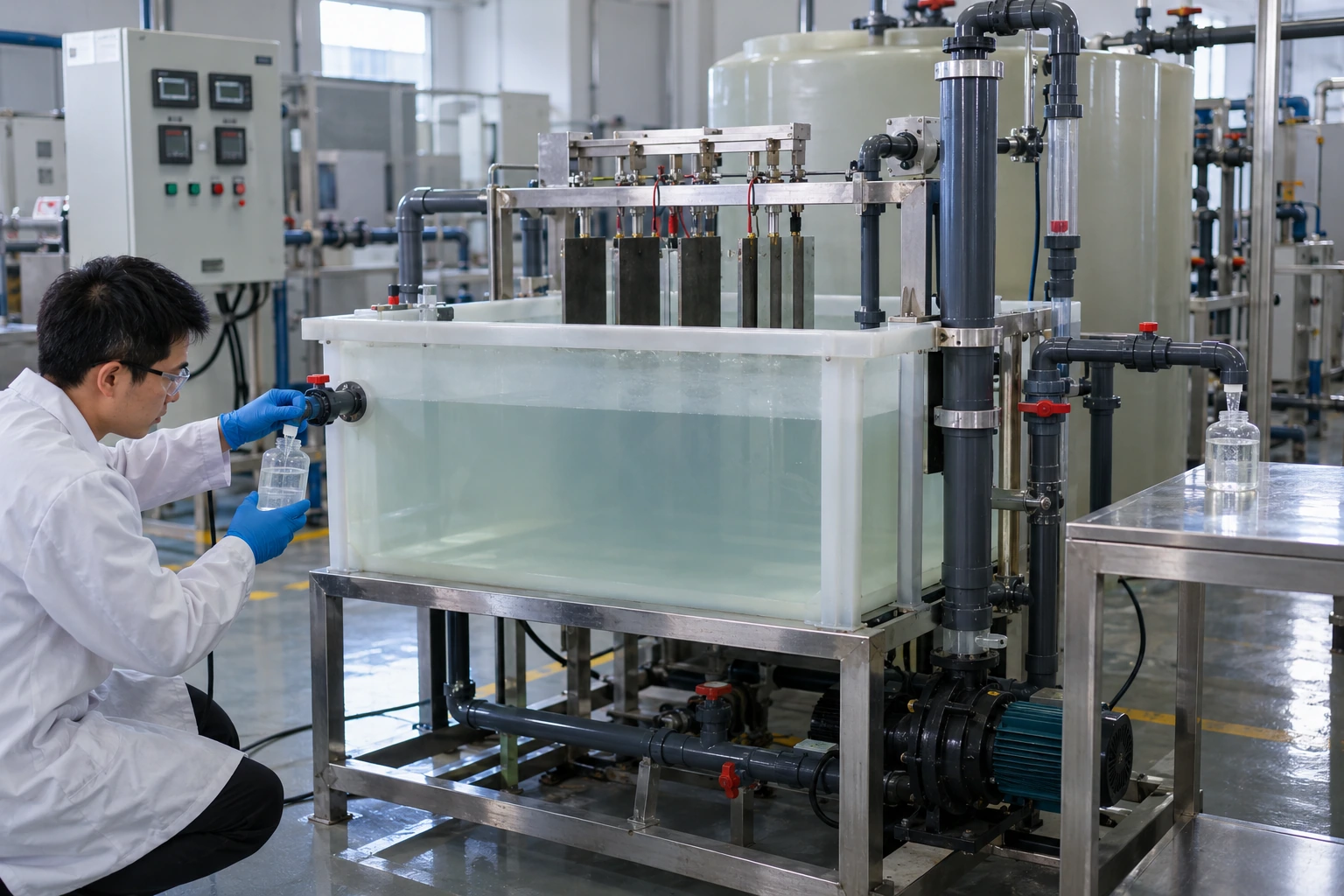
Titanium electrode process pH can drift as reactions, replenishment, mixing or contamination change the liquid. The cause depends on the process balance.
How should you investigate drift?
Compare chemistry and operating records on the same timeline. Note feed changes and maintenance events. Review whether the sampling point still represents the intended stream.
- Track makeup and discharge conditions.
- Record current, flow and temperature.
| Check | Decision |
|---|---|
| Operating timeline | Locates relevant changes |
| Chemical balance | Helps explain the drift |
A drifting reading should trigger investigation before a coating substitution. Key Takeaway: Identify the process cause before redesigning the electrode.
7. Can a Platinum Titanium electrode Handle Any pH?

A platinum-coated Titanium electrode cannot be assumed compatible with every pH or electrolyte. Substrate, active layer and the complete chemical environment still impose limits.
Which details prevent a misleading comparison?
Use a duty-specific specification. State the bath chemistry and operating conditions rather than a universal pH claim. Review complexing or aggressive constituents explicitly.
- Describe all relevant chemical exposure.
- Include cleaning and shutdown conditions.
| Check | Decision |
|---|---|
| Platinum surface | Has application-specific behavior |
| Finished assembly | Includes other exposed materials |
The active metal's name does not qualify the complete part. Key Takeaway: Check compatibility beyond the nominal pH.
8. How Does pH Affect Titanium electrode Cleaning Review?

pH affects Titanium electrode cleaning review, but cleaner compatibility also depends on chemical identity, concentration, temperature and time. Equal pH does not make cleaners interchangeable.
How should cleaning be connected to operation?
Keep cleaning exposure in the same material review. For water-treatment applications, residues and reaction products can change cleaning behavior. Use an approved procedure for the specific coating and assembly.
- Identify cleaner and exposure conditions.
- Document rinsing and restart requirements.
| Check | Decision |
|---|---|
| Operating liquid | Defines routine exposure |
| Cleaning liquid | Defines a separate material duty |
A successful operating trial does not automatically approve a cleaning chemical. Key Takeaway: Qualify both exposure conditions.
9. What Should a Titanium electrode pH Trial Compare?
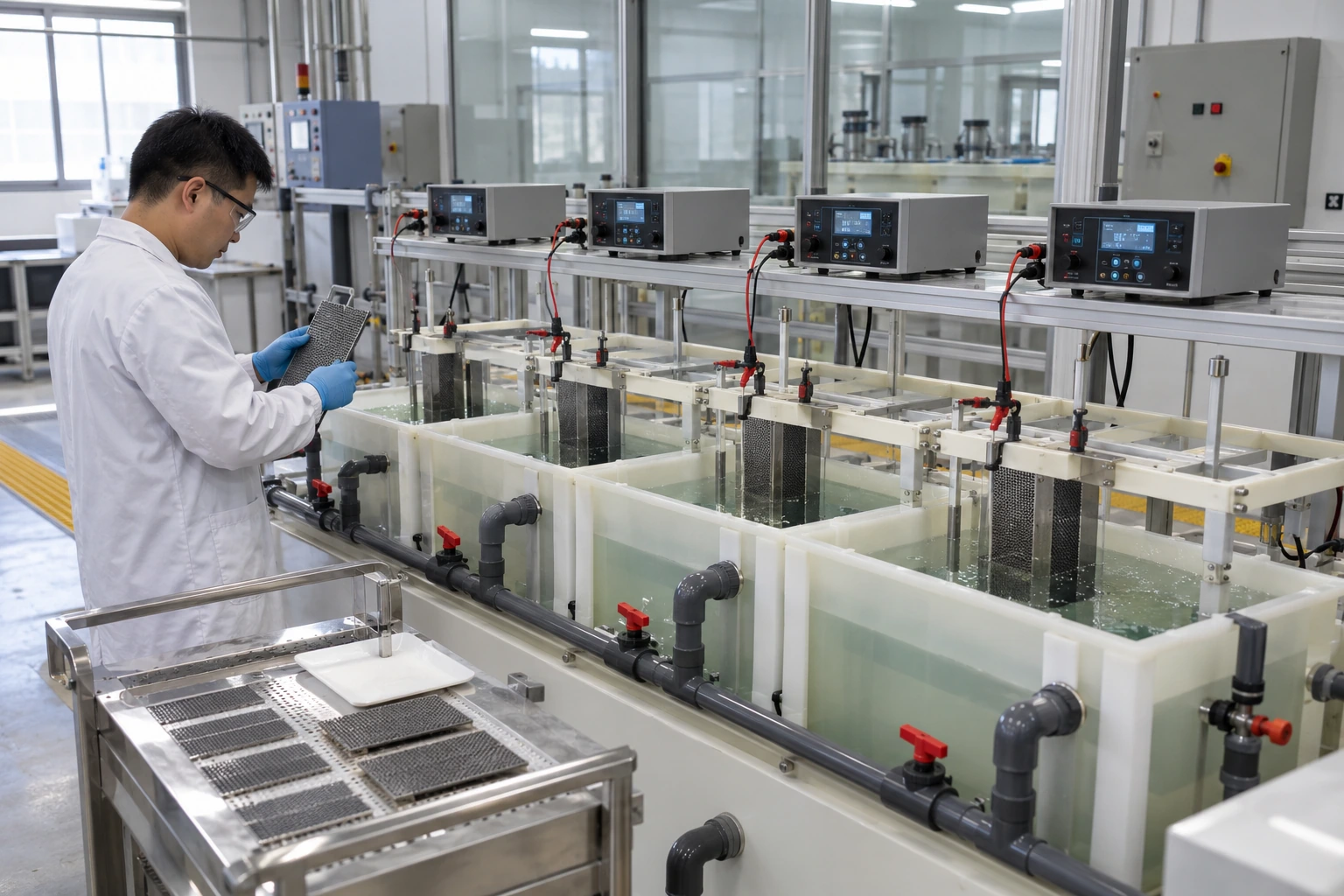
A Titanium electrode pH trial should compare representative chemistry and operating conditions against defined acceptance criteria. Changing pH may also change composition.
What should the test record make visible?
Record how each test liquid was prepared. Keep current, temperature and flow comparable where practical. Identify changes that prevent a simple comparison.
- Measure output and surface condition.
- Retain preparation and sampling records.
| Check | Decision |
|---|---|
| Controlled comparison | Supports interpretation |
| Multiple simultaneous changes | Require cautious attribution |
A changed result cannot always be assigned to pH alone. Key Takeaway: Design the trial around a clear question.
10. What Titanium electrode Chemistry Data Should You Submit?

Submit Titanium electrode composition, pH range, temperature, current, cleaning exposure and process objectives for review. Mark unknown or variable conditions explicitly.
How can we help narrow the specification?
Send the chemical window with the drawing. We can review electrode requirements against your stated duty; contact us today with those records. Our position is that chemical compatibility needs a complete description.
- Identify normal and limiting conditions.
- Define the evidence required from a sample.
| Check | Decision |
|---|---|
| Chemistry package | Defines exposure |
| Acceptance plan | Defines suitability |
The combined package reduces assumptions in the coating proposal. Key Takeaway: Validate the stated chemical window.
Frequently Asked Questions
Can I choose an anode using pH alone? No. Composition, temperature, current and reaction duty also matter.
What's the best pH for a titanium electrode? There is no universal value. Use the operating range qualified for the coating and process.
How do I know if a tank reading represents the surface? It usually describes bulk liquid. Local conditions can differ because of reactions and transport.
Can I replace a cleaner with another at the same pH? Not automatically. Chemical identity and exposure conditions still require compatibility review.
Can I apply another supplier's pH range to my part? Only with a matching specification and evidence. Coatings, geometry and chemistry may differ.