
Choose seals for a Titanium electrode cell by the exact compound, process chemistry, temperature and mechanical interface. A gasket can match your drawing perfectly and still swell, relax or release unwanted material during service. Replacing it with another material name without checking the compound only repeats that uncertainty. Review sealing, spacing and product-contact requirements together before approving a substitute.
1. What must a Titanium electrode seal withstand?
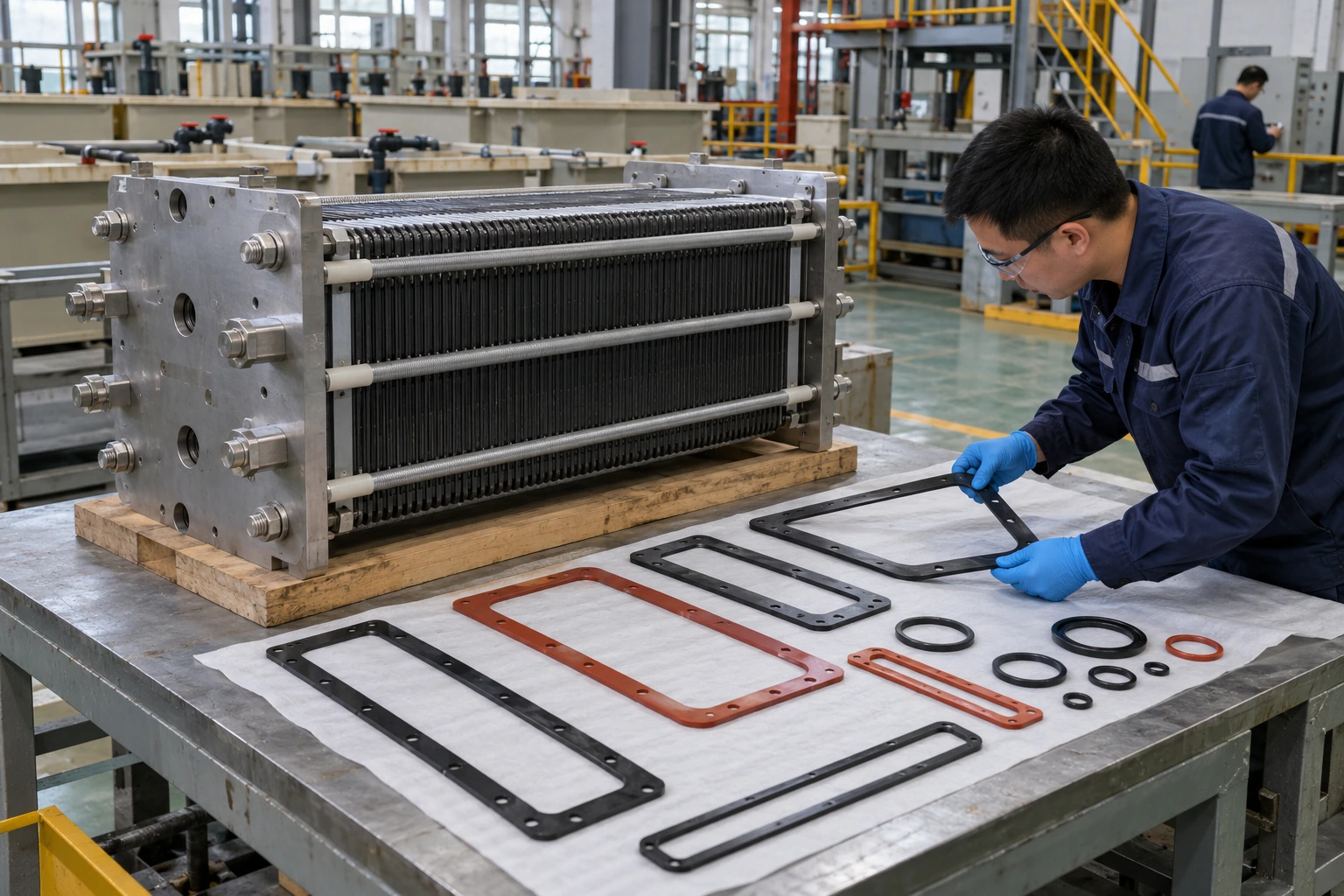
A Titanium electrode seal must withstand its actual chemical, thermal and mechanical exposure while maintaining the required containment boundary. Supplier limits must apply to the selected compound and design.
What does the seal actually contact?
Map normal and abnormal exposure. Include process liquid, gases and approved cleaning chemicals. A compatibility review based only on incoming water leaves operating and maintenance chemistry unaddressed.
- List temperature and pressure conditions.
- Identify cleaning and standby exposures.
| Check | Decision |
|---|---|
| Normal process exposure | Defines routine service |
| Maintenance exposure | May impose different material demands |
Review the full service cycle. Key Takeaway: A gasket specification should cover every approved fluid it will encounter.
2. Can one gasket suit every Titanium electrode chemistry?

One gasket compound cannot be assumed suitable for every Titanium electrode electrolyte or oxidizing environment. Even materials within the same polymer family can have different formulations and performance.
Is the material name specific enough?
Request compound-level identification. Use supplier compatibility evidence as a screening input, then validate the intended service. Generic resistance charts do not qualify every concentration, temperature or mechanical arrangement.
- Record exact compound and hardness where specified.
- Control substitutions through technical review.
| Check | Decision |
|---|---|
| Polymer family | Broad material classification |
| Compound identity | More precise purchasing specification |
Ask what evidence applies to the exact supplied material. Key Takeaway: A familiar polymer abbreviation is not a complete compatibility approval.
3. Why does Titanium electrode seal temperature matter?
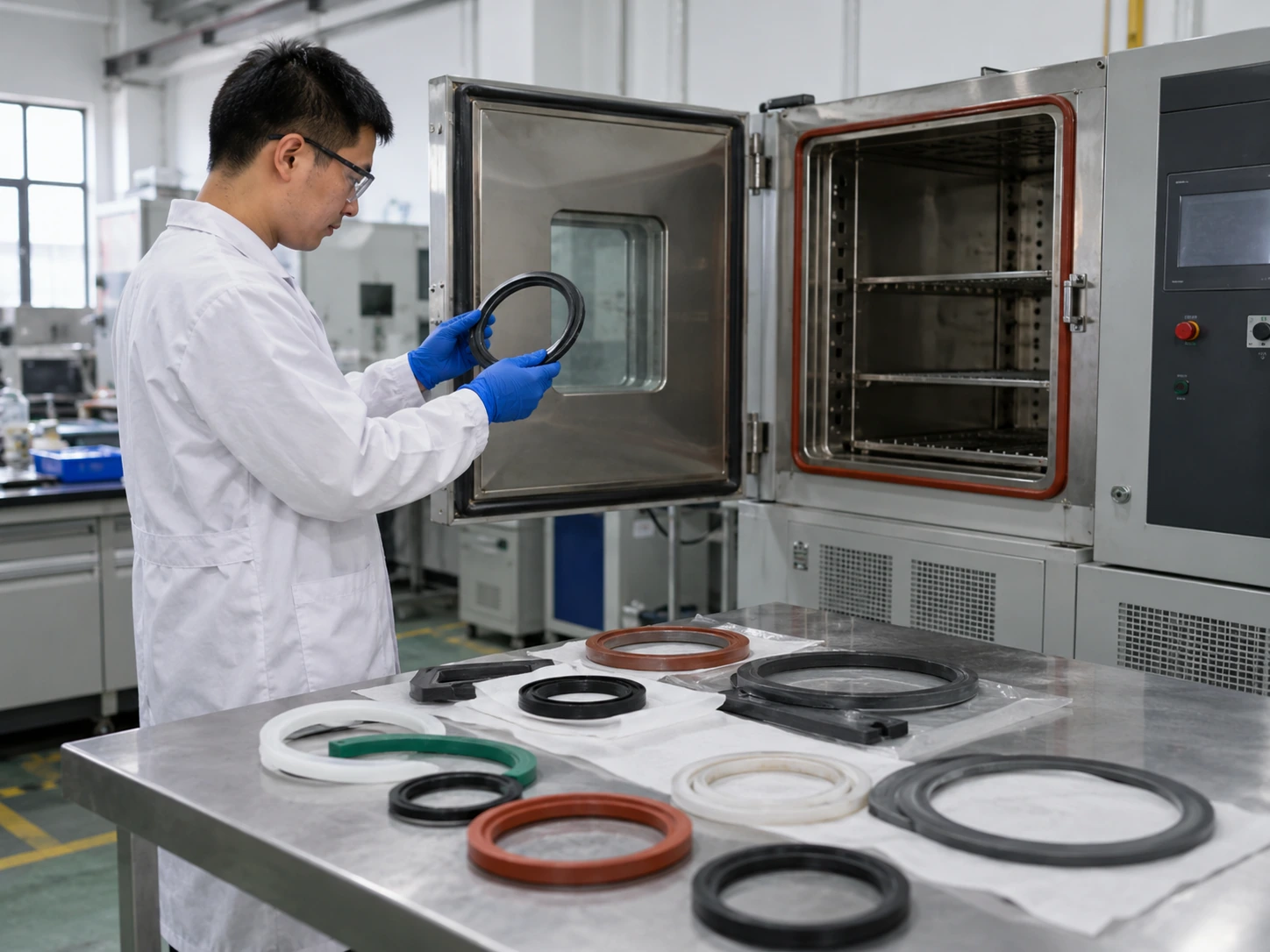
Titanium electrode seal temperature matters because chemical exposure and elastic behavior can change with heat. A temperature rating in air may not apply to the same compound in your process liquid.
Which rating is being quoted?
Match medium and temperature. Ask whether the supplier's evidence reflects continuous exposure, short excursions or another test condition. Keep design limits with their stated basis.
- Record actual sealing-region temperature.
- Distinguish normal and transient exposure.
| Check | Decision |
|---|---|
| Temperature rating alone | Missing environmental context |
| Rating with medium and duration | More relevant screening evidence |
Use limits tied to the actual service environment. Key Takeaway: Never transfer an air-temperature rating automatically to electrolyte service.
4. How does compression affect Titanium electrode sealing?

Titanium electrode seal compression must suit the approved gland, compound and assembly design. Too little or too much deformation can undermine the intended sealing function.
Who sets the compression requirement?
Use the released interface specification. Include groove geometry, assembly stops and fastening procedure in a custom engineering review. Avoid inventing a universal torque because similar-looking cells may transfer force differently.
- Identify compression-control features.
- Use approved assembly and inspection methods.
| Check | Decision |
|---|---|
| Fastener torque alone | May not define actual seal compression |
| Controlled interface design | Defines the intended deformation |
Check the mechanism that establishes sealing load. Key Takeaway: Seal compression is a design requirement, not a guess during assembly.
5. Can seal creep change Titanium electrode spacing?
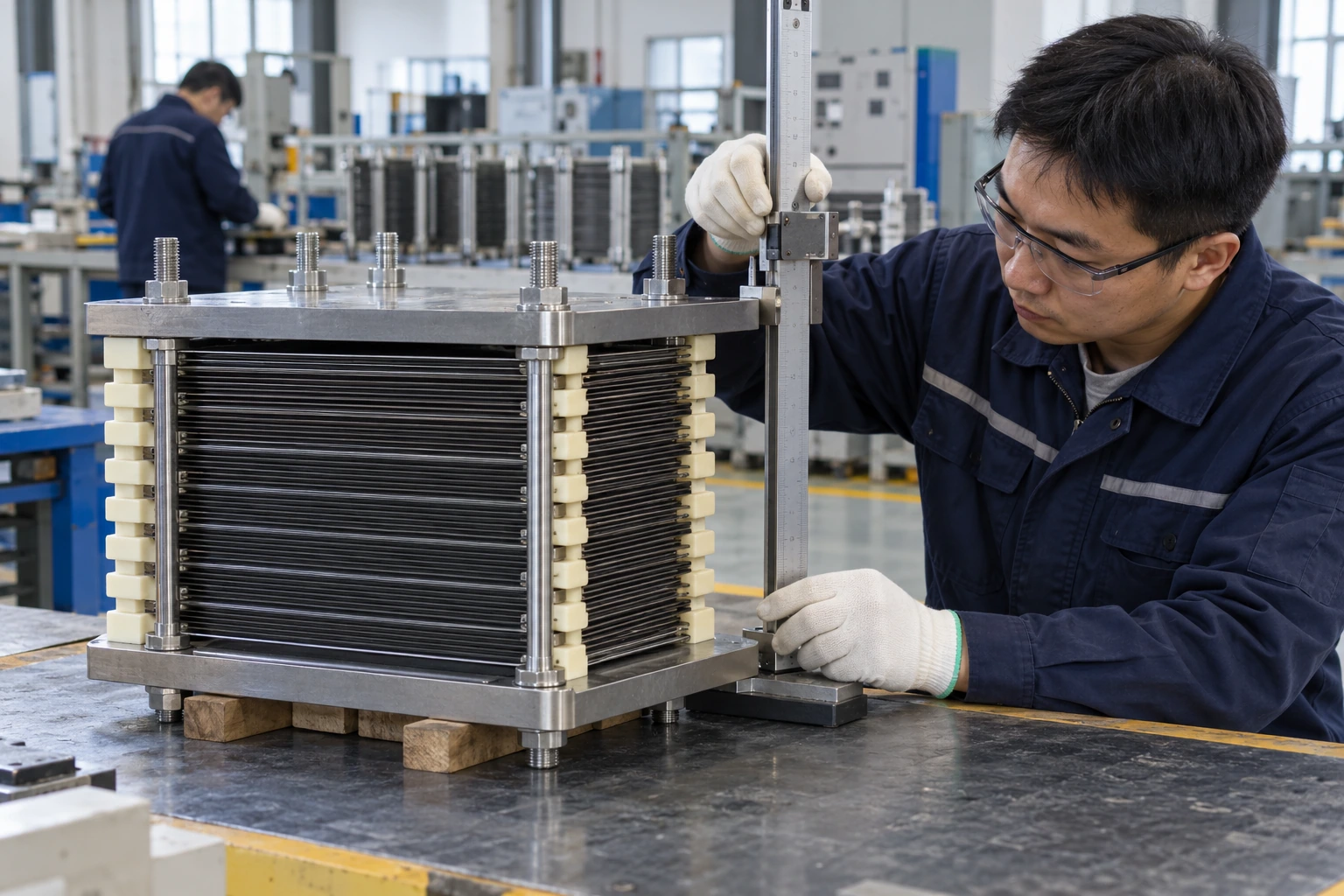
Seal relaxation or creep can affect Titanium electrode stack geometry where the seal also participates in load transfer or spacing. Dedicated spacers and mechanical stops may perform different functions.
Is the gasket also setting the gap?
Separate sealing from spacing. Identify which components define electrode separation under load. Ask responsible designers how dimensional stability is maintained over the intended service cycle.
- Mark gap-setting and sealing components separately.
- Record permitted assembly dimensional variation.
| Check | Decision |
|---|---|
| Seal function | Maintains fluid boundary |
| Spacer function | Defines mechanical separation |
Review any component asked to perform both roles. Key Takeaway: A seal substitution may also change the electrode-gap assumption.
6. What surfaces should a Titanium electrode gasket contact?
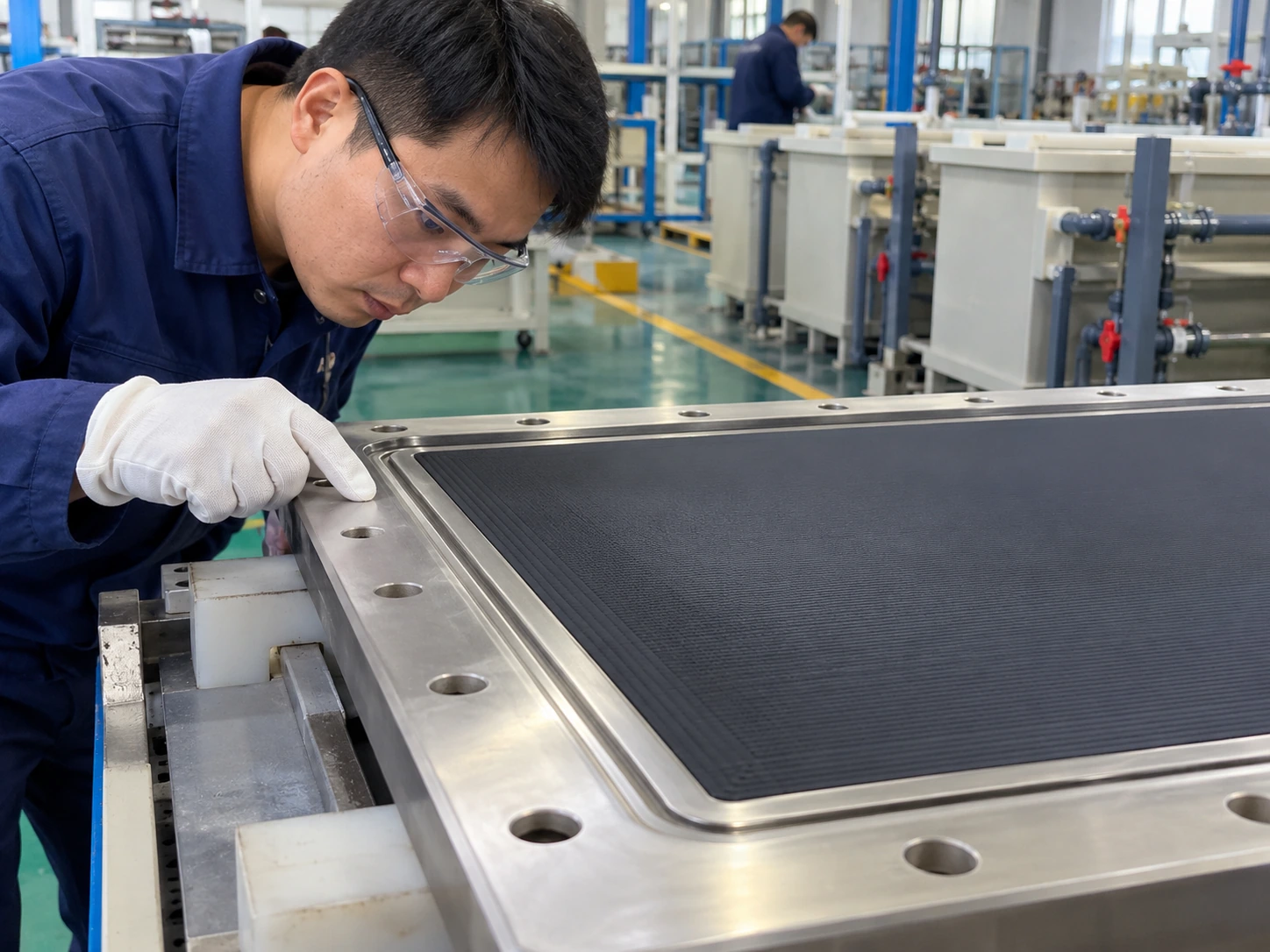
A Titanium electrode gasket should contact only the surfaces specified by the approved assembly design. Surface finish, coating boundaries and local geometry can influence sealing and coating protection.
What does the gasket footprint overlap?
Align the drawings. Compare seal footprint with coated regions and edge details. Resolve conflicting tolerances between electrode and frame drawings before sample approval.
- Protect active surfaces during assembly.
- Identify permitted lubrication or preparation methods.
| Check | Decision |
|---|---|
| Unspecified contact region | Creates assembly uncertainty |
| Coordinated seal land | Supports repeatable fit |
Treat coating and seal geometry as one interface. Key Takeaway: A gasket must fit the functional surface map, not merely the external outline.
7. Can extractables affect Titanium electrode product purity?

Seal extractables can affect Titanium electrode product purity where released substances matter to the intended use. Compatibility and visible integrity do not establish acceptable extractables.
Can a sound gasket still affect the product?
Separate durability from purity. Define relevant analytical tests with your laboratory and product specialists. Do not infer drinking-water, food-contact or other approvals from generic material resistance.
- Identify application-specific product limits.
- Include blank and comparative samples.
| Check | Decision |
|---|---|
| No visible damage | Limited material-condition evidence |
| Product analysis | Checks relevant release or contamination |
Use evidence matched to the product requirement. Key Takeaway: Chemical resistance is not a substitute for product-contact qualification.
8. How should Titanium electrode leak tests be planned?

A Titanium electrode leak test must follow an engineer-approved method with defined medium, pressure, duration and acceptance criteria. Test conditions must remain within the assembly's qualified limits.
What does a passed leak test mean?
State its scope. For water-treatment applications, distinguish initial containment from long-term compatibility in oxidizing service. Do not transfer a pass result beyond the conditions actually tested.
- Use appropriate guarded test equipment.
- Record test configuration and acceptance basis.
| Check | Decision |
|---|---|
| Initial leak test | Checks specified containment conditions |
| Service qualification | Addresses longer operating exposure |
Keep test claims within their evidence boundary. Key Takeaway: A leak-free assembly may still need chemical and thermal validation.
9. What triggers Titanium electrode seal requalification?
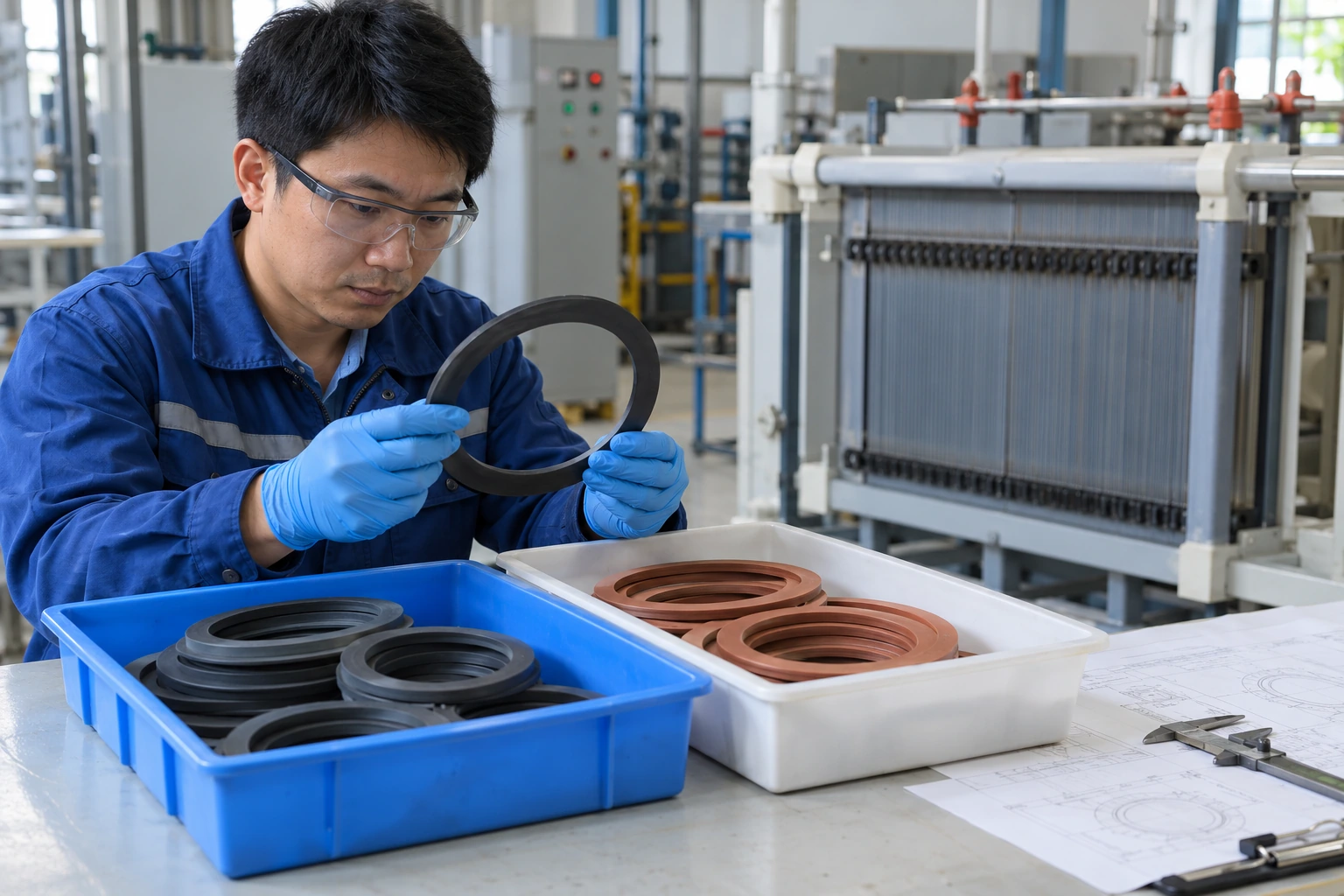
A Titanium electrode seal needs requalification when changes could affect compatibility, geometry, load behavior or product purity. A supplier substitution within one polymer family may still be a meaningful change.
What changed beneath the same material label?
Require change disclosure. Review compound, manufacturing source and dimensional changes through your controlled process. Let risk and evidence determine the necessary retest scope.
- Maintain approved part and compound identity.
- Segregate revised stock until release.
| Check | Decision |
|---|---|
| Documented equivalent evidence | May support limited verification |
| Unverified material change | Requires technical review |
Assess the actual changed characteristic. Key Takeaway: Control seal substitutions with the same care as electrode revisions.
10. What Titanium electrode sealing details should you send?

A Titanium electrode sealing request should include compound requirements, fluid exposure, gland drawings and acceptance tests. This prevents a dimensionally correct gasket from being treated as an automatically qualified component.
Send a complete interface brief
Bring the sealing conditions. When you contact us today, we can review electrode boundaries and drawing-based fit within your cell design. Our position is that reliable assemblies begin with clear interface responsibilities.
- Provide normal, cleaning and standby chemistry.
- Identify who approves seal material and system tests.
| Check | Decision |
|---|---|
| Electrode interface review | Checks supplied geometry |
| Seal qualification | Checks compound and complete service duty |
Resolve material and mechanical questions before substitution. Key Takeaway: Approve seals through a defined application specification.
Frequently Asked Questions
Can I substitute another gasket with the same dimensions? Only after review. Compound, hardness, compression behavior and product-contact requirements may differ.
What's the best seal material for hypochlorite service? Use compound-specific evidence. Concentration, temperature, pressure and cleaning conditions prevent a universal answer.
How do I know if a seal sets the electrode gap? Check the assembly drawing and load path. Dedicated spacers or stops may control spacing independently.
Can I claim compatibility from a leak test? No. A leak test checks specified containment conditions, while chemical compatibility needs separate evidence.
Can I reuse seals after opening a stack? Follow the equipment's approved procedure. Reuse suitability depends on material, condition and assembly requirements.