
A Titanium electrode cell needs interlocks that respond to its defined hazards and verify the required safe action. Your control screen may show healthy flow while a disconnected sensor freezes at its last value. If power remains enabled, the display offers reassurance without protection. Review detection, logic, final action and restart behavior as a complete function before commissioning.
1. What should a Titanium electrode interlock achieve?

A Titanium electrode interlock should prevent or interrupt defined operation when required conditions are absent. Its success depends on actual equipment response, not merely a warning on a screen.
What action must follow the fault?
Define the protected state. Responsible engineers should specify what power and auxiliary equipment must do for each initiating condition. Different hazards may require different sequences.
- State the initiating condition explicitly.
- Define the required equipment response.
| Check | Decision |
|---|---|
| Alarm only | Notifies personnel |
| Protective function | Performs a defined action |
Keep notification and automatic protection distinct. Key Takeaway: An interlock needs a testable cause-and-effect requirement.
2. Which hazards need Titanium electrode trip logic?
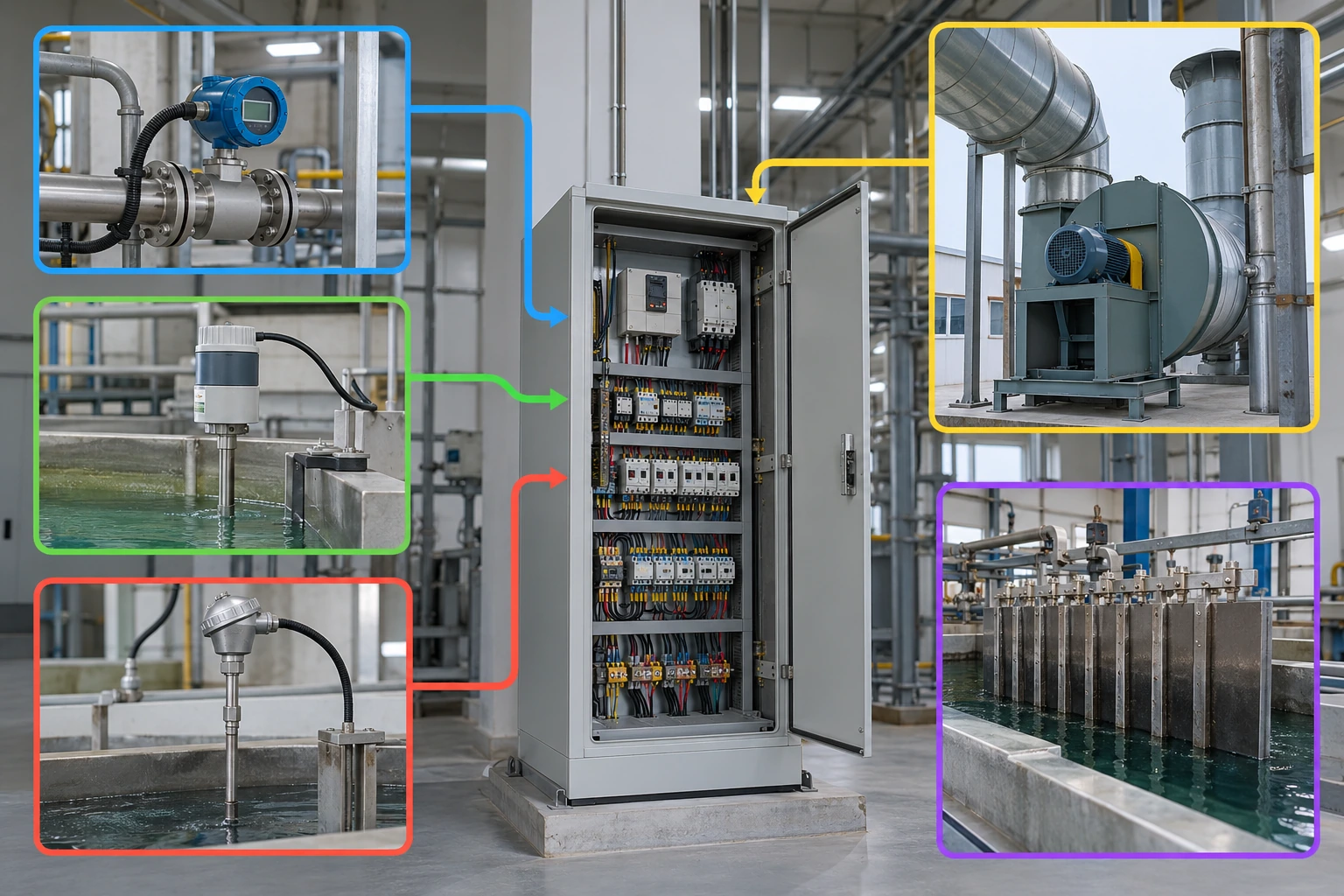
Titanium electrode trip logic should follow application-specific hazards such as loss of required liquid service, excessive temperature or gas-management failure. This list is a starting point for engineering review, not a complete safety specification.
Which hazards belong in your review?
Use the actual process layout. Include feed, reaction products and auxiliary equipment. A checklist copied from another electrolysis system may miss hazards created by your chemistry or configuration.
- Review normal, startup and maintenance states.
- Identify credible equipment and service failures.
| Check | Decision |
|---|---|
| Generic hazard list | Supports initial discussion |
| System-specific assessment | Defines required protective functions |
Let the approved assessment determine the final logic. Key Takeaway: Protection requirements must come from your complete process.
3. Can one sensor protect every Titanium electrode condition?

One sensor cannot automatically protect every Titanium electrode condition because flow, liquid level, temperature and ventilation represent different physical states. Shared dependencies can also undermine apparently separate signals.
What could several signals miss together?
Check common dependencies. Review power, wiring, sensing location and failure behavior with controls specialists. Avoid counting sensors as independent protection without an appropriate assessment.
- Document shared utilities and signal paths.
- Identify failure indications for each device.
| Check | Decision |
|---|---|
| Multiple displayed values | Does not prove independent protection |
| Reviewed dependencies | Supports a better fault model |
Examine how protective evidence could fail. Key Takeaway: A credible protection design accounts for sensor failures as well as process faults.
4. How does sensor location affect Titanium electrode protection?
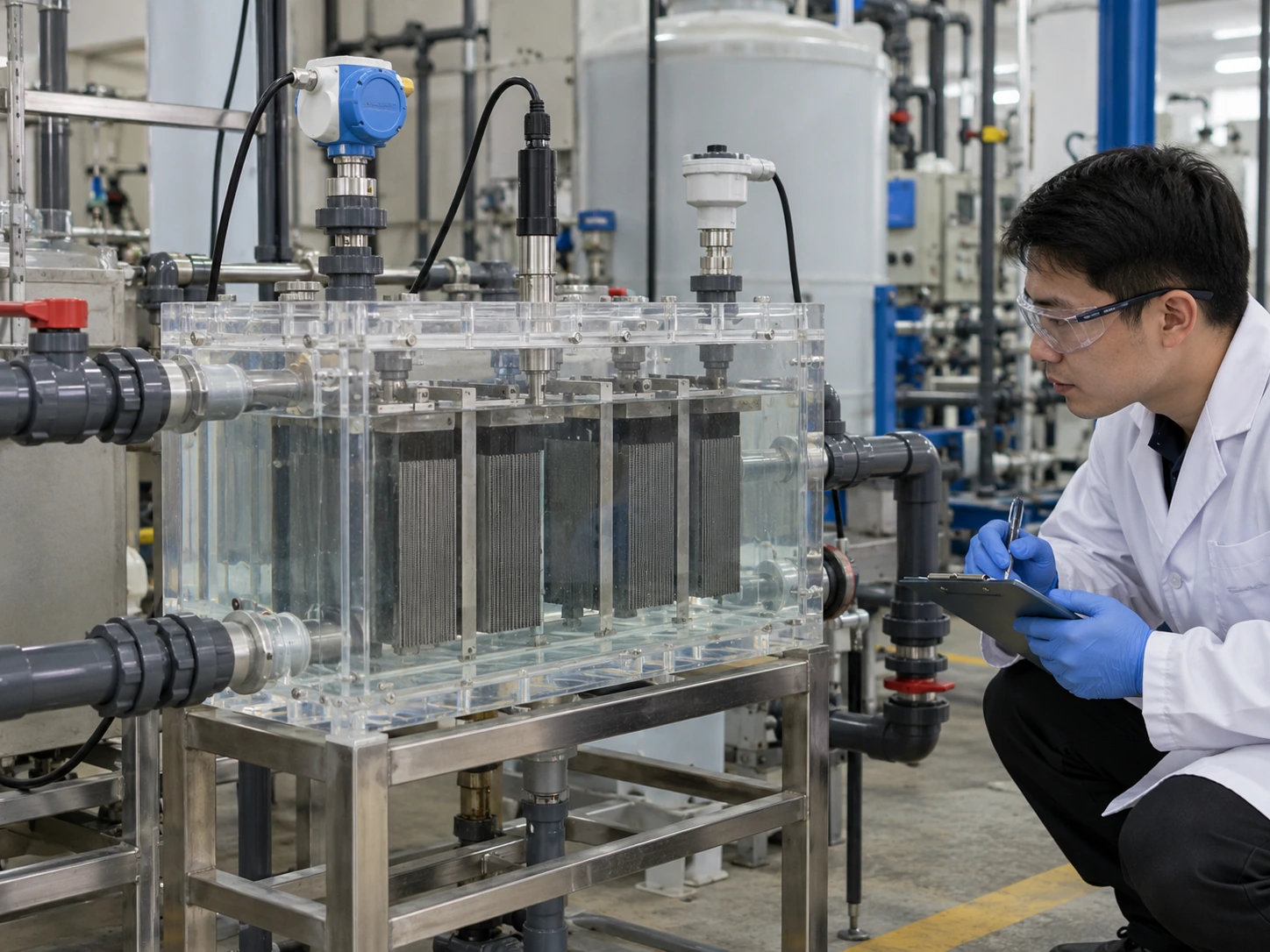
Titanium electrode sensor location affects protection because a measurement must represent the condition threatening the active cell. A remote reading can remain normal while a local chamber condition changes.
Does the sensor watch the right place?
Mark the protected volume. Include measurement locations and process response assumptions in a custom cell review. Validate whether those locations capture relevant changes under intended operation.
- Show sensor placement on as-built drawings.
- Record response and installation limitations.
| Check | Decision |
|---|---|
| Convenient mounting point | May miss the protected condition |
| Validated representative location | Connects reading to the hazard |
Verify installation assumptions during commissioning. Key Takeaway: Sensor selection and sensor placement need the same level of review.
5. What is a fail-safe Titanium electrode response?
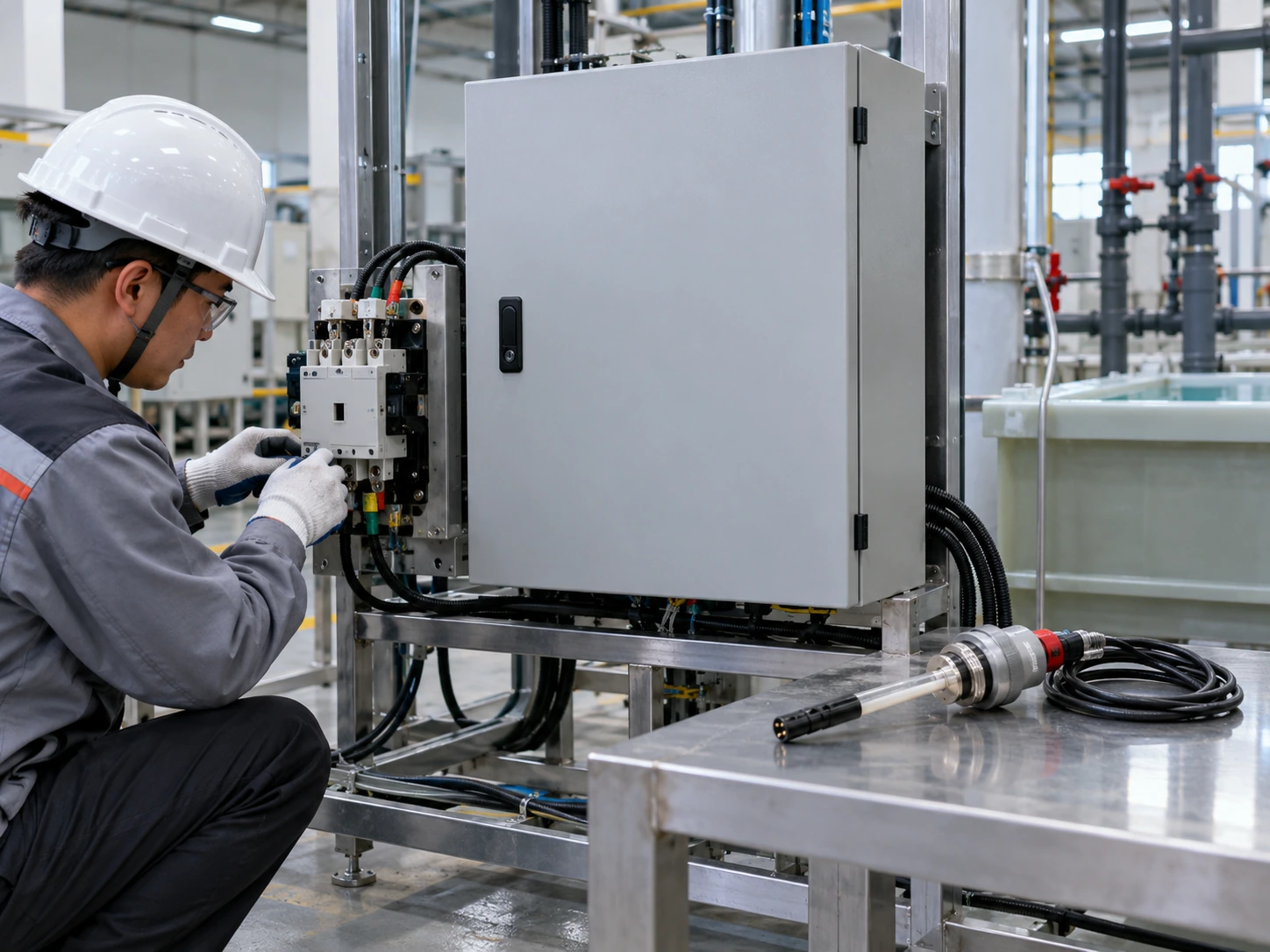
A fail-safe Titanium electrode response means defined failures lead to the safe state specified by the system's engineering assessment. It cannot be established simply by choosing normally closed contacts.
What happens when a signal disappears?
Review loss-of-signal behavior. Include broken wiring, loss of power and diagnostic faults where relevant. Qualified controls personnel must assess the entire chain through the final power-removal element.
- Specify behavior for invalid readings.
- Test the actual final action under controlled conditions.
| Check | Decision |
|---|---|
| Contact convention | Only one design detail |
| Complete failure response | Defines protective behavior |
Evaluate the whole function instead of a wiring shortcut. Key Takeaway: Fail-safe claims need system-level evidence.
6. Should Titanium electrode trips reset automatically?

Titanium electrode trips should reset only under the approved restart philosophy for the specific fault and equipment. Automatic recovery may be unsuitable when investigation or human clearance is required.
Does reset also restart the process?
Separate acknowledgment, reset and restart. Operators should understand what each action permits. A restored sensor reading alone may not prove that equipment condition remains acceptable.
- Define restart prerequisites by fault type.
- Identify release authority for abnormal events.
| Check | Decision |
|---|---|
| Acknowledgment | Records receipt of an alarm |
| Restart permission | Requires defined conditions and authority |
Make state transitions explicit in operator instructions. Key Takeaway: Avoid allowing a cleared display to substitute for a restart decision.
7. How do you test Titanium electrode interlocks?
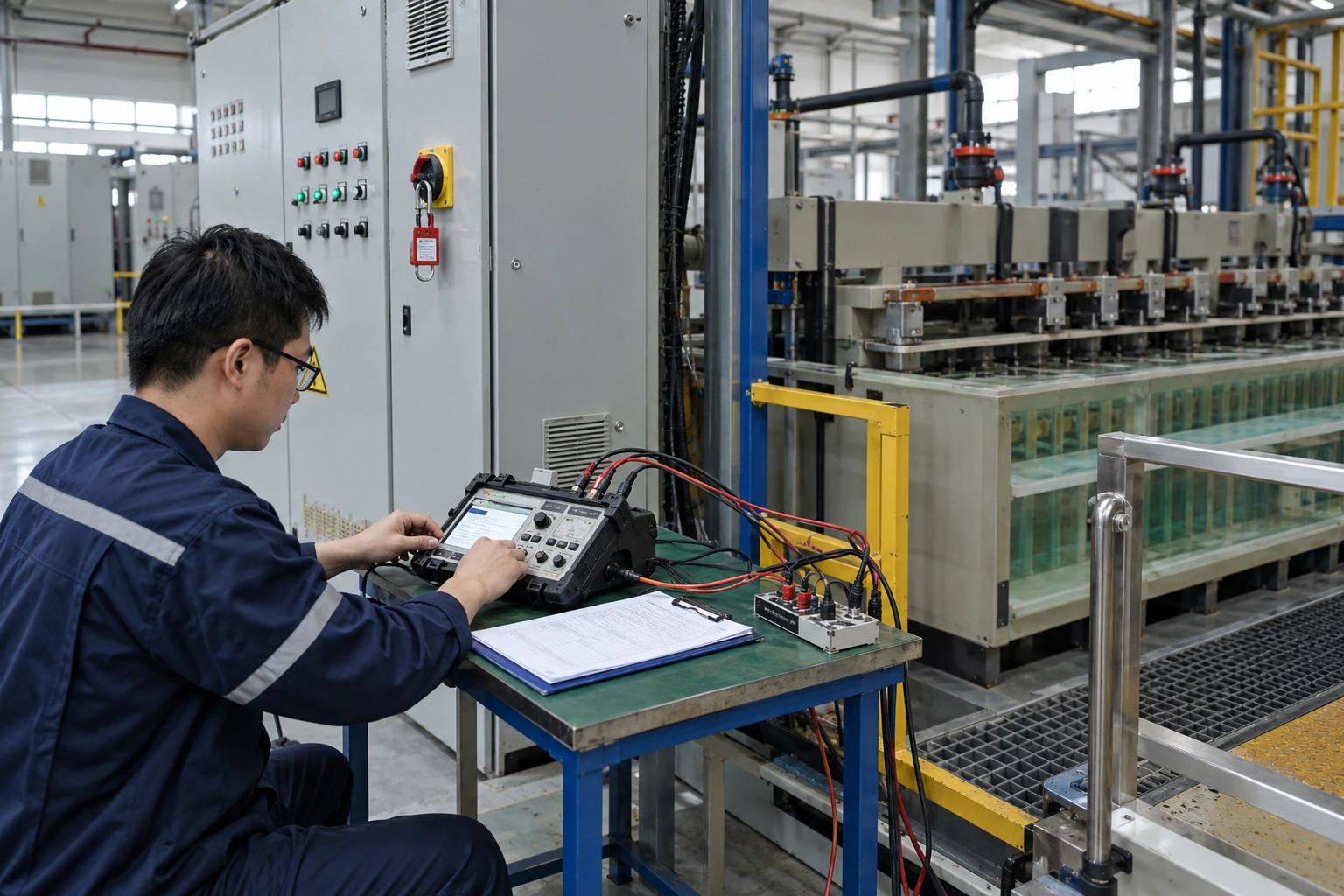
Titanium electrode interlocks should be tested using an approved commissioning or proof-test method that controls electrical and process hazards. The test must identify which portions of the function it actually verifies.
What can a simulation prove?
Document the tested boundary. A simulated input may verify logic while leaving sensor placement untested. Complement it with appropriate installation checks instead of treating software response as complete proof.
- Record expected and observed final actions.
- Restore and verify normal configuration after testing.
| Check | Decision |
|---|---|
| Input simulation | Checks part of the response chain |
| Complete verification plan | Addresses remaining installation and hardware checks |
Close evidence gaps before acceptance. Key Takeaway: Testing must verify the protective function you intend to rely on.
8. What records support Titanium electrode incident review?

Titanium electrode incident review benefits from synchronized alarms, process trends and maintenance records. Timing helps distinguish an initiating fault from consequences that appeared afterward.
Which event happened before power changed?
Keep a shared time basis. In water-treatment duty, link electrical trends with feed and gas-management events. Preserve raw records before resets or controller changes erase useful context.
- Record clock alignment and logging intervals.
- Keep operator observations with timestamps.
| Check | Decision |
|---|---|
| Isolated alarm message | Limited causal evidence |
| Aligned event timeline | Supports a more focused investigation |
Use timing to test competing explanations. Key Takeaway: A useful event record captures sequence as well as values.
9. Who approves Titanium electrode protective functions?

Titanium electrode protective functions need approval from responsible system and controls engineers with suitable process knowledge. An electrode supplier cannot certify a complete safety system from a plate drawing.
Who owns integrated protection?
Assign approval responsibility. Component suppliers can provide relevant limits and interface information. The system owner must integrate those inputs into the appropriate hazard assessment and acceptance process.
- Document component and system boundaries.
- Identify qualification and approval requirements.
| Check | Decision |
|---|---|
| Component input | Supports design decisions |
| System approval | Covers integrated protective behavior |
Do not leave responsibility implied between suppliers. Key Takeaway: Clear ownership is part of a usable protection specification.
10. What Titanium electrode control brief should you prepare?

A Titanium electrode control brief should connect hazards, sensing locations, trip actions, test methods and restart criteria. This package lets reviewers identify unverified assumptions before operation begins.
Prepare a cause-and-effect package
Bring the logic and the layout. When you contact us today, we can review electrode operating requirements and component interfaces within your system brief. Our position keeps protective-system approval with qualified responsible engineers.
- Include normal and fault-state diagrams.
- List unresolved tests and technical owners.
| Check | Decision |
|---|---|
| Defined protective function | Can be verified |
| Unassigned requirement | Must be resolved before reliance |
Turn each protection claim into an acceptance check. Key Takeaway: Specify and verify actual fault response before commissioning the cell.
Frequently Asked Questions
Can I use one flow switch as complete cell protection? Not without a system assessment. Level, temperature, gas handling and other hazards may require separate evidence and actions.
How do I know if an interlock really removes power? Verify the final action through an approved test. A screen alarm or changed logic bit is insufficient by itself.
Can I bypass a trip to finish a production run? Do not improvise a bypass. Follow the site's approved safety and engineering procedures for unresolved faults.
What's the best reset policy? Use a hazard-specific approved policy. Some events require investigation and controlled human release before restart.
Can I ask an electrode supplier to approve all control logic? Not from component information alone. Integrated protection needs qualified system-level engineering and acceptance.