
A Titanium electrode for tank CP must match the surface being protected: an immersed internal area and a soil-side tank bottom are different circuits. Confusing those boundaries can send an anode request toward the wrong electrolyte, location, or access plan. Begin with tank sections, fluid levels, water chemistry, coating condition, and existing CP records, then assign system design criteria to a qualified CP engineer.
1. Which Titanium electrode suits an immersed tank?
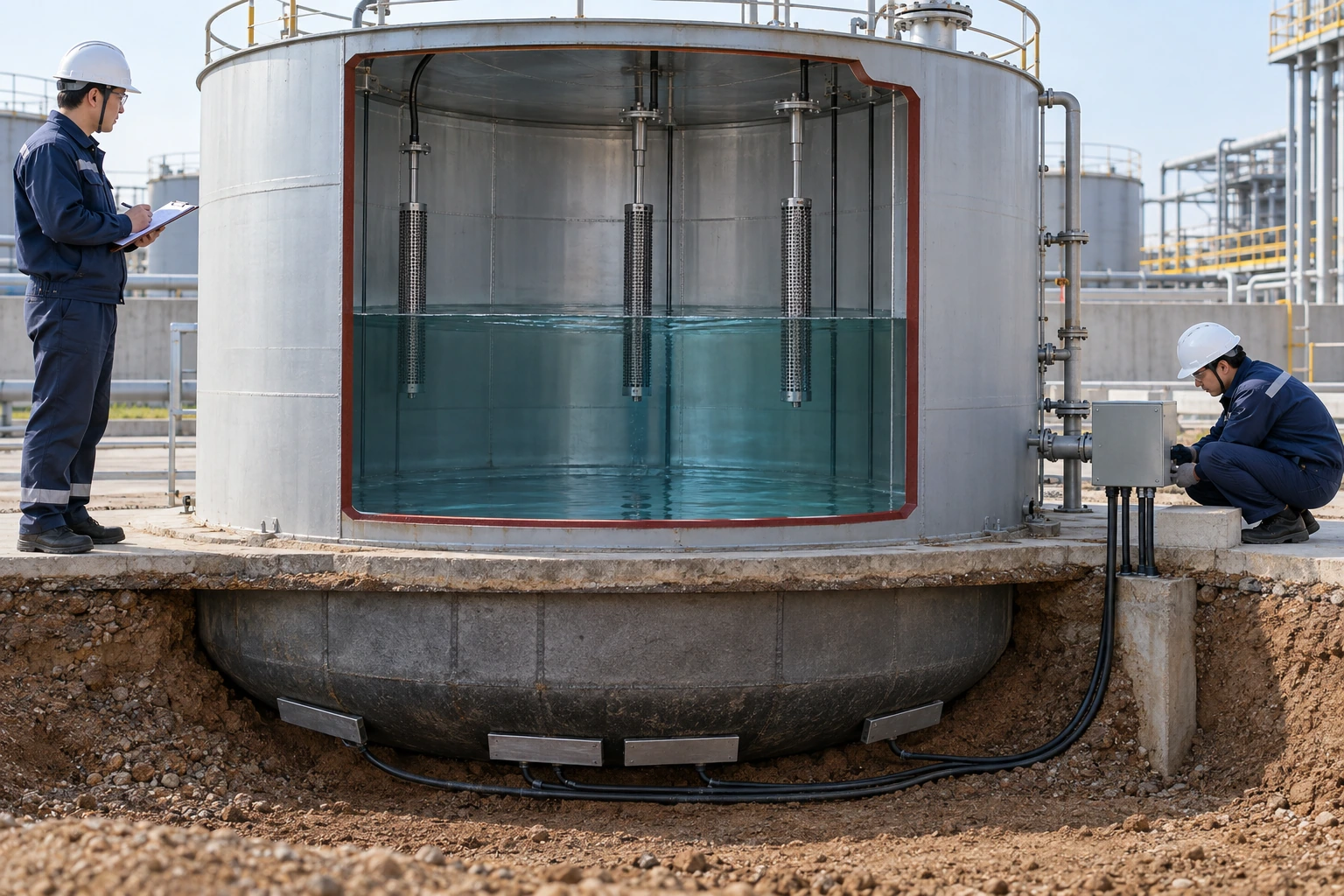
An immersed-tank Titanium electrode must suit wetted internal steel and water chemistry; an external tank bottom uses a separate soil-side design. One vessel can contain separate exposure and monitoring zones.
Name which tank surface needs protection
A tank shell may border air, liquid, coating, concrete, or soil; its bottom can face a separate electrolyte. Draw the target surface before selection. Mark internal wetted steel, external bottom, annular regions, supports, and existing linings.
- Mark internal and external corrosion zones separately.
- Show product level, foundation, coating, linings, and connected steel on sections.
| Check | Decision |
|---|---|
| Internal immersed duty | Current path uses tank liquid |
| External bottom duty | Current path uses surrounding soil or foundation media |
One vessel can contain multiple CP problems with different electrolytes and access constraints. Key Takeaway: Ask the tank owner and CP engineer to define each target zone.
2. How do Titanium electrode layouts differ on each tank side?
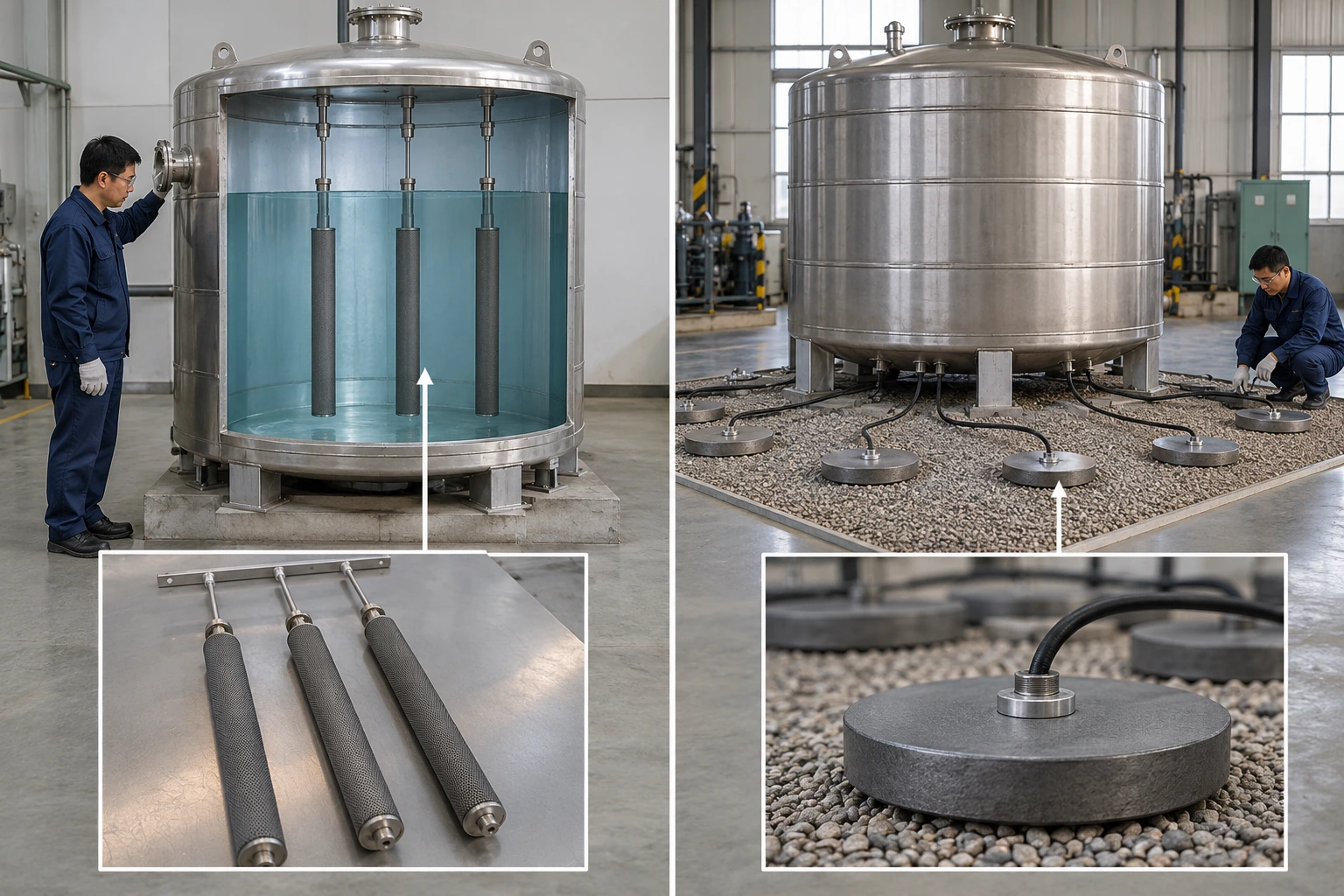
A Titanium electrode layout differs between immersed internal steel and external bottom steel by electrolyte, anode position, and access. Tank-bottom guidance does not establish internal water-service suitability.
Keep tank-side and soil-side layouts separate
An internal anode carries current through tank liquid, while an external bottom system uses soil or foundation media beneath steel. Compare circuit boundaries before selection, because tank-bottom conditions vary and internal water service needs separate review.
- Label each power circuit and electrolyte boundary.
- Check applicable tank and water-service requirements with the owner and CP engineer.
| Check | Decision |
|---|---|
| Wetted internal surface | Anode interacts with tank contents |
| Underside bottom | Anode interacts through foundation media |
An anode placed on one side of a tank cannot be assumed to protect every other surface. Key Takeaway: Do not combine internal and bottom CP scopes without a reviewed circuit design.
3. How do water levels change Titanium electrode exposure?

Water level changes the wetted area and exposure boundary around a Titanium electrode inside a tank. Wetting cycles can change exposure while supports stay fixed.
Map operating levels and intermittent wetting
Anodes, connections, and reference locations may sit in liquid, splash, vapor, or dry areas as level changes. Show normal and upset levels. Also note filling cycles, drain-down, temperature, cleaning, and periods when the system operates without full immersion.
- Draw minimum, normal, and maximum levels where available.
- Describe filling, emptying, cleaning, and shutdown sequences.
| Check | Decision |
|---|---|
| Stable immersion | Presents a defined liquid-contact zone |
| Variable level | Changes exposed steel and electrode surroundings |
A steady-state water line can omit exposure changes that matter during operation. Key Takeaway: Review level scenarios before freezing anode location or cable routing.
4. Where can a Titanium electrode sit inside a tank?
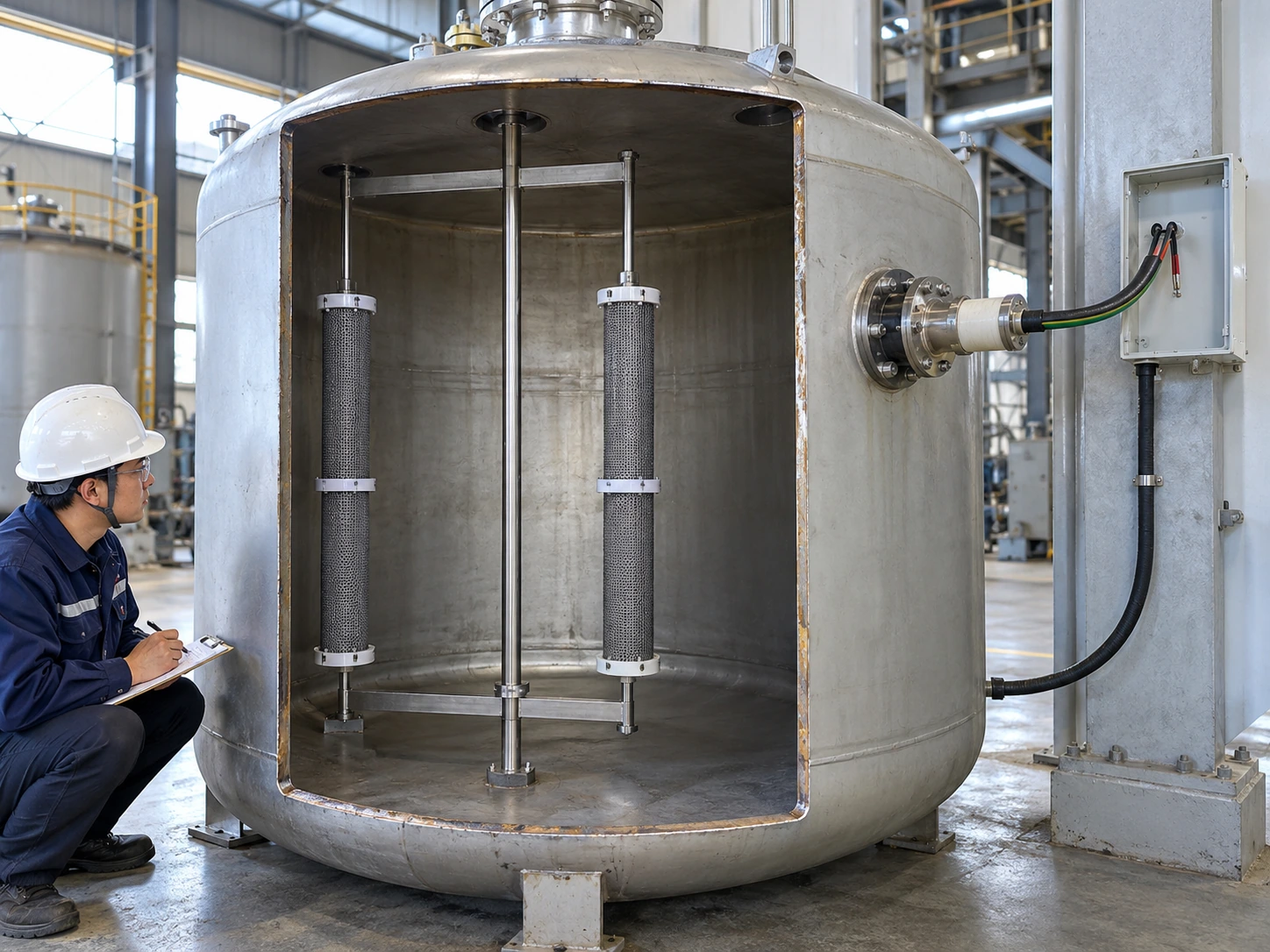
Placement of a Titanium electrode must balance current access, mechanical clearance, liquid exposure, and inspection access. As-built geometry governs support and inspection routes.
Place anodes against the real tank geometry
Compare the electrode product range with an internal elevation. Map likely shadows before fixing supports. Mark active faces, connections, clearances, and structures that could hinder inspection.
- Include an internal plan and at least one section view.
- Mark obstructions, access points, and removable equipment.
| Check | Decision |
|---|---|
| Open tank bay | Offers a relatively direct liquid path |
| Obstructed zone | Needs separate current-access review |
A wide-open sketch may not represent a tank after internals and supports are installed. Key Takeaway: Request a layout review using as-built or coordinated equipment drawings.
5. How does a Titanium electrode tank layout shape current?
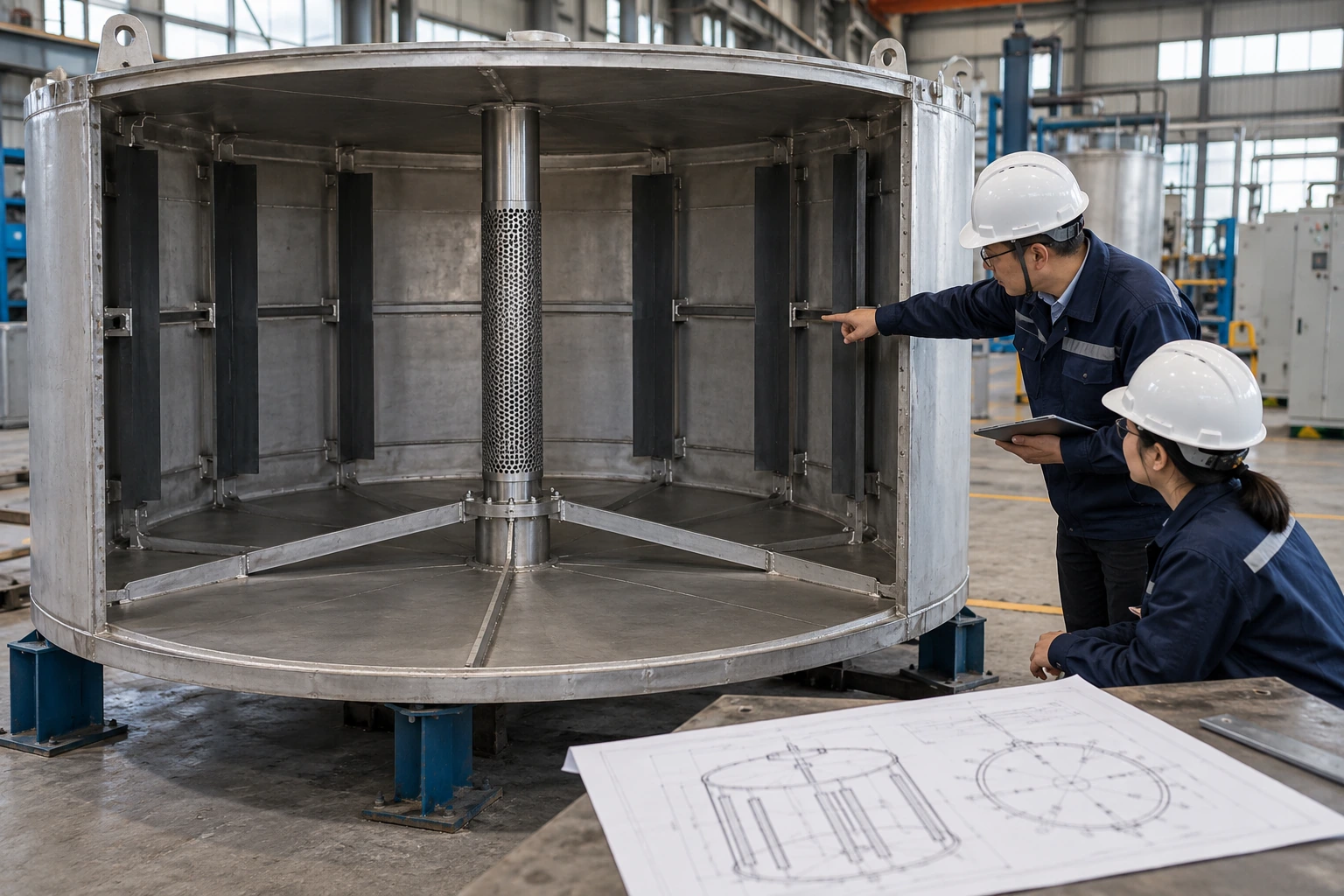
Tank curvature, stiffeners, liquid compartments, and anode spacing can shape current distribution around a Titanium electrode. Partitions can divide liquid paths and survey coverage.
Review geometry beyond tank diameter
Steel inside a tank may face away from anodes or sit behind structural features. Map shadows across partitions, then have a CP engineer assess compartments, bottom transitions, coatings, and continuity before setting survey zones.
- Show internal framing, baffles, columns, and compartment boundaries.
- Flag coated, lined, or electrically isolated components.
| Check | Decision |
|---|---|
| Open line of sight | May simplify anode placement review |
| Partitioned geometry | Can separate electrolyte or screen surfaces |
Tank volume alone does not explain how current reaches every wetted surface. Key Takeaway: Coordinate anode positions with tank geometry and monitoring locations.
6. Which coating fits a Titanium electrode tank duty?

Water chemistry and coating condition define exposure inputs for a tank Titanium electrode material review. Potable-water acceptance needs explicit project evidence.
Describe contents before selecting anode coating
A water-service electrode review should consider chemistry, temperature, contaminants, cleaning agents, and operating cycles. Send current water chemistry records. Include linings and exposed steel; potable-water approval cannot be inferred from titanium substrate or coating family.
- Provide current water analyses and expected process changes.
- Identify lining material, repairs, cleaning chemicals, and required approvals.
| Check | Decision |
|---|---|
| Water data | Defines chemical exposure assumptions |
| Lining data | Shows which surfaces remain electrically exposed |
Material names cannot replace application-specific review of contents and contact conditions. Key Takeaway: Confirm regulatory and potable-water requirements with the tank owner and authority.
7. What changes between immersed and bottom Titanium electrode CP?
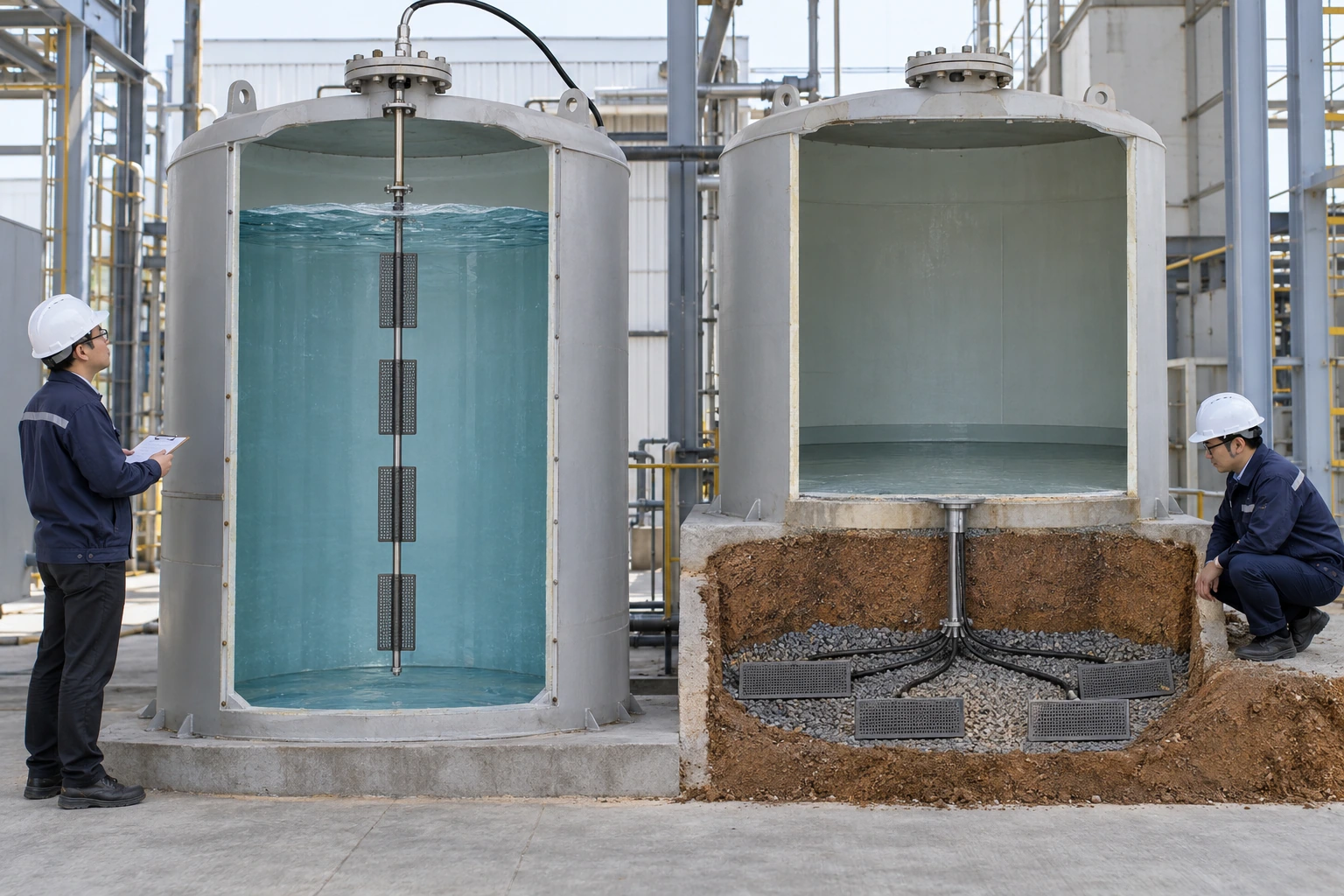
Internal water-side CP from a Titanium electrode and external bottom CP address different steel surfaces through different media. An internal survey cannot describe conditions below the foundation.
Distinguish two boundaries around one tank
A tank-bottom lining can limit internal contact at the floor, while external soil-side corrosion concerns underside surfaces. Split the inspection map by boundary. Linings, foundation, water ingress, and continuity help define each CP system's reach.
- Mark the tank floor, shell, annular region, and foundation separately.
- List current protection systems and isolation or bonding points.
| Check | Decision |
|---|---|
| Inside boundary | Liquid contacts selected steel surfaces |
| Outside boundary | Soil or foundation contacts underside steel |
An internal tank survey cannot by itself establish conditions under a buried or supported bottom. Key Takeaway: Assign separate review questions for each exposure boundary.
8. What access does a Titanium electrode need?

A tank Titanium electrode needs planned inspection access for connections, monitoring points, and any removable supports. Outage windows also shape isolation and removal planning.
Make access part of the electrode layout
Tank entry rules and outage windows can limit how teams inspect, replace, or test an internal assembly. Plan around real access before layout. Use the project quotation requirements to name entry points, lifting routes, cable penetrations, isolations, and records.
- Show entry and removal routes on the tank plan.
- Coordinate access requirements with the tank safety and maintenance teams.
| Check | Decision |
|---|---|
| Fixed assembly | Needs accessible inspection points |
| Removable assembly | Needs defined handling and reconnection interfaces |
An electrode that cannot be reached during an approved outage may complicate inspection or repair. Key Takeaway: Check layout and access with operations before finalizing supports.
9. How can a Titanium electrode tank CP trial be judged?

A Titanium electrode tank CP trial should track representative locations, water levels, circuit status, and agreed measurements. Log actual operating conditions alongside each reading.
Measure tank response at selected locations
Rectifier output alone cannot show conditions at every internal surface. Tie readings to tank locations and state. A CP engineer selects reference positions and criteria; operators log water level, contents, mixing, and interruptions.
- Map reference electrodes and measurement positions on tank drawings.
- Record operating level, contents, current status, and survey conditions.
| Check | Decision |
|---|---|
| Output trend | Tracks power-source behavior |
| Tank survey | Measures selected structure locations |
A useful trend pairs electrical records with the tank state during each reading. Key Takeaway: Agree on survey method and criteria before commissioning or troubleshooting.
10. What should a tank Titanium electrode RFQ include?
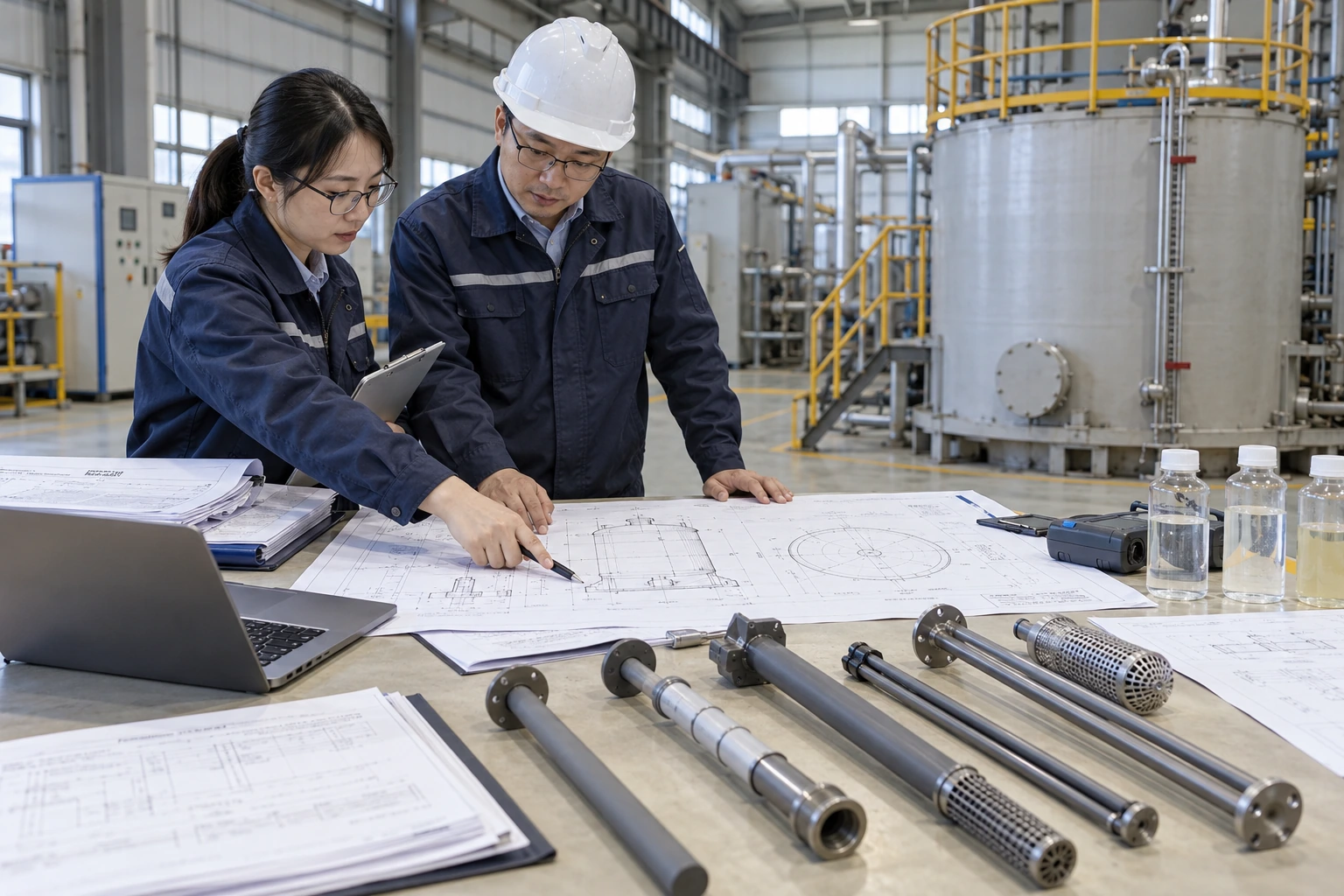
A Titanium electrode tank inquiry needs drawings, fluid data, target surfaces, level range, access details, and a CP criteria owner. Product and system responsibilities need separate confirmation.
Send tank data with the electrode request
We review custom titanium rods, tubes, mesh, plates, and assemblies from drawings or samples. Keep water-contact approval separate from material choice. contact us today with tank sections, chemistry, levels, linings, connections, and requested checks; certification requires project-specific confirmation.
- Attach as-built drawings, internal equipment layout, and target surface map.
- List contents, temperature, levels, access rules, acceptance records, and requested quantities.
| Check | Decision |
|---|---|
| Form request | States shape and connection needs |
| Tank package | Adds water and operating context |
Separating internal, external, and certification questions keeps the quote scope technically clear. Key Takeaway: Obtain owner and CP-engineer review before approving a tank electrode drawing.
Frequently Asked Questions
Can I use an internal water-tank anode for its external bottom? No assumption should connect those duties. Each side has a separate electrolyte, surface, layout, and CP design basis.
What's the best titanium electrode position inside a water tank? Position depends on tank internals, liquid levels, exposed steel, access, and current distribution. Review a coordinated tank drawing with a CP engineer.
How do I know if an electrode remains immersed during operation? Compare electrode elevation with documented minimum and maximum liquid levels, splash conditions, drain-down, and cleaning cycles.
Can I assume a titanium electrode is approved for potable water? No, obtain application-specific material and regulatory confirmation from the responsible supplier, tank owner, and authority.
How do I know if tank rectifier readings prove every surface is protected? Rectifier readings alone cannot prove protection across every tank surface. Qualified surveys, reference locations, and tank operating records support interpretation at steel.