
A Titanium electrode system cannot have free-chlorine output verified by ORP alone; ORP tracks the water's broader oxidizing and reducing balance. Pair a probe trend with a direct chlorine method at matched sample conditions. Set site rules from representative data instead of using a universal millivolt conversion.
1. What Does ORP Tell a Titanium electrode Operator?
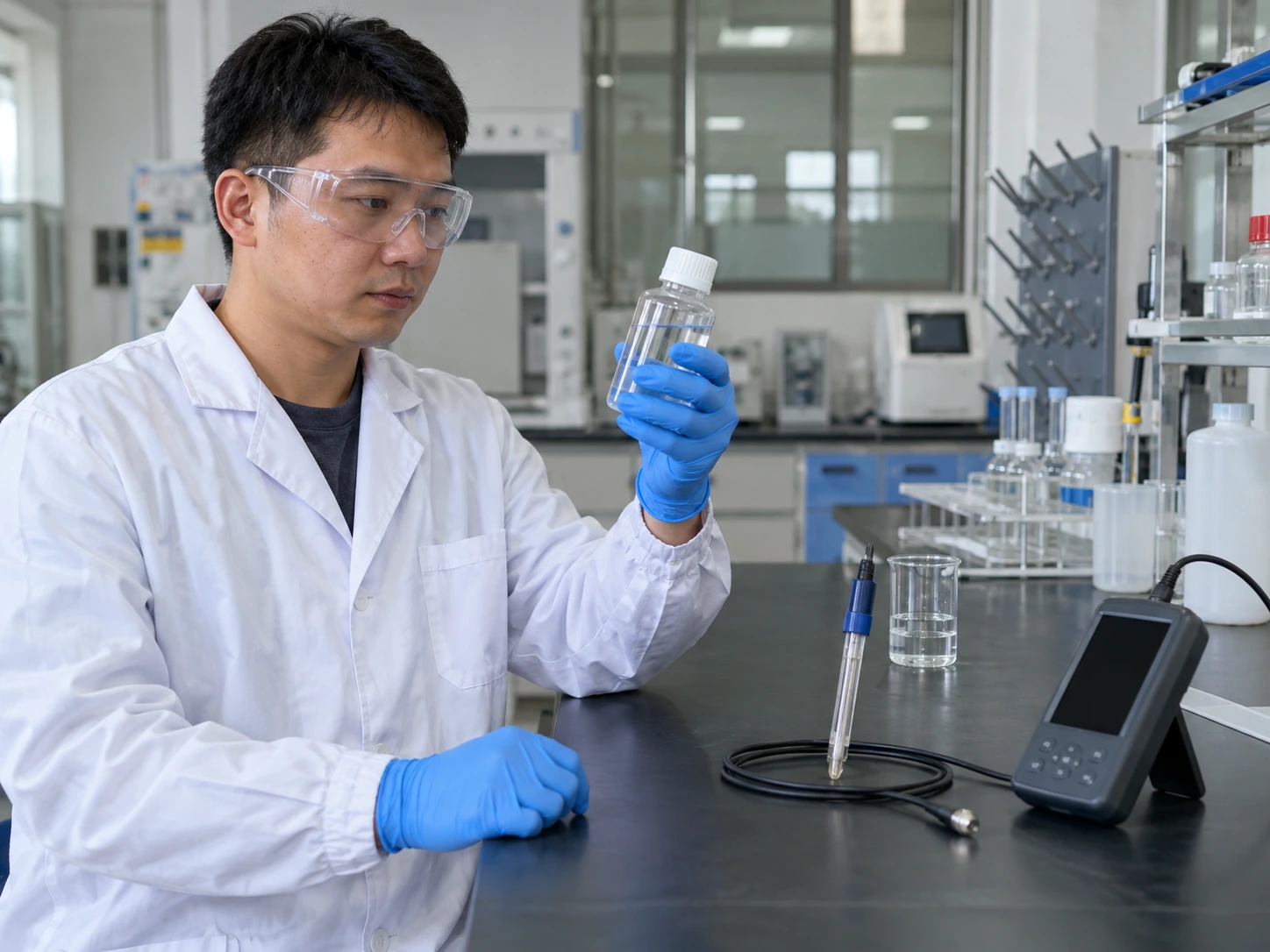
A Titanium electrode process can use ORP as a redox trend at a defined location. ORP reflects the combined tendency of substances in that sample to accept or donate electrons, so it does not isolate free chlorine by itself.
Read ORP as a redox condition
An ORP probe measures voltage between a sensing electrode and a reference system; it responds to mixed chemistry touching its sensor. Read sensor response in context each time. Oxidants and reductants affect a sample's redox response, but a probe cannot identify which species caused a shift.
- Log probe location, sample flow, temperature, pH, and operating state beside each reading.
- Use a direct chlorine method when a concentration decision or independent check is required.
| Check | Decision |
|---|---|
| ORP result | Combined redox response |
| Direct chlorine test | Selected chlorine fraction |
A high ORP value describes conditions at one probe location, not chlorine mass throughout a plant. Key Takeaway: Define the probe's job before using its signal in a dose decision.
2. How Does ORP Compare with a Titanium electrode Chlorine Test?
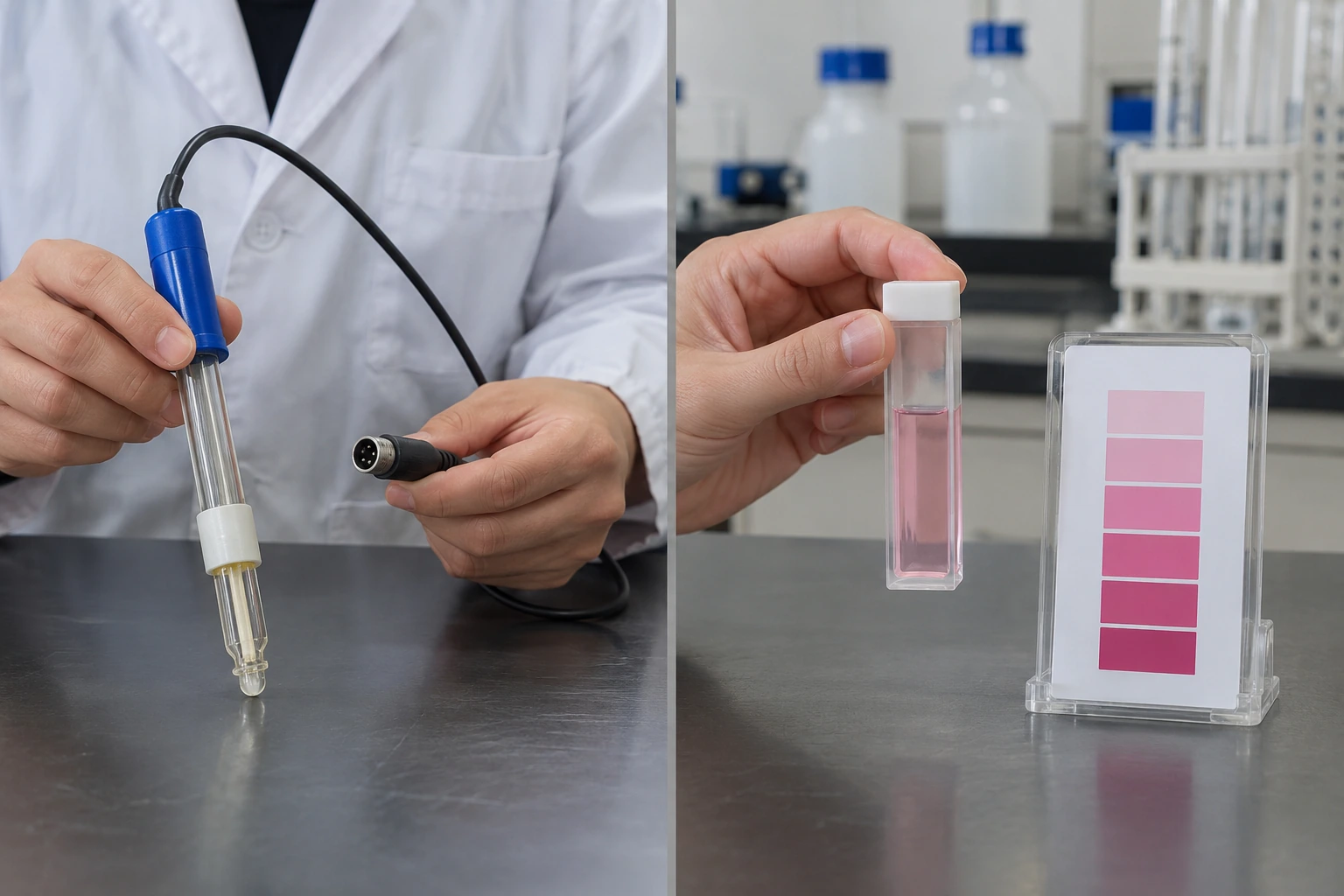
A Titanium electrode operator can use ORP for a fast trend and a direct chlorine method for concentration evidence. Each answers a different process question.
Keep signal speed and analyte meaning separate
ORP can change as water conditions shift, while a colorimetric or titrimetric method reports chlorine through its own procedure. Keep each instrument in its lane. A direct test still depends on sample, method range, reagent handling, and matrix interferences.
- Compare readings collected from the same process point and time window.
- Specify whether the target means free chlorine, total chlorine, or another measured fraction.
| Check | Decision |
|---|---|
| ORP trend | Redox changes over time |
| Direct method | Selected analyte concentration |
A rapid signal may help an operator respond, yet it cannot replace analyte-specific verification. Key Takeaway: Choose each measurement around the decision it must support.
3. Why Can a Titanium electrode ORP Shift While Chlorine Holds?
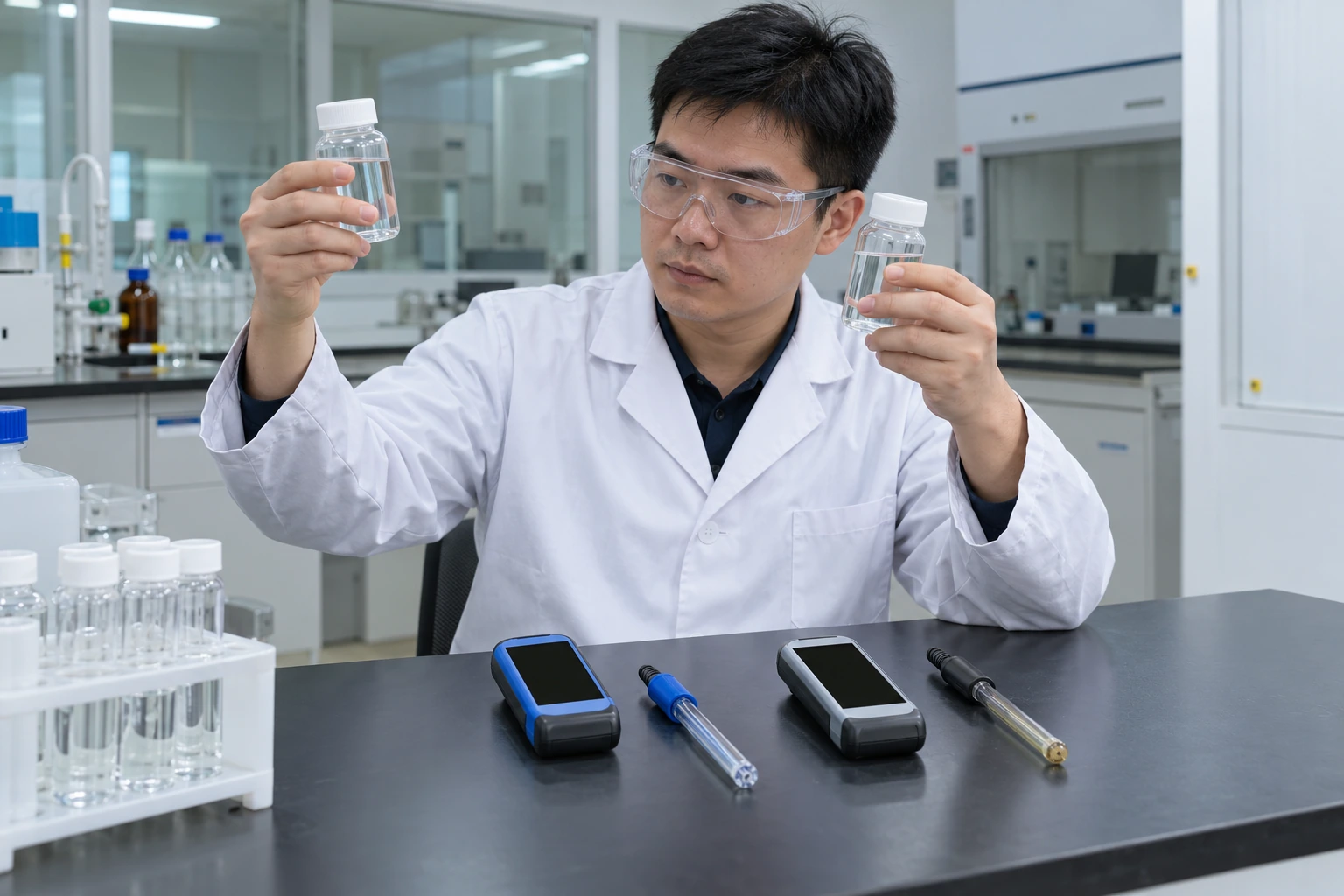
A Titanium electrode ORP value can move while a direct chlorine result stays similar because other parts of the water matrix also affect redox potential.
Look for changes beyond chlorine
A change in reducing compounds, other oxidants, sample temperature, or flow at the probe can shift ORP. Check the whole sample story. If a plant changes feed water or process timing, compare chemistry and sample conditions before attributing a voltage change to chlorine.
- Record process changes that may add oxidants, reductants, or demand compounds.
- Collect paired ORP and chlorine results before changing a response rule.
| Check | Decision |
|---|---|
| ORP shift | May reflect mixed chemistry |
| Stable chlorine test | One analyte stayed similar |
A single signal rarely identifies which chemical change drove its movement. Key Takeaway: Use paired measurements to narrow the cause of a trend shift.
4. How Does pH Affect a Titanium electrode Reading?

A Titanium electrode reading needs pH context because pH can change measured ORP response even when chlorine concentration does not move in the same direction.
Record pH beside every comparison
ORP responds to a mixture of oxidizing and reducing agents, while pH can alter its relationship with chlorine. Keep pH beside the trend. Include temperature and sample conditions before comparing readings across periods; for a custom cell review, share matrix, measurement plan, and cell drawing.
- Measure pH at a consistent point and record it with the ORP and chlorine result.
- Build any site correlation from paired samples across the expected operating range.
| Check | Decision |
|---|---|
| Without pH context | Trend may be misread |
| Matched conditions | Comparison is more useful |
A millivolt conversion built under one pH condition may not travel to another. Key Takeaway: Document the water conditions that shaped each accepted correlation.
5. What Does a Titanium electrode Sample Need Before Testing?
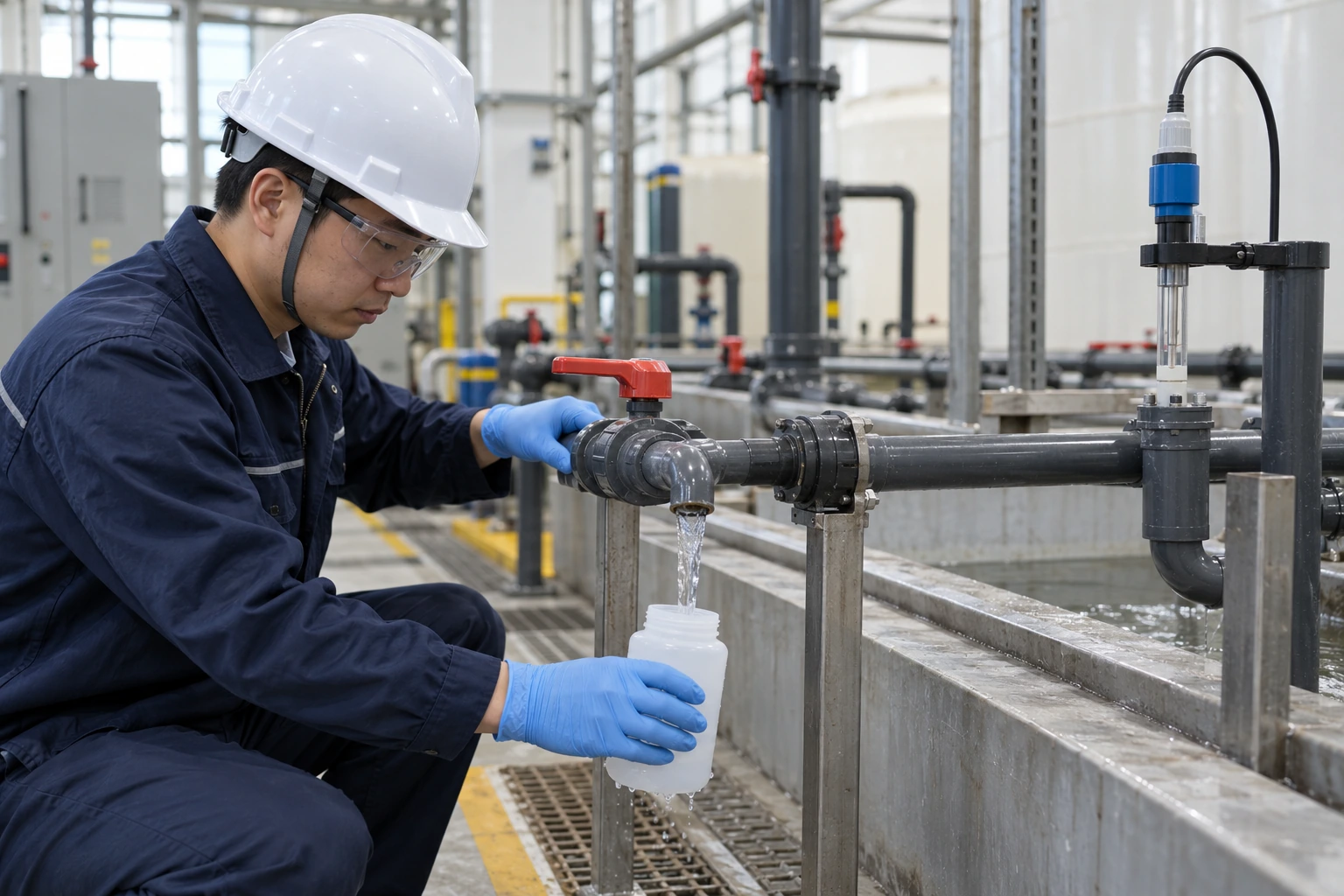
A Titanium electrode process sample should represent water reaching treatment before its result is compared with a probe.
Match location, timing, and handling
A tank sample and a flowing-line sample can differ after mixing, delay, or additional demand. Sample where the question originates for each test. Follow the chosen method's instructions for vessel cleanliness, handling, and analysis timing rather than assuming a stored grab sample mirrors live process conditions.
- Name each sampling point and explain why it represents the chosen control boundary.
- Record collection time, method, and any wait before analysis.
| Check | Decision |
|---|---|
| Probe sample | Continuous local contact |
| Grab sample | Point-in-time collection |
Location and handling can create apparent disagreement even when both instruments work as intended. Key Takeaway: Pair measurements only after aligning their sample point and time.
6. How Should DPD Results Be Matched with a Titanium electrode?
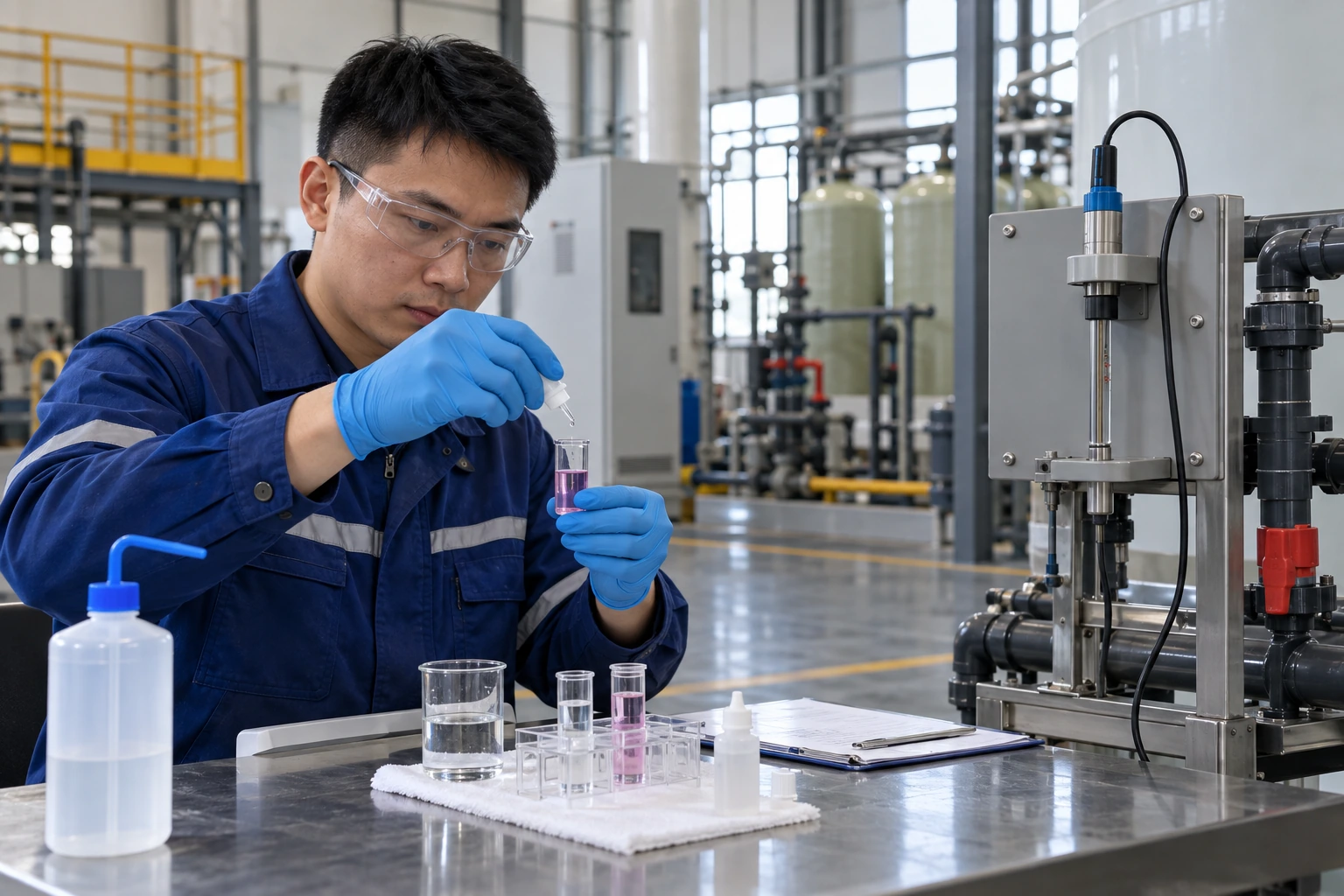
A Titanium electrode output check needs a direct method chosen for the chlorine fraction and concentration range expected at that sample point.
Match the chemistry test to its range
DPD procedures can measure free or total chlorine, but their ranges and interferences depend on the selected method and sample. Read the method before comparing numbers. A result outside its range, or a colored or turbid matrix, may need another validated analytical approach.
- Choose a method that covers the expected concentration with useful resolution.
- Keep free and total chlorine records distinct instead of combining unlike results.
| Check | Decision |
|---|---|
| Method selection | Fraction and range |
| Matrix review | Interference and sample quality |
A direct result provides stronger evidence only when its procedure fits that sample. Key Takeaway: Specify the analytical method before defining a chlorine acceptance check.
7. Where Should a Titanium electrode ORP Probe Sit?
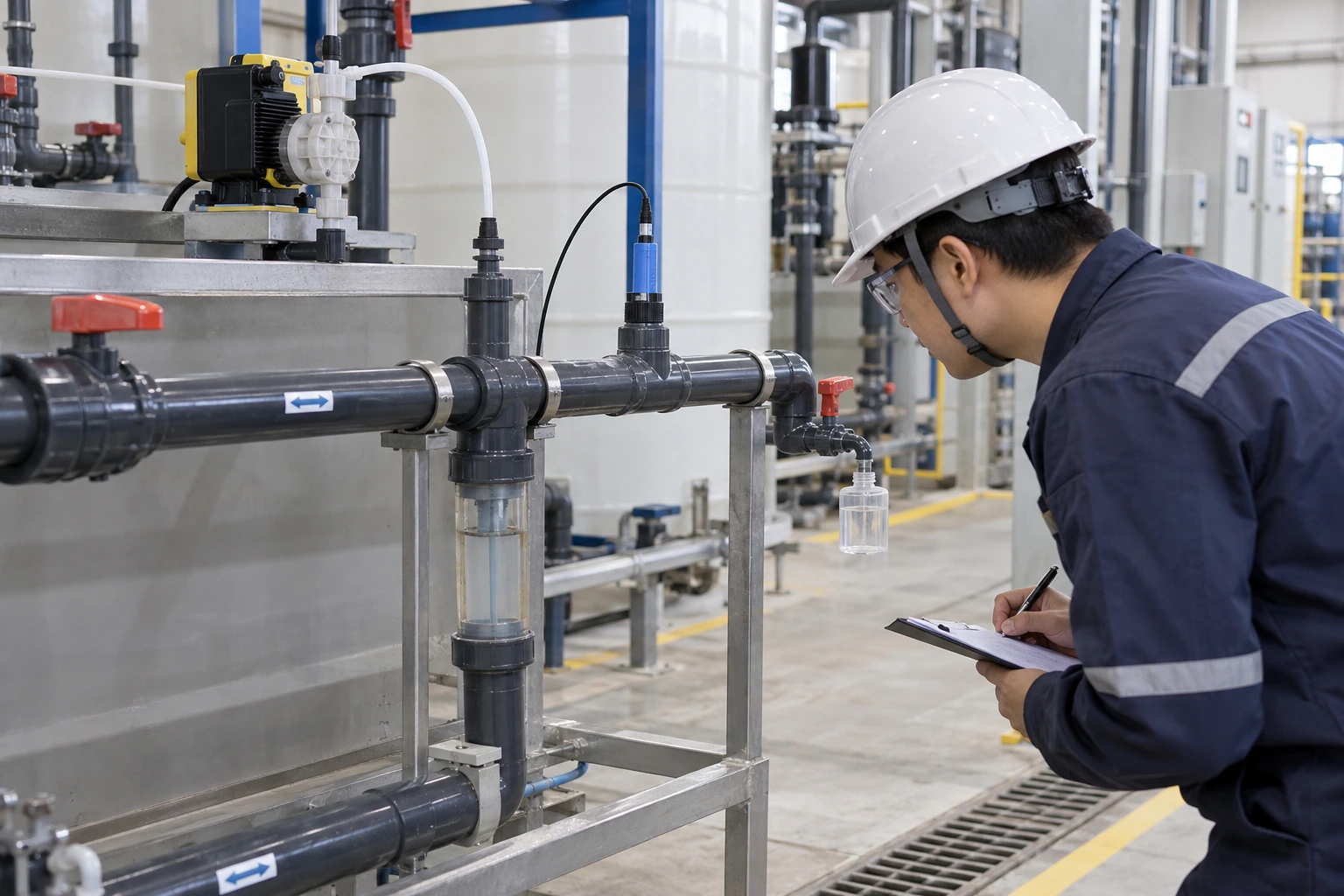
In a Titanium electrode system, place the ORP probe where its sample path aligns with process decisions. Confirm placement through a site-specific review of flow, mixing, and maintenance access.
Choose a representative probe location
Review flow, mixing, contact time, maintenance access, and possible chemical additions around the probe port. Trace the water path upstream. A sensor near an injection plume may report a local transient, while a distant point may include additional demand or dilution.
- Mark probe, injection, mixing, and sample locations on one process drawing.
- Confirm sample flow and probe access suit that location.
| Check | Decision |
|---|---|
| Near injection | May capture a local plume |
| Downstream point | May include more process demand |
Measurement location becomes part of what an ORP value means. Key Takeaway: Ask a process owner to approve probe and sample locations together.
8. How Should a Titanium electrode Trend Be Interpreted?

A Titanium electrode ORP trend becomes actionable after operators compare it with direct chlorine results under known process conditions.
Build a site-specific trend relationship
A correlation for a water-treatment duty should use paired data across representative changes in pH, flow, temperature, and demand. Let paired data set a site boundary. A narrow operating case should not become a universal conversion or transfer to another water source without review.
- Capture paired results across normal and expected changing conditions.
- Set review rules for out-of-range samples, missing data, and sensor maintenance.
| Check | Decision |
|---|---|
| Narrow data set | Local observation only |
| Representative pairs | Supports site review |
Trend value depends on the conditions included in its supporting data. Key Takeaway: Recheck the relationship when feed water or process configuration changes.
9. What Belongs in a Titanium electrode Measurement Log?

A Titanium electrode log should preserve enough context for another operator to explain both ORP trends and direct test results.
Keep the evidence beside each value
A voltage or chlorine number without location, time, pH, and test method is hard to compare later. Give every reading its context. Include relevant operating state, sample flow, instrument checks, and any unusual process event that could explain a departure from prior data.
- Record method, sample point, pH, temperature, time, and operator or instrument identifier.
- Note maintenance, reagent changes, and process events near unusual readings.
| Check | Decision |
|---|---|
| Bare value | Weak comparison record |
| Context-rich entry | Easier troubleshooting |
A disciplined log can separate water changes from measurement changes. Key Takeaway: Use one record format for paired ORP and chlorine measurements.
10. What Should Buyers Define for a Titanium electrode Test?

A Titanium electrode test specification should name the analyte, measurement method, sample boundary, and evidence needed before control behavior is agreed.
Write the measurement interface into the request
Share expected chlorine fraction, concentration span, water matrix, probe location, sample point, and control owner. Define the handoff in plain terms. For an application review, contact us today with a process sketch and current measurement plan; electrode fit alone cannot validate a chlorine-control strategy.
- Attach a process diagram showing the cell, contact volume, probe, and sample ports.
- Identify who owns method selection, data review, operating limits, and any permit criteria.
| Check | Decision |
|---|---|
| Buyer input | Analyte and process boundary |
| Review output | Product fit or evidence gap |
A component inquiry cannot establish site control performance without process and measurement evidence. Key Takeaway: Request review after defining the analyte and sample boundary.
Frequently Asked Questions
Can I convert ORP millivolts directly to free chlorine? No universal conversion applies across water matrices. A site may develop a bounded correlation from paired measurements under documented conditions.
What's the best test to verify chlorine output? A suitable method matches chlorine fraction, expected concentration, sample matrix, and decision. Select a validated direct method with suitable range and handling.
How do I know if an ORP shift means chlorine changed? Compare a direct chlorine result from a matched point and time, then review pH, temperature, flow, and other oxidants or reductants.
Can I use ORP for electrochlorination process control? Yes, when a site validates its trend relationship and operating limits. ORP remains a redox signal rather than a chlorine-specific concentration test.
How do I know if a DPD method fits my sample? Check its analyte, range, matrix interferences, and collection procedure against your process sample before using results for acceptance or control.