
A Titanium electrode cable seal should be specified around a defined wet boundary, conductor layout, mechanical load, and verification plan. A generic waterproof label leaves questions about chemistry, cable motion, insulation, and test scope. Draw a full section from active electrode through cable entry to dry terminal. Confirm the supplier's sealing scope for that exact assembly.
1. Why does Titanium electrode cable sealing matter?
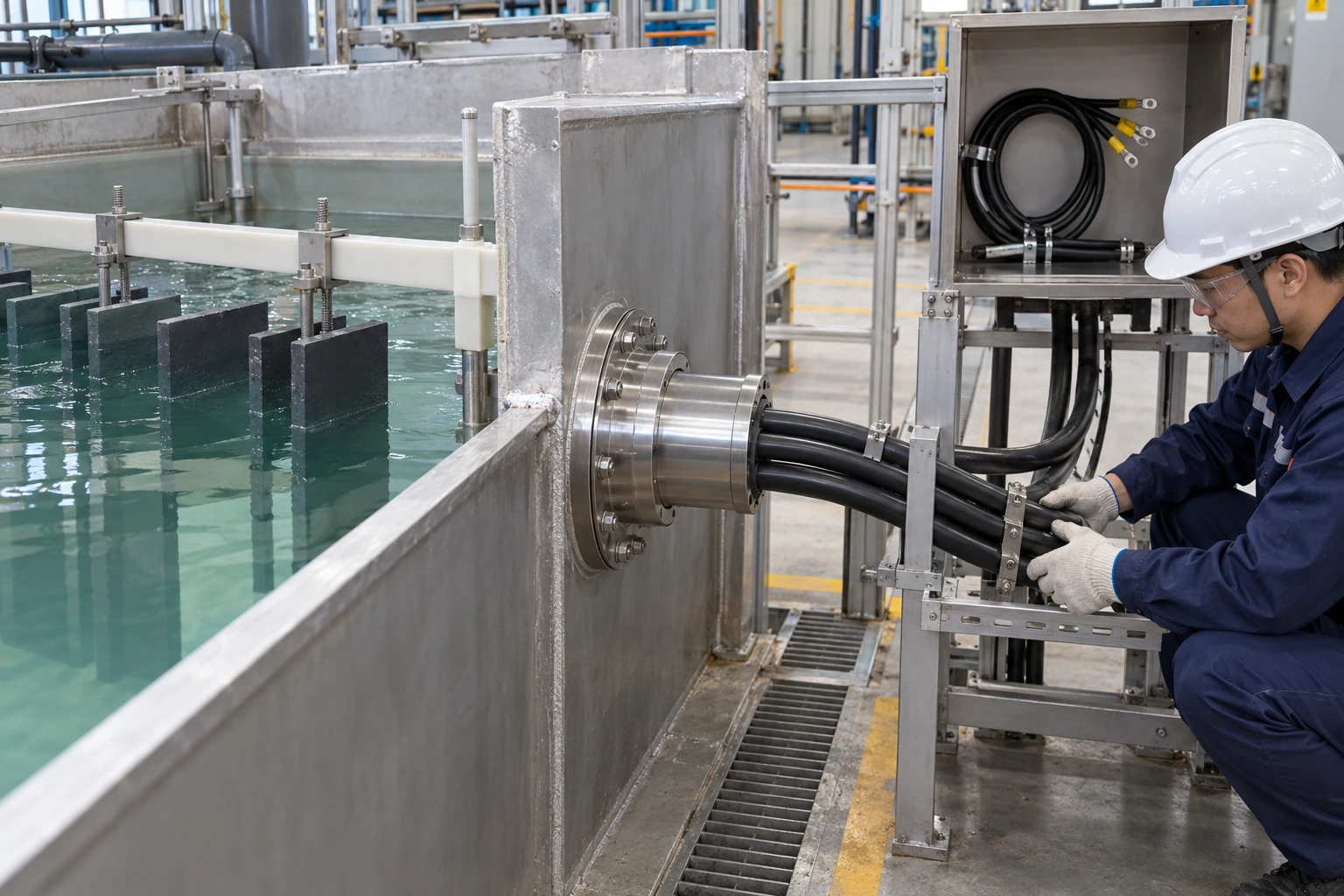
A Titanium electrode cable seal must control a defined wet-to-dry interface while preserving electrical insulation and mechanical support.
Treat sealing as an interface, not a label
A cable transition may sit in liquid, splash, vapor, soil, or dry enclosure, each with distinct exposure conditions. Draw wet and dry boundaries. Show liquid contact, conductor insulation, and any cable span carrying strain.
- Identify each wet, splash, vapor, and dry zone.
- Show cable entry, conductor exposure, and enclosure connection on one section.
| Check | Decision |
|---|---|
| Exposure boundary | Defines where sealing must act |
| Electrical boundary | Defines conductor and insulation separation |
A seal specification without a physical boundary can produce incompatible assumptions across buyer and supplier. Key Takeaway: Start the RFQ with a section drawing that shows every exposure zone.
2. Where does a Titanium electrode cable cross wet boundaries?
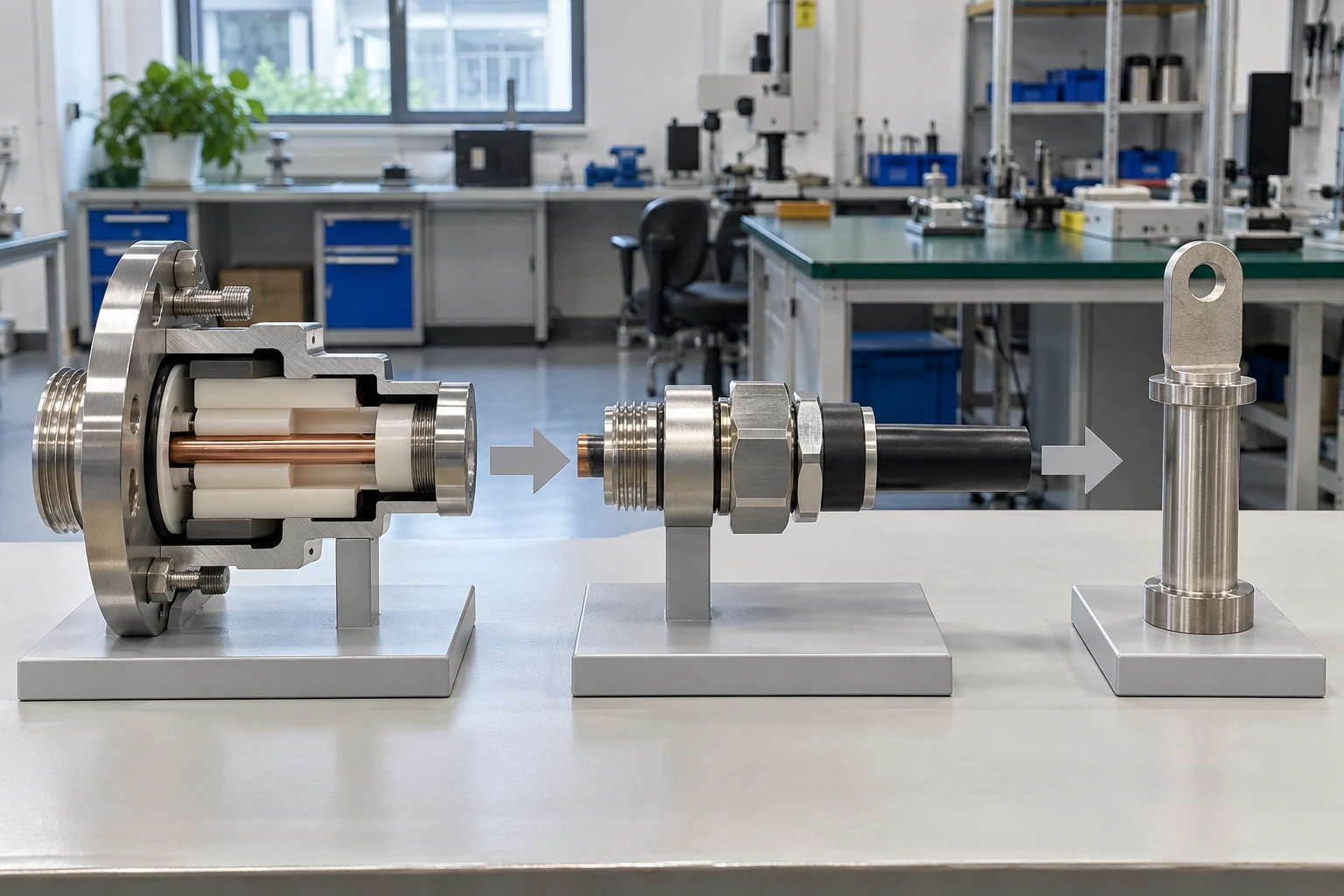
A Titanium electrode cable exit should match liquid levels, splash zones, and maintenance access around its vessel or enclosure.
Locate each cable crossing on a drawing
Cable routes can cross tank walls, junction boxes, submerged joints, or protective housings. Mark each wet exposure zone. Add filling cycles, washdown, condensation, immersion, and planned access; name which seal component forms each boundary.
- Show cable entry elevation against operating and upset liquid levels.
- Mark cable support, enclosure wall thickness, and service access.
| Check | Decision |
|---|---|
| Above liquid | May see splash or condensation |
| Below liquid | Needs an explicitly defined immersion boundary |
The cable path can change exposure even when electrode geometry remains fixed. Key Takeaway: Use operating and maintenance drawings to select entry location.
3. How should a Titanium electrode cable gain strain relief?
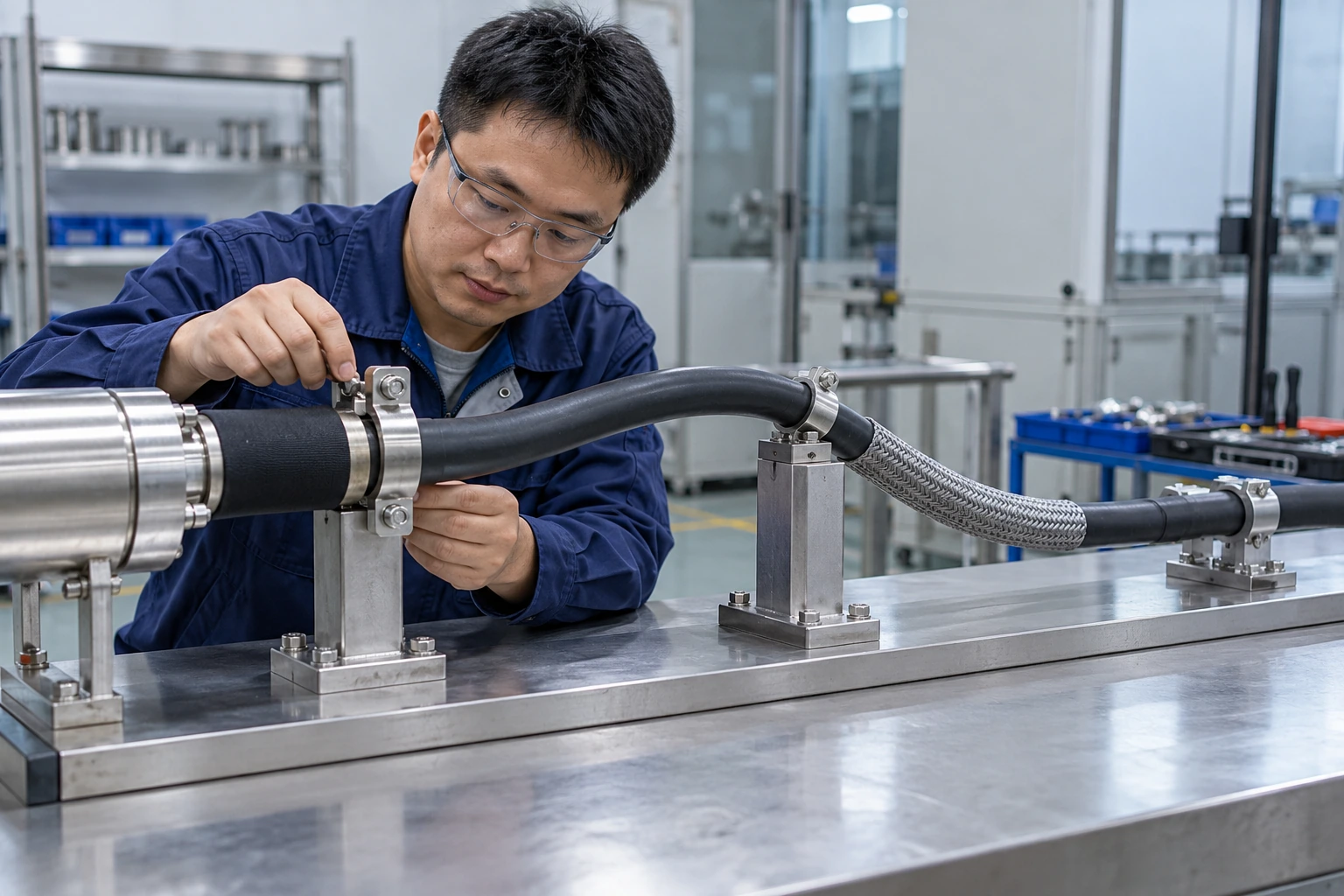
Strain relief protects a Titanium electrode cable joint by directing pull, bending, vibration, and handling loads into a suitable support.
Define loads around the cable transition
A seal can resist liquid while an unsupported cable transfers load into its terminal or electrode joint. Show each support and load direction. Specify movement, bend clearance, pull direction, and nearby clamps.
- State fixed or moving service and any expected handling.
- Mark bend route, support point, pull direction, and cable entry orientation.
| Check | Decision |
|---|---|
| Supported route | Transfers load into a defined structure |
| Free cable span | Can load the seal or conductor joint |
Mechanical support and liquid sealing solve related but separate interface problems. Key Takeaway: Review strain relief and seal geometry together on the same assembly drawing.
4. What insulation must a Titanium electrode assembly provide?

Insulation boundaries in a Titanium electrode assembly depend on conductor count, exposed metal, voltage, and wet-zone geometry.
Separate conductors from wetted metal
A cable drawing should distinguish active conductor, return path, exposed substrate, and any insulated transition. Compare the available forms: match the electrode product range with your interface. Confirm cable count, conductor material, connection method, insulation boundaries, and which surfaces are intended to contact electrolyte.
- List conductor material, size, termination, and polarity.
- Mark exposed and insulated areas across each wet boundary.
| Check | Decision |
|---|---|
| Intended exposure | Shows surfaces designed for electrolyte contact |
| Insulated region | Separates conductors or protected surfaces |
A circuit diagram can prevent an exposed conductor from being mistaken for an active surface. Key Takeaway: Ask the engineer to approve polarity and insulation boundaries before fabrication.
5. Which seal materials suit a Titanium electrode interface?

Seal materials for a Titanium electrode interface require review against liquid chemistry, temperature, cleaning exposure, and service cycle.
Review chemistry against every seal component
A seal may include elastomers, potting, cable jackets, adhesives, and feedthrough parts. List each wetted component, because compatibility depends on actual media and exposure. A generic material name cannot prove suitability for unreported service.
- Provide process fluid, contaminants, cleaning agents, and temperature range.
- Identify sealant, jacket, gasket, potting, and substrate materials when known.
| Check | Decision |
|---|---|
| Named material | Starts a compatibility review |
| Operating profile | Shows chemistry and exposure duration |
Each component at a liquid boundary can age differently under one process condition. Key Takeaway: Request written confirmation for the complete material stack and operating profile.
6. How can water ingress affect a Titanium electrode cable?
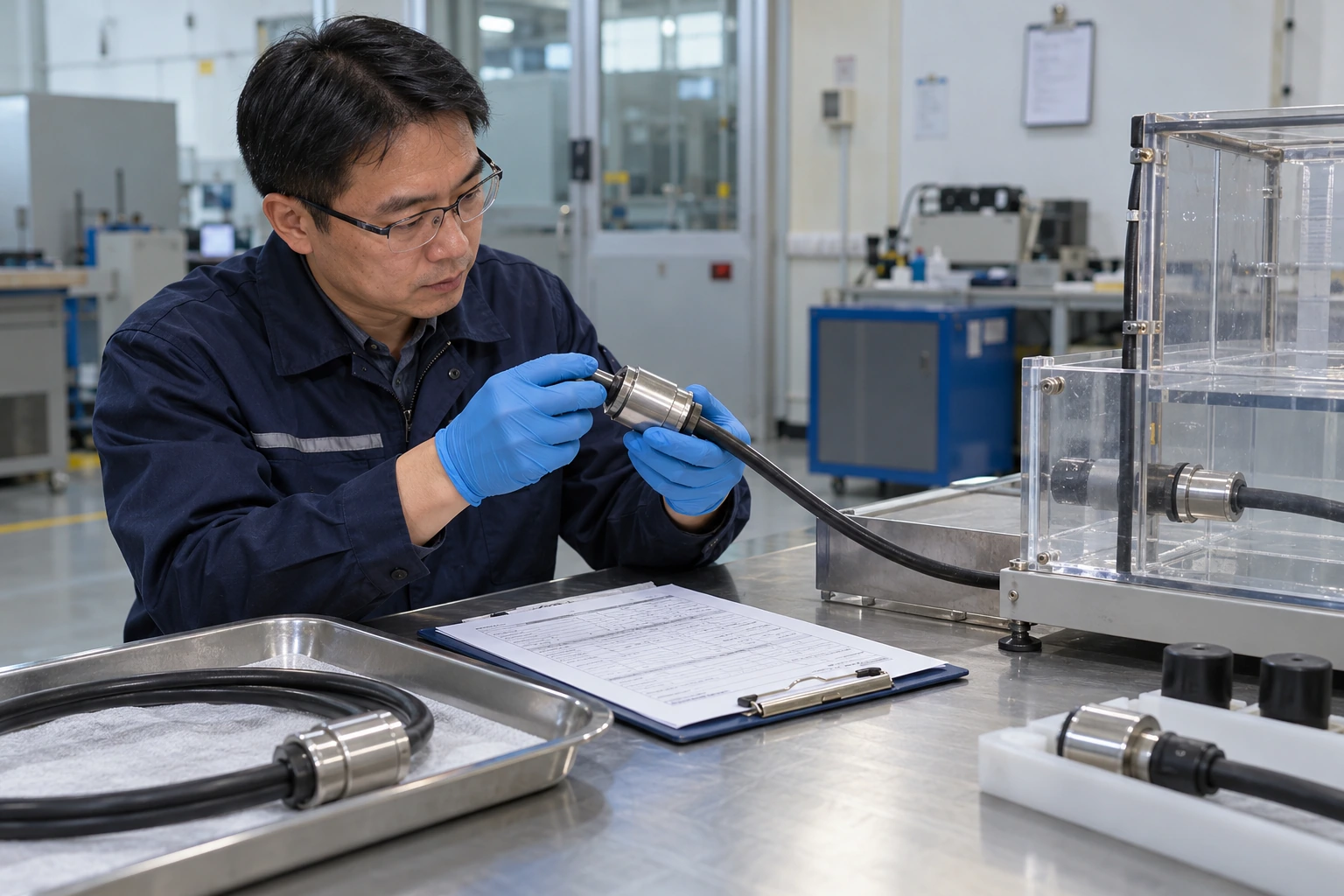
Water ingress can expose a Titanium electrode cable conductor or joint, creating leakage or corrosion paths that undermine operation. Its effects depend on the actual assembly and exposure.
Ask what the test actually demonstrates
A visual check, insulation measurement, continuity reading, and ingress test answer different questions. Name the evidence and test boundary, then specify standard edition and scope when an IP classification applies. An enclosure-protection classification applies only within its stated test scope; it does not certify a complete electrode installation.
- Identify sample state, exposure direction, and acceptance method.
- Record cable type, seal configuration, test date, and inspection results.
| Check | Decision |
|---|---|
| Electrical check | Assesses defined continuity or insulation behavior |
| Ingress check | Assesses an enclosure under a stated method |
A pass result has limited value when its test boundary differs from the installed interface. Key Takeaway: Agree on test methods and acceptance criteria before a sample is prepared.
7. Which checks verify a Titanium electrode cable seal?
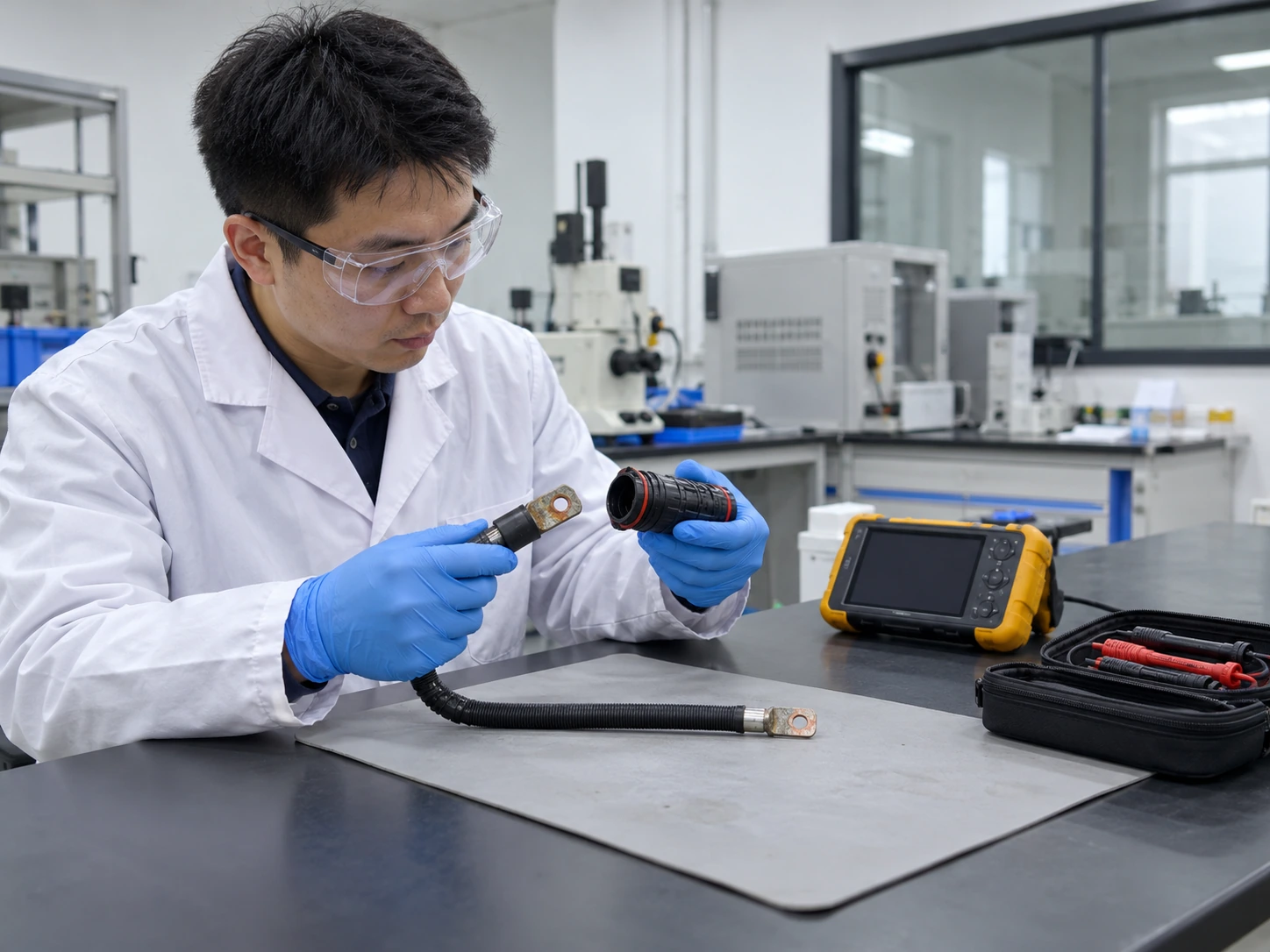
A Titanium electrode cable-seal review should pair mechanical inspection with electrical checks and any agreed ingress test.
Build checks around failure paths
Inspection should consider loose terminations, damaged jackets, blocked seal paths, exposed conductors, and strain on feedthroughs. Connect each check with a risk. Select test methods under the project quality plan and document which assembly features each method can assess.
- Review termination, seal condition, strain support, and visible jacket damage.
- Separate continuity, insulation, and liquid-ingress results in the record.
| Check | Decision |
|---|---|
| Visual review | Finds visible assembly defects |
| Electrical and ingress checks | Address separate functional questions |
No single test establishes every mechanical, electrical, and chemical property. Key Takeaway: Use a test matrix that links each requirement to a method and record.
8. What should a Titanium electrode drawing specify?

A Titanium electrode cable drawing should name seal ownership, boundary location, conductor route, and requested verification evidence.
Specify responsibility with the physical detail
Purchasing language should state whether cable sealing occurs at a factory, on site, or through another approved party. Assign owners explicitly: use the project quotation requirements, then list cable route, wet boundary, strain, materials, sample setup, and test record. Factory sealing remains subject to confirmation.
- Assign design, fabrication, installation, and inspection responsibilities.
- State whether any supplier sealing step is required or still pending confirmation.
| Check | Decision |
|---|---|
| Factory work | Requires explicit scope and evidence |
| Site work | Needs installer method and acceptance record |
An interface can fall between suppliers when responsibility appears only in a general note. Key Takeaway: Name each owner in the drawing and purchase specification.
9. How should factory sealing for Titanium electrodes be confirmed?

A sample of a Titanium electrode cable seal can verify fit and one test objective under documented assembly conditions.
Use a sample to close one stated question
A representative sample should match cable diameter, seal materials, enclosure wall, and installation method. Keep sample configuration records traceable. Record changes between samples and repeat review when chemistry, cable route, or exposure changes.
- Photograph the sample before and after testing.
- Log materials, dimensions, assembly method, and any deviations.
| Check | Decision |
|---|---|
| Fit sample | Checks geometry and assembly access |
| Test sample | Checks one agreed functional question |
A small sample cannot represent untested cable variants or field-installed joints. Key Takeaway: Approve only variants covered by the sample record and test scope.
10. What belongs in a Titanium electrode cable-seal RFQ?

A cable-seal RFQ for a Titanium electrode needs conductor data, exposure, chemistry, strain conditions, test methods, and confirmed work scope. Confirmed ownership prevents duties from falling between suppliers.
Send the boundary package with your cable question
We review custom titanium electrodes and assemblies from drawings or samples, while factory cable sealing requires confirmation for each design. Keep sealing scope bounded in writing. contact us today with a section drawing, cable details, liquid profile, movement, connections, sample plan, and acceptance evidence.
- Attach a dimensioned interface drawing and conductor schedule.
- List service conditions, required tests, quantity, and sealing responsibility.
| Check | Decision |
|---|---|
| Cable data | Defines conductor and jacket details |
| Interface package | Adds exposure, support, and test scope |
A complete boundary description makes sealing capability and evidence gaps visible before order placement. Key Takeaway: Get written confirmation of factory sealing scope before approving a purchase order.
Frequently Asked Questions
Can I specify a cable seal only by an IP rating? An IP code describes enclosure protection under a defined standard. Include cable, chemistry, strain, boundary, and sample details for the full assembly review.
What's the best seal material for a titanium electrode cable? There is no universal material. Review every wetted seal, jacket, adhesive, and feedthrough against actual chemistry, temperature, and service cycles.
How do I know if water reached a cable termination? Use an agreed inspection and test plan that separates visual condition, electrical checks, and any ingress test, with locations and configuration recorded.
Can I assume ARY provides factory cable sealing as standard? Factory sealing is subject to confirmation for the requested assembly. Send cable, exposure, chemistry, support, and test details for scope review.
How do I know if one seal sample covers several cable types? Only variants covered by an agreed qualification plan can rely on that evidence. Changes in diameter, material, installation, or exposure may need separate review.