
A Titanium electrode CP form should follow the required current distribution, electrolyte, structure geometry, and connection plan. Rod, tube, plate, and expanded mesh present different active surfaces and supports, while wire or ribbon requests need separate availability confirmation. Compare each concept against the engineered layout, coating duty, inspection access, and acceptance plan before specifying a shape.
1. Which Titanium electrode forms suit a CP layout?
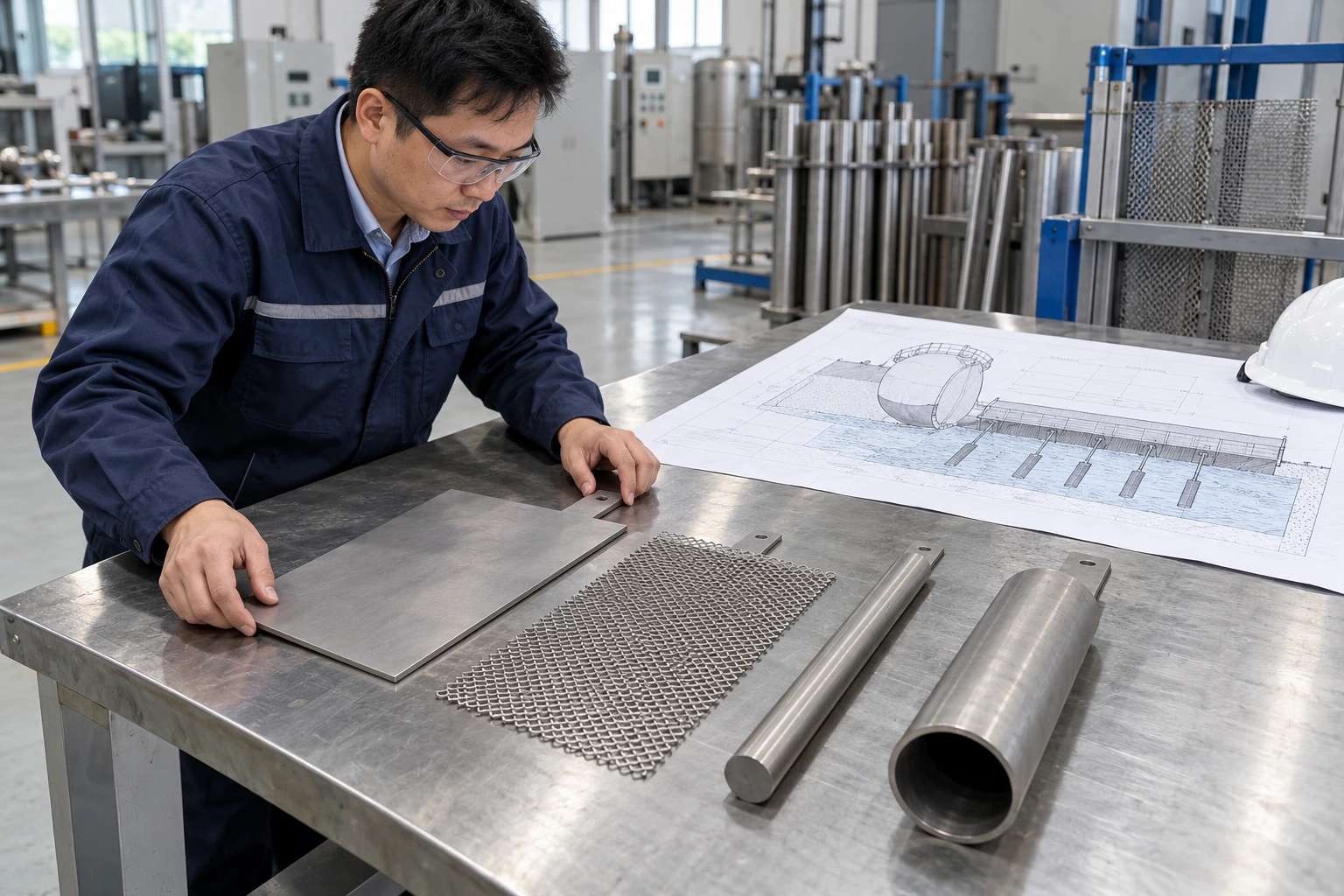
A Titanium electrode CP form should follow current distribution, electrolyte exposure, mounting, and access within a designed protection system. Layout sets electrode duty before shape selection.
Choose geometry from the system layout
A rod, tube, plate, mesh, or custom assembly offers a different relationship between active surface and protected steel. Begin with actual electrode placement. A CP designer sets current demand and layout; product review then addresses form, coating, dimensions, connections, and support.
- Show anode position relative to every target steel surface.
- List electrolyte, current basis, support points, and inspection access.
| Check | Decision |
|---|---|
| System layout | Defines where current must travel |
| Electrode form | Defines active surface and mounting envelope |
A familiar shape can still misfit a structure when placement and boundaries differ. Key Takeaway: Approve a layout concept before requesting final electrode dimensions.
2. How do Titanium electrode forms compare in a CP layout?
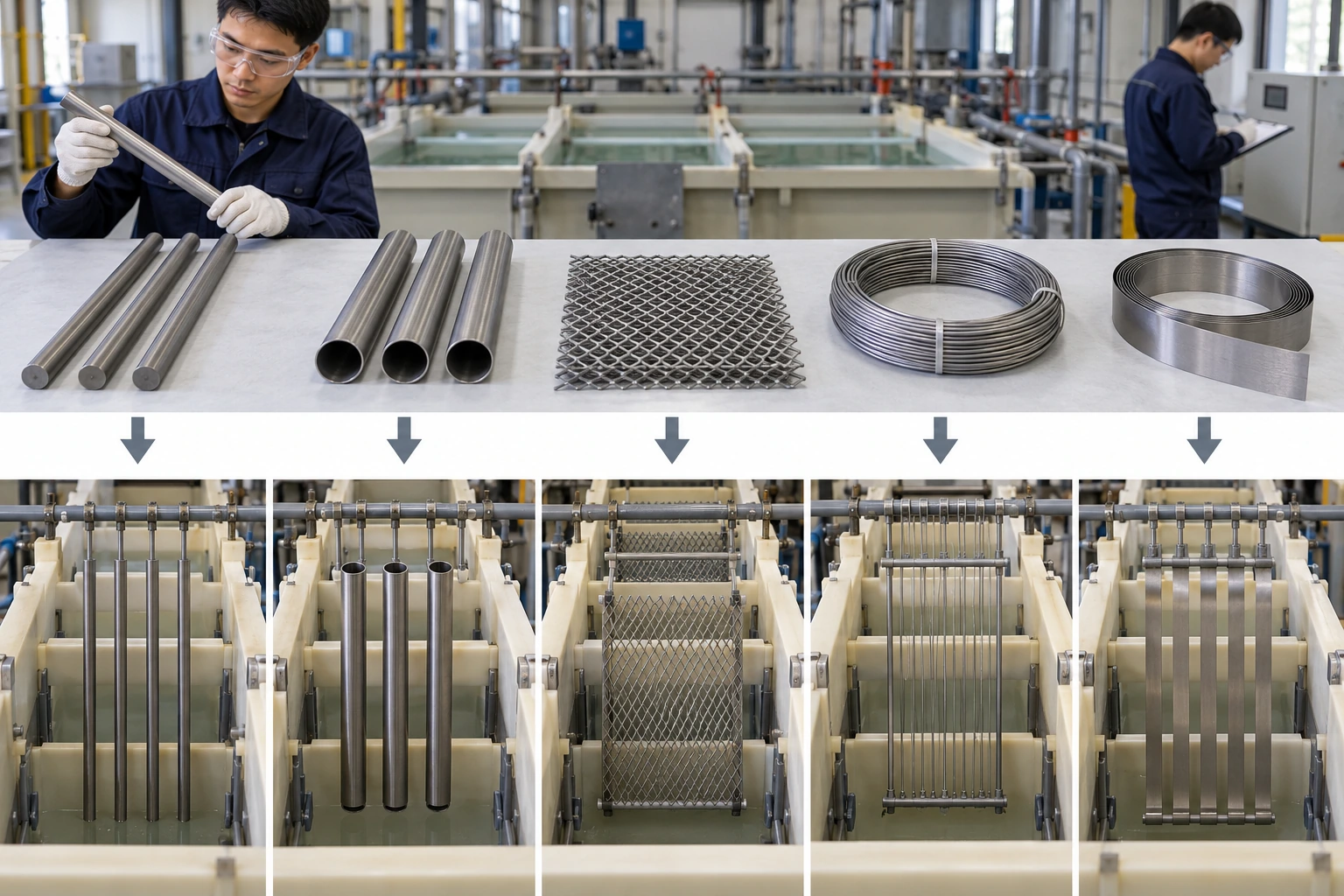
Rod, tube, mesh, wire, and ribbon concepts differ in spacing, support, current paths, and availability for a Titanium electrode CP layout. Project geometry determines which form fits each duty.
Compare forms against boundaries, not labels
A qualitative comparison helps teams discuss access and mounting without implying one geometry always performs better. Use one design basis, then compare active faces, spacing, feeds, supports, electrolyte boundary, and inspection access. Wire and ribbon requests remain concepts until supply scope is confirmed.
- Use one structure drawing for each candidate form.
- Mark whether each concept is listed, custom, or pending supplier confirmation.
| Check | Decision |
|---|---|
| Rod or tube | Provides a linear profile for a reviewed location |
| Mesh or plate | Provides broader distributed surfaces when designed |
Form selection depends on the complete current path and mounting conditions. Key Takeaway: Ask the designer to compare concepts using identical duty assumptions.
3. When might Titanium electrode rods or tubes fit?
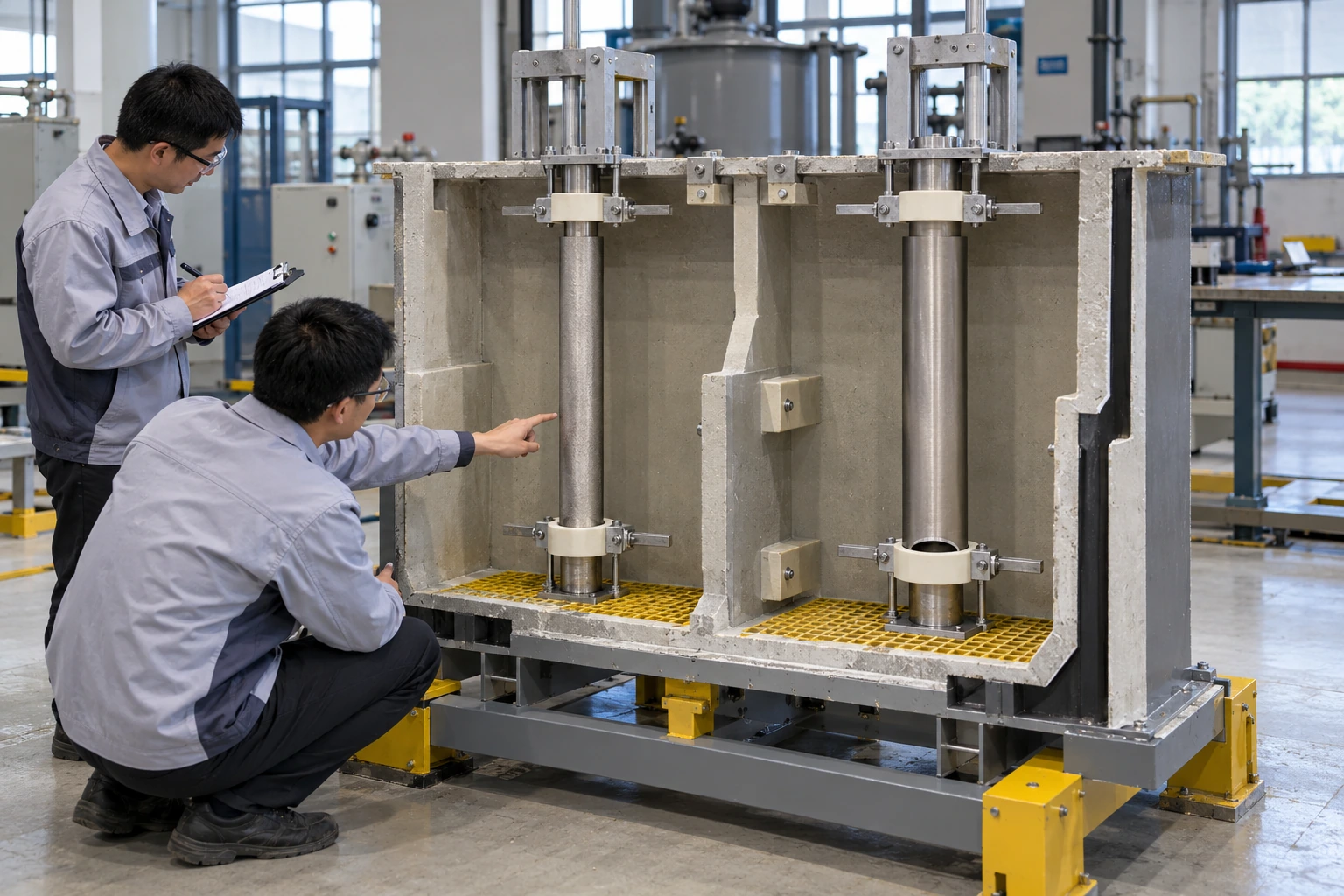
Rods or tubes can fit a linear layout when a Titanium electrode has suitable supports, electrolyte, coating, and connections. Support conditions and terminal access shape final dimensions.
Assess linear forms with their support scheme
A rod or tube can fit a narrow envelope, yet unsupported spans, bends, joints, and feeds shape its assembly. Trace each mount and support. Review clearances and active length on a structure drawing rather than choosing by diameter alone.
- Show support spacing, end conditions, and mounting orientation.
- Identify joints, cable feeds, exposed lengths, and access for inspection.
| Check | Decision |
|---|---|
| Rod concept | Fits a slender solid profile |
| Tube concept | Adds a hollow section requiring end-detail review |
Linear form affects support and connection details as much as anode placement. Key Takeaway: Check mechanical envelope and electrical feeds together.
4. Where can a Titanium electrode mesh fit?
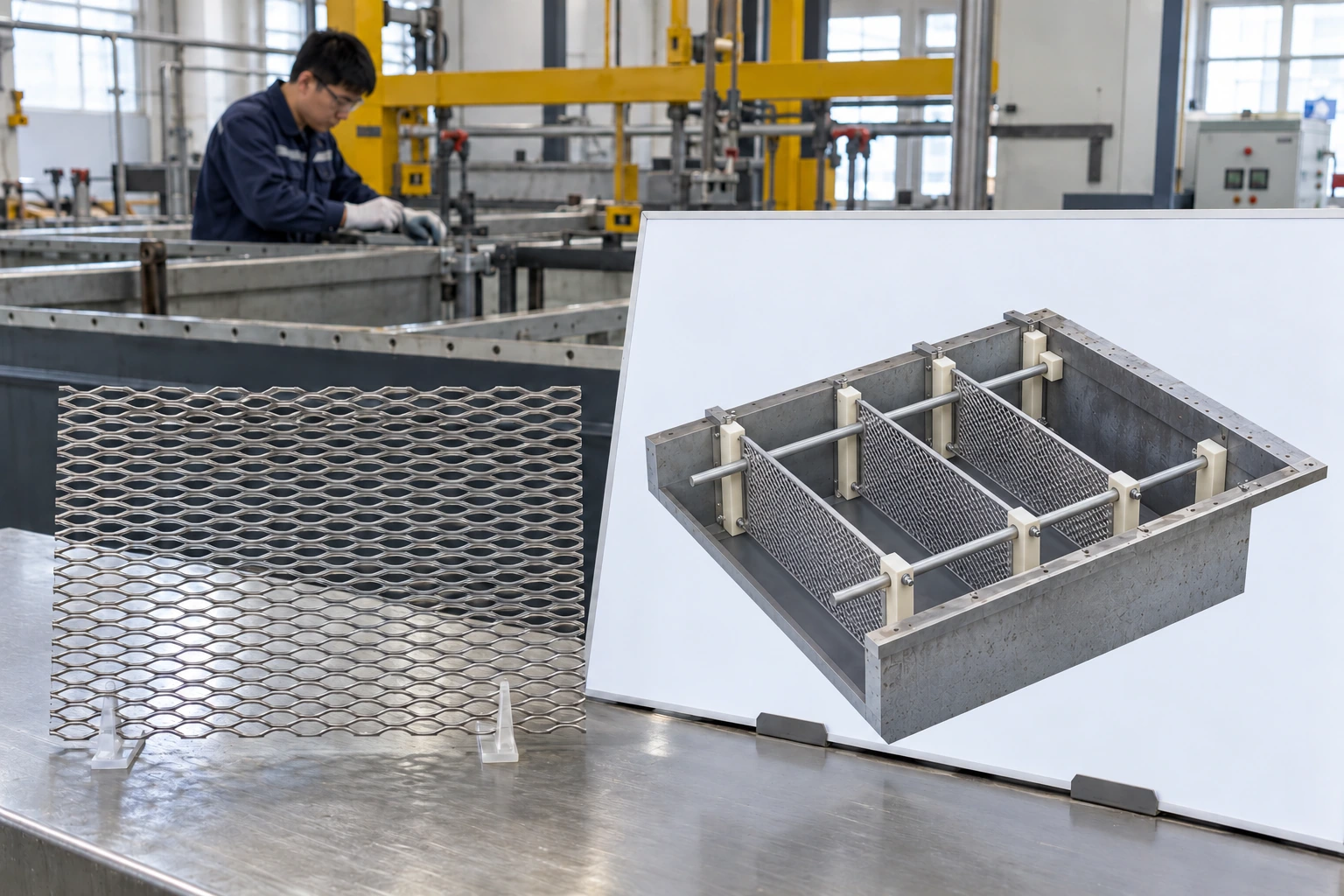
A Titanium electrode expanded mesh can distribute active surface across a broader structure when supports and electrical joints suit the project. Panel seams and feeds need separate drawing details.
Review mesh coverage and connection points
Expanded mesh can be shaped around a planned area, but seams, feeds, and attachment points set its practical layout. Check the proposed form: compare the electrode product range with your drawing. Specify active zones, joints, coating exposure, and whether mesh sits in soil, water, or concrete.
- Dimension panels, edges, overlaps, and feed locations.
- Show electrolyte boundary and attachment method on each section.
| Check | Decision |
|---|---|
| Broad panel | Covers a defined surface area |
| Narrow strip | Needs separate support and current-feed review |
A mesh outline does not define electrical continuity across seams or supports. Key Takeaway: Set panel connections and quality checks before finalizing fabrication drawings.
5. How should Titanium electrode wire and ribbon be qualified?

Wire or ribbon requests for a Titanium electrode need project review because these forms are not listed as standard ARY supply. Confirm availability and geometry together.
Treat unlisted forms as engineering concepts
A requested wire or ribbon may add coating, tension, joining, handling, and termination questions. Confirm availability before design freeze. ARY lists custom plate, expanded mesh, rods, tubes, and assemblies; unlisted shapes need written confirmation.
- Label wire and ribbon as requested concepts until confirmed.
- Provide cross-section, coating duty, tension or support, and connection requirements.
| Check | Decision |
|---|---|
| Listed custom forms | Still require drawing and duty review |
| Unlisted concepts | Need availability and feasibility confirmation |
A familiar shape from another project does not establish current supplier capability. Key Takeaway: Ask for written scope confirmation before designing around wire or ribbon.
6. What should a Titanium electrode assembly drawing show?

A Titanium electrode assembly drawing should distinguish titanium substrate, active coating, electrical feed, support, and insulated boundary.
Make the assembly interfaces visible
A shape sketch can hide whether an active surface remains exposed or how a connection reaches it. Show the complete assembly and interfaces. Include substrate, approved coating designation, joints, mounting hardware, cable route, clearances, and non-active surfaces.
- Dimension functional interfaces from shared drawing datums.
- Label active faces, masked zones, feeds, supports, and inspection access.
| Check | Decision |
|---|---|
| Product outline | Shows outer shape and dimensions |
| Assembly view | Shows joints, feeds, and supports |
Reviewing the assembly prevents a standalone component from being confused with a complete system. Key Takeaway: Release a coordinated assembly drawing for technical review before order.
7. How do Titanium electrode coating and substrate match CP?

Coating and titanium substrate for a Titanium electrode form must suit reaction, electrolyte, current conditions, and expected exposure.
Match surface chemistry with the intended anode role
A coating family cannot be selected from geometry alone. State the full operating window. Give normal and upset chemistry, temperature, current, shutdown exposure, and interfaces for a coating and substrate review.
- Identify electrolyte composition and meaningful contaminants.
- Describe startup, idle, cleaning, and shutdown exposure.
| Check | Decision |
|---|---|
| Coating family | Links catalytic surface with electrochemical duty |
| Substrate geometry | Sets active area, supports, and connection access |
Material suitability depends on operating conditions as much as form factor. Key Takeaway: Obtain written coating and substrate review against the stated duty.
8. Which tests support a Titanium electrode CP layout?

A Titanium electrode form review should define product checks separately from system measurements and protection criteria.
Build evidence around the selected geometry
Inspection can confirm dimensions, material identity, coating records, connections, and assembly condition. Separate product checks from field measurements. Use the project quotation requirements to assign product checks; field data assess selected structure locations.
- List drawing checks, material records, and agreed coating evidence.
- Assign field measurements to the CP engineer and site team.
| Check | Decision |
|---|---|
| Supplier checks | Assess the delivered electrode assembly |
| Field checks | Assess selected structure locations |
A delivery inspection cannot prove that current reaches every surface in service. Key Takeaway: Attach separate acceptance criteria for product and installed system.
9. How does access shape Titanium electrode form selection?
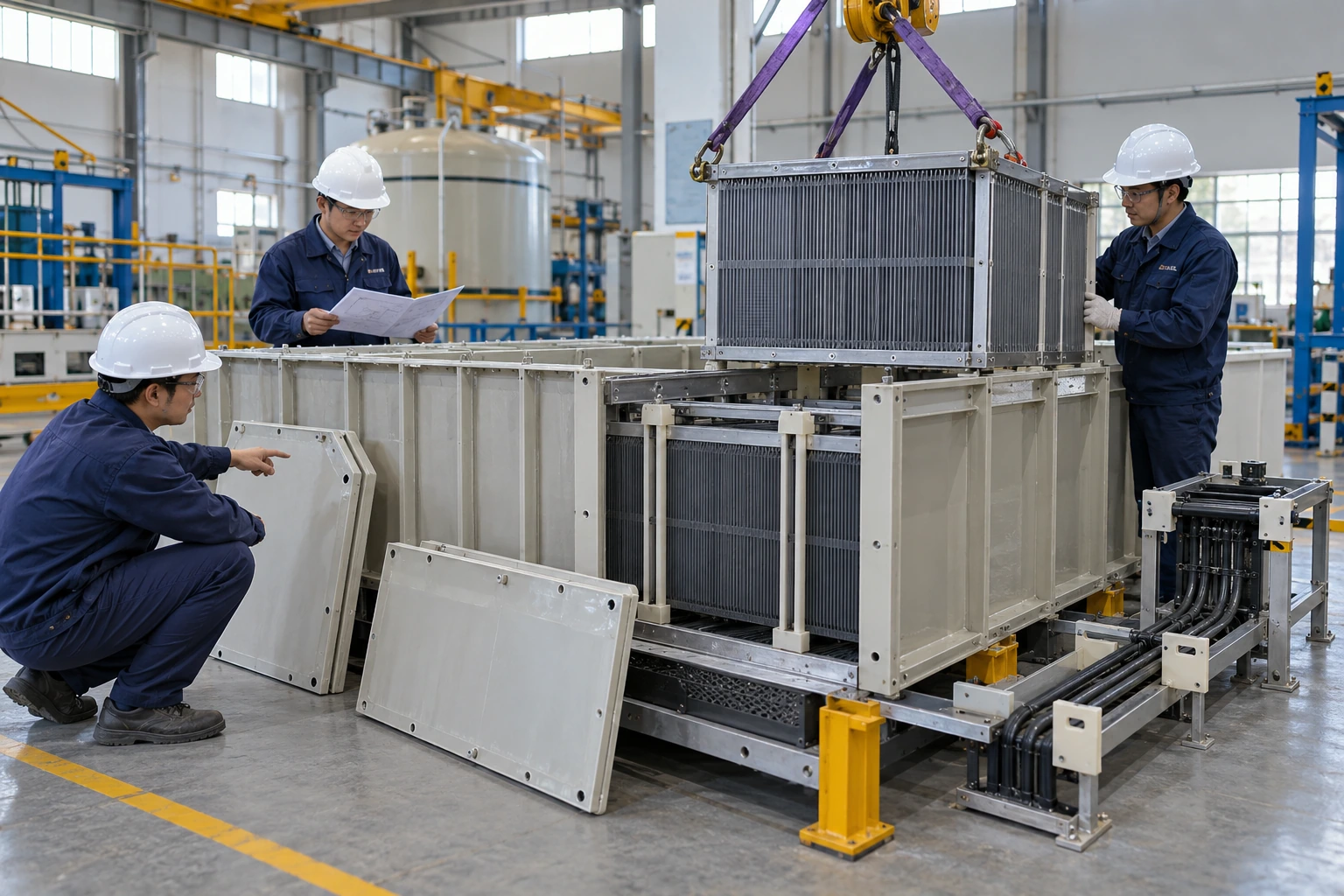
Access, removal route, and replacement method can favor one Titanium electrode assembly envelope over another. Plan support removal before surrounding equipment blocks reach.
Include maintenance in the form decision
An electrode may fit during installation yet remain hard to inspect or remove later. Check the full service route. Review lifting access, cable disconnection, nearby equipment, fastener reach, and outage constraints before choosing a fixed or removable design.
- Show installation and removal paths on the assembly layout.
- Ask maintenance staff to review clearances and isolation sequence.
| Check | Decision |
|---|---|
| Fixed design | Reduces planned removal interfaces |
| Removable design | Needs defined fasteners and reconnection steps |
A geometry that installs easily may create harder inspection or replacement work. Key Takeaway: Get operations approval for service access before drawing release.
10. What should a Titanium electrode CP RFQ include?

A Titanium electrode CP electrode RFQ should state requested form, application, coating duty, dimensions, connections, tests, and quantity.
Send one design basis for every shape request
We review custom titanium plate, expanded mesh, rods, tubes, and assemblies from drawings or samples. Separate listed forms from concepts, then contact us today with structure geometry, electrolyte, current basis, requested shape, connections, quantity, and acceptance evidence. Wire and ribbon availability needs written confirmation.
- Attach plan and section views with dimensions and active zones.
- Mark requested wire or ribbon as subject to feasibility confirmation.
| Check | Decision |
|---|---|
| Shape request | Defines form, dimensions, and connections |
| Engineering package | Adds duty and acceptance context |
A form-specific quote needs a clear line between listed custom scope and unconfirmed concepts. Key Takeaway: Approve only a confirmed shape and duty in the final purchase specification.
Frequently Asked Questions
Can I use any titanium electrode shape for impressed-current CP? No, each form must suit current distribution, electrolyte, coating, support, connections, and maintenance within an engineered system.
What's the best titanium electrode shape for distributed CP? There is no universal form. Compare rods, tubes, mesh, or plate against target surfaces, active area, supports, and approved design criteria.
How do I know if ARY supplies titanium wire or ribbon anodes? Wire and ribbon are not listed as standard supply in this scope. Ask for written availability and feasibility confirmation for your project.
Can I replace a rod or tube with expanded mesh? Only when geometry, current distribution, supports, coating, and connections suit that system. A drawing review should compare both options.
How do I know if a supplied electrode shape proves CP performance? An electrode's delivered shape alone cannot establish installed CP performance. Product checks assess the assembly; qualified field measurements and project criteria assess response at steel.