
An ICCP designer needs Titanium electrode geometry, coating identity, duty-specific operating information, connection details and acceptance evidence. The supplier also needs the project's environmental and design conditions to make those data meaningful. A component quotation cannot establish whether a structure receives adequate protection. Exchange a defined design basis and keep system verification with the responsible corrosion engineer.
1. What Does a Titanium electrode Supplier Need from an ICCP Design?

A Titanium electrode supplier needs the ICCP designer's environmental, electrical and installation requirements before proposing a component. The required anode duty should come from the system design.
Which decisions belong in that design basis?
Start with the engineer-approved project requirements. Identify the protected structure and intended environment. Define the component interfaces without treating a generic current rating as a complete design.
- Provide installation and exposure conditions.
- State the specified anode duty and geometry.
| Check | Decision |
|---|---|
| System design | Defines protection requirements |
| Component proposal | Responds to the defined duty |
A quotation can be technically specific only when its basis is known. Key Takeaway: Exchange the design basis before selecting anodes.
2. How Do Titanium electrode and Structure Roles Differ in ICCP?
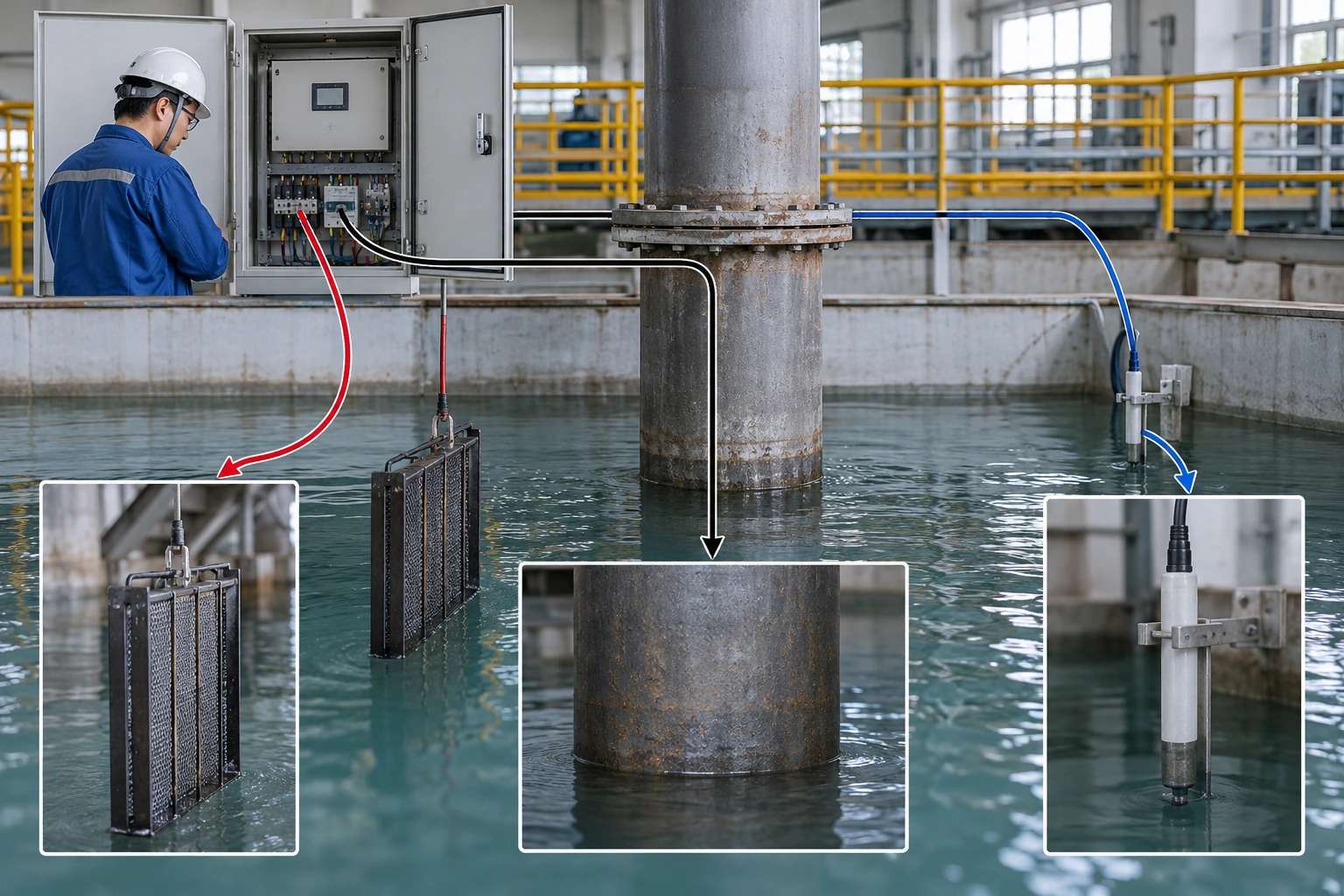
An ICCP Titanium electrode anode and the protected structure perform different roles in the circuit. A reference electrode serves a separate measurement function.
What should the project drawing distinguish?
Show power, current paths and measurement points separately. The corrosion engineer should define monitoring and acceptance. Rectifier output alone does not establish structure protection.
- Identify anode and structure connections.
- Show specified reference-electrode locations.
| Check | Decision |
|---|---|
| Anode circuit | Delivers the designed current path |
| Monitoring circuit | Supports protection assessment |
A current reading cannot replace the project's potential measurements. Key Takeaway: Keep supply and monitoring functions distinct.
3. Which Environment Data Guide Titanium electrode Selection?

Environmental data guide Titanium electrode selection through electrolyte conditions, exposure and installation constraints. Soil, water and concrete applications can impose different duties.
What information should the designer provide?
Describe the actual installation medium. Include relevant chemistry, temperature, resistivity or other design inputs selected by the engineer. Do not transfer an anode specification from an unrelated environment.
- State normal and limiting exposure.
- Identify installation and maintenance constraints.
| Check | Decision |
|---|---|
| Environment description | Defines material exposure |
| Design parameters | Support the assigned anode duty |
An application label alone cannot describe the installation. Key Takeaway: Use project-specific environmental evidence.
4. How Should Titanium electrode Form Match the Installation?
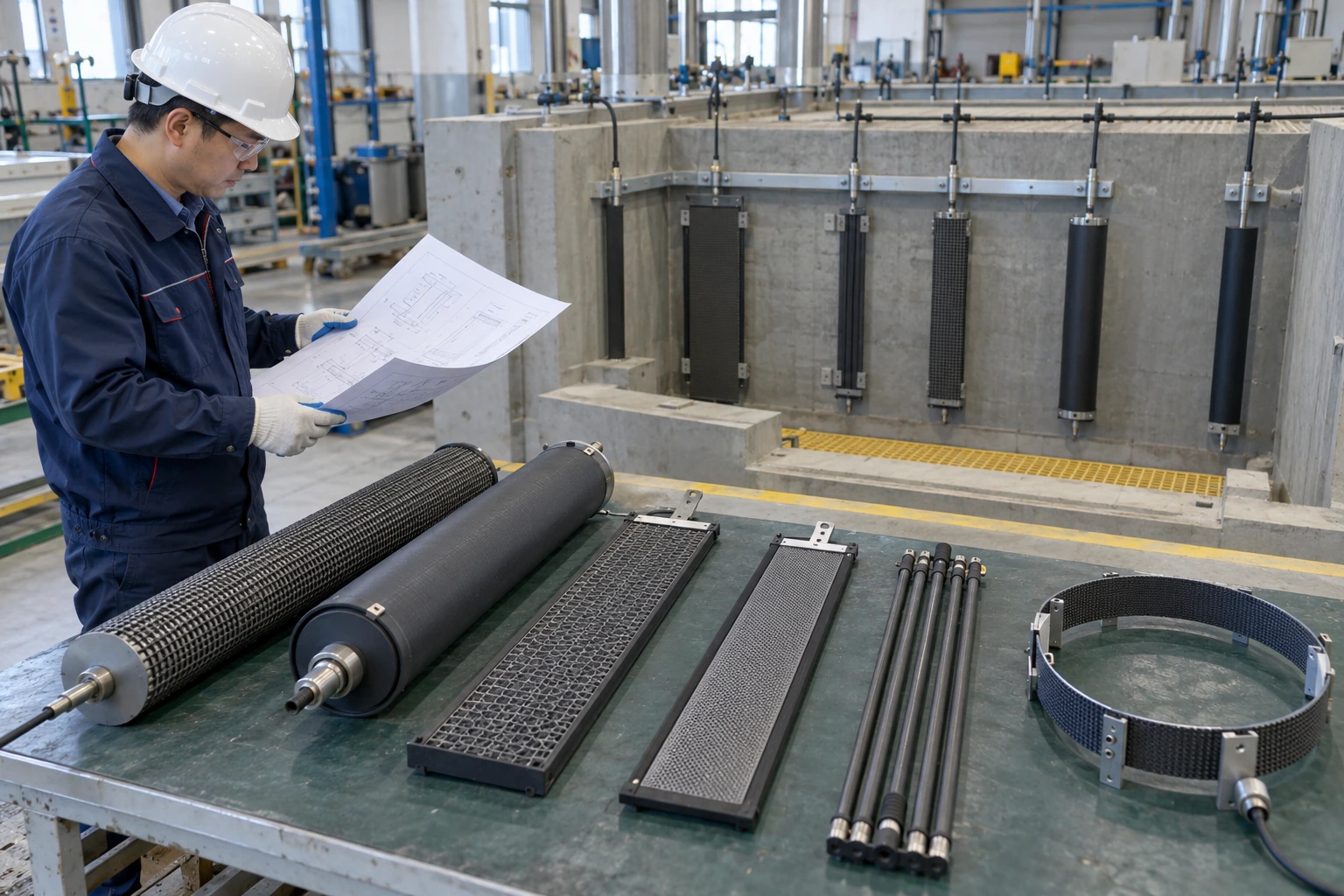
Titanium electrode form should match the engineer-approved installation envelope, current distribution needs and handling constraints. Available shapes do not independently establish system suitability.
How should a supplier's range be used?
Compare the proposed form with the actual installation. The electrode product range can identify component options for review. Confirm fabrication feasibility without assuming every form is a standard stocked item.
- Provide dimensions and mounting details.
- Identify handling and access requirements.
| Check | Decision |
|---|---|
| Component form | Defines physical geometry |
| Installation design | Establishes its suitability |
A familiar shape still needs project-specific assessment. Key Takeaway: Select geometry within the approved design.
5. What Current Data Does an ICCP Titanium electrode Need?

An ICCP Titanium electrode needs a defined current duty, operating environment and relevant life basis from the design process. Average current alone may not describe all required exposure.
Which electrical information should be exchanged?
State the operating profile and its assumptions. Include normal, limiting and intermittent conditions where relevant. The supplier should explain the basis of any component rating.
- Identify the area or geometry convention.
- Record the specified current range and service objective.
| Check | Decision |
|---|---|
| Design duty | Defines required exposure |
| Rating basis | Explains component qualification |
A rating without conditions cannot support a defensible comparison. Key Takeaway: Match component data to the engineer's duty basis.
6. How Do Titanium electrode Cable Interfaces Affect Installation?

Titanium electrode cable interfaces affect installation, durability and the integrity of the current path. Connection materials, sealing and mechanical protection need defined requirements.
What should the interface drawing show?
Include the complete termination arrangement. Identify exposed and protected regions. Inspection and handling should follow the approved component and project procedures.
- Define cable and termination interfaces.
- Identify mechanical and environmental protection.
| Check | Decision |
|---|---|
| Electrical connection | Maintains the current path |
| Environmental protection | Addresses installation exposure |
A suitable active surface cannot compensate for a failed connection. Key Takeaway: Approve the connection as part of the anode assembly.
7. Which Titanium electrode Acceptance Checks Belong in the Project?

Titanium electrode acceptance checks should verify the project's specified identity, geometry, coating and connection requirements. System commissioning remains a separate engineering activity.
How should the records be organized?
Separate factory acceptance from site verification. Agree which component records accompany delivery. The project engineer should define installation and protection checks.
- Retain drawing, batch and inspection references.
- Document deviations before shipment.
| Check | Decision |
|---|---|
| Factory evidence | Checks component conformity |
| Site verification | Checks installed system behavior |
A factory pass does not establish adequate protection after installation. Key Takeaway: Use evidence appropriate to each stage.
8. What Must a Titanium electrode Quotation Leave to the Designer?

A Titanium electrode quotation should leave protection criteria, current-demand design, anode placement and final commissioning with the responsible ICCP designer unless separately contracted and qualified. Component supply has a defined boundary.
How should the scope be written?
Make responsibilities explicit in the inquiry. The project quotation requirements should distinguish component information from system engineering. Assign unresolved technical decisions before ordering.
- Identify the responsible corrosion engineer.
- State supplier deliverables and exclusions clearly.
| Check | Decision |
|---|---|
| Component scope | Defines the supplied assembly |
| Engineering scope | Defines system-design responsibility |
Clear scope prevents an electrode quotation from being mistaken for a protection design. Key Takeaway: Document who approves each decision.
9. How Should Titanium electrode Changes Be Reviewed?

Review Titanium electrode changes against the approved ICCP design because geometry, coating or connections may affect the assigned duty. A similar-looking replacement still needs assessment.
What should a change request contain?
Show the difference against the released baseline. Provide revised drawings and relevant component data. Let the responsible engineer determine whether installation or monitoring requirements change.
- Identify affected parts and projects.
- Retain approval and requalification records.
| Check | Decision |
|---|---|
| Baseline comparison | Makes the change visible |
| Engineering disposition | Defines acceptance |
An undocumented substitution can undermine project traceability. Key Takeaway: Approve consequential changes before installation.
10. What Titanium electrode ICCP Package Should You Submit?

Submit Titanium electrode environmental data, assigned duty, installation drawings, connection requirements and acceptance criteria as one project package. Include the designer's contact and responsibility boundaries.
How can we support the component review?
Send the approved component requirements for evaluation. We can review custom electrode manufacturing requirements; contact us today with the project package. Our position is that anode supply should remain traceable to an engineered ICCP design.
- Identify unresolved component questions.
- Define sample, inspection and delivery requirements.
| Check | Decision |
|---|---|
| Design package | Establishes the required duty |
| Supply package | Defines the component evidence |
The combined package connects manufacturing decisions with the project's engineering basis. Key Takeaway: Keep final system approval with the responsible designer.
Frequently Asked Questions
Can I design an ICCP system from an anode current rating alone? No. Structure, environment, placement and monitoring require qualified system design.
What's the best titanium anode form for every installation? There is no universal form. Use the geometry specified for the actual project.
How do I know if the installed structure is protected? Use the corrosion engineer's monitoring and acceptance procedure. Rectifier output alone is insufficient.
Can I substitute a similar-looking anode? Only after review against the approved design and component specification.
Can I treat factory inspection as site commissioning? No. Component conformity and installed protection are separate verification tasks.