
A suitably coated Titanium electrode can support COD reduction in a validated electrochemical wastewater-treatment process. The result depends on the wastewater, operating conditions and treatment objective. A lower COD reading does not by itself prove complete mineralization, safe discharge or removal of every contaminant. Define the required outcomes and test representative water before making a performance claim.
1. Can a Titanium electrode Reduce Wastewater COD?

A Titanium electrode can contribute to COD reduction when its active surface and process conditions support suitable oxidation reactions. Performance remains specific to the wastewater and cell.
What should the treatment objective identify?
Define what must change in the water. State the required COD result and any target contaminants. Include upstream and downstream treatment when they affect the outcome.
- Provide representative feed analysis.
- State the required treatment endpoints.
| Check | Decision |
|---|---|
| COD objective | Defines a bulk measurement target |
| Specific-contaminant objective | Requires additional relevant analysis |
A coating family alone cannot establish a removal result. Key Takeaway: Validate the actual wastewater and objective.
2. Does Titanium electrode COD Reduction Mean Complete Treatment?
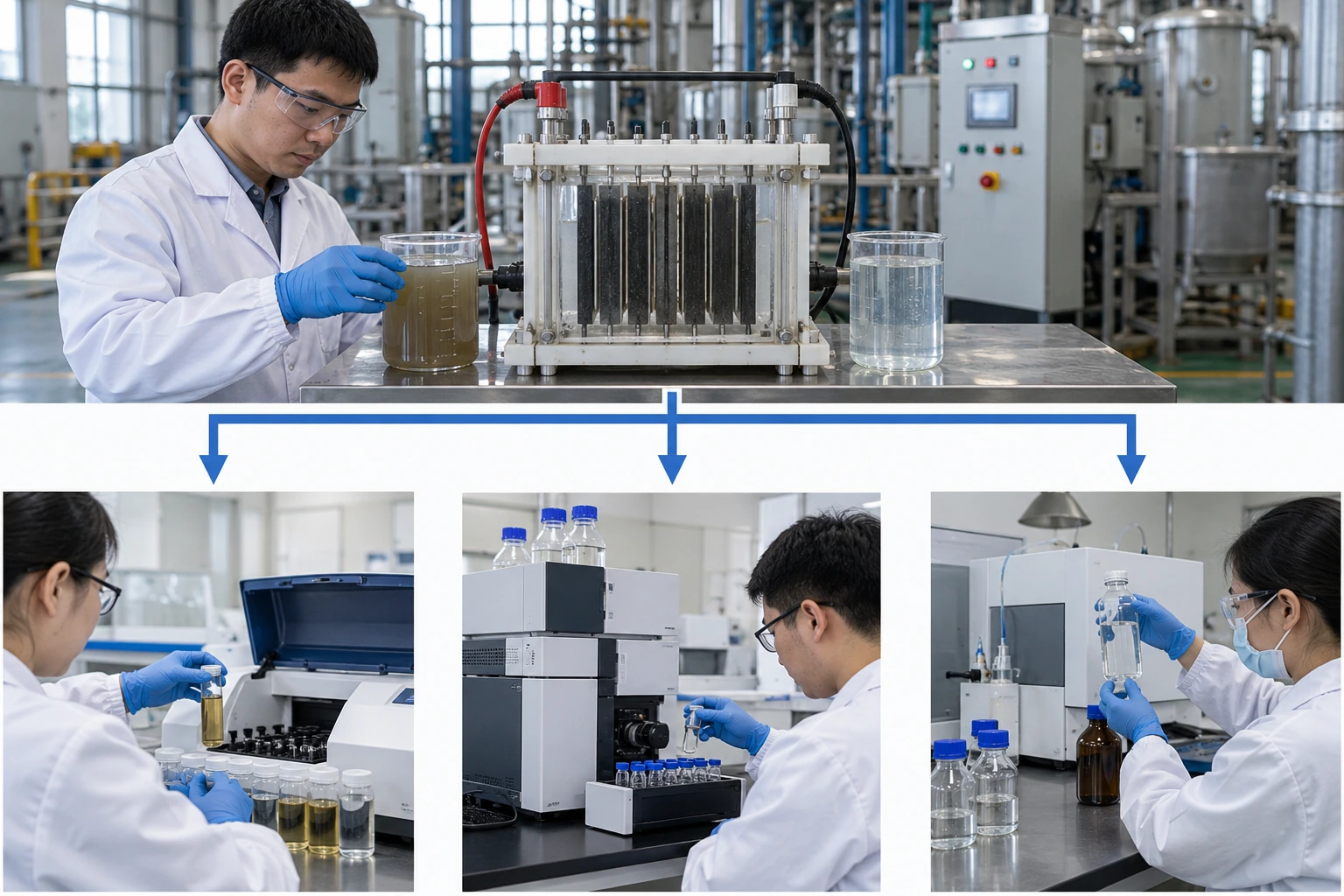
Titanium electrode COD reduction does not automatically mean complete treatment because COD is a bulk oxidation-demand measurement. Individual contaminants, intermediates and other quality requirements can remain relevant.
Which outcomes should be assessed separately?
Keep the required endpoints distinct. A reduction in one measure may not establish mineralization or suitability for a particular discharge or reuse. Qualified process staff should define the full assessment.
- Identify target compounds and relevant byproducts.
- Include other required water-quality measures.
| Check | Decision |
|---|---|
| COD trend | Shows one treatment response |
| Complete assessment | Checks the intended use or release criteria |
A single improving number cannot establish every required outcome. Key Takeaway: Match claims to the measurements actually performed.
3. Which Wastewater Data Guide Titanium electrode Selection?

Titanium electrode selection needs wastewater composition, variability, solids, conductivity, pH and temperature alongside COD. Equal COD values can describe chemically different streams.
What should sampling capture?
Include representative variation rather than one convenient sample. Production changes and upstream treatment can alter the matrix. Define the range your equipment must handle.
- Document source and production conditions.
- Record relevant ions and contaminants.
| Check | Decision |
|---|---|
| Single sample | Describes limited conditions |
| Representative range | Supports a realistic design basis |
A successful trial on one sample does not establish broad feed tolerance. Key Takeaway: Characterize the expected wastewater range.
4. How Does Chloride Affect Titanium electrode Oxidation?
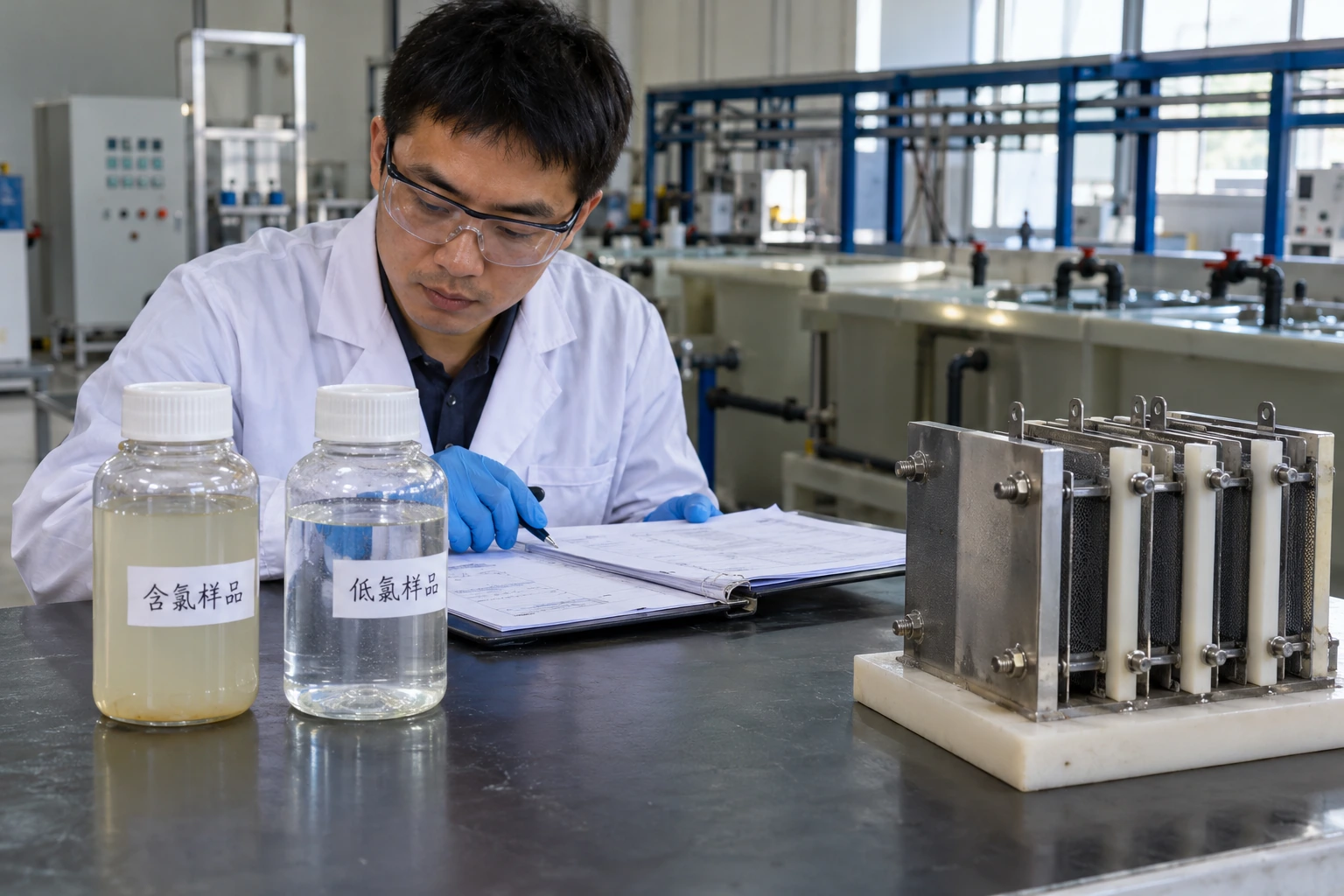
Chloride can change Titanium electrode oxidation pathways and generated species, so its presence affects both treatment and byproduct review. Higher chloride is not a universal solution.
Which questions should the chemistry review answer?
Consider useful reactions and unwanted products together. A custom electrode review needs the actual matrix and treatment objective. Evaluate changes through qualified analysis rather than assuming improved safety from lower COD.
- Record chloride and other relevant constituents.
- Define appropriate byproduct monitoring.
| Check | Decision |
|---|---|
| Reaction pathway | Influences treatment behavior |
| Byproduct assessment | Checks additional consequences |
A stronger oxidation response can still require broader water-quality evaluation. Key Takeaway: Review the complete chemical outcome.
5. Which Titanium electrode Coating Fits the Treatment Objective?

A Titanium electrode coating should fit the intended oxidation duty, wastewater matrix and operating conditions. A product selected for disinfection may not meet every COD-removal objective.
What should a candidate review include?
Use the treatment requirement to select the trial. Compare coating options with representative feed. Avoid importing removal percentages from unrelated studies or equipment.
- Identify active-surface designation.
- State current, flow and temperature ranges.
| Check | Decision |
|---|---|
| Coating proposal | Defines a candidate component |
| Application trial | Establishes its measured response |
Published success elsewhere does not prove performance in your wastewater. Key Takeaway: Qualify the proposed coating in the actual process.
6. How Do Flow and Current Affect Titanium electrode COD Tests?
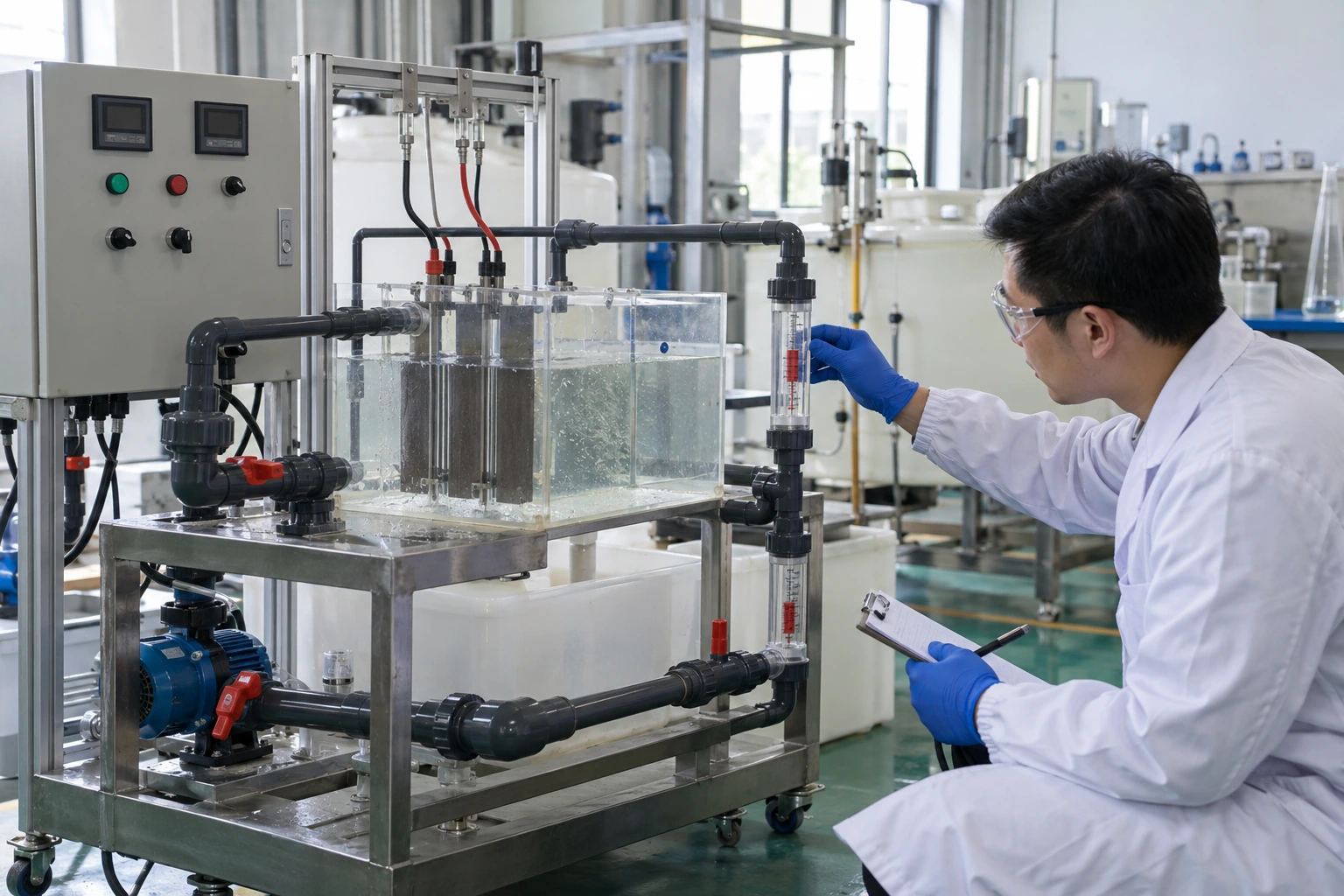
Flow and current affect Titanium electrode COD trials through contact conditions, charge input and transport. More electrical input does not guarantee proportionally greater useful treatment.
How should operating points be compared?
Measure treatment and energy together. Keep sampling and feed conditions consistent. Record batch volume or continuous flow so charge exposure is interpretable.
- Track current, voltage and elapsed operation.
- Record flow and relevant temperatures.
| Check | Decision |
|---|---|
| Electrical input | Defines supplied energy and charge |
| Treatment response | Measures the useful result |
A higher removal result may come with a different energy requirement. Key Takeaway: Compare matched and fully recorded operating points.
7. How Should You Sample Titanium electrode Treatment Results?

Sample Titanium electrode treatment results using a validated analytical and handling method suited to the wastewater. Residual reactions and matrix interference can affect interpretation.
What should the laboratory control?
Agree sampling and preservation before the trial. Qualified analysts should address relevant interferences and sample stability. Record collection timing and the actual analytical basis.
- Use defined inlet and outlet locations.
- Retain method and preparation records.
| Check | Decision |
|---|---|
| Controlled sampling | Supports representative results |
| Suitable analysis | Addresses the sample matrix |
An apparent COD change can be misleading if the measurement chain is uncontrolled. Key Takeaway: Validate the analytical method for the actual samples.
8. How Do You Check Titanium electrode Treatment Byproducts?

Check Titanium electrode treatment byproducts with a targeted plan based on feed composition and expected reactions. COD analysis alone cannot identify every formed species.
How should the testing scope be chosen?
Let chemistry guide the additional measurements. For hypochlorite-generation systems, oxidant-generation behavior can inform the review but does not establish wastewater suitability. Qualified specialists should select consequential endpoints.
- Identify plausible transformation products.
- Include relevant residual oxidants and quality measures.
| Check | Decision |
|---|---|
| Targeted analysis | Examines identified chemical concerns |
| Bulk measurement | Provides broader but less specific information |
A convincing treatment claim needs evidence beyond the metric it improves. Key Takeaway: Test the outcomes relevant to the intended use.
9. What Makes a Titanium electrode COD Pilot Convincing?

A convincing Titanium electrode COD pilot uses representative feed, controlled conditions, traceable analysis and defined acceptance criteria. It should also report energy and maintenance observations.
What should the report make transparent?
Keep limitations beside successful results. Describe variability, repeatability and conditions not covered. Separate a pilot observation from a guaranteed production outcome.
- Retain raw measurements and calculations.
- Inspect electrode and cell condition.
| Check | Decision |
|---|---|
| Representative evidence | Supports the defined claim |
| Uncovered duty | Remains a qualification gap |
A clear limitation improves the usefulness of the result. Key Takeaway: Approve only the operating scope the pilot demonstrates.
10. What Titanium electrode Wastewater Data Should You Send?

Send Titanium electrode feed analysis, treatment targets, flow, electrical duty and analytical requirements for a meaningful wastewater review. Include the role of other treatment stages.
How can we support component selection?
Provide the treatment basis with the cell design. We can review electrode geometry and coating requirements; contact us today with the pilot plan. Our position is that treatment claims should remain tied to measured water quality.
- Identify target contaminants and byproduct questions.
- Define acceptance and scale-up requirements.
| Check | Decision |
|---|---|
| Wastewater package | Defines the treatment challenge |
| Validation package | Defines the evidence needed |
This package connects electrode supply with a testable treatment objective. Key Takeaway: Validate the complete process before claiming treatment performance.
Frequently Asked Questions
Can I assume lower COD means safe discharge? No. Discharge or reuse suitability can require other chemical and process evidence.
What's the best coating for every wastewater? There is no universal coating. The matrix, reaction duty and treatment objectives determine the review.
How do I know if an apparent COD reduction is reliable? Use representative sampling and a suitable validated method that addresses relevant interferences.
Can I copy a removal percentage from a published study? No. It describes that study's conditions and does not establish performance in your equipment.
Can I judge a pilot only by COD removal? Not if other outcomes matter. Include relevant contaminants, byproducts, energy and maintenance evidence.