
A Titanium electrode system can supply current while a steel surface remains difficult to reach behind a coating, recess, or dielectric barrier. Raising output alone may not correct that local access problem and can change conditions elsewhere. Review coating details, structure geometry, electrical continuity, and measurements at steel with a qualified CP engineer before changing electrode output.
1. Why can a Titanium electrode leave steel unprotected?

A Titanium electrode can supply impressed current without protecting every steel area if electrolyte paths or electrical continuity are blocked. Local measurements reveal where system response needs review.
Separate delivered current from protected steel
An impressed-current CP system needs an anode, power supply, electrolyte path, and metallic connection to protected steel. Trace each circuit link, then compare output with coating gaps, disconnected sections, and access barriers.
- Map the anode, electrolyte, steel connections, and power supply.
- Mark surfaces behind coatings, barriers, narrow gaps, and structural attachments.
| Check | Decision |
|---|---|
| System output | Shows current delivered by the power source |
| Steel condition | Needs measurements at selected structure locations |
Source output and local steel response describe different points in an electrical system. Key Takeaway: Ask a qualified CP engineer to compare output records with structure measurements.
2. Where can a Titanium electrode current fail to reach steel?
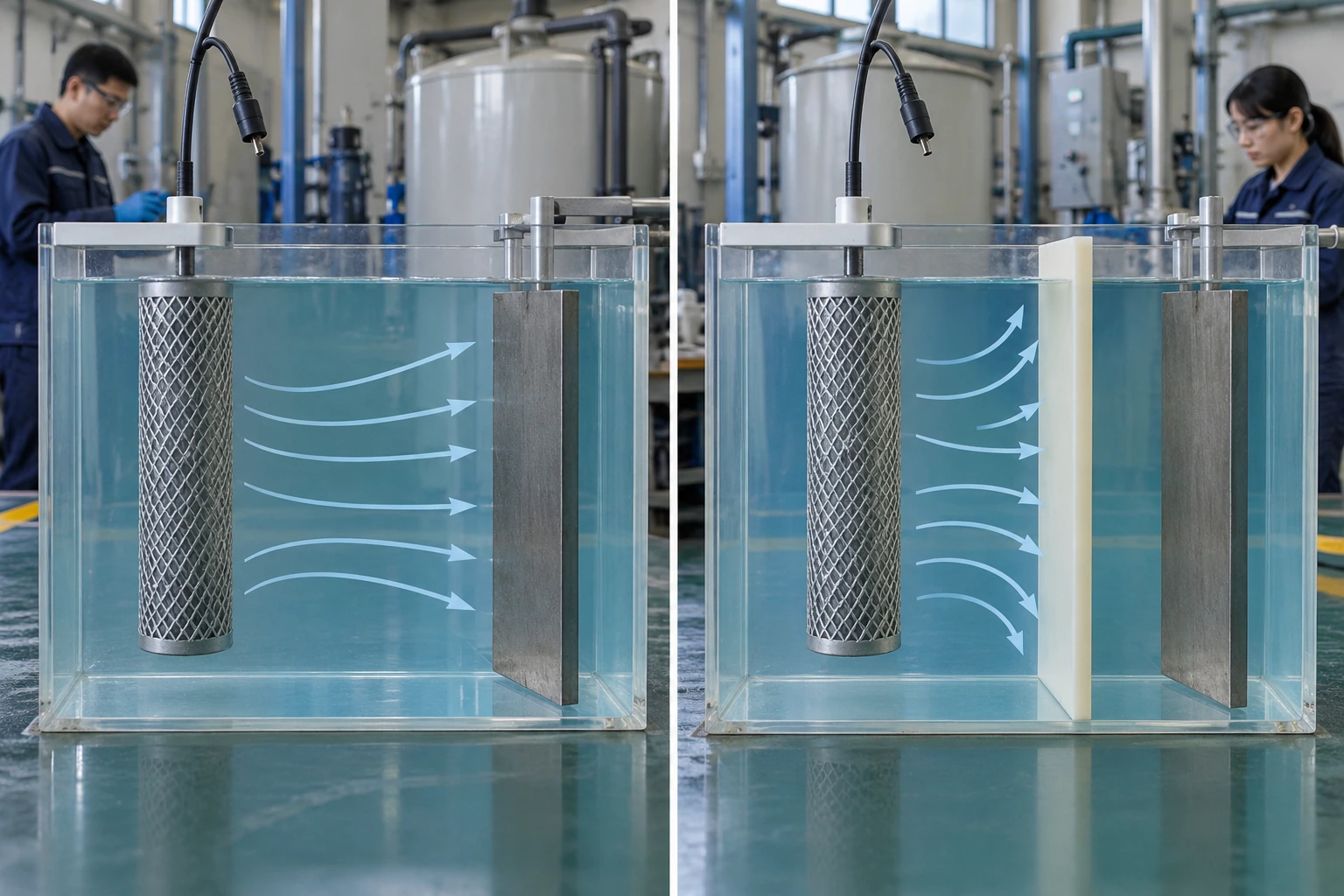
Current may not reach steel when a Titanium electrode path is interrupted by dielectric material, coating geometry, or restricted electrolyte access. Surface access changes with electrolyte and barrier geometry.
Find where ionic contact disappears
Cathodic protection current must reach steel through electrolyte at its surface. Mark each barrier before survey. Tight gaps, insulating wraps, disbonded coatings, deposits, and nearby structures may restrict access; effects depend on material and geometry.
- Map coating edges, wraps, recesses, seals, and close-spaced members.
- Note whether electrolyte can reach the steel surface at each location.
| Check | Decision |
|---|---|
| Open electrolyte path | Allows current access to exposed steel |
| Restricted path | May limit current at a local surface |
A large anode current does not show which microscopic or hidden surfaces receive it. Key Takeaway: Inspect the structure and identify suspected access barriers before changing settings.
3. How do dielectric shields change Titanium electrode current paths?

A dielectric shield can block current from a steel region even when nearby exposed surfaces respond to a Titanium electrode system.
Inspect coating gaps and narrow voids
Disbonded wraps, sleeves, or coatings can create a narrow space that limits current access under some conditions. Look behind coating edges, then record type, adhesion, gap geometry, moisture, deposits, and repair history. Do not infer shielding from one potential reading.
- Document coating transitions and disbonded areas with location references.
- Separate visible damage from confirmed current shielding in reports.
| Check | Decision |
|---|---|
| Bonded coating | Acts as a barrier over covered steel |
| Disbonded gap | May restrict electrolyte and current entry |
Coating condition and shielding are related observations, but they are not interchangeable findings. Key Takeaway: Use approved inspection methods to assess coating condition and current access.
4. What does coating geometry hide from a Titanium electrode?

Geometry around a Titanium electrode can screen steel inside recesses, under supports, or behind overlapping structural features. Include supports and close-spaced members on drawings.
Map hidden surfaces and overlap zones
Stiffeners, pipe supports, tank internals, lap joints, and close parallel members change access around steel. Work from an as-built section. Use the electrode product range to compare forms with difficult surfaces; a CP engineer chooses zones and survey locations.
- Mark recess depth, support contact, overlaps, and clearances.
- Compare anode positions with every surface named in the protection objective.
| Check | Decision |
|---|---|
| Exposed face | Receives a more direct electrolyte route |
| Recessed face | May need separate access and survey review |
Plan-view separation can hide a shadowed surface that appears close in a simplified sketch. Key Takeaway: Review three-dimensional geometry before signing off anode placement.
5. Why does continuity matter beside a Titanium electrode?

A Titanium electrode circuit needs electrically continuous steel within each intended protection zone.
Check metallic continuity apart from current output
An insulating joint, damaged bond, or isolated attachment can divide a steel structure into separate electrical sections. Trace each steel connection carefully. Continuity data help engineers relate zones, bonds, and references with metallic boundaries.
- Show welds, bonds, isolating joints, and test points on drawings.
- Record continuity results by structure segment and location.
| Check | Decision |
|---|---|
| Continuous steel | Can share a defined electrical connection |
| Isolated segment | May need separate circuit treatment |
A nearby structure can appear physically connected while remaining electrically isolated. Key Takeaway: Verify continuity under a project-approved method before interpreting protection data.
6. Can more Titanium electrode output fix shielding?

More Titanium electrode output may improve some low-current areas, but it cannot be assumed to bypass a shield or fix every access limit. Unreviewed changes can affect accessible steel elsewhere.
Treat output changes as a design decision
Increasing current or voltage can alter response at accessible steel without opening a restricted path. Check every part of the zone. A CP engineer should compare measurements, interference, anode limits, supply behavior, and coating conditions before changing output.
- Record baseline readings before any approved adjustment.
- Review accessible and suspected shielded locations after changes.
| Check | Decision |
|---|---|
| Output adjustment | Changes system delivery conditions |
| Barrier investigation | Addresses local current access |
A higher source reading is not proof of improved protection beneath a barrier. Key Takeaway: Leave system adjustments and acceptance decisions with qualified CP personnel.
7. How do structure features screen Titanium electrode current?

Tank and pipeline features can block electrolyte access or separate anode current from a Titanium electrode target surface.
Use actual structure details during diagnosis
Tank stiffeners, pipe shoes, casings, supports, liners, and narrow annuli can create distinct current paths. Compare field geometry with drawings. Construction changes or deposits may also alter access after commissioning, so diagnostics should include updated as-built information.
- Check field changes, coatings, supports, inserts, and nearby metal.
- Mark suspected barriers beside survey points and CP zones.
| Check | Decision |
|---|---|
| Original layout | Shows intended current routes |
| As-built condition | Shows actual access and obstructions |
Outdated drawings can direct measurements away from the surfaces causing concern. Key Takeaway: Update structure details before finalizing a shielding diagnosis.
8. Which measurements confirm Titanium electrode steel protection?

Protection from a Titanium electrode system must be assessed with qualified measurements at selected structure locations, not output alone. Survey records need location, circuit, timing, and operating state during each approved survey.
Place measurements near the questioned surface
Reference-electrode surveys, current interruption, depolarization, or other methods may suit a project, but interpretation depends on setup and criteria. Keep each measurement location traceable. Use the project quotation requirements to record positions, circuit status, instruments, and conditions.
- Map reference positions and access limitations on the structure drawing.
- Record circuit status, instrument details, and measurement conditions.
| Check | Decision |
|---|---|
| Source reading | Tracks power delivery |
| Structure reading | Assesses selected steel locations |
A measurement far from a shielded region may miss its local condition. Key Takeaway: Ask a CP engineer for survey methods suited to each location.
9. How should a CP engineer diagnose Titanium electrode shielding?

A shielding review of a Titanium electrode combines survey records, coating details, electrical continuity, geometry, and current distribution. Separate field evidence from assumptions in each record.
Test the suspected cause before changing anode hardware
A disciplined review can distinguish low output, poor bonding, coating shielding, and geometric shadowing. Compare competing explanations before choosing a fix. Collect observations, measurements, coating details, bonds, and geometry for qualified review.
- List symptoms, dates, locations, and operating conditions.
- Separate confirmed observations from hypotheses in the investigation record.
| Check | Decision |
|---|---|
| Electrical issue | May involve supply, bonds, or continuity |
| Access issue | May involve coating or geometry |
The same low reading can arise from different causes that need different actions. Key Takeaway: Keep diagnosis evidence and corrective action under engineer review.
10. What belongs in a Titanium electrode shielding review?

A shielding inquiry about a Titanium electrode needs structure drawings, coating details, survey positions, continuity records, and criteria owner.
Send the structure evidence with anode questions
We review custom titanium anode forms and assemblies from drawings or samples. Keep diagnosis with the system engineer. contact us today with anode locations, geometry, coatings, bonds, and measurements; product changes cannot replace qualified CP diagnosis.
- Attach plan, sections, coating history, and test-point map.
- Include output trends, survey context, and any confirmed continuity findings.
| Check | Decision |
|---|---|
| Product review | Checks anode form and interface |
| CP diagnosis | Interprets steel response and site conditions |
A clear inquiry lets supplier review remain distinct from system acceptance. Key Takeaway: Get an engineer's diagnosis before changing electrode output or layout.
Frequently Asked Questions
Can I fix a shielded steel surface by increasing titanium electrode output? No, higher output may change accessible areas while a barrier still limits local current. Consult a qualified CP engineer.
What's the best way to find cathodic protection shielding? Combine structure inspection, coating details, continuity data, and measurements near suspected surfaces under an approved survey plan.
How do I know if low current comes from shielding or a weak rectifier? Compare rectifier records with structure measurements, cable and bond checks, coating condition, and circuit geometry; one reading cannot isolate cause.
Can I assume disbonded coating blocks CP current everywhere? No, disbondment alone does not prove a coating blocks current. Effects depend on coating, gap geometry, electrolyte, and conditions.
How do I know if a new anode shape protects a recessed area? No shape guarantees access to recessed steel. Review placement, electrolyte paths, geometry, measurements, and criteria with the CP engineer.