
Low chloride does not select oxygen evolution over chlorine evolution for a Titanium electrode. Both reactions may compete at anodic surfaces; product distribution changes with coating, water chemistry, potential, and transport. Sampling and analysis determine what the report can resolve. ARY Titanium can review drawings and samples, while process owners define accepted output and safety controls.
1. How does low chloride change Titanium electrode reactions?

Low chloride does not determine whether a Titanium electrode evolves oxygen or active chlorine. Observed product ratios also depend on how gas and liquid products are sampled.
What does low chloride change?
Separate feed concentration from reaction selectivity. Chloride oxidation and water oxidation can compete at an anode. A low bulk chloride reading alone cannot prove chlorine-free operation.
- Identify intended product and acceptable side reactions.
- Record chloride data with sampling location and timing.
| Check | Decision |
|---|---|
| Bulk chloride | Describes a feed sample |
| Product analysis | Checks what the cell forms |
A feed number cannot replace product measurement. Key Takeaway: Define the required reaction outcome before choosing a coating.
2. Which inputs shift reactions at a Titanium electrode?
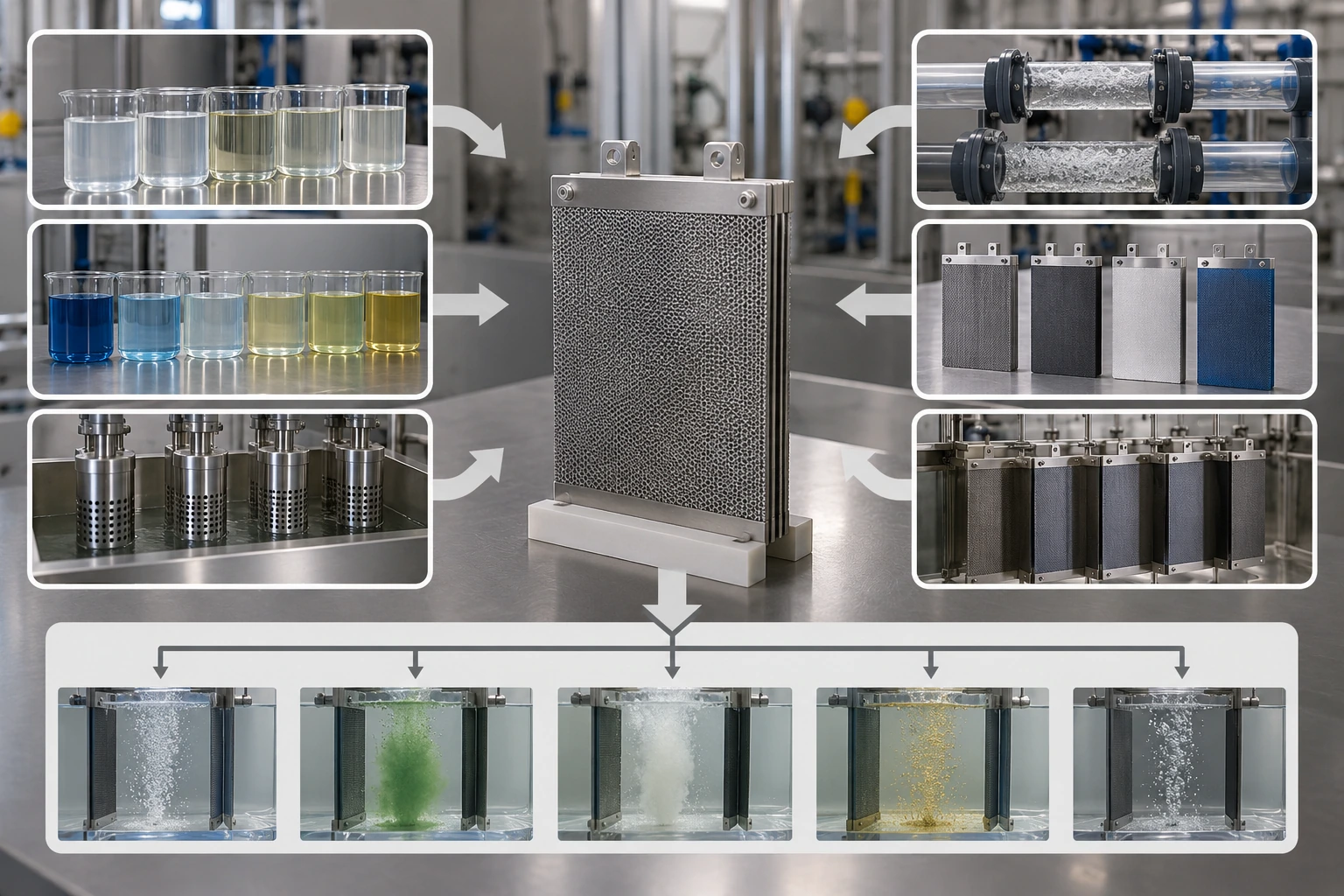
A Titanium electrode reaction review should include chloride activity, acidity, temperature, flow, coating, and electrode potential. Those inputs affect competing oxygen and chlorine pathways.
Which inputs shape competing reactions?
Read the whole operating envelope. Coating composition, current conditions, water chemistry, and transport interact at an active surface. A coating label cannot promise fixed selectivity across different duty.
- Record operating conditions beside sample identity.
- Include water composition, flow, and electrical duty.
| Check | Decision |
|---|---|
| Single variable | Cannot describe interacting conditions |
| Operating envelope | Frames the tested combination |
Reaction evidence belongs with its full condition set. Key Takeaway: Compare coatings only under conditions relevant to service.
3. Why can bulk chloride miss local Titanium electrode conditions?
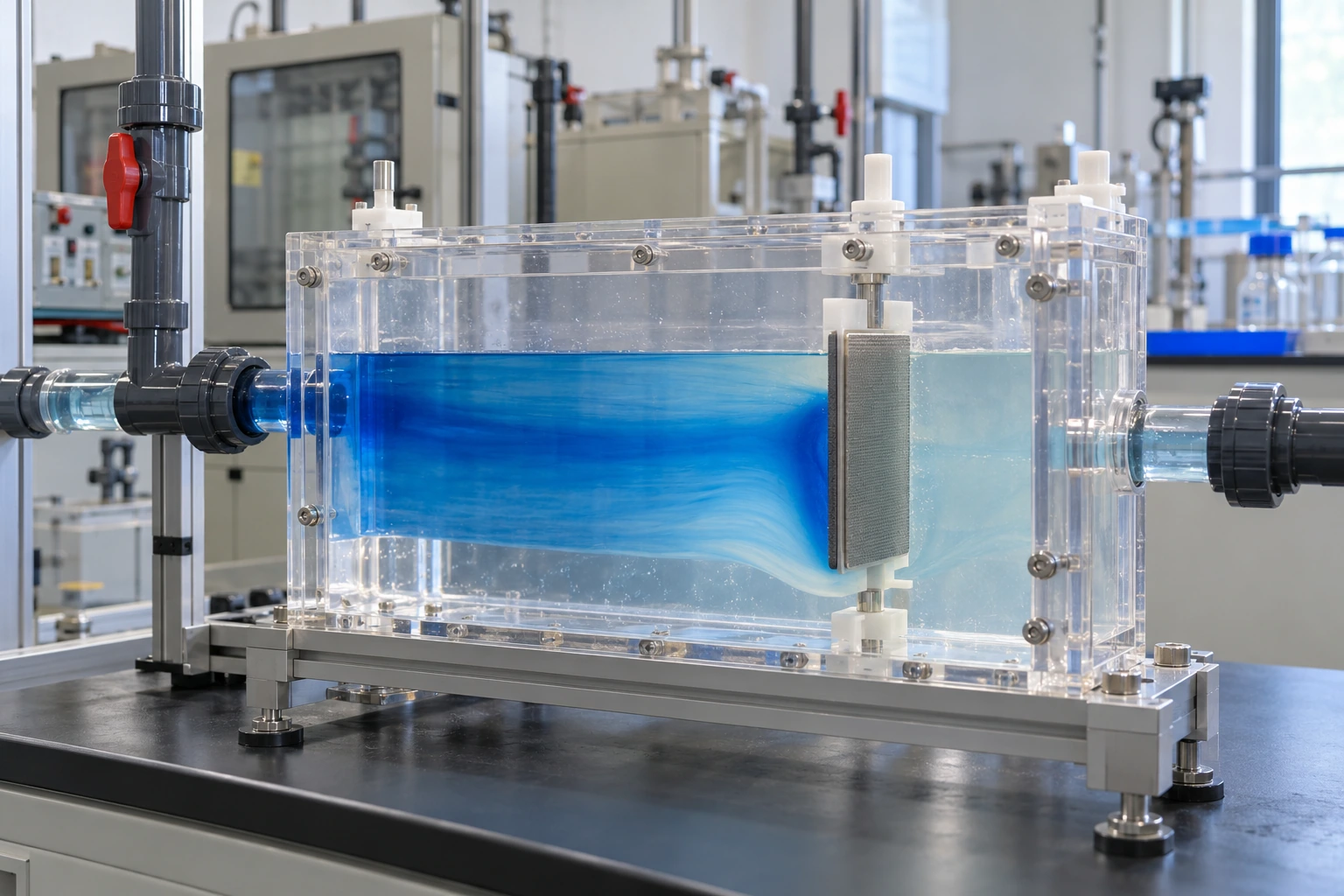
Bulk chloride can differ from conditions near a Titanium electrode surface because reaction and transport alter local composition. Feed analysis alone cannot describe every interfacial condition.
Does bulk water represent the interface?
Keep local transport in the picture. Current flow, cell geometry, gas coverage, and mixing shape surface access to reactants. A lab result may shift when those features change.
- Document cell gap and flow arrangement.
- Record whether measurements came before or after treatment.
| Check | Decision |
|---|---|
| Bulk sample | Represents a sampling point |
| Interface conditions | Depend on cell operation |
Cell geometry can change what reaches an electrode surface. Key Takeaway: Match laboratory transport conditions with the intended cell.
4. How does coating fit low-chloride Titanium electrode duty?

A Titanium electrode coating choice should match required reaction duty and operating conditions. Coating families cannot guarantee chlorine or oxygen preference across every electrolyte.
What should a coating claim cover?
Ask what was tested. Compare coating identity, substrate, media, current conditions, and measured products. Use a custom cell review when a drawing or sample review must define component scope.
- Request coating identification tied to the part.
- State intended duty and measurable acceptance criteria.
| Check | Decision |
|---|---|
| Generic family claim | Leaves duty undefined |
| Condition-specific evidence | Explains tested reaction scope |
Coating choice and reaction duty need a shared technical basis. Key Takeaway: Tie each selectivity statement to a named test condition.
5. Which water measurements interpret Titanium electrode gas output?

Water samples alone cannot show which gases a Titanium electrode produced. Chloride, acidity, dissolved constituents, outlet samples, and gas analysis answer different questions.
Which measurements complete the reaction picture?
Pair feed data with products. Record sampling time and location alongside cell state. Active chlorine species can change after formation, so a downstream result needs careful interpretation.
- Preserve paired feed and outlet sample identities.
- Use qualified methods for gas and liquid products.
| Check | Decision |
|---|---|
| Feed chemistry | Describes incoming solution |
| Product analysis | Checks reaction output |
A downstream concentration may reflect formation and later chemistry. Key Takeaway: Plan measurements around both cell output and sample handling.
6. What can a Titanium electrode polarization test show?

A Titanium electrode polarization curve can show current response under stated test conditions, but it cannot by itself quantify each product. Product analysis remains necessary for selectivity claims.
What can a polarization test show?
Keep electrochemical response separate from product yield. Qualified laboratories can pair polarization data with gas or liquid analysis. Test controls must fit the chemistry and hazards under review.
- Record reference system and solution conditions.
- Keep product quantification with each electrochemical result.
| Check | Decision |
|---|---|
| Polarization curve | Shows electrical response |
| Product measurement | Supports pathway interpretation |
Electrical response does not identify every reaction product. Key Takeaway: Request product analysis when the decision depends on selectivity.
7. How does flow shape Titanium electrode reaction readings?
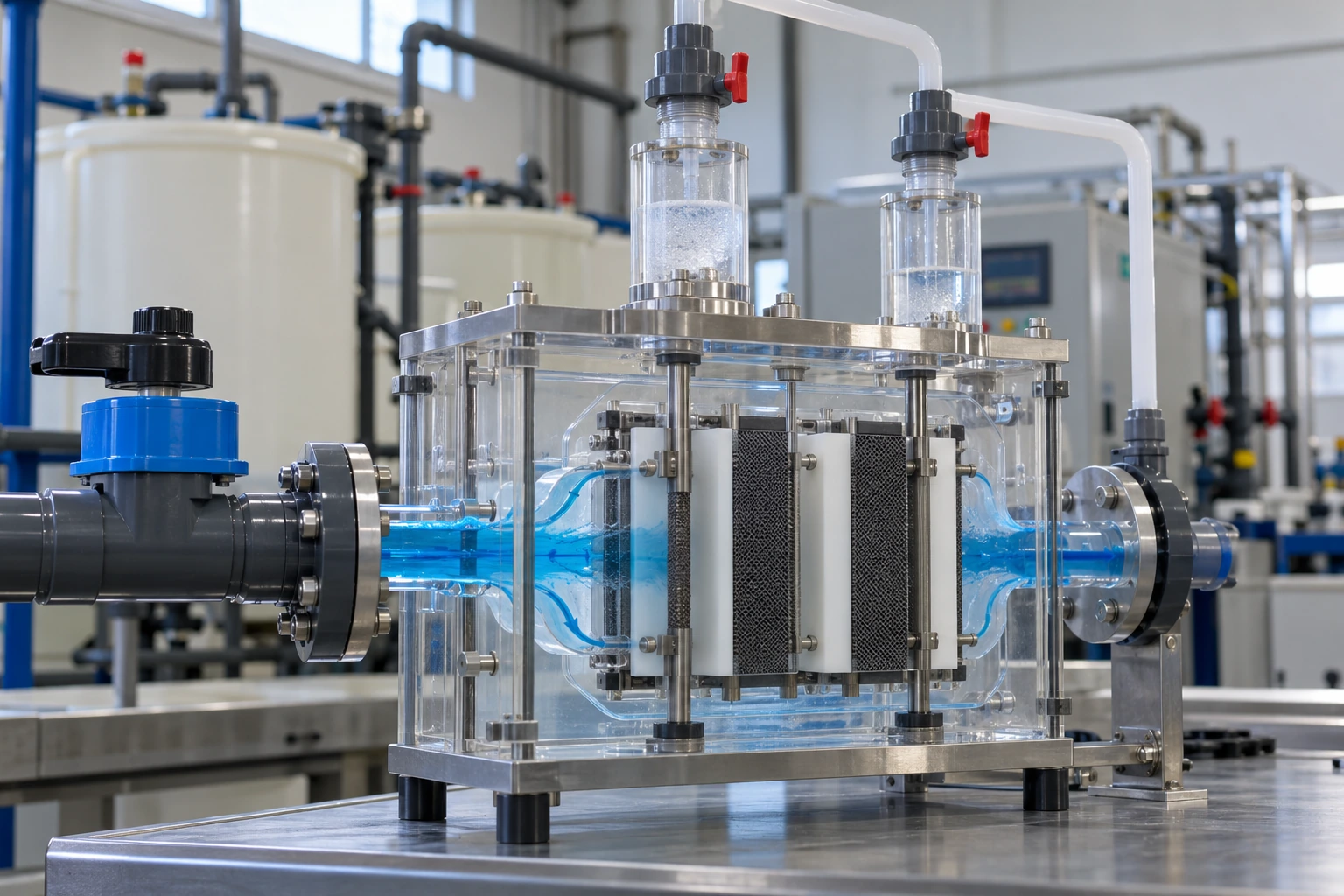
Flow and gas management affect how a Titanium electrode result is interpreted. Bubbles, outlet routing, mixing, and sampling location can alter collected evidence.
Could cell handling change measured output?
Trace each outlet. A guarded cell drawing should show liquid path, gas separation, sampling points, and exhaust controls. Qualified personnel must define safe operation and analysis.
- Map liquid and gas paths separately.
- Document outlet sampling and containment arrangements.
| Check | Decision |
|---|---|
| Unmapped outlet | Leaves product routing unclear |
| Defined gas path | Supports controlled analysis |
Product recovery depends on the path between formation and measurement. Key Takeaway: Review gas handling with process and safety owners.
8. Which changes complicate Titanium electrode reaction results?

A Titanium electrode result can change during startup, feed variation, shutdown, or a prolonged idle state. One stable run may not represent every transition.
Which operating changes deserve separate review?
Include transitions in the test brief. Frame intended use as a water-treatment duty but match test data with relevant transitions. Chloride feed, pH, temperature, and flow may move during process changes.
- List normal and transient states for evaluation.
- Preserve operating logs with each sample set.
| Check | Decision |
|---|---|
| Steady operation | Covers a defined state |
| Transition record | Shows changing conditions |
Transitions can change both chemistry and product evidence. Key Takeaway: Set approval boundaries for startup and abnormal states.
9. How should Titanium electrode reaction evidence be compared?

A Titanium electrode comparison needs matched samples, coating identity, cell configuration, and product methods. Different test boundaries can make apparent selectivity differences misleading.
How should competing evidence be compared?
Line up the test conditions. Keep feed analysis, current history, gas capture, and analytical methods with each result. Product analysis cannot compare unmatched conditions.
- Compare like-for-like samples and cell boundaries.
- Record analysis limits and unmeasured products.
| Check | Decision |
|---|---|
| Unmatched trial | Leaves causes ambiguous |
| Matched evidence | Supports a fair comparison |
A comparison is only as strong as its shared test basis. Key Takeaway: Review sample and method differences before ranking results.
10. What should a Titanium electrode spec ask before selection?

A Titanium electrode specification should name target output, feed envelope, coating scope, gas path, and evidence required before selection. It cannot delegate process safety approval to a component supplier.
What belongs in a low-chloride specification?
Make the acceptance question explicit. When you contact us today, share process records, cell drawing, target products, sampling plan, and safety interfaces. ARY Titanium can review drawings and samples; system owners approve operation.
- State intended product and allowed uncertainty.
- Assign owners for analysis and process approval.
| Check | Decision |
|---|---|
| Component review | Covers supplied part inputs |
| System approval | Covers integrated operation |
Clear scope keeps coating discussion tied to process requirements. Key Takeaway: Agree on test boundaries before ordering a reaction-specific part.
Frequently Asked Questions
Can I assume low chloride prevents chlorine formation? No. Chloride oxidation may still compete with oxygen evolution, so measure products under representative operating conditions.
What's the best way to compare oxygen and chlorine output? Use matched test conditions with qualified gas and liquid product analysis. A polarization curve alone cannot quantify each product.
How do I know if my coating favors one reaction? Review evidence for the specified coating, electrolyte, potential, and cell configuration. Broad family names do not establish duty-specific selectivity.
Can I use feed chloride as a selectivity result? No. Feed analysis characterizes a sample, while product analysis checks what the cell formed and what remained after handling.
How do I know if a bench result applies at plant scale? Compare flow, geometry, gas handling, chemistry, and operating transitions. Differences need engineering review before transfer.