
A Titanium electrode only reacts with species that reach its interface, unless a soluble mediator carries part of the oxidation into bulk water. Wastewater engineers can diagnose transport limits by pairing current data with flow, concentration, and cell geometry rather than relying on voltage alone.
1. How does a Titanium electrode transfer species?

A Titanium electrode transfers charge through reactions at an interface, so reacting species must reach that surface or a mediator must carry the chemistry into water. Flow and species movement shape observed treatment rates.
Follow species toward the interface
Diffusion, convection, and sometimes migration carry species toward an interface; their roles depend on charge, concentration, solution properties, and geometry. Look at the whole path. A current reading cannot reveal target arrival at an active surface.
- Map target concentration from bulk liquid toward each reactive electrode face.
- Record whether oxidation depends on direct contact or a soluble mediator.
| Check | Decision |
|---|---|
| Diffusion | Gradient-driven movement |
| Convection | Flow-driven replenishment |
A treatment rate can fall when reaction sites outpace replenishment from bulk liquid. Key Takeaway: Pair electrical data with concentration and flow observations.
2. Where does a Titanium electrode boundary layer form?
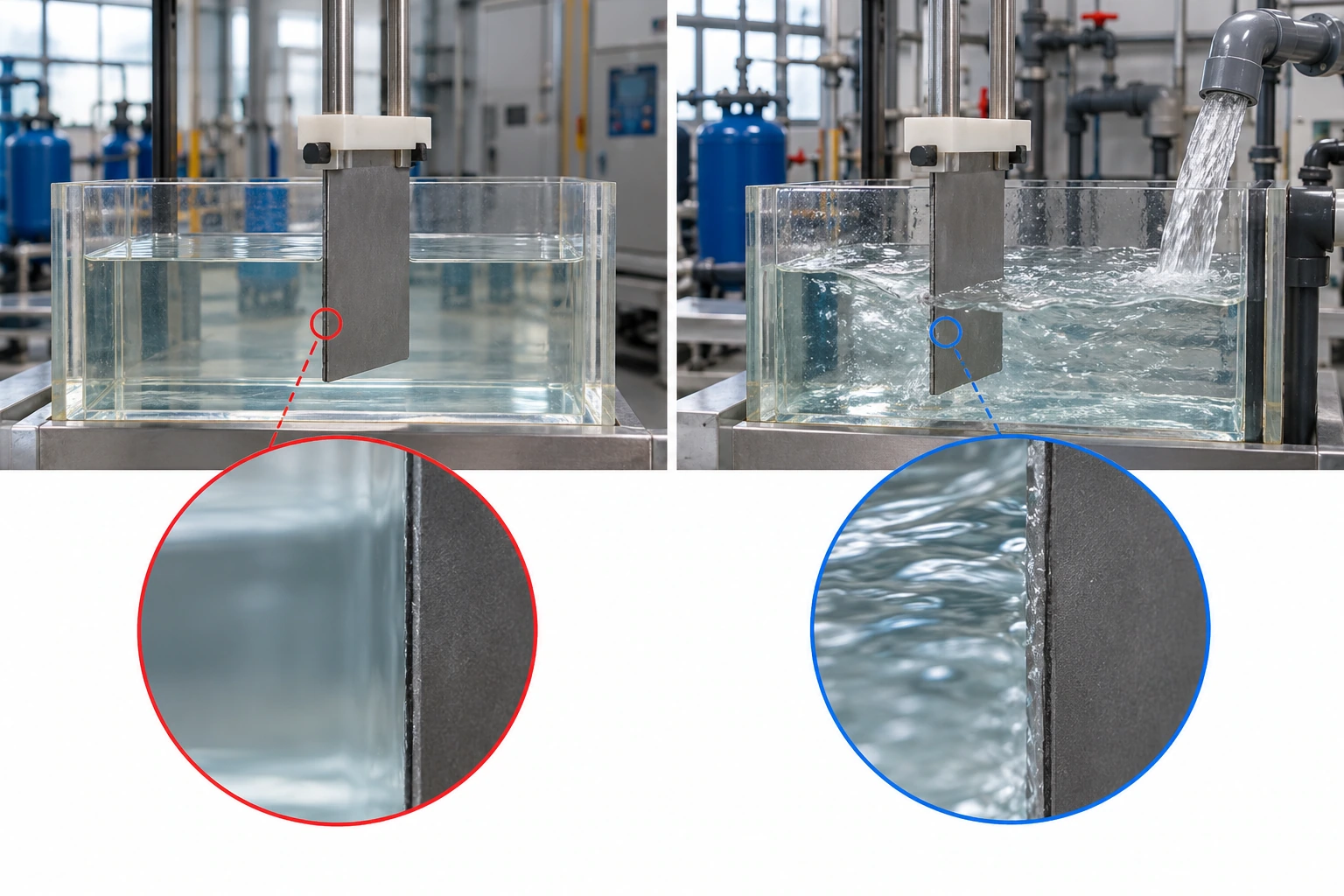
A Titanium electrode develops a concentration boundary layer wherever a consumed species must cross liquid next to its surface. Flow can alter that layer, but reactor geometry determines how evenly flow reaches each face.
Read the boundary layer as a local transport zone
A concentration gradient forms as reactions consume species at an electrode surface; channel flow can refresh liquid while sheltered gaps retain slower-moving water. Check the quiet corners for flow. Vessel stirring does not prove uniform transport across every plate or mesh strand.
- Inspect channel spacing, manifolds, edges, and supports that may shelter liquid.
- Compare sampling locations when flow distribution appears uneven.
| Check | Decision |
|---|---|
| Bulk flow | Sets cell-wide delivery |
| Near-surface flow | Sets local replenishment |
An average flow rate can hide stagnant pockets beside a working electrode. Key Takeaway: Review both average throughput and local access to active area.
3. What makes a Titanium electrode current approach a limit?
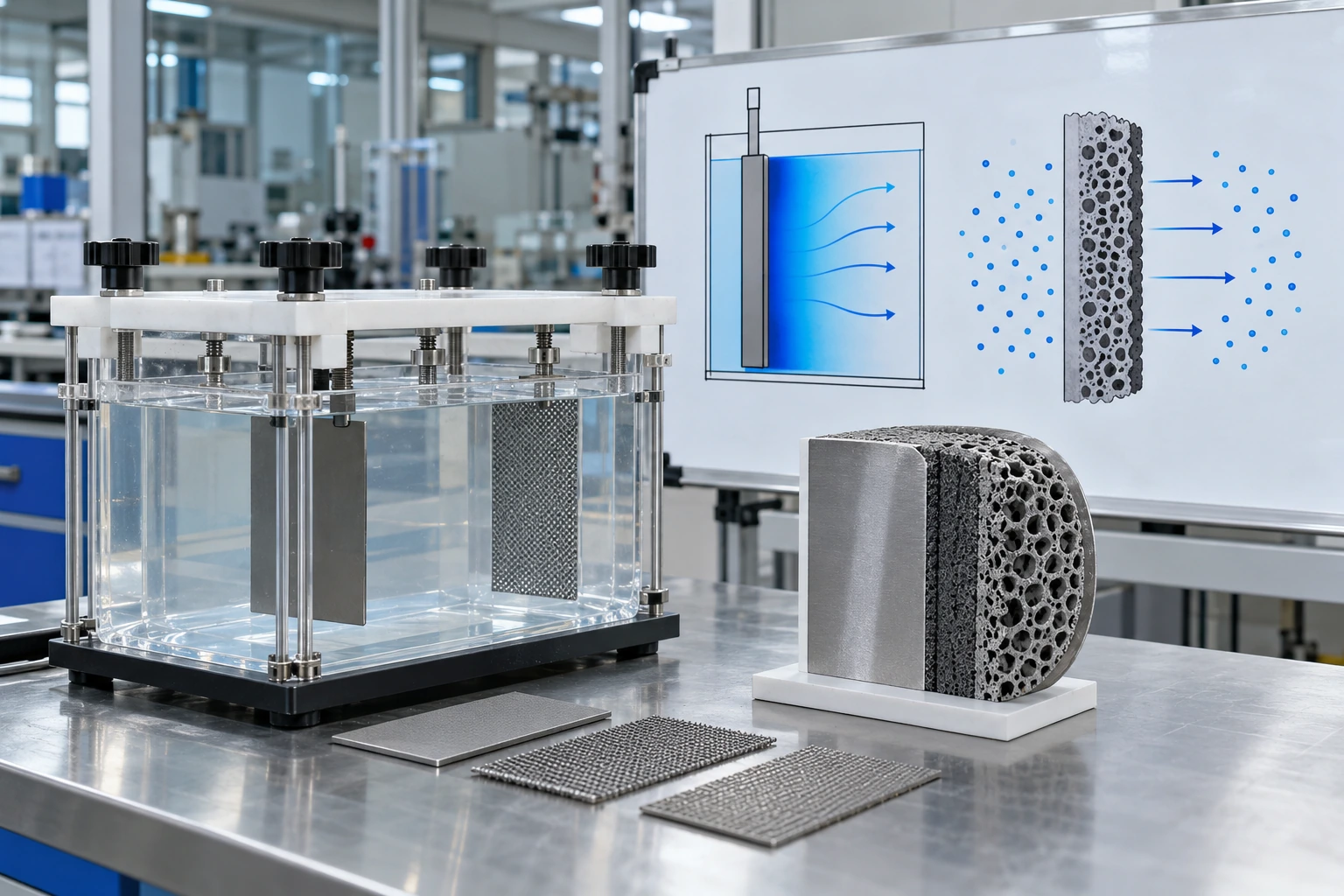
A Titanium electrode reaction can become transport-limited when demand at its interface exceeds arrival of the target species. This limiting current depends on concentration, transport properties, and hydrodynamics.
Treat limiting current as a condition, not a rating
A limiting current indicates when reactant delivery governs response in a defined test; mixed wastewater adds competing species and reactions. Watch for a transport plateau. If current rises while target conversion stalls, check chemistry and samples before assigning cause.
- Compare current and target conversion across a controlled operating range.
- Record the target concentration and flow conditions used to identify any plateau.
| Check | Decision |
|---|---|
| Observed plateau | Possible transport control |
| Mixed feed | Several reactions compete |
A current ceiling belongs to a specific species, surface, matrix, and flow condition. Key Takeaway: Use measured evidence before calling a cell transport-limited.
4. How does a Titanium electrode respond to poor circulation?
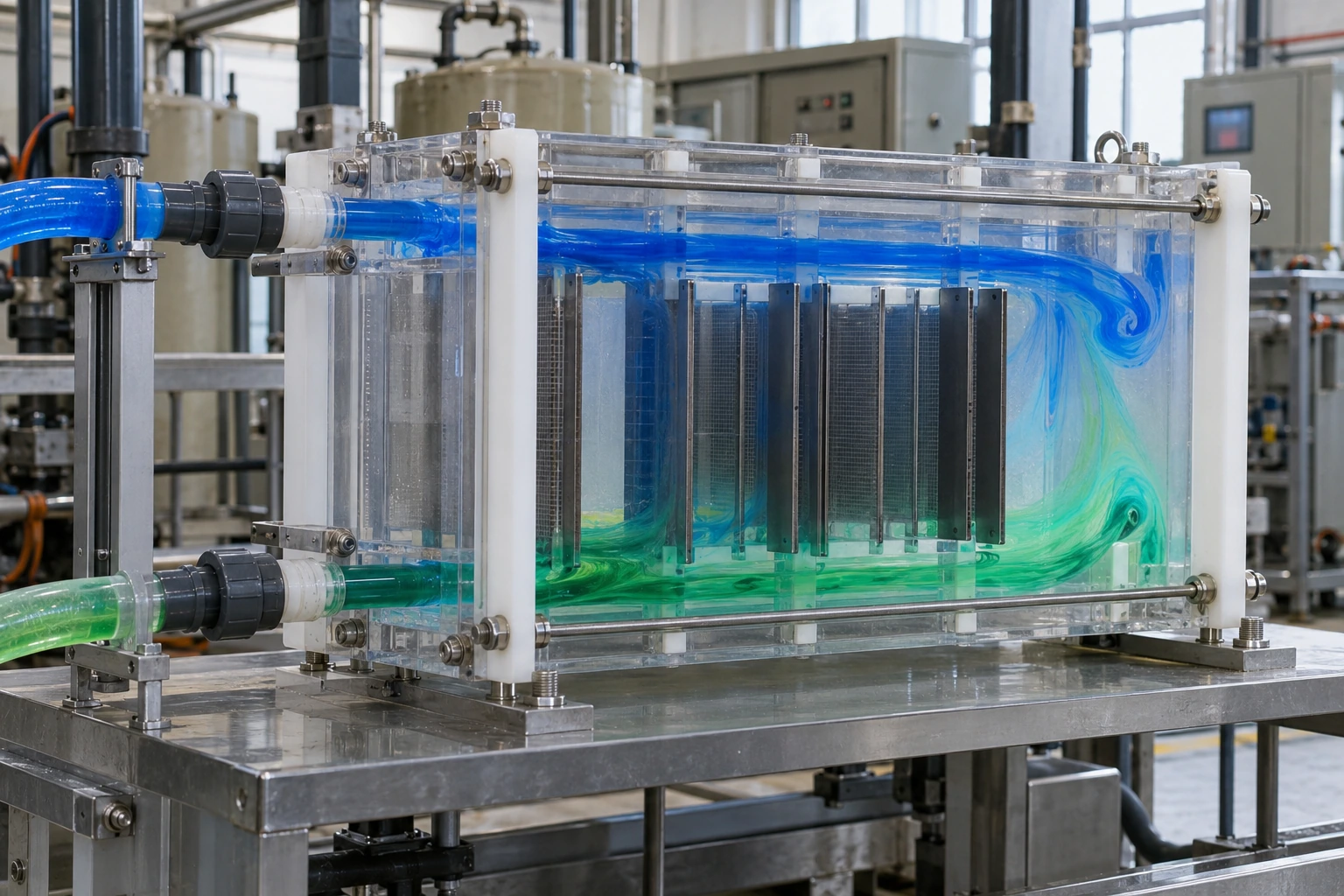
A Titanium electrode receives less replenishment when circulation leaves low-flow regions beside active faces. Current can then concentrate in better-fed paths or shift toward competing reactions.
Separate weak circulation from weak chemistry
Inlet placement, spacers, electrode alignment, bubbles, and fouling can shift local flow; one pump setting cannot describe velocity between every plate. Trace each flow path carefully. A custom electrode review can compare pressure, samples, and geometry when cell response looks uneven.
- Check manifold balance and cell orientation against the assembly drawing.
- Correlate deposits, gas coverage, and outlet variation with flow observations.
| Check | Decision |
|---|---|
| Low-flow region | May limit replenishment |
| Uneven feed | May shift current paths |
A chemistry adjustment cannot repair a hydraulic path that bypasses active area. Key Takeaway: Inspect distribution before changing electrical load.
5. How do signals reveal a Titanium electrode transport limit?

A Titanium electrode transport limit may appear as a plateau in target removal, a changing cell voltage, or weak response to added current. None of these signs proves a single cause by itself.
Combine signals before diagnosing a limit
Track feed and outlet targets with current, voltage, flow, and temperature; rising current beside flat conversion can signal several causes. Use paired evidence before diagnosing. Check electrode condition, side reactions, conductivity, and sample integrity before blaming diffusion.
- Synchronize process samples with electrical and hydraulic records.
- Check electrode condition and conductivity before interpreting a flat removal curve.
| Check | Decision |
|---|---|
| Target response | Shows measured conversion |
| Current response | Shows electrical demand |
One instrument trend can point in several directions without another measurement. Key Takeaway: Diagnose from synchronized process, flow, and electrical evidence.
6. How does wastewater chemistry affect Titanium electrode transport?

A Titanium electrode sees different transport behavior as viscosity, temperature, concentration, and ionic composition change. Conductivity also affects ohmic loss, which must not be confused with species delivery.
Separate fluid properties from electrical resistance
Conductivity affects ohmic loss, while viscosity and diffusion shape species transport; temperature can change fluid behavior and reaction rates. Keep these transport effects distinct. A clean-water test may miss feed variation and cleaning carryover.
- Measure conductivity and temperature alongside target concentrations.
- Use representative samples that capture routine feed changes and cleaning carryover.
| Check | Decision |
|---|---|
| Conductivity | Affects ohmic drop |
| Viscosity and diffusion | Affect species transport |
Electrical efficiency and mass transfer respond to related but different properties. Key Takeaway: Report water composition with every mass-transfer result.
7. What changes when flow reaches a Titanium electrode stack?
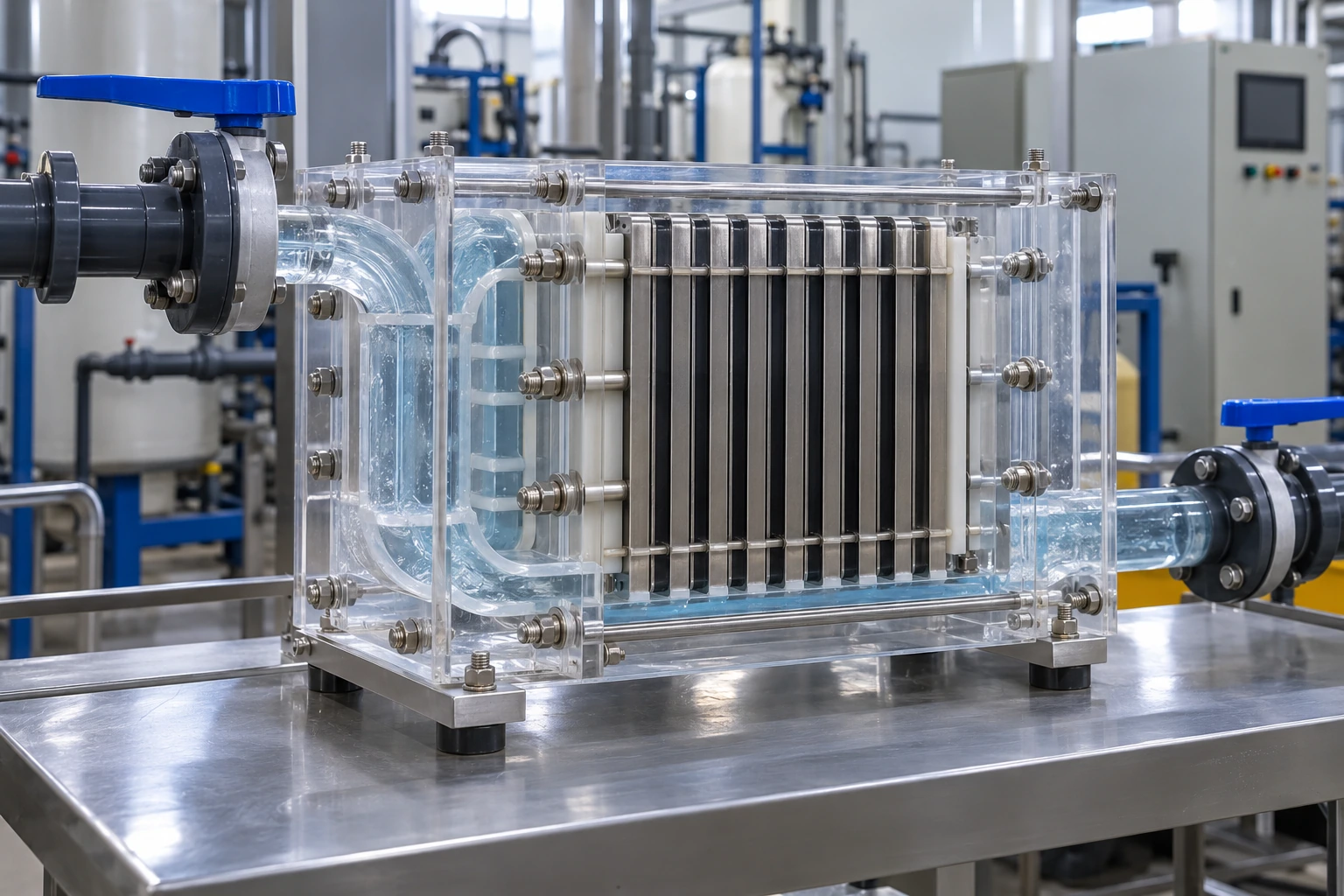
A Titanium electrode stack adds parallel channels where flow distribution and pressure loss can vary from passage to passage. Total flow divided by channel count cannot prove equal delivery.
Check manifolds and gaps as one hydraulic system
Manifolds, plate spacing, seals, supports, and gas paths divide flow among stack channels; a blocked passage can leave electrode area poorly supplied. Review the complete flow path. Compare assembled geometry with the planned operating orientation.
- Record channel count, gap, inlet direction, and outlet arrangement.
- Compare pressure and sampling points across the cell where access permits.
| Check | Decision |
|---|---|
| Manifold | Distributes incoming liquid |
| Electrode gap | Carries local flow |
A stack drawing communicates hydraulic and electrical boundaries together. Key Takeaway: Submit a flow-path drawing with electrode dimensions for review.
8. How should engineers map transport near a Titanium electrode?

A Titanium electrode transport map should connect test results with active area, flow path, and target concentration.
Measure transport where the reaction occurs
Controlled limiting-current tests isolate selected species; actual water reveals competing chemistry and fouling. Keep the test matrix representative. In hypochlorite-generation systems, chloride delivery can also shape oxidant production at the anode.
- Document electrode orientation, active area, spacing, and sample points.
- Use actual wastewater for validation after controlled tests identify transport trends.
| Check | Decision |
|---|---|
| Controlled test | Isolates selected species |
| Wastewater test | Includes matrix effects |
A model can guide test placement but cannot replace measured feed behavior. Key Takeaway: Connect transport estimates with pilot data from the intended water.
9. How can a pilot test compare Titanium electrode hydrodynamics?
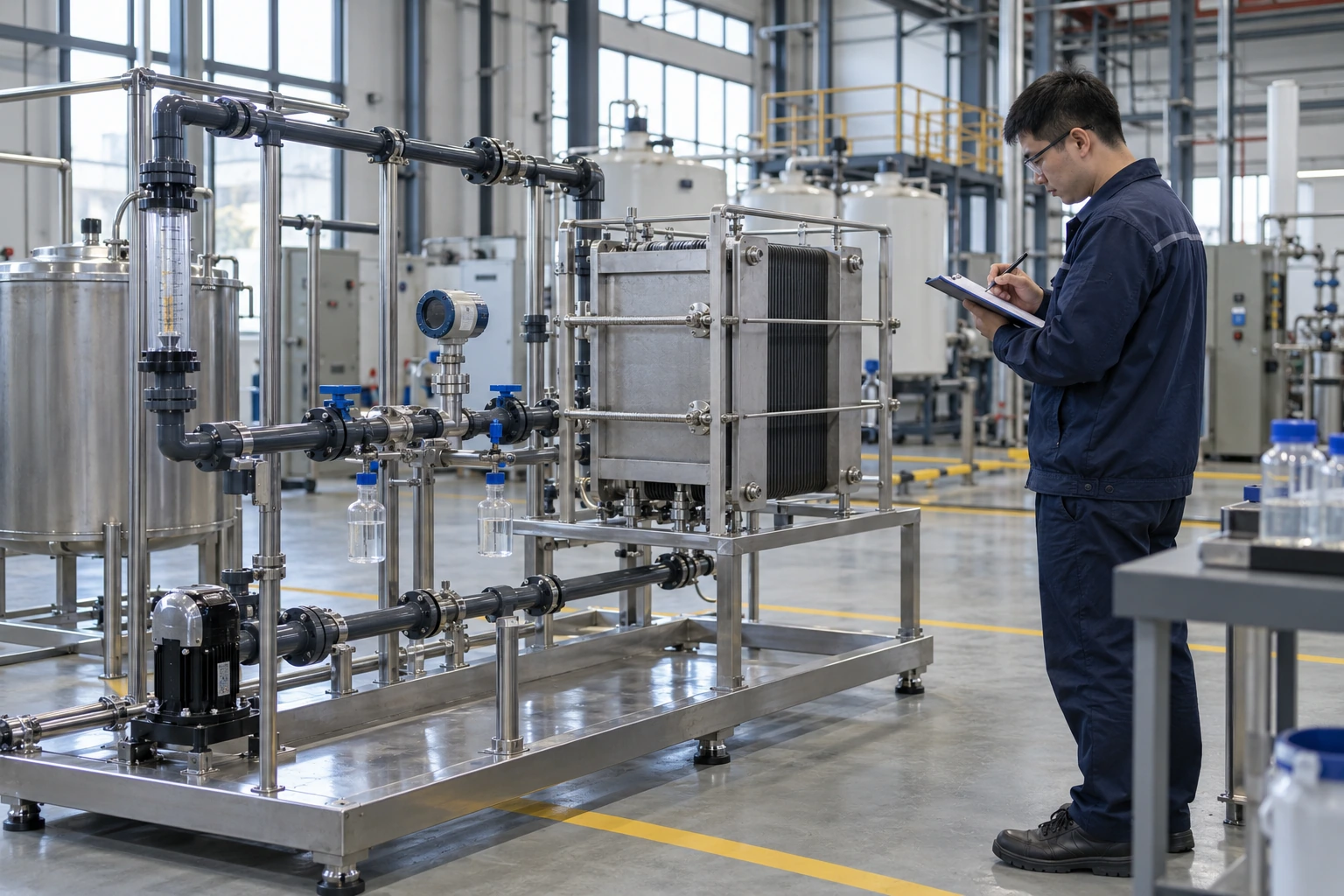
A Titanium electrode pilot can compare hydrodynamic changes when inlet flow, current, water composition, and electrode geometry are recorded together. A test without matched conditions cannot isolate mass transfer.
Build a test around competing explanations
Change one factor at a time and collect matched feed and outlet samples; record pressure, temperature, conductivity, current, and deposits. Keep a reproducible baseline intact. Retain flow paths, electrode condition, and test sequence with each comparison.
- Set sample timing and target analysis before changing flow or current.
- Retain drawings, test sequence, and cell condition with each result.
| Check | Decision |
|---|---|
| Matched test | Supports causal comparison |
| Unmatched test | Blends several effects |
Useful scale-up evidence depends on comparable water and documented geometry. Key Takeaway: Agree on a pilot matrix before interpreting a current plateau.
10. What operating data belong in a Titanium electrode review?

A Titanium electrode review needs the water matrix, duty, and cell geometry behind any requested mass-transfer claim. ARY Titanium reviews titanium electrode forms against buyer drawings and stated application conditions.
Send data that define the interface
Send target species, concentration range, conductivity, temperature, flow mode, electrode spacing, active area, and sample locations; label pilot data and assumptions. Make the test boundary very clear. To request a product review, contact us today with a drawing and the stated test conditions.
- Attach flow-path drawings and current, voltage, flow, and sample records.
- State whether you need a component fit review or a process validation plan.
| Check | Decision |
|---|---|
| Process data | Water and operating range |
| Cell data | Geometry and flow path |
A precise scope keeps electrode selection separate from a treatment guarantee. Key Takeaway: Request review after defining the target and test conditions.
Frequently Asked Questions
Can I raise current to overcome a mass-transfer limit? Not without evidence; added current may feed side reactions when transport remains limiting.
What's the best way to confirm transport control? Pair a controlled transport test with target concentration, flow, and electrical measurements under defined water conditions.
How do I know if voltage rise means poor mass transfer? You cannot tell from voltage alone. Conductivity, electrode gap, deposits, contact, and gas coverage can also affect voltage.
Can I use one limiting-current value for every wastewater? No; concentration, species, water properties, surface condition, and hydrodynamics change the observed limit.
How do I know if more flow will improve treatment? Compare matched tests at different flows while measuring target response, pressure, and current. Higher flow can also change energy demand.