
Rectifier ripple can affect a Titanium electrode through fluctuating current or voltage, but its significance depends on waveform, chemistry and control mode. Your panel shows steady amperage while a supplier asks about ripple. That average may hide peaks or brief reversals, leaving your coating trial poorly defined. A measured waveform and an agreed test protocol give you a defensible power-supply requirement.
1. What is Titanium electrode rectifier ripple?

Titanium electrode rectifier ripple is the time-varying component superimposed on a nominal DC output. Noise and switching transients may accompany it, so a single percentage needs a measurement definition.
What does the specification describe?
Read beyond the percentage. Ask whether your supplier reports voltage ripple or current ripple, over which bandwidth, and at what load. A specification measured elsewhere may not describe your operating cell.
- Identify RMS or peak-to-peak reporting.
- Record measurement bandwidth and load.
| Check | Decision |
|---|---|
| Undefined ripple figure | Cannot support a comparison |
| Defined metric and conditions | Can be tested against a requirement |
Start comparisons with matching definitions. Key Takeaway: A ripple percentage without a method is incomplete procurement data.
2. Why can Titanium electrode averages hide peaks?

A Titanium electrode average-current display can hide short peaks because its update rate and averaging method smooth the signal. A stable number does not establish a flat waveform.
What happens between display updates?
Capture the time scale. Select instrumentation with suitable bandwidth and range through a qualified electrical specialist. Avoid treating a slow process logger as a substitute for waveform measurement.
- Record sampling and averaging settings.
- Check for clipping or sensor saturation.
| Check | Decision |
|---|---|
| Panel average | Useful for routine process tracking |
| Waveform capture | Reveals excursions between updates |
Use each instrument for the question it can answer. Key Takeaway: Average current and instantaneous current describe different parts of duty.
3. How do Titanium electrode ripple and pulses differ?

Titanium electrode ripple is unwanted variation around an intended output, while pulse operation deliberately programs current changes. A waveform crossing into reversal introduces another coating-compatibility question.
Are the changes intentional?
Separate three operating modes. Describe DC ripple, commanded pulses and commanded reversal independently. Do not accept a pulse-capable supply description as evidence that your electrode tolerates every available program.
- State whether current changes polarity.
- Keep commanded and measured waveforms together.
| Check | Decision |
|---|---|
| DC ripple | Variation around nominal DC |
| Pulse or reversal | Programmed duty needing qualification |
Classify the waveform before evaluating its effects. Key Takeaway: Power-supply capability does not establish electrode compatibility.
4. Where should Titanium electrode ripple be measured?
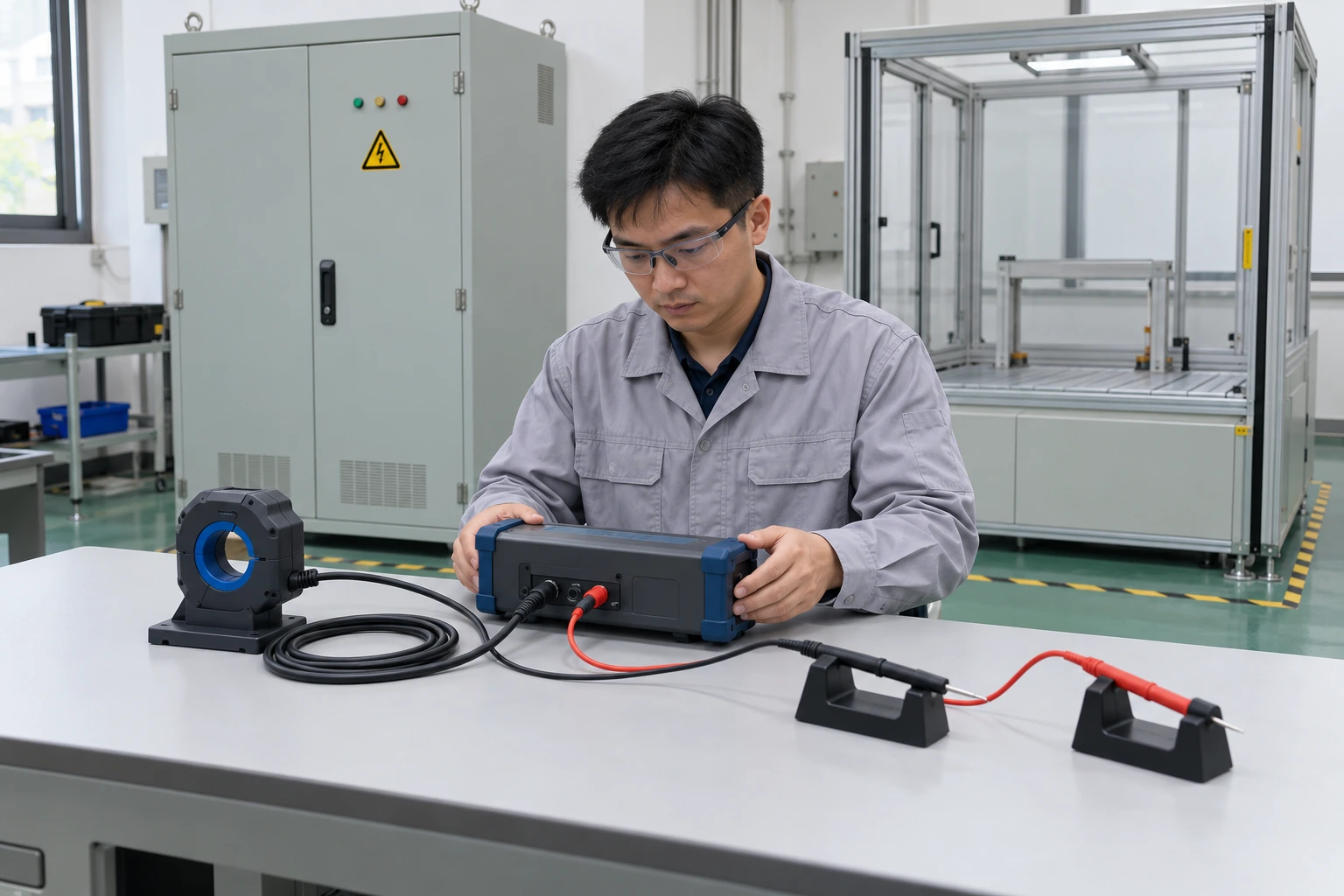
Titanium electrode ripple should be measured at defined electrical points relevant to the cell, using a safe approved measurement arrangement. Cabling and sensing locations can change what an instrument sees.
Where should your test boundary sit?
Agree on the sensing arrangement. Include measurement points and connection geometry in a custom engineering review. Qualified personnel should select isolation, probe ratings and grounding practices for that installation.
- Mark sensing points on a drawing.
- Retain instrument and probe identifiers.
| Check | Decision |
|---|---|
| Supply measurement | Describes output at that boundary |
| Cell measurement | Describes delivered operating waveform |
Keep both records if conductor effects are under investigation. Key Takeaway: Repeatable probe placement makes later comparisons meaningful.
5. Which Titanium electrode ripple metric matters?
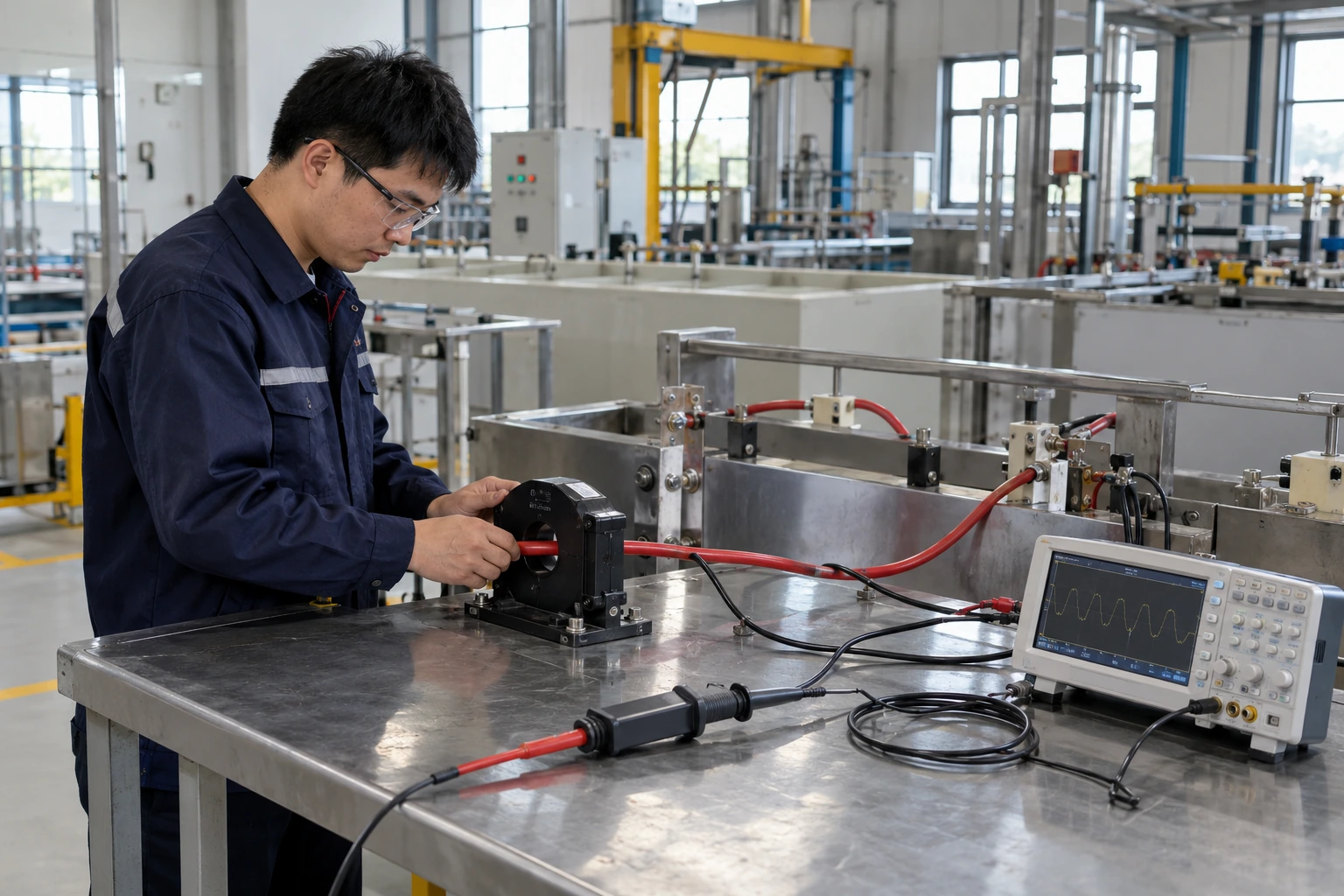
Current ripple usually needs particular attention during current-controlled Titanium electrode operation, while voltage ripple describes a different electrical quantity. Report both when the process question requires them.
Which metric answers your concern?
Match the metric to the mechanism. Heating, peak current density and control stability need different evidence. You cannot convert an undefined voltage-ripple figure into a coating-life prediction.
- Report amplitude and frequency information.
- State nominal current and active-area convention.
| Check | Decision |
|---|---|
| Peak current concern | Examine current waveform |
| Control concern | Review voltage and current together |
Choose measurements before setting acceptance limits. Key Takeaway: A useful specification names the electrical behavior you want controlled.
6. Can cabling alter Titanium electrode measurements?

Titanium electrode cabling can alter measured transients through resistance, inductance and measurement-loop pickup. Some apparent noise may come from your test arrangement rather than actual cell current.
Could your measurement be adding noise?
Check the test setup itself. Have a specialist review lead routing, transducer placement and instrument settings. Repeat an approved measurement arrangement before interpreting small differences between rectifiers.
- Document cable length and routing.
- Keep measurement leads away from avoidable interference.
| Check | Decision |
|---|---|
| Setup-dependent trace | Investigate measurement artifacts |
| Repeatable trace | Proceed with process interpretation |
A repeatable waveform deserves more weight than a single capture. Key Takeaway: Confirm measurement quality before changing production hardware.
7. Does ripple prove Titanium electrode damage?

Ripple alone does not prove Titanium electrode damage or predict a universal service-life reduction. Coating formulation, electrolyte and waveform exposure must be evaluated together.
What evidence would support a damage claim?
Request a matched comparison. Look for measured electrical duty alongside surface inspection and process output. Reject a lifetime multiplier that omits electrolyte, temperature or current-density conditions.
- Check coating identity and test duration.
- Distinguish damage observations from proposed mechanisms.
| Check | Decision |
|---|---|
| Waveform only | Shows electrical exposure |
| Controlled comparison | May support a process-specific finding |
Keep observation separate from extrapolation. Key Takeaway: Do not buy or reject a rectifier based on unsupported lifespan claims.
8. How should Titanium electrode ripple trials run?
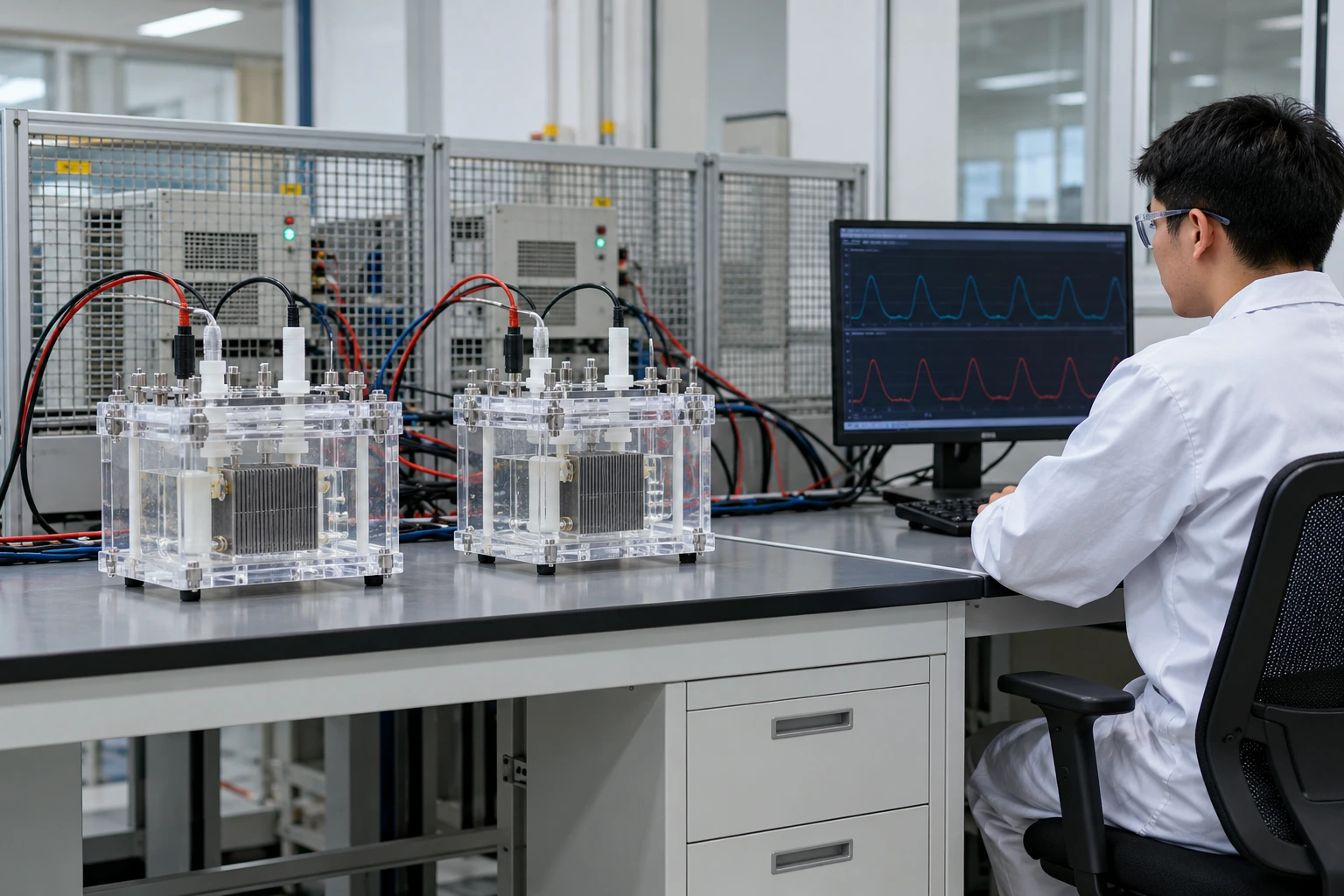
A Titanium electrode ripple trial should hold chemistry, geometry, current basis and sampling method constant while changing the intended electrical variable. Otherwise, differences cannot be assigned cleanly to ripple.
How can you avoid a mixed-variable trial?
Freeze the process conditions. For water-treatment applications, include output measurement and feed sampling in the trial plan. Record any unavoidable deviation rather than quietly treating it as equivalent.
- Use comparable electrode samples.
- Define endpoints and stop conditions beforehand.
| Check | Decision |
|---|---|
| Multiple variables changed | Interpretation remains limited |
| Controlled electrical change | Supports a focused comparison |
Use the trial design to constrain your claim. Key Takeaway: A narrower comparison gives a more useful purchasing answer.
9. What should a Titanium electrode power brief include?

A Titanium electrode power brief should include operating mode, measured waveform, nominal current, active area and permitted operating envelope. Rectifier nameplate ratings alone leave several application questions unanswered.
What should purchasing attach?
Bundle the electrical and process data. Include electrolyte, temperature range and reversal status with your waveform files. Ask both equipment and electrode suppliers to review their own responsibility boundaries.
- Attach native waveform data when available.
- Identify normal and upset conditions.
| Check | Decision |
|---|---|
| Electrical brief | Defines supplied duty |
| Process brief | Defines material exposure |
Review both before accepting a power specification. Key Takeaway: Keep electrode and rectifier requirements in the same technical package.
10. How do you settle Titanium electrode ripple limits?

Titanium electrode ripple limits should follow validated application requirements and a repeatable measurement method. There is no single percentage that qualifies every coating and electrolyte.
Make the requirement measurable
Bring your actual waveform. When you contact us today, share power data and chemistry so we can review the electrode-side requirements. We support specifications that can be checked under your operating conditions.
- Agree on metric, bandwidth and load.
- Record how deviations will be handled.
| Check | Decision |
|---|---|
| Measurable limit | Can become an acceptance test |
| Unqualified percentage | Needs clarification before purchase |
Close the review with a testable acceptance condition. Key Takeaway: Buy against a defined operating requirement, not an isolated ripple claim.
Frequently Asked Questions
Can I use the rectifier's panel reading to assess ripple? Usually not by itself. Panel averages may conceal fast variations, so waveform measurements need suitable instrumentation.
What's the best ripple percentage for an MMO anode? No universal value applies. Agree on coating-specific duty, measurement method and process acceptance with your suppliers.
How do I know if my waveform reverses? Use a qualified waveform measurement. A positive average can coexist with brief negative excursions that a slow display misses.
Can I compare two rectifiers using voltage ripple alone? Only for a clearly defined voltage requirement. Current-controlled electrode duty may also require current-waveform comparison.
Can I claim longer electrode life from lower ripple? Only with supporting application evidence. Lower measured ripple by itself does not quantify a service-life benefit.