
Rising cell voltage usually signals added electrical resistance or changed electrode reactions, but it does not identify a failed anode by itself. You arrive for a shift and find a higher rectifier reading at yesterday's current. Replacing your Titanium electrode immediately could leave a blocked channel or loose connection untouched. Compare matched operating conditions, then isolate where that extra voltage appears.
1. What does rising Titanium electrode voltage mean?

Rising Titanium electrode cell voltage means more electrical potential is required for the measured current under those conditions. A sudden step and a slow drift deserve different investigations.
Start with the shape of the change
Put a time stamp on it. Match voltage changes against feed deliveries, maintenance, temperature and controller events. You need an incident timeline before you need a replacement quotation.
- Separate abrupt changes from gradual trends.
- Retain readings from stable operation.
| Check | Decision |
|---|---|
| Sudden step | Check recent events and connections |
| Slow drift | Compare chemistry, deposits and ageing |
Use timing to narrow your next inspection. Key Takeaway: Preserve operating history before changing components.
2. Where is Titanium electrode voltage being measured?
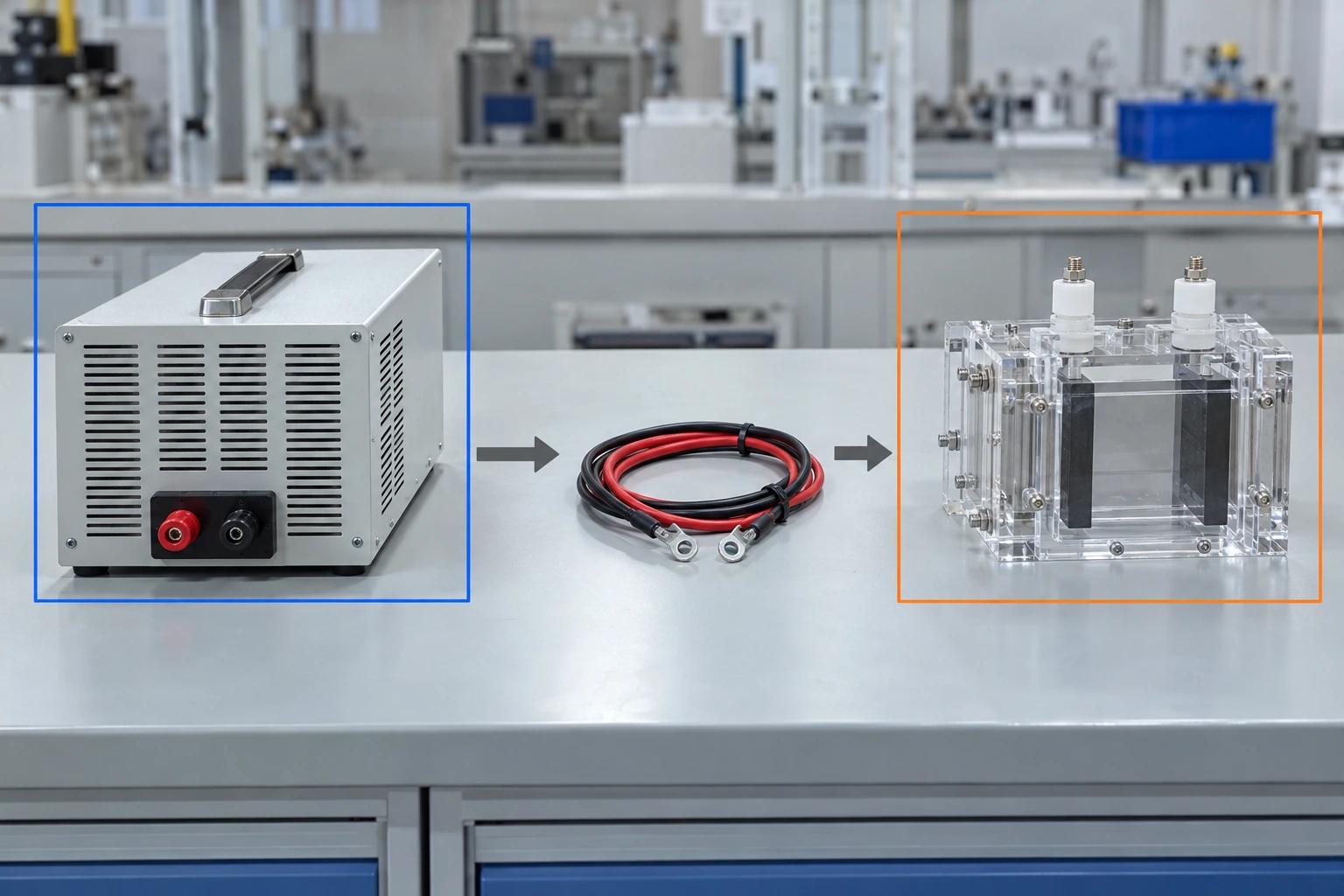
Titanium electrode voltage should be compared at consistent measurement points, because rectifier terminals also include losses along connecting conductors. Cell voltage alone still includes both electrode interfaces and electrolyte resistance.
Which boundary are you comparing?
Separate the measurement boundaries. Have qualified electrical personnel check your approved sensing points with appropriately rated instruments. Do not move live probes around exposed busbars as an informal troubleshooting exercise.
- Record rectifier and cell sensing locations.
- Keep instrument range and calibration consistent.
| Check | Decision |
|---|---|
| Supply terminals | Includes external conductor losses |
| Cell terminals | Captures electrochemical assembly losses |
A boundary mismatch can imitate a process change. Key Takeaway: Compare like measurement points before interpreting a trend.
3. Can conductivity raise Titanium electrode voltage?

Lower electrolyte conductivity can raise Titanium electrode cell voltage at unchanged current, although temperature and composition also affect electrode behavior. A feed concentration label cannot replace an actual conductivity measurement.
What changed in the feed?
Check a retained sample. Measure inlet conductivity alongside temperature using your approved method. Compare those results with a known stable run before blaming coating condition.
- Sample from a consistent inlet location.
- Record concentration and temperature together.
| Check | Decision |
|---|---|
| Conductivity changed | Investigate feed preparation |
| Conductivity stable | Continue through other loss sources |
A matched feed comparison removes one common confounder. Key Takeaway: Treat chemistry as measured evidence, not a recipe assumption.
4. How does flow affect Titanium electrode voltage?

Restricted flow can raise Titanium electrode voltage when gas coverage or local chemistry changes inside reaction channels. A normal main-line flow reading cannot prove that every channel receives enough liquid.
Could flow be taking another route?
Follow the actual channel path. Include inlet geometry, outlet restrictions and bypass possibilities in a custom engineering review. Avoid increasing current while an unexplained circulation fault remains.
- Compare differential pressure with baseline.
- Check valve positions and return paths.
| Check | Decision |
|---|---|
| Changed pressure loss | Inspect restrictions safely |
| Normal bulk flow | Still check distribution |
Look for a hydraulic explanation before changing coatings. Key Takeaway: Bulk flow and useful channel flow are different measurements.
5. Can contacts distort Titanium electrode voltage?

A resistive connection can increase apparent Titanium electrode supply voltage and create local heating without any coating failure. Connection checks must follow electrical isolation and your site's maintenance procedure.
Are external losses growing?
Inspect outside the electrolyte. Ask qualified personnel to compare approved voltage-drop or thermal measurements against earlier records. Document moisture exposure, corrosion and assembly changes without prescribing a universal tightening torque.
- Inspect dry terminal condition after isolation.
- Use the connection supplier's assembly specification.
| Check | Decision |
|---|---|
| Localized contact loss | Repair under approved procedure |
| External losses unchanged | Investigate inside the cell |
Keep electrical and electrochemical faults in separate branches. Key Takeaway: An anode replacement cannot repair a resistive cable joint.
6. Does scale explain Titanium electrode voltage drift?

Deposits may raise Titanium electrode cell voltage by restricting flow or changing accessible reaction area, but their appearance alone does not establish composition. Photograph deposits before any approved cleaning.
What evidence survives cleaning?
Save the deposit history. Record which surface, edge or channel accumulated material. Let your equipment and coating suppliers review a compatible cleaning method rather than testing an improvised acid mixture.
- Map deposit locations on both electrodes.
- Retain a sample when analysis is warranted.
| Check | Decision |
|---|---|
| Deposit identified | Review its source and removal |
| Unknown residue | Obtain analysis before cleaning |
Location can be as useful as deposit mass. Key Takeaway: Preserve evidence before cleaning removes the clues.
7. Can the cathode raise Titanium electrode voltage?

The cathode can raise Titanium electrode cell voltage through deposits, poor electrical contact or changed reaction conditions. A two-terminal reading cannot assign every increase to the anode.
Have you inspected the other electrode?
Include both reaction surfaces. Compare cathode condition with its own operating history. Where needed, a qualified electrochemist can plan separate electrode-potential measurements using a suitable reference arrangement.
- Keep anode and cathode photographs paired.
- Check cathode connections and deposits.
| Check | Decision |
|---|---|
| Whole-cell voltage | Combines several contributions |
| Separate potential study | Helps locate an interface change |
Use component evidence before choosing a replacement. Key Takeaway: Whole-cell voltage is a diagnostic signal, not an anode verdict.
8. What trend confirms Titanium electrode deterioration?

Titanium electrode deterioration becomes more plausible when voltage remains abnormal after verified feed, flow, temperature and connection checks. You still need coating evidence and process-output data before assigning cause.
What makes the comparison credible?
Recreate a documented baseline. In water-treatment applications, compare output as well as electrical behavior under matched conditions. Stop short of claiming a lifetime estimate from one elevated reading.
- Hold current and active area consistent.
- Record product measurement method and sampling time.
| Check | Decision |
|---|---|
| Several conditions changed | Result remains confounded |
| Matched conditions | A component comparison becomes useful |
A controlled comparison supports a narrower diagnosis. Key Takeaway: Use repeatable evidence to separate ageing from operating drift.
9. When should Titanium electrode operation stop?
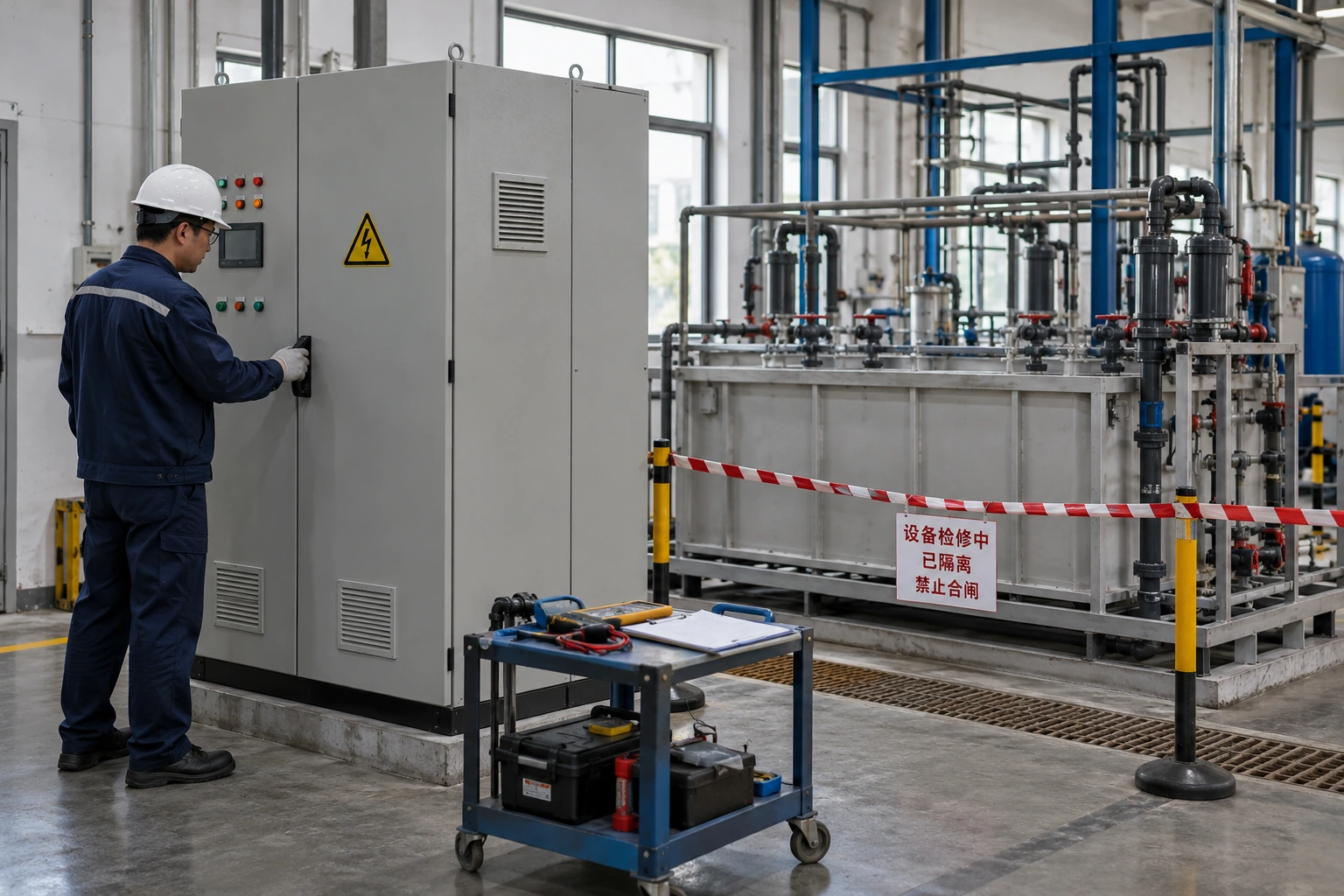
Titanium electrode operation should stop according to approved trip limits and any unresolved leak, abnormal heating or gas-management fault. This guide does not supply safe operating thresholds for your equipment.
When does troubleshooting become a shutdown task?
Respect the protection envelope. Follow site procedures for isolation and qualified review. Do not defeat an interlock to gather another data point.
- Preserve alarms and event records.
- Investigate the initiating fault before restart.
| Check | Decision |
|---|---|
| Protection activated | Follow the shutdown procedure |
| Cause unresolved | Keep restart under engineering review |
Safety limits take priority over diagnostic convenience. Key Takeaway: Investigate faults within your approved operating and maintenance controls.
10. What Titanium electrode evidence should you send?

A useful Titanium electrode review needs matched voltage-current records, feed analysis, cell geometry and photographs of both electrodes. These records separate external losses, hydraulic restrictions and plausible coating changes.
Turn the symptom into a reviewable case
Send the comparison, not a guess. Share your drawing and operating record when you contact us today; we can review electrode fit and coating requirements within your process scope. Our position is straightforward: replacement recommendations should follow evidence.
- Include a stable baseline and incident timeline.
- Identify what was changed or cleaned.
| Check | Decision |
|---|---|
| Operating evidence | Supports cause screening |
| Drawing and sample | Supports component review |
Agree on the next discriminating check. Key Takeaway: Ask for a defined technical review before ordering another anode.
Frequently Asked Questions
Can I keep running if voltage rises slowly? Only within approved limits. A slow trend still needs review alongside temperature, flow, output and protection status.
Can I lower voltage by adding more salt? Do not change feed chemistry without approval. Higher conductivity may lower resistance while creating different process or material risks.
How do I know if the coating is worn? You need more than voltage. Matched operating tests and appropriate surface inspection help distinguish wear from deposits or feed changes.
What's the best reading to send a supplier? Send paired current and voltage with sensing locations. Add feed conductivity, temperature, flow and the previous stable baseline.
Can I diagnose the anode from a rectifier display? Only partly. That reading includes contributions beyond the anode, so it cannot establish the failure mechanism alone.