
A titanium electrode can close a terminal circuit in reverse electrodialysis, while a salinity gradient drives ion transport through its membrane stack. Buyers comparing RED with powered electrodialysis can assign the wrong job to end electrodes. This guide separates membrane transport, terminal reactions, and rinse-loop questions. Start a supplier conversation with a Titanium electrode drawing, feed-stream details, and a clear electrical boundary.
1. How Does a Titanium electrode Fit a RED Stack?

A Titanium electrode can sit at a RED stack end, where electrode reactions connect ionic current inside the stack with electron flow through an external circuit.
Follow the ion route
Keep each path separate. Alternating cation- and anion-exchange membranes maintain selective paths as high- and low-salinity feeds move through different compartments. A gradient supplies driving potential; terminal reactions close that circuit.
- High- and low-salinity streams flow through alternating channels separated by ion-exchange membranes.
- Electrons travel through an external circuit while ions carry current through liquid and membranes inside it.
| Check | Decision |
|---|---|
| Salinity gradient | Drives ion transport through selective membrane pairs |
| Terminal electrode | Closes charge transfer through electrode-electrolyte reactions |
RED output depends on the full stack and feed pair, not on electrode material alone. Key Takeaway: Map each feed stream and membrane path before choosing terminal-electrode details.
2. How Does a Titanium electrode Differ Across ED Processes?
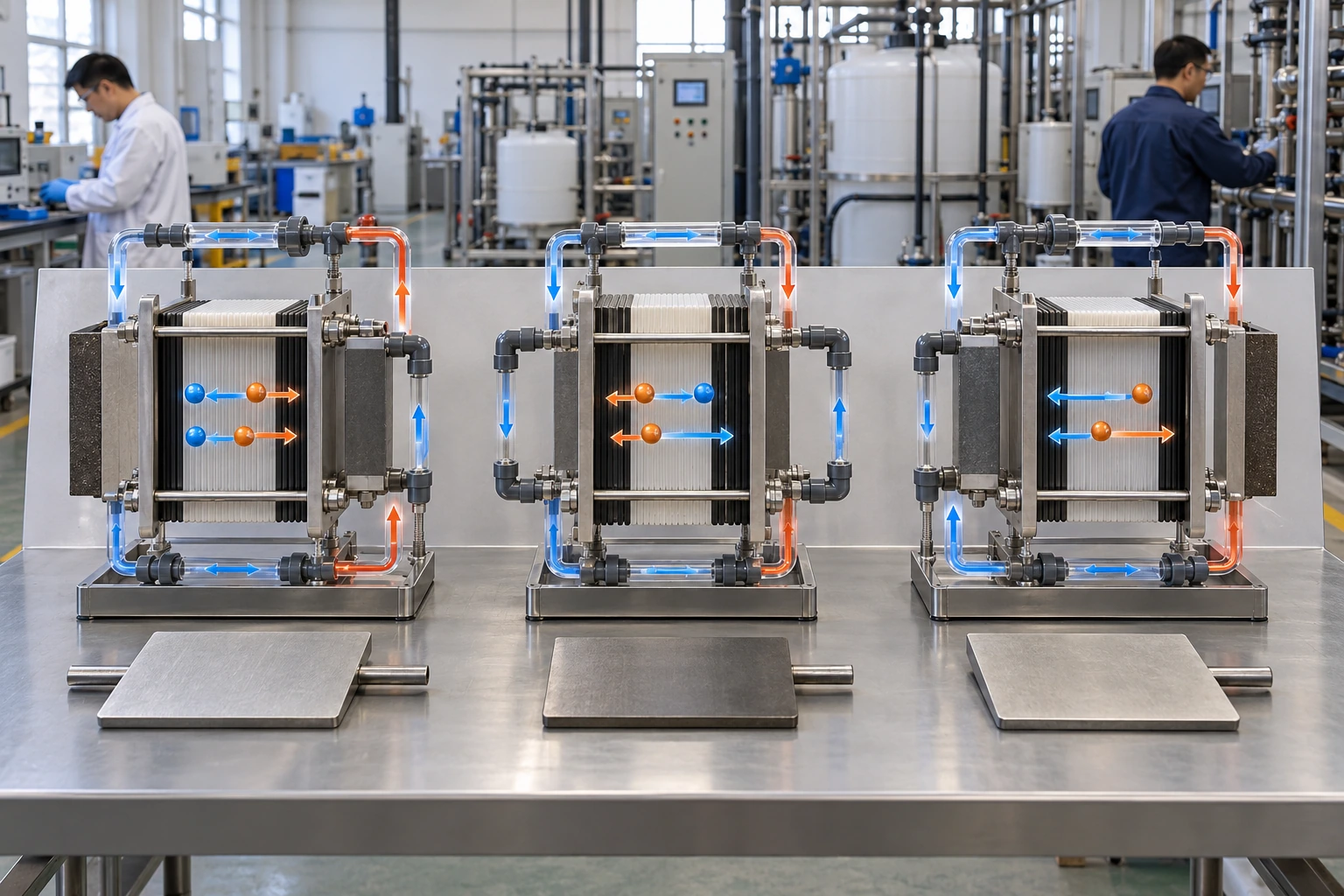
A Titanium electrode in RED belongs to a salinity-gradient power process; EDR uses supplied current for ion separation and periodically reverses polarity.
Separate the process names
Put power direction on the drawing. Conventional ED consumes electrical power to move ions between diluate and concentrate channels. RED converts a concentration difference into electrical output; EDR uses supplied current for separation and scheduled polarity reversals. Similar membrane stacks can serve different system objectives.
- RED buyers should map both feed salinities and the external electrical load.
- EDR reviews should include polarity state, stream routing, and reversal control boundaries.
| Check | Decision |
|---|---|
| RED | Salinity difference supplies the driving potential |
| EDR | Power input drives separation; reversal changes ion direction |
The acronym alone does not identify whether a project generates or consumes power. Key Takeaway: Use a process flow sketch that shows the energy source and desired output.
3. What Moves Charge Past a Titanium electrode?
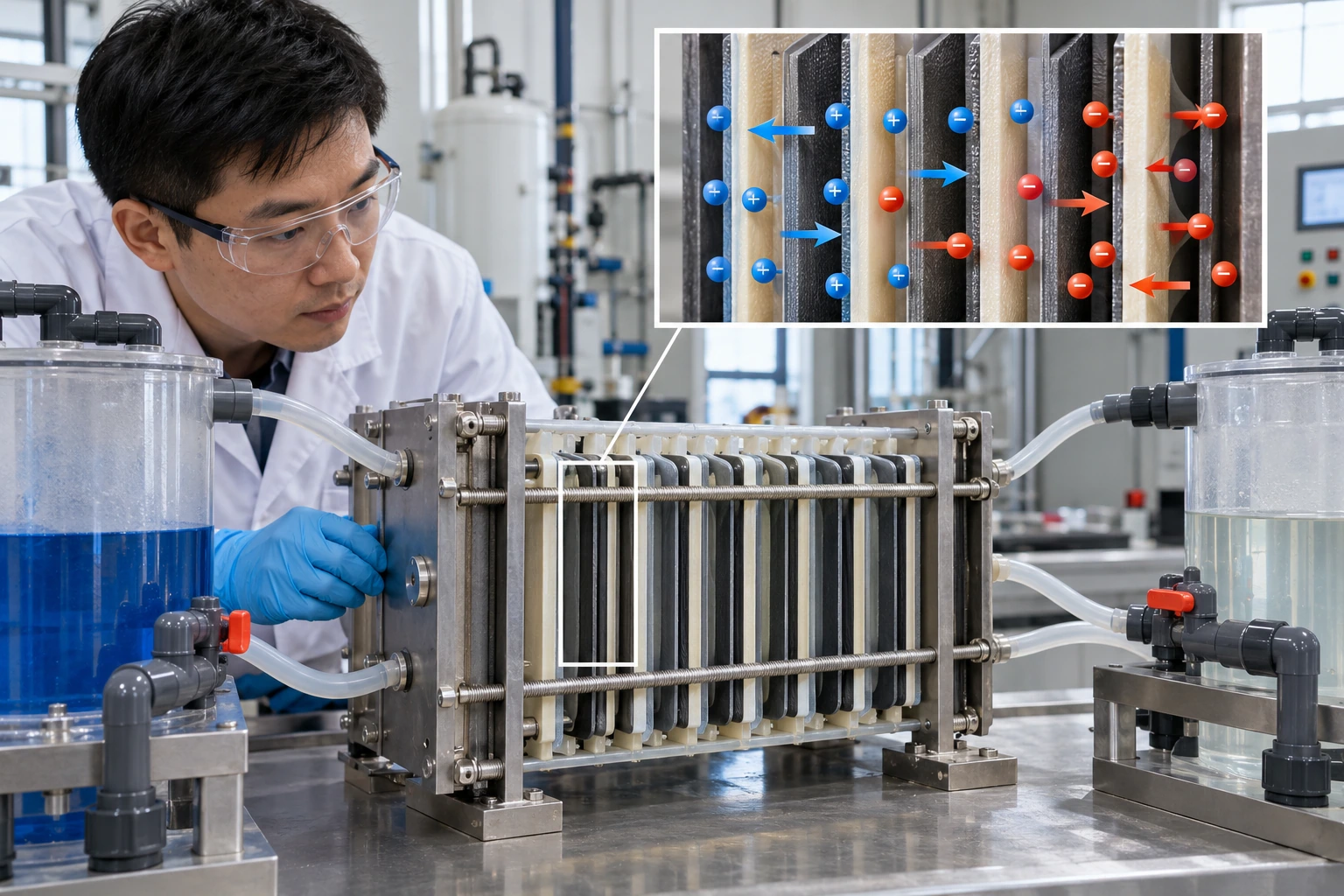
A Titanium electrode closes RED's terminal circuit, while ion-exchange membranes carry ionic current through its stack.
Trace charge through the stack
Follow charge on both sides. AEMs favor anion transport and CEMs favor cation transport under the stack potential. Electrons move through an external conductor, so the electrode and rinse compartment must complete charge balance without replacing membrane selectivity.
- Mark each membrane type and its orientation relative to the high- and low-salinity channels.
- Separate external wiring from internal liquid channels on the process drawing.
| Check | Decision |
|---|---|
| Internal path | Ions move through solution channels and membranes |
| External path | Electrons pass between terminal electrodes through a load |
A stack drawing becomes easier to review when ionic and electronic paths use different symbols. Key Takeaway: Ask the system designer to identify both paths before reviewing electrode connections.
4. Which Reactions Reach a Titanium electrode?
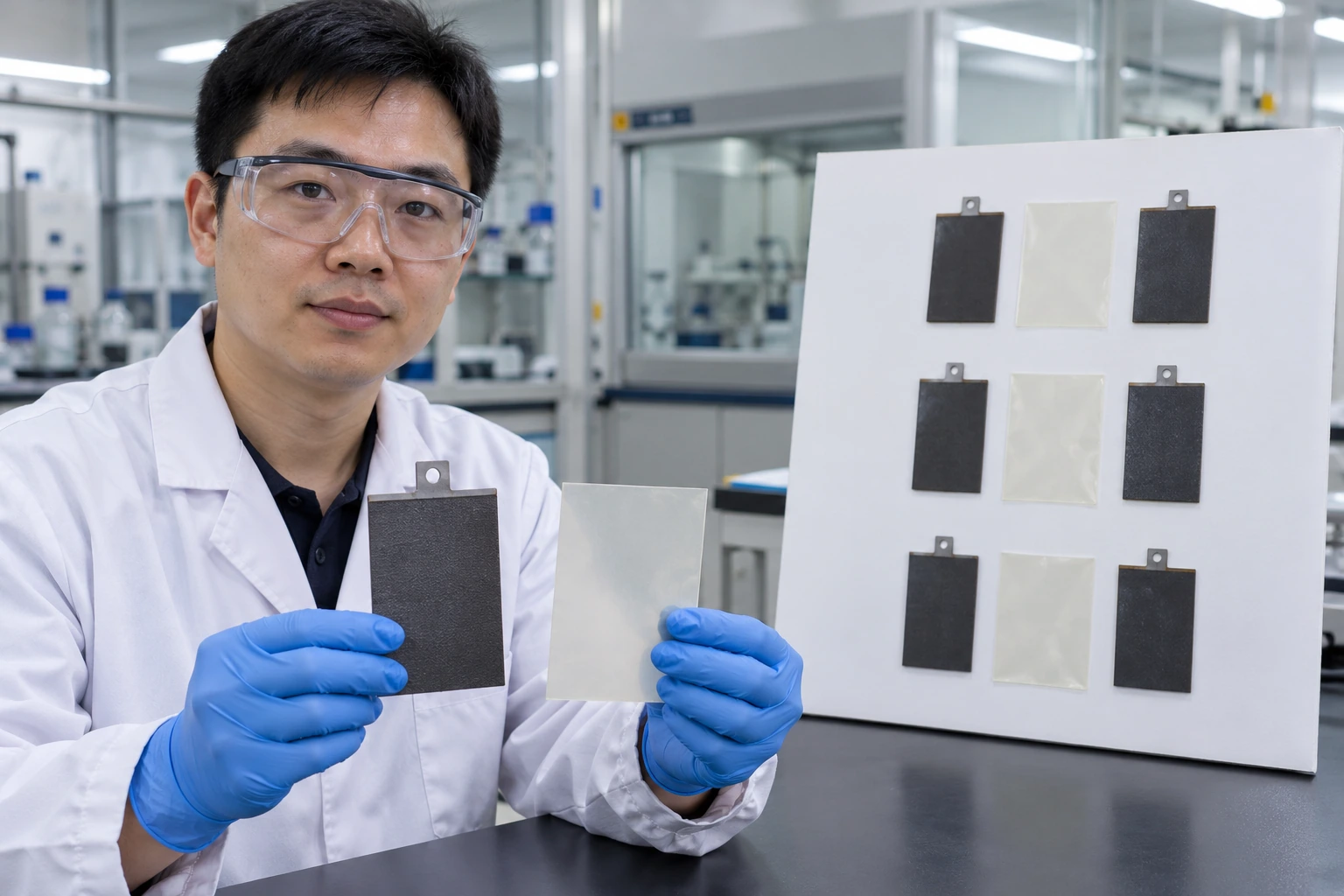
A Titanium electrode supports terminal oxidation or reduction reactions; membrane-junction transport remains a separate part of the RED stack.
Keep terminal chemistry in view
The end compartment sets a separate duty. Electrode reactions balance charge in terminal electrolyte, while membrane pairs manage salt-ion transport. A drawing for custom stack-interface review should show reaction environment, exposed surface, circuit, and rinse path.
- Review specified electrode coating and exposed substrate against intended rinse chemistry.
- Show the terminal compartments, rinse ports, and electrical connections on one interface drawing.
| Check | Decision |
|---|---|
| Membrane stack | Controls selective transport between process channels |
| Terminal compartment | Hosts electrode reactions and its own rinse circuit |
Choosing a terminal plate by material label alone can hide its reaction environment. Key Takeaway: Show plate geometry, compartment boundaries, and rinse routing together on the interface drawing.
5. How Should a Titanium electrode Match Rinse Chemistry?

Assess a Titanium electrode against project rinse chemistry because that liquid contacts its reaction surface.
Match materials with rinse duty
Chemistry belongs beside the drawing. Identify rinse composition, operating temperature, expected pH range, conductivity, and whether the loop recirculates. A literature recipe from another RED test does not establish compatibility for a different coating, concentration, or flow arrangement.
- List all rinse constituents and likely contaminants from adjacent process streams.
- State whether the rinse loop is open, recirculated, sampled, or subject to periodic replacement.
| Check | Decision |
|---|---|
| Rinse review | Check composition, temperature, and exposure duration |
| Electrode review | Confirm substrate, coating, connection, and polarity duty |
Compatibility depends on both exposed surface and actual chemical environment. Key Takeaway: Send rinse details with the electrode drawing instead of requesting a material match in isolation.
6. How Does a Titanium electrode Affect Stack Resistance?
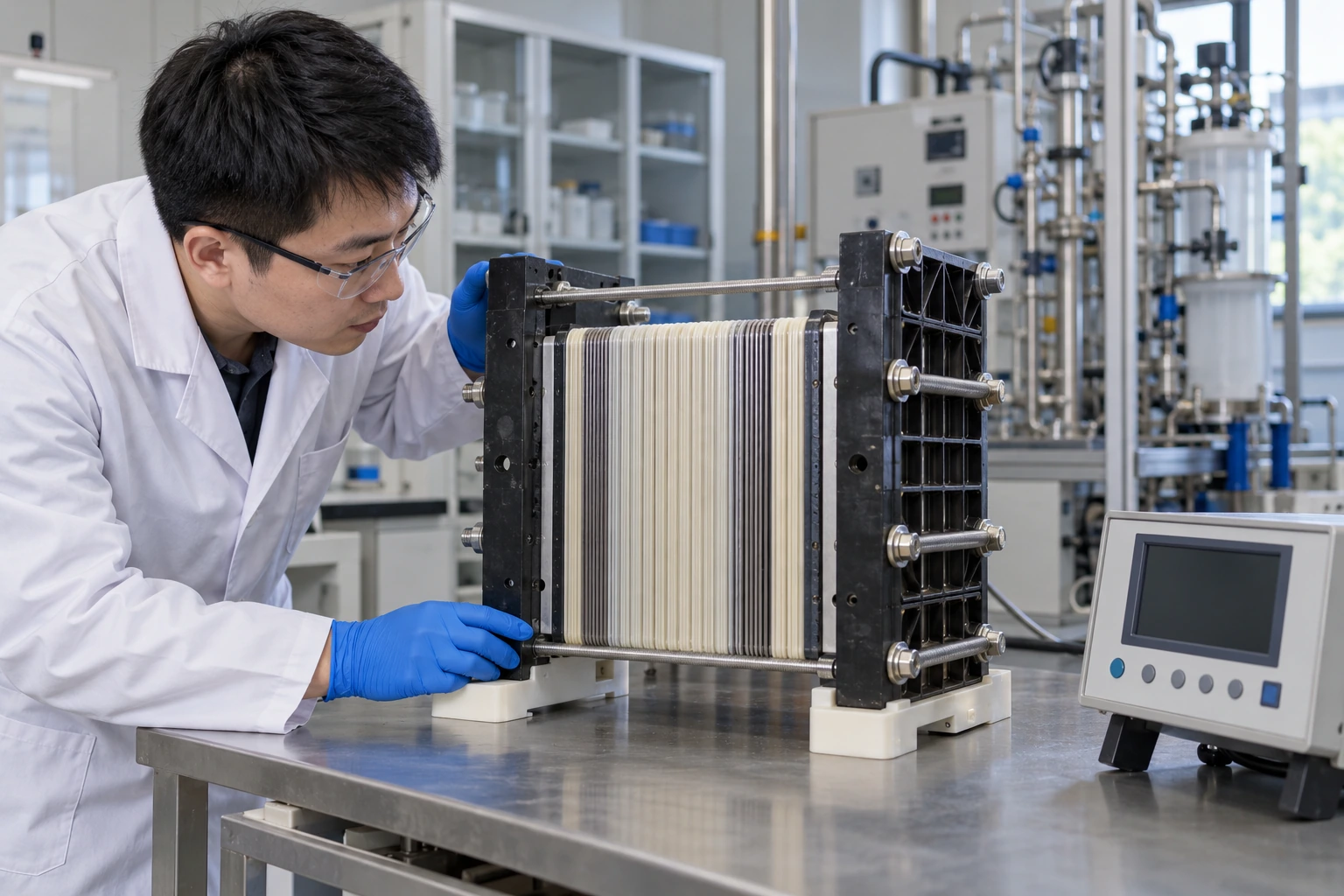
A Titanium electrode can affect terminal resistance and polarization, while membranes, spacers, channels, and feed conductivity also shape stack losses.
Read resistance as a system result
Separate the losses before changing area. Membrane resistance, solution conductivity, spacer geometry, and boundary layers contribute inside the stack. Electrode surface condition and reaction overpotential affect terminal behavior, so a voltage change alone does not identify which part needs revision.
- Record current and voltage alongside feed conductivity, temperature, and flow conditions.
- Compare membrane and electrode interfaces separately when diagnosing a change in output.
| Check | Decision |
|---|---|
| Stack-side losses | Membranes, liquid channels, and spacers |
| Terminal-side losses | Electrode surface, reaction kinetics, and rinse conditions |
A resistance trend becomes useful only when operating conditions stay visible beside it. Key Takeaway: Request a component-level review before changing electrode dimensions from one voltage reading.
7. What Data Should a Titanium electrode Trial Record?

A Titanium electrode trial should record enough electrical, hydraulic, and chemistry data to separate membrane behavior from terminal reactions.
Build a useful trial record
Make each reading traceable. Record stream identities, inlet composition, flow, temperature, stack voltage, current, and load condition. Track rinse composition and sample timing separately; otherwise, a shift at the terminal loop can look like a membrane effect.
- Use paired inlet and outlet samples for high-salinity, low-salinity, and rinse circuits.
- Note membrane arrangement, electrode orientation, and any changes between test runs.
| Check | Decision |
|---|---|
| Electrical log | Current, voltage, and external load condition |
| Process log | Stream chemistry, flow, temperature, and sample time |
Good trial data ties each measurement to a specific stream and operating state. Key Takeaway: Agree on sample locations and record fields before a pilot run begins.
8. Where Can a Titanium electrode Fit Water Treatment?
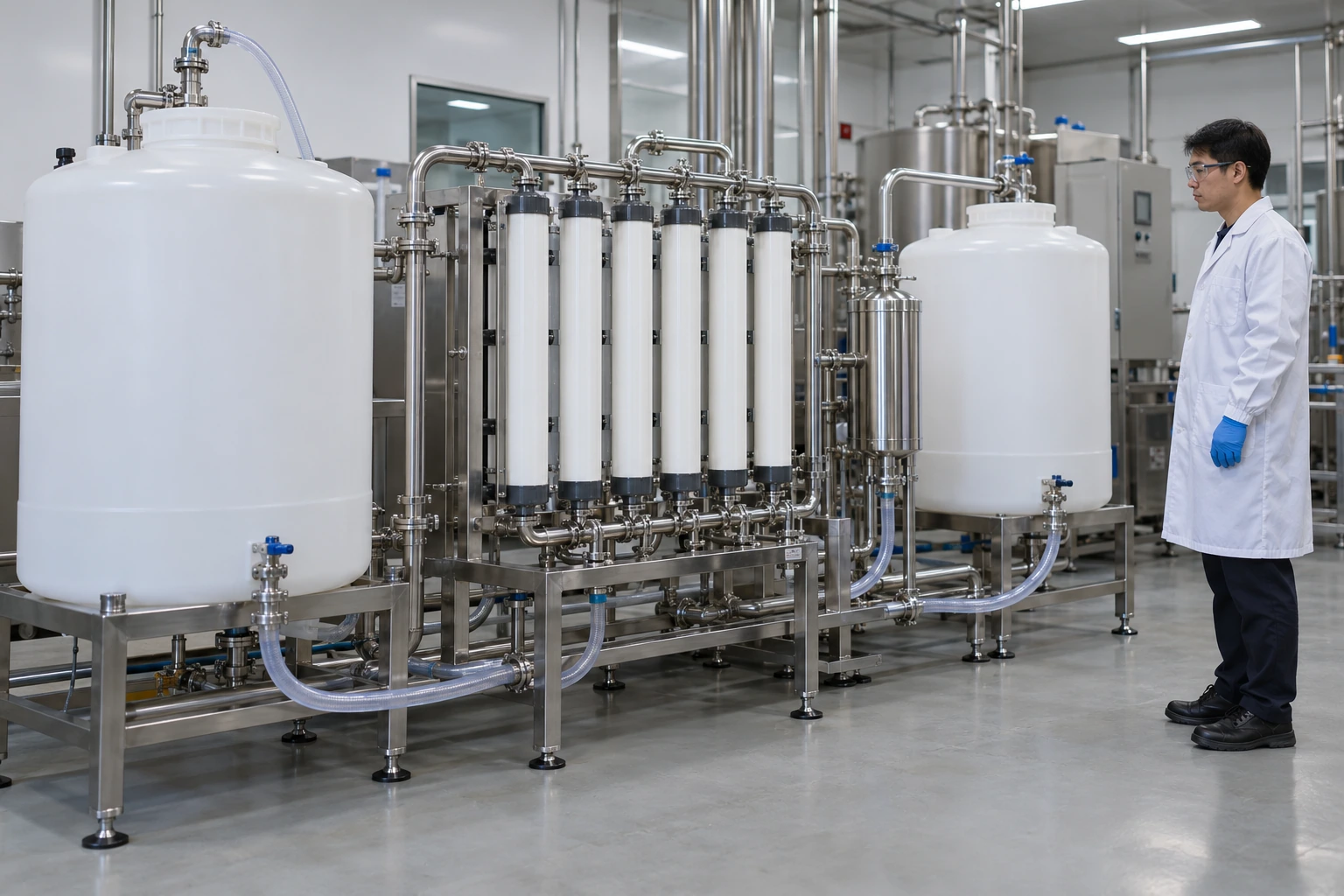
A Titanium electrode may appear in a RED project linked to water treatment, but the feed pair and site process determine whether energy recovery fits.
Screen the surrounding water process
Start with stream boundaries. A project may compare a concentrated stream with a lower-salinity stream, yet pretreatment, fouling, flow balance, and return-water requirements remain process questions. Review water-treatment applications for process context; it does not establish that RED equipment or a particular recovery result is supplied.
- Describe each stream's source, chemistry range, flow variation, and planned destination.
- Check whether fouling control and rinse management would offset energy available from a salinity gradient.
| Check | Decision |
|---|---|
| Water-treatment fit | Feed quality, flow balance, and downstream use |
| RED fit | Gradient potential, membrane stability, and electrical load |
A water-treatment connection is credible only when both streams and downstream duties are defined. Key Takeaway: Screen process integration before requesting a terminal-electrode quotation.
9. What Should Buyers Specify for a Titanium electrode?

A Titanium electrode specification should identify its shape, exposed surface, connection, polarity duty, rinse exposure, and dimensional interface.
Give suppliers a complete interface
A drawing beats a material label. State plate or mesh geometry, active area, mounting points, lead orientation, coating description, and contact conditions. Include the stack end-frame drawing and note which details remain provisional pending application review.
- Attach the assembly view and a detail of ports, seals, electrical contact, and edge clearances.
- List chemistry, current range, polarity, start-stop pattern, and target inspection evidence.
| Check | Decision |
|---|---|
| Geometry | Form, dimensions, mounting, and connection location |
| Duty | Rinse chemistry, current, temperature, and polarity state |
A complete interface package reduces ambiguity without implying a guaranteed design outcome. Key Takeaway: Ask for questions on missing inputs before approving a drawing revision.
10. How Should a Titanium electrode Interface Be Reviewed?

A Titanium electrode review should start with the system drawing, membrane arrangement, feed pair, and terminal-compartment conditions.
Turn the interface into a reviewable package
Leave the boundary visible. Keep membrane duty, electrical circuit, rinse loop, and electrode scope on separate drawing layers. For a project-specific discussion, contact us today with drawings, feed details, and the intended operating sequence; supplier review can then stay within confirmed interface scope.
- Send the latest stack end view and a process sketch showing both salinity streams.
- Mark open chemistry, coating, connection, and acceptance questions for engineering review.
| Check | Decision |
|---|---|
| Ready to review | Current drawings and confirmed process boundaries |
| Still open | Unconfirmed rinse chemistry or operating conditions |
A bounded supplier review is more useful when the open design decisions are named. Key Takeaway: Request a scope check before treating a RED electrode as a standard item.
Frequently Asked Questions
Can I use a titanium electrode in reverse electrodialysis? Possibly, if its exposed surface, coating, connections, polarity, and rinse conditions suit the specific stack. A titanium substrate alone does not confirm RED compatibility.
What's the best electrode rinse for RED? There is no universal rinse choice. Select a compatible electrolyte and redox system for the actual electrode, membranes, loop materials, and operating duty.
How do I know if a RED electrode matches my stack? Compare its drawing and surface specification with the terminal compartment, current path, rinse chemistry, and operating sequence.
How do I know if RED and EDR use the same membrane stack? Their stacks may share alternating ion-exchange membrane concepts, but energy direction, controls, feed routing, and terminal duty differ by process.
What's the best way to understand RED power generation? RED output comes from its salinity-gradient system; membranes transport ions and terminal reactions complete the circuit.