
Choose a tubular Titanium electrode when its geometry fits the required flow path, active area and service access better than a flat layout. A compact tube can look convenient while leaving its inner surface difficult to inspect or its annular gap hard to control. Those details affect manufacturing and maintenance. Compare complete cell interfaces before choosing a shape.
1. When does a tubular Titanium electrode make sense?
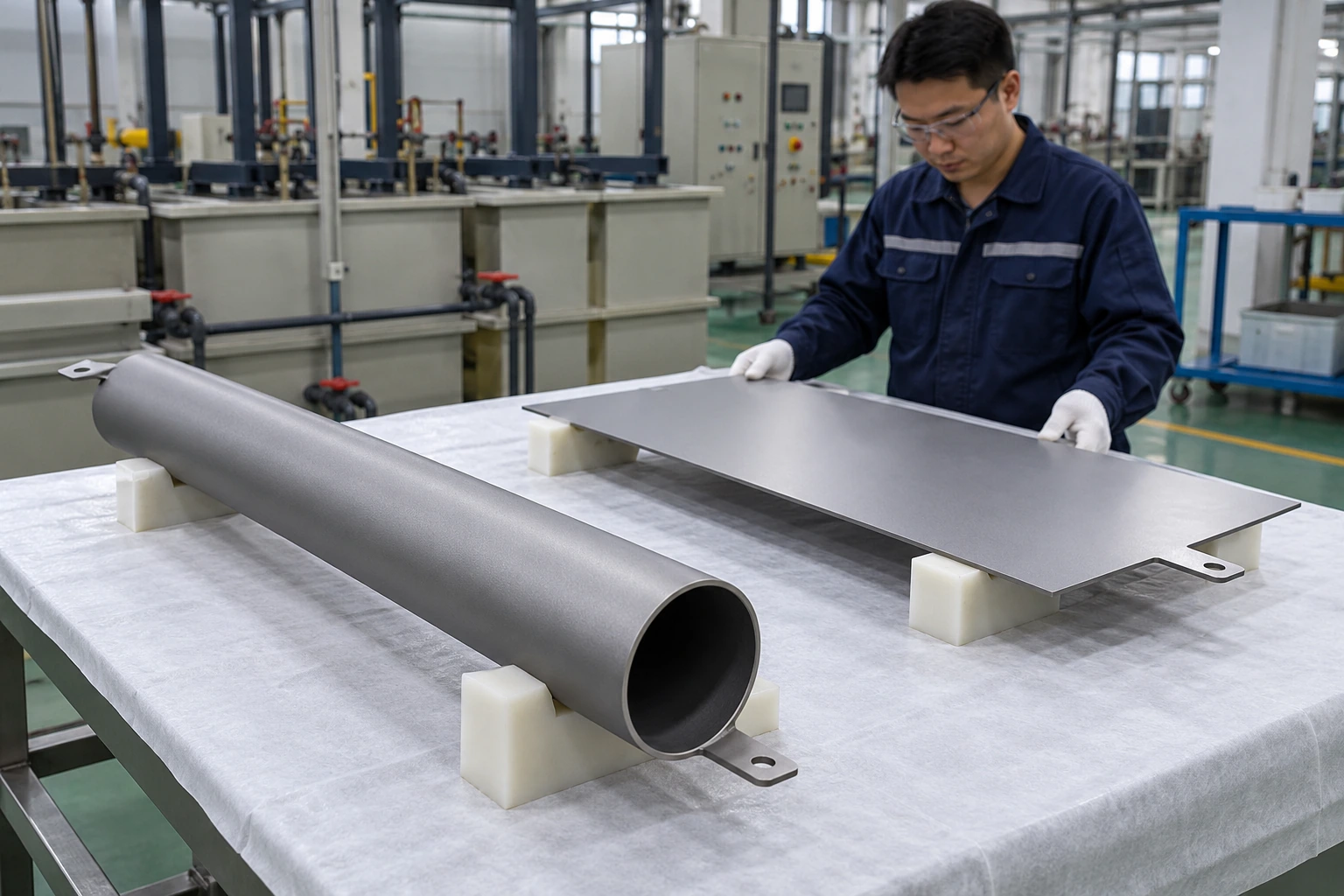
A tubular Titanium electrode makes sense when a reviewed cylindrical layout meets the process and integration requirements. Shape alone does not establish better efficiency or durability.
What problem should the tube solve?
Start with the cell envelope. Identify space, flow and connection constraints before selecting geometry. Keep the required useful output and qualified operating duty unchanged during comparison.
- Define installation constraints.
- State the reaction and product requirements.
| Check | Decision |
|---|---|
| Compact shape | One mechanical feature |
| Qualified cell layout | Addresses complete process requirements |
Judge geometry against a defined application. Key Takeaway: Choose a tube for a demonstrable integration benefit rather than appearance.
2. How does tubular Titanium electrode area compare with plate area?
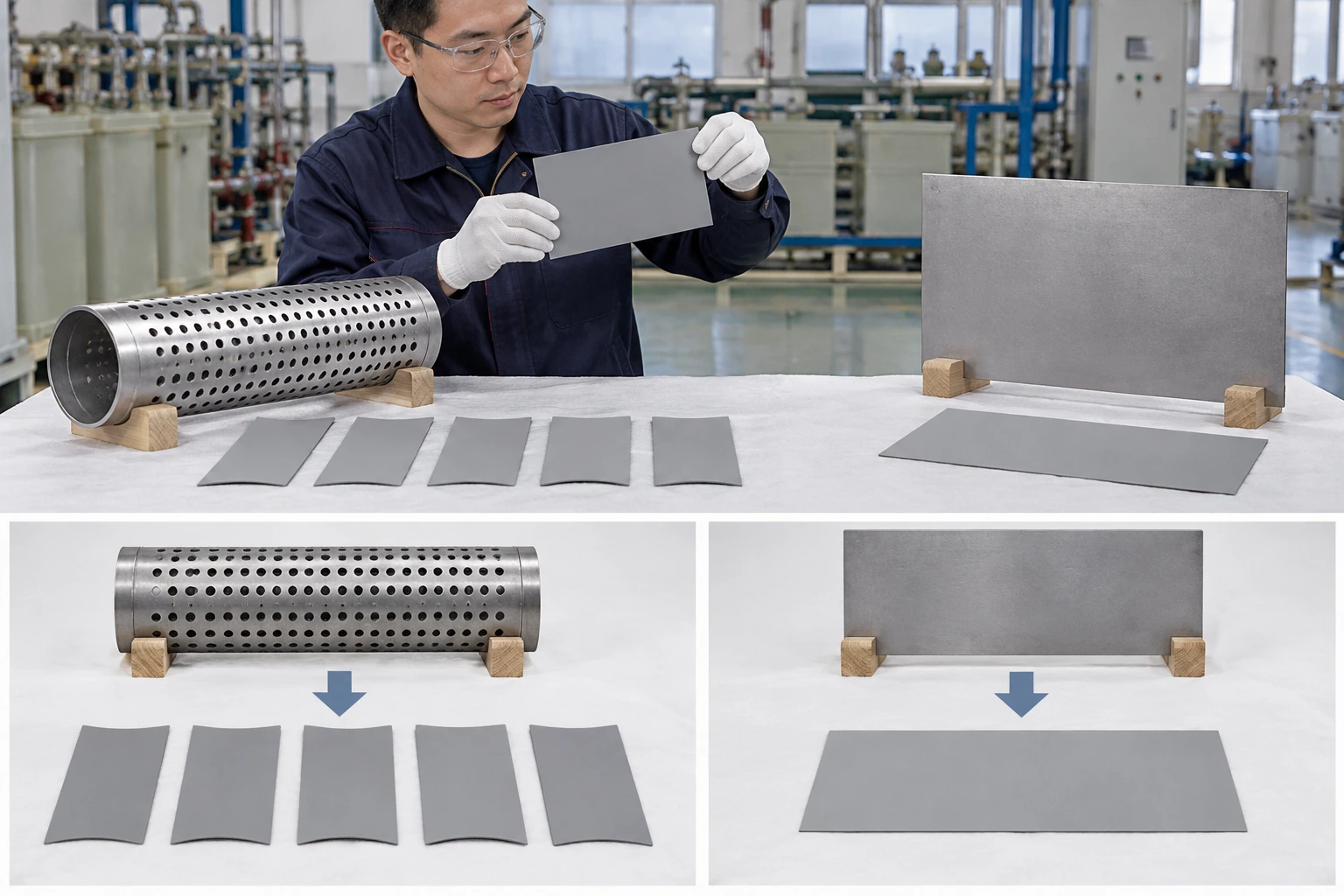
Tubular Titanium electrode active area depends on which cylindrical surfaces are coated, wetted and intended to react. External tube dimensions do not automatically define the active area.
Which surfaces count?
Mark inner and outer duty. State whether ends or internal surfaces contribute to the declared area. Use the same area convention when comparing a tube with a flat plate.
- Identify coated and immersed regions.
- Record the calculation basis.
| Check | Decision |
|---|---|
| External dimensions | Describe physical size |
| Declared active area | Describes the loading basis |
Separate component size from electrochemical area. Key Takeaway: Current-density comparisons need an explicit tube-surface definition.
3. What sets a tubular Titanium electrode electrode gap?
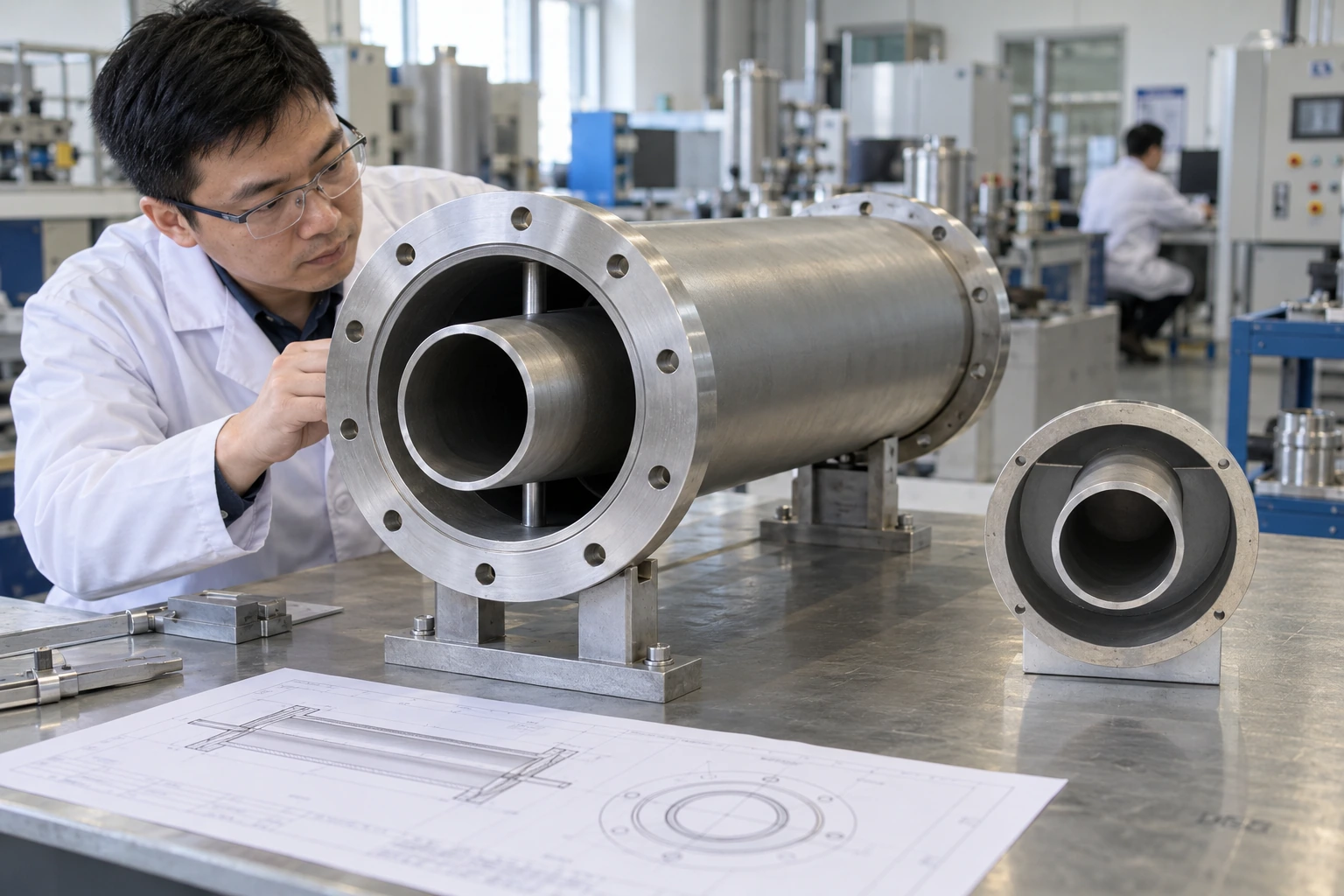
A tubular Titanium electrode gap depends on the relative geometry and alignment of its companion electrode. Concentricity and assembly tolerances can matter in annular cells.
Is the gap consistent around the circumference?
Review assembled dimensions. Ask which datums, supports and inspection methods control alignment. A nominal diameter difference does not prove a uniform operating gap.
- Specify relevant concentricity requirements.
- Identify gap-setting components.
| Check | Decision |
|---|---|
| Nominal diameters | Define an intended gap |
| Assembled alignment | Determines actual local spacing |
Inspect the assembled relationship where needed. Key Takeaway: A tubular gap is an assembly requirement, not only a tube dimension.
4. How does flow pass a tubular Titanium electrode?
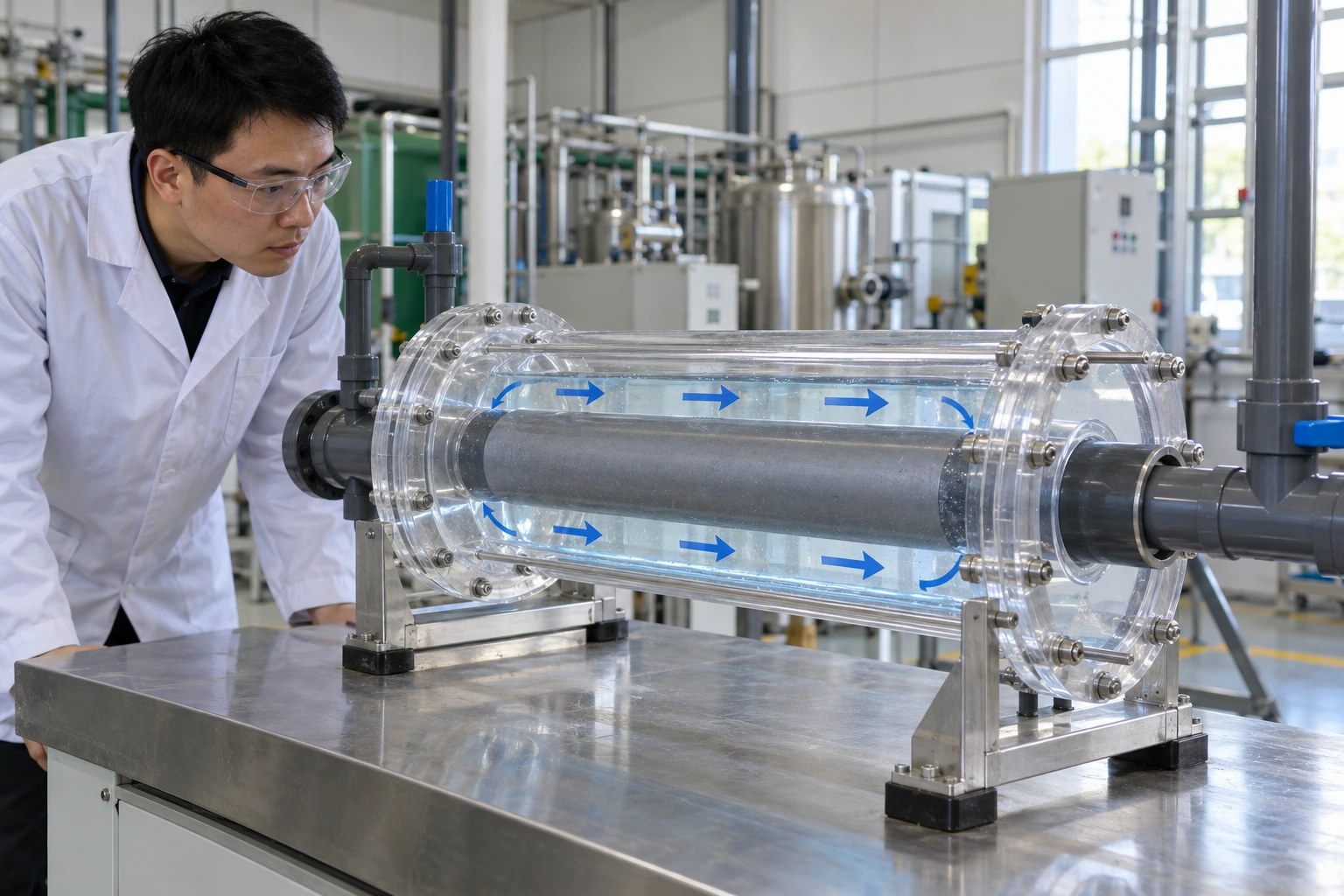
Flow around a tubular Titanium electrode may pass through an annulus, an internal channel or another defined route. Distribution and bypass depend on the complete hydraulic design.
Where does liquid contact the active surface?
Trace the working flow path. Include inlet, outlet and seal geometry in a custom engineering review. Avoid assuming that all measured flow passes through the intended active region.
- Show bypass and parallel paths.
- Define flow-measurement boundaries.
| Check | Decision |
|---|---|
| Total flow | Combined system quantity |
| Active-channel flow | Relevant local service |
Connect hydraulic evidence with the installed geometry. Key Takeaway: A tube needs a defined reaction-channel flow path.
5. Where can gas collect around a Titanium electrode tube?

Gas may collect around a tubular Titanium electrode where orientation or outlet geometry prevents the intended removal. Suitable gas handling must be established by the complete equipment design.
Can products leave the reaction region?
Review orientation and exits. Include startup and expected operating conditions in the assessment. Do not improvise vent changes or operate outside approved limits to clear a suspected pocket.
- Identify possible high points.
- Record the approved operating orientation.
| Check | Decision |
|---|---|
| Defined gas route | Supports intended operation |
| Persistent accumulation | Requires technical investigation |
Evaluate liquid and gas paths together. Key Takeaway: Geometry selection must account for generated products and feed flow.
6. How should a tubular Titanium electrode be connected?
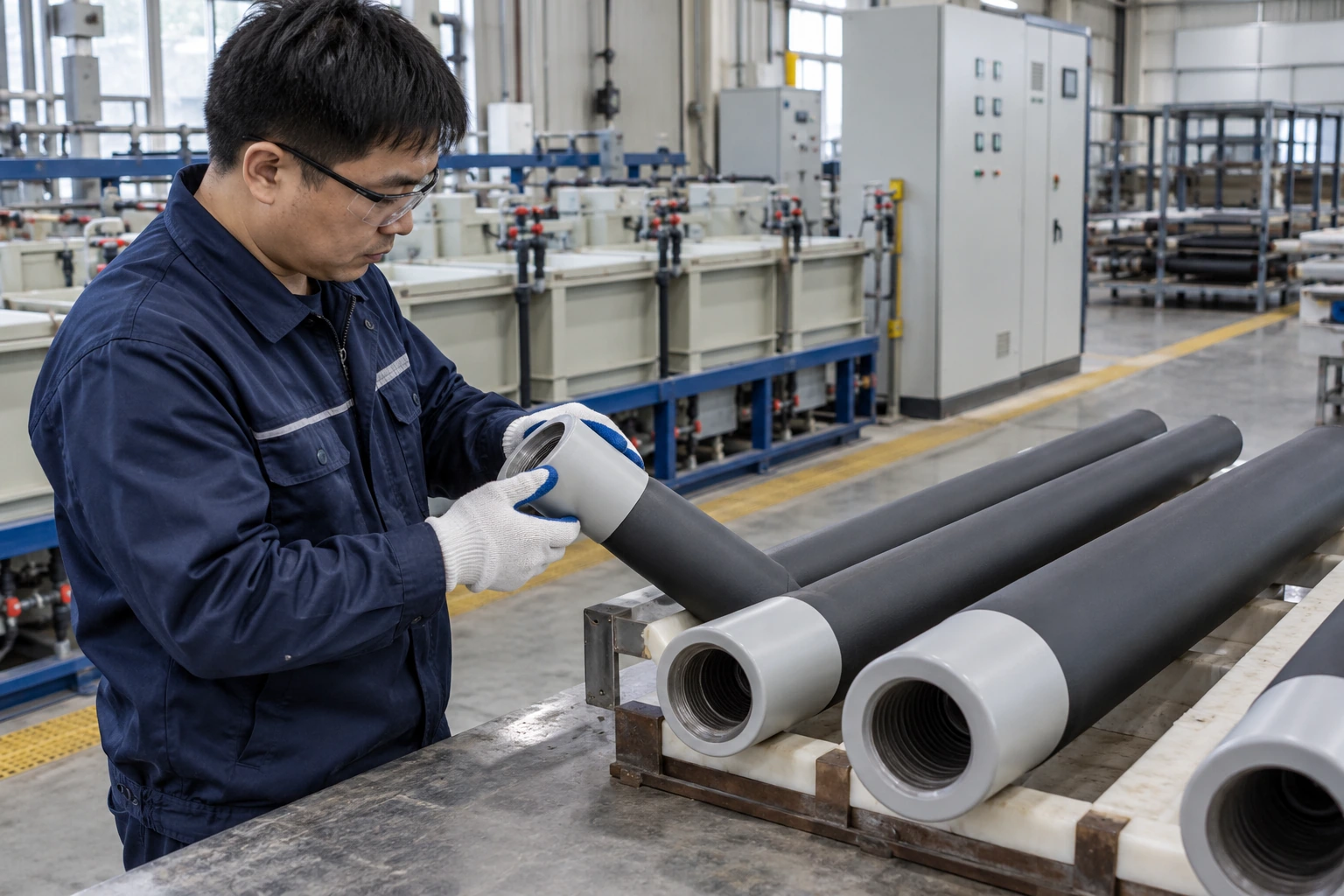
A tubular Titanium electrode connection should provide the specified electrical and mechanical interface while protecting active surfaces and dry regions. Its design depends on current, assembly and exposure.
Where does the dry connection end?
Specify the terminal interface. Show coating boundaries and expected liquid levels with the connection geometry. Use approved assembly instructions rather than a generic tightening value.
- Identify current-entry features.
- Define protected contact surfaces.
| Check | Decision |
|---|---|
| Connection geometry | Defines assembly and current entry |
| Exposure boundary | Defines material conditions |
Coordinate both details before manufacture. Key Takeaway: The terminal should be specified as part of the complete tubular component.
7. Can tubular Titanium electrode surfaces be inspected easily?
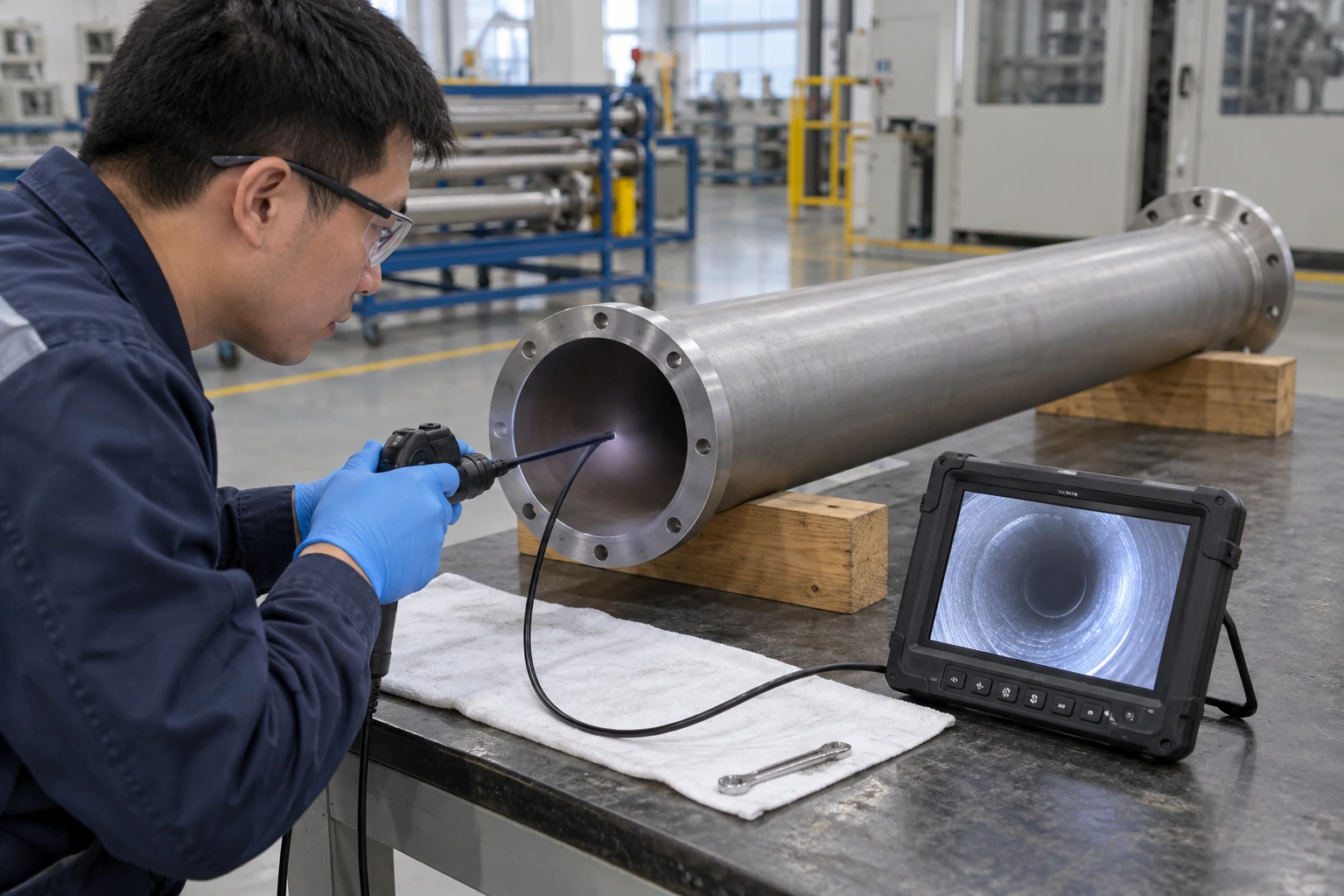
Tubular Titanium electrode inspection can be more difficult where active surfaces are internal or obstructed. Access should be considered when defining acceptance and maintenance methods.
Can you inspect the relevant surface?
Plan access before production. Select suitable inspection methods for internal and external regions. Do not claim full surface acceptance from photographs that show only the accessible face.
- Identify hidden active regions.
- State inspection coverage and limitations.
| Check | Decision |
|---|---|
| Accessible exterior | Direct inspection may be possible |
| Hidden interior | Needs a suitable method or access plan |
Match acceptance claims with inspection coverage. Key Takeaway: A hidden surface still needs a defined quality-verification method.
8. What limits tubular Titanium electrode maintenance access?
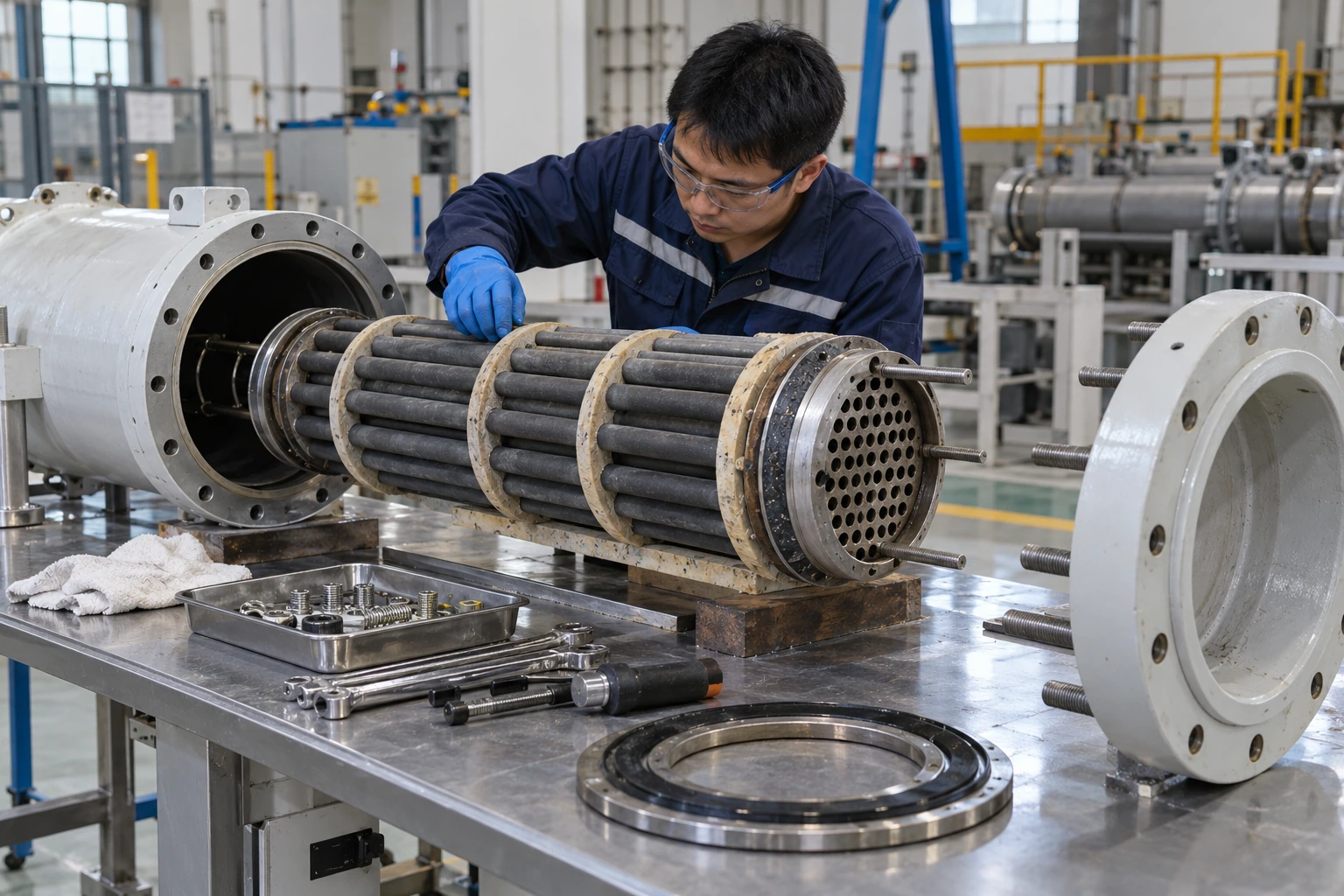
Tubular Titanium electrode maintenance access depends on how the cell opens, supports the component and exposes serviceable interfaces. Compact packaging can increase removal or reassembly work.
What must be dismantled for service?
Walk through the replacement task. For water-treatment applications, include seals, alignment and recommissioning in the maintenance review. Compare the complete task rather than the electrode's weight alone.
- Identify required tools and supports.
- Record replaceable seals and alignment checks.
| Check | Decision |
|---|---|
| Component removal | One maintenance stage |
| Restored qualified assembly | The actual service objective |
Include reassembly in the geometry decision. Key Takeaway: Service access can outweigh a small reduction in package size.
9. How do you compare tubular and flat Titanium electrode cells?
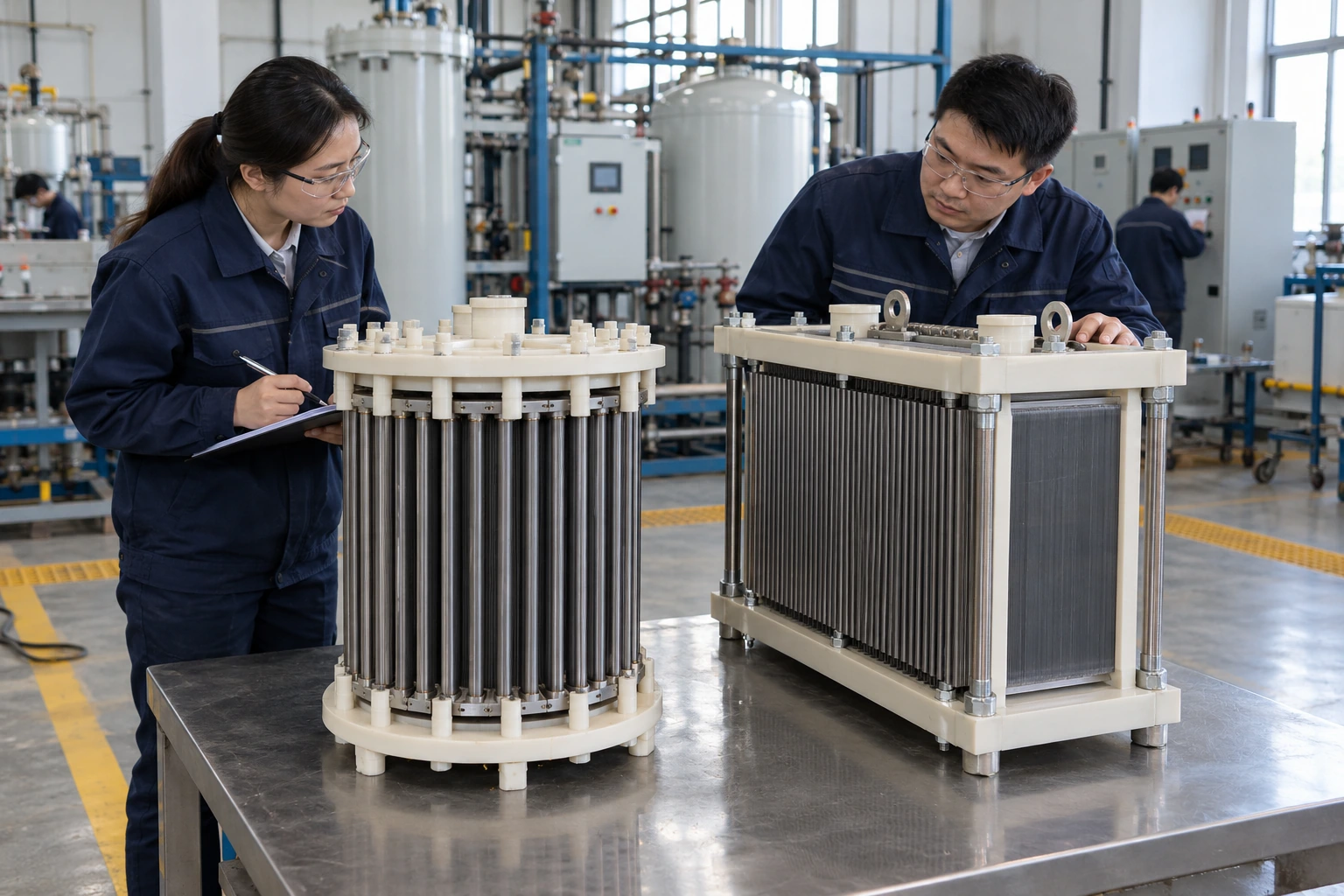
Tubular and flat Titanium electrode cells should be compared at equivalent accepted output with clear energy, geometry and maintenance boundaries. Equal nominal current does not establish equal process performance.
Are the alternatives solving the same requirement?
Normalize the comparison. Use matched chemistry and product criteria where practical. State any unavoidable design differences rather than assigning their effects entirely to electrode shape.
- Compare useful output and energy.
- Include inspection and maintenance scope.
| Check | Decision |
|---|---|
| Shape-only comparison | Incomplete selection basis |
| Defined system comparison | Supports a practical choice |
Keep geometry claims within tested evidence. Key Takeaway: Select the layout that meets your complete operating requirement.
10. What tubular Titanium electrode drawing details are needed?

A tubular Titanium electrode brief should include active surfaces, diameters, alignment, flow and connection details. These inputs make the component manufacturable and its interfaces reviewable.
Send a sectioned assembly drawing
Show the inside and the outline. When you contact us today, we can review drawing-based tubular electrode requirements. We favor clear interfaces over unsupported claims that one shape is universally superior.
- Define inspection access and acceptance.
- State the intended duty and chemistry.
| Check | Decision |
|---|---|
| Section drawing | Reveals internal relationships |
| Operating brief | Defines material and process exposure |
Resolve hidden interfaces before quoting. Key Takeaway: Specify the complete tubular electrode arrangement before selecting a sample.
Frequently Asked Questions
Can I replace a plate with a tube of equal area? Not directly. Spacing, flow, connections and inspection access also change.
What's the best tubular electrode diameter? Use the cell's process, spacing and mechanical requirements; no universal diameter applies.
How do I know if a tube surface is active? Use the coating and immersion map in the released specification.
Can I inspect an internal coating from outside photographs? No. Define a method that covers the relevant internal surface.
Can I assume a tubular layout uses less energy? No. Compare measured energy per accepted output under equivalent conditions.