
Water Treatment & Disinfection
Application guides for electrochemical water treatment, wastewater oxidation, disinfection, residual control, and system validation.
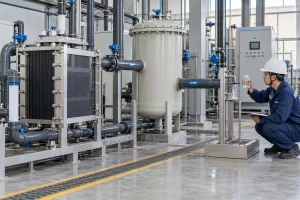
How Does a Titanium Electrode System Manage Residual?
Electrochlorination can leave oxidant in treated water after contact. A separate downstream process may need to manage that residual before reuse or discharge, with sample points and control ownership defined across the handoff….
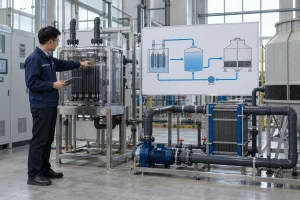
Can a Titanium Electrode Control Cooling-Water Growth?
An electrode can generate oxidant for a cooling-water process, but it cannot guarantee biological control by itself. Water demand, distribution, contact, monitoring, and discharge conditions define the application duty….
Can a Titanium Electrode Treat Landfill Leachate Effectively?
How coated titanium anodes remove ammonia and COD from landfill leachate, where the cell fits, and how to manage byproducts….
How Is a Titanium Electrode Used in Aquaculture Water Disinfection?
How titanium electrode cells make on-site disinfectant for fish farms, and how to size, clean, and keep residual oxidant away from stock….
Which Titanium Electrode Fits a Ballast Water Treatment System?
How to choose, size, and maintain titanium electrodes for electrochlorination ballast water treatment systems on ships….
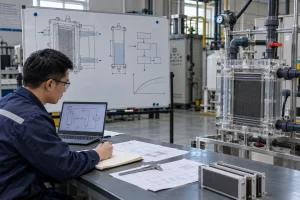
Does a Titanium Electrode Deliver Its Contact Time?
Volume divided by flow gives nominal hydraulic residence time. Actual parcel exposure depends on short paths, dead zones, mixing, and measured flow distribution….
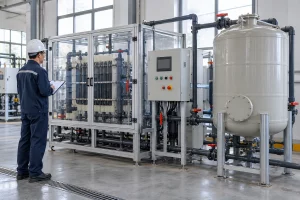
How Does a Titanium Electrode Affect Oxidant Residual?
Electrochemical generation describes oxidant leaving a cell; residual describes what remains after contact with process water. Separate both measurements when reviewing a disinfection duty….
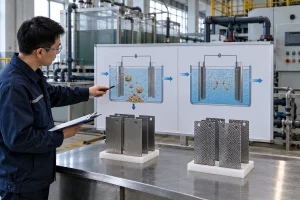
How Does a Titanium Electrode Fit Electrocoagulation?
Electrocoagulation releases sacrificial metal ions; electrooxidation uses direct or mediated anodic reactions. Learn where coated titanium fits each wastewater duty….
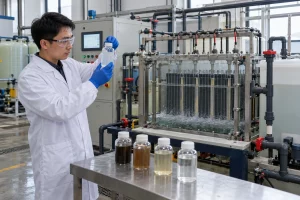
Can a Titanium Electrode Reduce Wastewater COD?
Evaluate titanium-electrode wastewater oxidation through COD, feed variability, target contaminants, byproducts, sampling and measured energy….