
Electrodialysis & Descaling
Guidance on titanium electrodes, rinse circuits, membranes, electrodialysis applications, and electrochemical descaling.
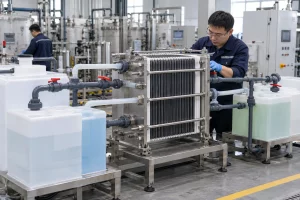
Can a Titanium Electrode Rinse Cross a Membrane?
Rinse crossover can result from membrane transport, water movement, differential pressure, or a seal leak. Learn how to distinguish these pathways and prepare a useful measurement and interface review….
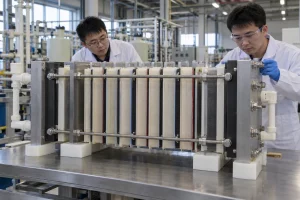
Can a Titanium Electrode Select Which Ions Leave Water?
In electrodialysis, ion-exchange membranes govern which charged species move through a stack. Learn what a terminal titanium electrode controls, which process variables change selectivity, and how to frame a trial….
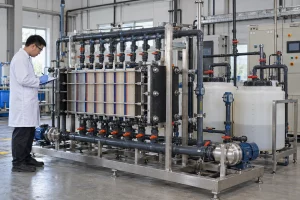
How Should a Titanium Electrode Support EDR?
EDR changes polarity on a schedule, so buyers must review terminal-electrode duty beside stream routing and control sequence. This guide outlines what to document before an interface review….
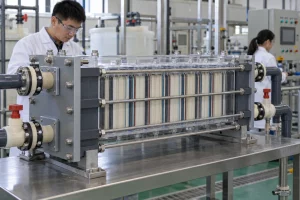
What Does a Titanium Electrode Do in Bipolar ED?
Bipolar membrane electrodialysis separates water dissociation at the membrane junction from reactions at terminal electrodes. This guide maps those duties, rinse paths, and the information needed for an interface review….
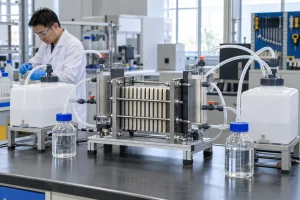
Can a Titanium Electrode Work in Reverse Electrodialysis?
Reverse electrodialysis turns a salinity difference into electrical output. See how the terminal titanium electrode fits the stack, why rinse chemistry matters, and what buyers should include in a project review….
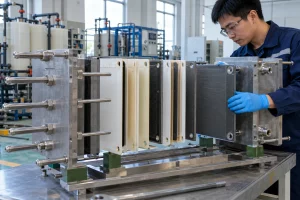
What Does a Titanium Electrode Do in Electrodialysis?
Specify electrodialysis electrodes through end-compartment chemistry, rinse circuits, polarity, gas handling and stack-interface requirements….
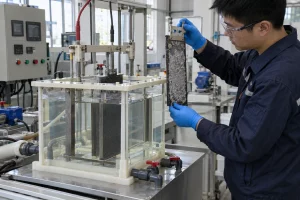
How Does a Titanium Electrode Support Water Descaling?
Understand electrode roles in electrochemical descaling, the difference from electrodialysis, and the water chemistry and pilot data needed….