
Electrochlorination
Guides to titanium electrodes for brine and seawater electrolysis, hypochlorite generation, pool chlorination, and chlorine-output control.
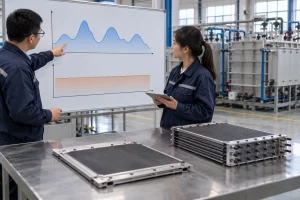
How Does a Titanium Electrode System Handle Variable Demand?
Electrochlorination demand changes do not define how far a cell can safely or reliably turn down. Compare demand with the qualified production envelope, then assess staging and buffer storage against process data….
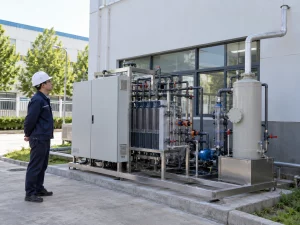
Why Does a Titanium Electrode Cell Need Gas Venting?
Electrochlorination produces hydrogen at the cathode, and some gas may remain entrained or dissolved after bulk separation. Vent paths, storage boundaries, and room ventilation require a qualified review tied to the selected system….

How Does Titanium Electrode Product Storage Affect Dose?
Stored hypochlorite can lose available chlorine, changing how much oxidant each metered volume delivers. Track storage conditions and compare fresh, tank, and feed samples before adjusting a dosing plan….
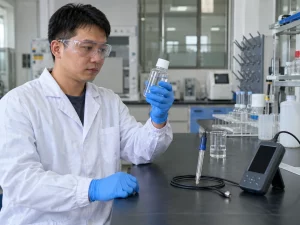
Can ORP Verify Titanium Electrode Chlorine Output?
ORP can trend oxidizing conditions during electrochlorination, but it does not directly measure free chlorine. Pair the probe with a direct chlorine method and control pH, sampling point, and timing before making dose decisions….
Which Titanium Electrode Is Best for a Salt Pool Chlorinator?
How to choose the coating, plate stack, reversal settings, and cleaning routine for titanium electrodes in salt pool chlorinators….
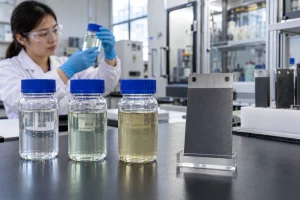
How Does Bromide Affect a Titanium Electrode Review?
Assess bromide-related questions with feed characterization, analyte-specific product testing and a qualified application acceptance plan….
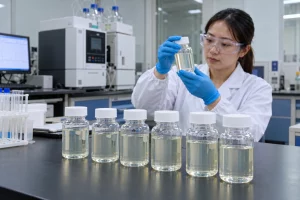
How Should Titanium Electrode Chlorate Risk Be Checked?
Review chlorate with a defined analytical plan that separates fresh production, stored product and application-specific acceptance….
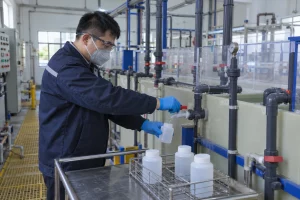
How Do You Measure Titanium Electrode Chlorine Output?
Measure chlorine-generation output with a defined concentration basis, representative flow and sampling, and a consistent electrical boundary….
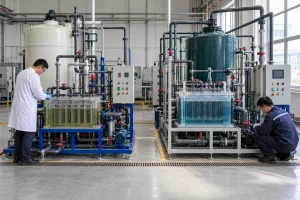
Brine or Seawater: Which Titanium Electrode Duty Fits?
Distinguish prepared-brine and seawater electrochlorination through feed chemistry, solids, scale, temperature and system-specific validation….